
Do you have houseplants that seem to be struggling and could really use your help? A once thriving and healthy houseplant can quickly start to look less than ideal in just a matter of a few days – especially during the shorter winter months.
There are actually a number of reasons why your houseplant might be struggling. Pests, diseases, a lack of nutrients, improper watering, lack of sunlight, low humidity, wrong soil, and so much more can all be the culprits of the yellowing, dying plants.
Just do a quick Google search of why your plants have yellow leaves and you will be presented with a huge array of possibilities! (Many of which contradict one another.) This can make it seem overwhelming and impossible to find the problem.
However, before you end up tossing that plant into the compost, keep in mind that there are usually three main reasons houseplants struggle. If you fix these problems, your houseplants should bounce back to normal in no time at all.
3 Main Issues With Struggling Houseplants – And How To Help
I have a lot of houseplants in my home. As someone who loves to garden and grow vegetables and flowers outside, I enjoy being able to bring some of that greenness and nature indoors.
This is especially the case during the winter months when I am often stuck inside during the cold and snowy Midwest days it’s nice to have some life indoors when everything outside looks dead and dreary.
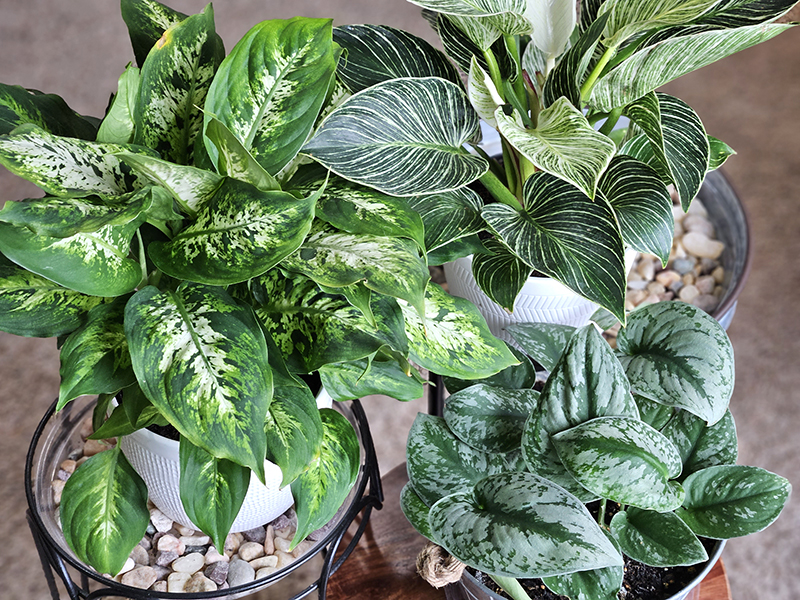
However, as much as I love caring for and keeping houseplants, I have also done my fair share of killing some of those beloved houseplants for one reason or another (not intentional, of course!). Often I try my best to keep the plants staggering along for as long as possible until I finally have to admit defeat.
With all the plants that I’ve tossed into my compost bin over the years, I’ve also gotten pretty decent at figuring out why the plants might be struggling. Sure, it sometimes comes a little too late. But at least the knowledge is there and it’s something I can pass on to you to hopefully help you identify why your plant is struggling before it becomes too late.
1. Not Enough Sunlight
Plants require sunlight in order to photosynthesize and produce food. Without it, they can’t stay healthy. When you grow plants outside, they have access to the strong rays of the sun. This allows the plants to grow thick and full.
But those same plants that thrived outside can easily struggle if they are brought indoors and not provided with enough sunlight. Most often, the signs are long, thin stems but few leaves.
Or, maybe you have a houseplant that was doing perfectly well next to a North-facing window during the summer months. Once winter rolls around, that same plant starts to thin out and become all stems.
This is due to the fact that there is usually a reduction in both the length of the sunlight as well as the strength. Without enough light, the plant will start to stretch to what little light source there is.
Other Signs Of Lacking Light
Leggy stems isn’t the only sign of a lack of sunlight with struggling houseplants. Another sign of not enough rays is plants have leaves turning paler in color.
Eventually, those leaves turn yellow and fall off altogether. This typically occurs on the bottom of the plant or deep underneath layers of foliage where light can’t reach.
Ways To Help These Struggling Houseplants
Move your plants to a South-facing window for the most amount of sunlight possible. If you don’t have that option (like us), the easiest and best way to help is to use artificial lights.
I have used several different types of artificial lights to help provide my plants with additional light. Each one has its advantages and uses. (Please note that all of the lights I link below are ones I am personally using for my houseplants.)
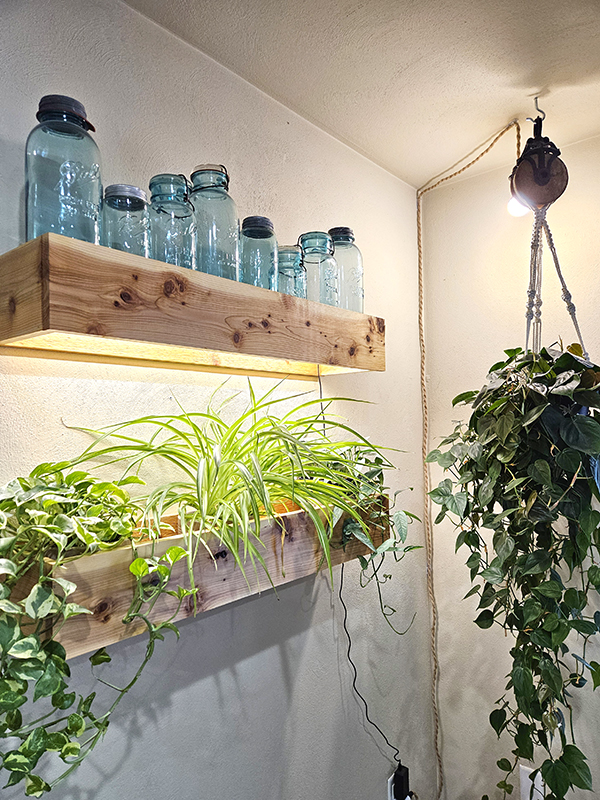
I have a set of four strip lights that I use in these grow boxes my husband and kids made me. It has a timer that turns on for 12 hours each day so I don’t even have to mess with them. (Product Link: Mosthink Grow Lights for Indoor Plants)
I also use “grow light” light bulbs that are screwed into pendant lights above hanging plants. I then have them set up with an outlet timer so that they come on and turn off automatically. (Product Link: Briignite Grow Light Bulbs)
The last style I have clip onto the side of the pot or I can stake them into the soil. Again, the ones I have include a timer that turns them on or off for a specific amount of hours. You can adjust the lights as needed and move them to get just the right angle for your particular houseplant. (I have both of these types – Product Links: Wolezek Grow Lights for Indoor Plants and GooingTop LED Grow Light)
All of these artificial lights will help to supplement the sunlight the plants lack.
2. Underwatering & Overwatering – Help Struggling Houseplants
Probably the most common issue of why your houseplant is struggling besides light is watering issues. Both overwatering and underwatering can cause loads of problems with potted houseplants. And unfortunately, sometimes the signs can be the same.
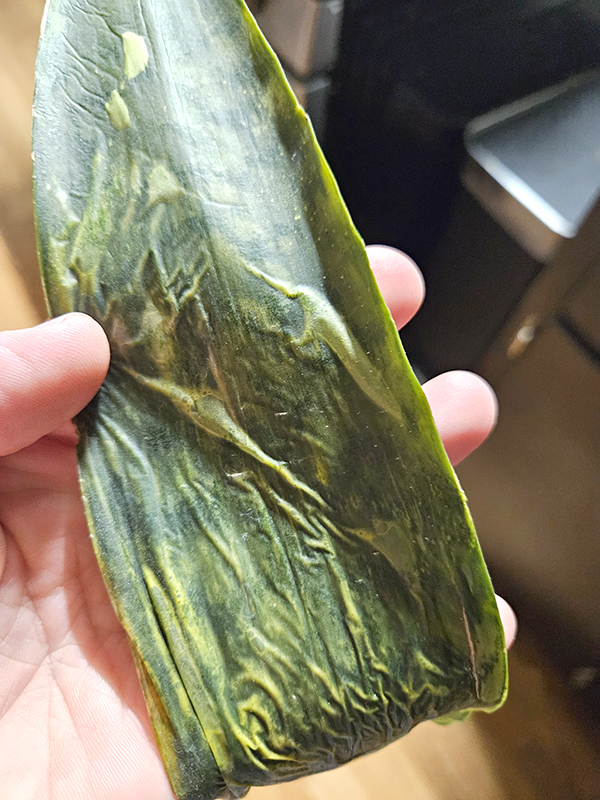
Signs of overwatering often include soggy limp leaves. The leaves can start to turn yellow and eventually brown. You might even notice that the base of the stem is soft to the touch. This usually indicates that the roots are rotting due to excess moisture.
Waterlogged roots cannot soak up proper nutrients and resources from the soil. Once the roots are rotting, there isn’t a whole lot you can do to save the stem.
In addition, you can also have an increase of fungus gnats around your plants. These tiny flying pests seem to materialize out of thin air but they thrive in moist soils. (And they LOVE to divebomb your nose – ask me how I know!)
Signs of underwatering can also include yellowing leaves. However, instead of the leaves looking soggy and limp, they will be brittle and dry. One of the best indications of underwatering is dry soil that has pulled away from the edge of the pot or container.
How To Help
Well, depending on the issue, you need to either water the plant more or water the plant less. Seems simple right?
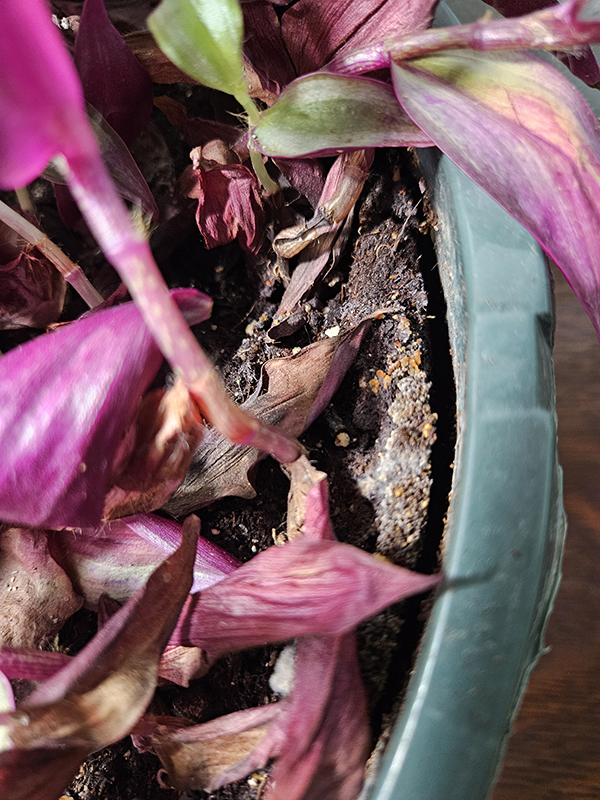
However, it depends on the type of plant you are growing and its moisture needs. Some houseplants require constantly moist soil while others need to dry out in between waterings. Research what your specific plant needs and set up a watering schedule accordingly.
Also, keep in mind that even though the top layer of your soil might look bone dry, three to four inches down might still be sopping wet. You can use your finger to feel down in the soil. If the tip of your finger is wet, there is enough moisture. If it is dry, you likely need to water the plants.
The best way to know whether your plants are getting the right moisture is to use an inexpensive moisture meter. These simple-to-use devices will take the guesswork out of what the soil is like down where the roots of the plant are. (Product Link: XLUX Soil Moisture Meter)
3. Poor Soil Quality
The last big issue that can cause struggling houseplants deals with soil quality, but thankfully there are easy ways to help. There are many issues that can occur due to poor soil quality. First, plants receive their nutrients from the soil. If the soil is cheap or lacking in those nutrients, the plants will struggle to survive and grow.
Poor-quality soil can also cause issues when it comes to watering. If the soil is too loose, it can’t absorb enough moisture. When you water the plants, the moisture will quickly drain out as soon as it is poured into the container.
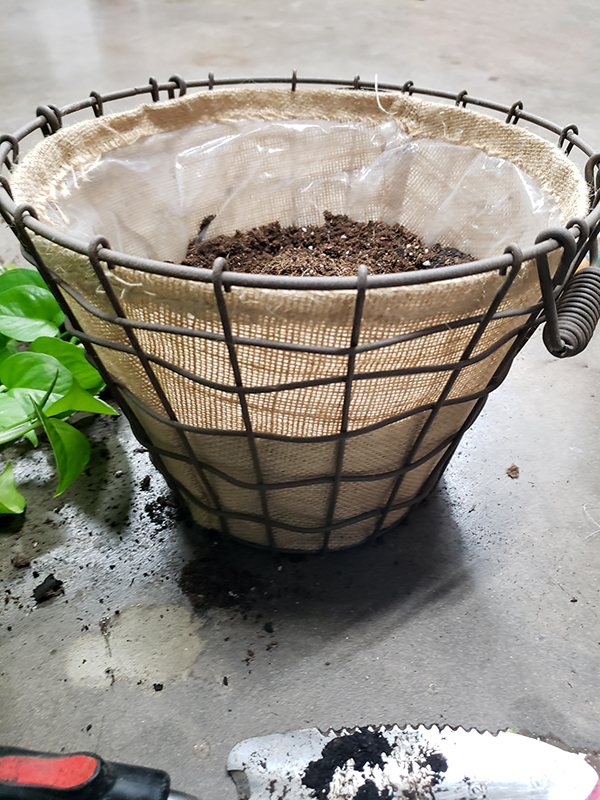
On the flip side, compacted or dense soil can absorb too much moisture and cause root rot. Or, if it is too compacted, it can actually become hydrophobic. In addition, compacted soil will also not allow roots to grow and expand.
How To Help These Struggling Houseplants
When you bring home new plants from the nursery, be sure to change out their potting soil if the quality looks lacking. The soil that comes from houseplants you buy at garden nurseries will likely be much better quality than those bought from big box stores.
Be mindful of what type of soil your particular houseplant requires as well. Some plants need loose, well-draining soil while others need soil that provides structure and maintains even moisture levels.
Ensure that your container has proper drainage holes as well. It’s ok to move plants to new containers. But if your container doesn’t have drainage, consider keeping the houseplant in the nursery pots and putting it inside the new container instead.

In addition, make sure that plants are not root bound and that they are plants that don’t like being root bound. Some plants like spider plants or snake plants prefer being root bound and will start to fail if they have too much room to move around in their container.
Additional Tips
Occasionally, your problems won’t be answered by fixing these three things. They are by all means not the only issues that can occur with struggling houseplants. However, they tend to be the most common.
Other problems like pests, diseases, improper fertilization, temperature fluctuations, lack of humidity, and more can all be reasons why your houseplants are failing. As soon as you notice any issues, try to eliminate the big 3 issues first and see if that helps your plants.
Many times, a little tweaking will be all you need to get your houseplants back to thriving and looking beautiful once again!
Until next time, thanks for stopping by!
– Chelsea
*This post may contain affiliate links. These are products I have used personally and highly recommend. As an Amazon Associate, I may earn a small commission from qualifying purchases if you purchase items through my links. These links and the ads on this page help to support my family and our semi homestead, so Thank You!
Discover more from Semi Homestead Life
Subscribe to get the latest posts sent to your email.