
Do you need some help understanding fertilizers and how to use them to help power your garden plants and vegetables? Don’t worry, because I will break it down into simple information you can use to properly power your plants!
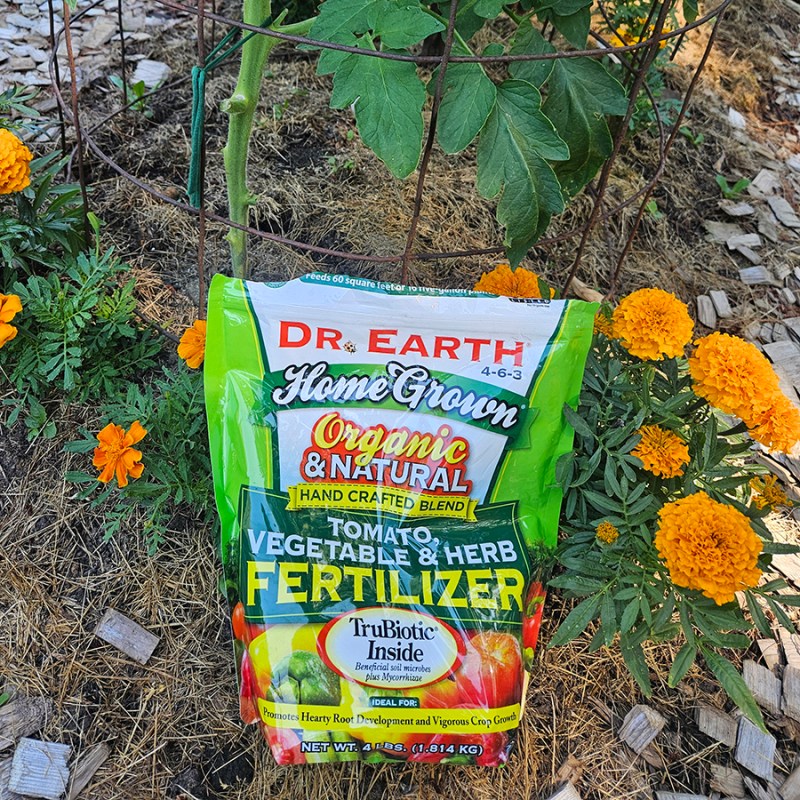
When it comes to picking out vegetable and flower fertilizers, it can be a bit confusing, to say the least! Not only are there about a thousand different brands out there, but the labels themselves can be very overwhelming. Manufacturers like to throw certain “buzzwords” around, leaving growers even more confused about what they are putting on their plants.
If you use the wrong one, then the results likely won’t end up being what you were after. Maybe your plants grow to be big and beautiful and full of lush foliage but there is hardly a single bloom on the stems. That can all be caused by using the wrong type of fertilizers.
Or, maybe you end up applying too much and your plants get overpowered with nutrients all at once and then quickly fizzle out soon after. Or, worse yet, apply them the wrong way and the plants end up burnt or even dead!
You can see how it can all be a bit too overwhelming! This might even cause gardeners to skip out on using fertilizers altogether. So I thought I’d just put together a simple article to help walk you through the process and make understanding fertilizers a bit easier.
Nutrients Plants Require – Understanding Fertilizers
Plants all require 17 vital nutrients in order to grow and survive. They can obtain three of these nutrients – carbon, hydrogen, and oxygen – from the air and water. Others are usually found naturally in the soil. Unfortunately, the soil can quickly get depleted of these nutrients over time. Because of this, gardeners use fertilizers or compost to help build back those lost nutrients.

Besides the ones found in the air and water, there are three important nutrients that plants need in larger quantities than the others. These nutrients are often referred to as “the big 3” – nitrogen (N), phosphorous (P), and potassium (K) (also called potash). (The abbreviations go back to the periodic table – flashback to high school Chemistry class!)
The abbreviations are important to remember because they are usually shown on labels as a ratio, N-P-K or 10-10-10 for example. The ratio tells you how much of those nutrients are in the fertilizers. Each one performs a different job for the plants.
Fertilizers are also made up of three minor nutrients: calcium, magnesium, and sulfur. In addition, there are typically trace elements like copper, iron, manganese, and zinc. While they still help to provide energy to plants, they aren’t typically the main focus of which brand or variety of fertilizer you purchase.
What The Nutrients Do – Understanding Fertilizers
Each of the fertilizers has a slightly different job when it comes to growing and keeping plants healthy. Here’s a simple breakdown of what some of the top nutrients do:
- Nitrogen – This helps to provide foliage growth. It is great to have high amounts early in the growing season to help plants fill out and produce rapid growth. However, too much nitrogen during the growing season can cause plants to focus too much energy on producing leaves as opposed to setting blooms and supporting fruit.
- Phosphorus – This element helps to produce root growth, providing plants with a strong and healthy root structure. In addition, it also helps plants to set blooms and produce fruit.
- Potassium – It helps to improve the overall health of the plant because it helps to build strong cell walls. It improves resistance to diseases as well as drought-like conditions.
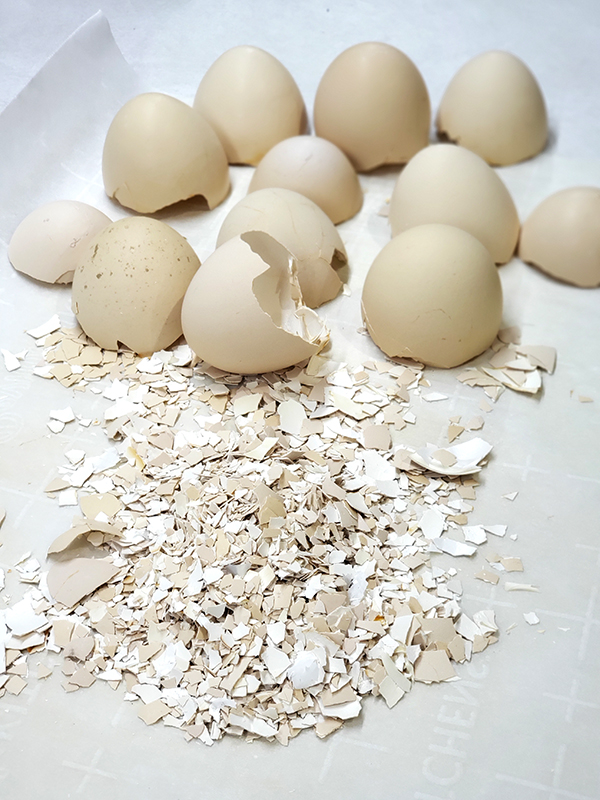
- Calcium – Not only does calcium help to produce strong, healthy roots, but it also helps to improve the way those roots absorb and distribute nutrients. When there is a deficiency of calcium and inconsistent watering, you might end up with issues like blossom end rot (tomatoes).
Choosing The Right Ratio
The fertilizer you choose and the ratio of these elements will depend on the type of plant you are growing. It also depends on what part of the growing season you are in as well. For example, in late spring and early summer, you want a fertilizer that has a higher ratio of nitrogen when growing vegetables. This helps to fill plants out and provide plenty of foliage growth.
However, as soon as the plants start to set blooms, you want to switch to a fertilizer that focuses instead on bloom and fruit production. If you continue to use a fertilizer with high levels of nitrogen, your plants will look beautiful but will likely fail to produce many blooms and fruit.
Organic vs. Synthetic Fertilizers
When it comes to understanding and using fertilizers, this can be a hot topic amongst gardeners and consumers. However, it is all a personal choice – especially when you are the only one consuming the produce. I’ve personally used both with good results. There are many good and successful synthetic fertilizers available on the market as well as organic ones.
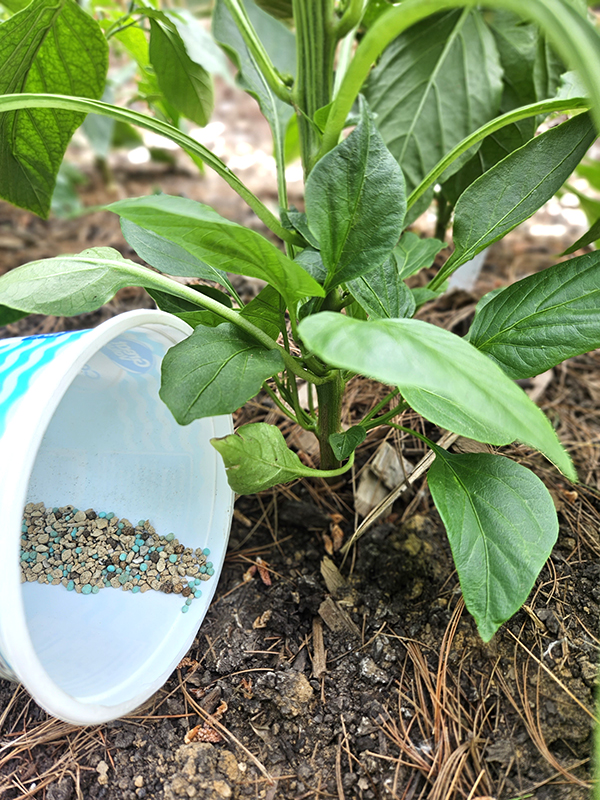
One of the benefits of using synthetic fertilizers is that they are typically less expensive than organic varieties. They can also be coated to provide plants with a slower supply of nutrients over a longer period of time (granular forms). Or, they can be made to quickly be absorbed by plants (liquid forms).
One of the drawbacks of synthetic fertilizers is that they tend to have a chance of burning the plants if they are used incorrectly. In addition, there is a chance that the synthetic elements leach into the surrounding soil, compromising the environment.
On the other hand, organic fertilizers are typically made from natural materials that were once living. These materials break down slowly over time, yet they cause no concern to the environment. You can also create your own fertilizers by making compost.
Often, one of the downsides of using organic fertilizers is that they are more expensive to purchase. In addition, it might be harder to get an accurate rate of the particular nutrients you are trying to focus on. This is more often the case when using compost or any homemade fertilizers.
Liquid vs. Granular – Understanding Fertilizers
In addition to having different nutrient ratios, there are also different forms of fertilizers. The two main types of commercial fertilizers are either liquid or granular. However, you can also purchase or make compost as well (more on compost below).

Liquid fertilizers work best when you need to provide fast nutrients to the plants. You can also use liquid fertilizers at a lower dose than the recommended amount and just apply it more frequently. This helps to give plants a steadier dose of nutrients throughout the growing season. Just use them at a reduced dosage than the package recommends and apply every two weeks or so.
Most liquid fertilizers are applied around the root zone of the plants. Some can be applied at the same time you water plants. Others can be applied to the soil and then watered in. There are even some liquid fertilizers that can be applied to the foliage of plants, giving plants even more ways to absorb the nutrients (be sure to read the labels).
Granular fertilizers are made to break down slowly over time. They are a great choice when you want a little less hands-on with feeding plants, since many of them last for at least a month or more.
Most granular fertilizers get worked into the soil at the base of plants. Then, each time you water, those nutrients are leached down to the plant’s roots. They should be applied carefully to avoid getting them on plant foliage and causing burns.
What About Compost?
The last option is compost. It is great for adding to seed starting soils and for amending soils when planting transplants and seeds. You can also top-dress plants with compost and use it as an organic mulch for pretty much any and all plants.
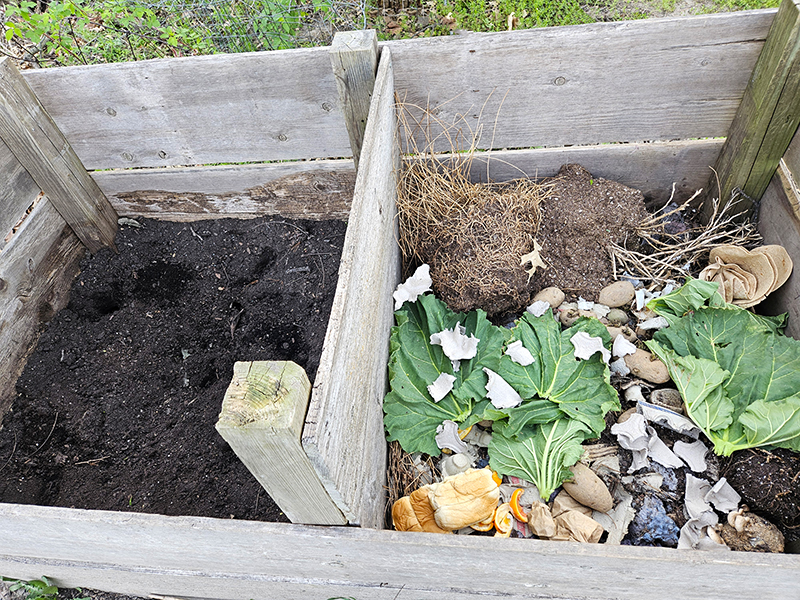
This is the main way I provide my plants with nutrients and energy. We have our own compost pile that I use to break down all sorts of biodegradable materials that we use on a day-to-day basis. Whether it’s food scraps, old hanging basket soil, or used tissues, it goes into our compost pile.
One side of the pile has finished compost that we purchased a few years ago. The other is where we throw all of our organic materials and scraps. As these materials break down, they turn into an amazingly rich compost that is packed full of nutrients and organic matter.
If you don’t have a compost bin, you can usually purchase compost in larger quantities from local garden centers. In addition, most big box stores also sell bags of compost.
The drawback of compost is that you likely don’t know the exact ratio of nutrients like you would with purchased fertilizers. However, it is a great way to put back into the ground what might’ve been depleted in addition to improving the soil’s structure at the same time.
Using The Fertilizers
Now that you have a bit better understanding of fertilizers, let’s talk about using them. Unfortunately, there isn’t a one-size-fits-all situation on when and how to use fertilizers.

Make sure to look at the ratio of N-P-K nutrients and cater those to the type of plant you are growing, what part of the growing season it is in, and what your goal is with each plant (e.g., filling in foliage as opposed to setting blooms).
You can often find specific brands that have fertilizers for specific types of plants or for specific goals. For example, some are geared toward encouraging flowers to produce blooms as opposed to supporting plants that are growing vegetables or fruit.
Just remember, it’s always best to go light on the fertilizer as opposed to using too much. Not only does overfertilizing waste your money and the product, but it can be detrimental to the plants and the environment.
Hopefully, now you have a bit better understanding of fertilizers and how using the right one can help improve your garden vegetables and flowers!
Until next time, thanks for stopping by!
– Chelsea
*This post may contain affiliate links. These are products I have used personally and highly recommend. As an Amazon Associate, I may earn a small commission from qualifying purchases if you purchase items through my links. These links and the ads on this page help to support my family and our semi homestead, so Thank You!
Discover more from Semi Homestead Life
Subscribe to get the latest posts sent to your email.