
Want to learn all about growing and caring for petunias so you can enjoy their colorful, never-ending blooms all summer long? Then you’ve come to the right place!
One of the most popular flowering annuals is the petunia. During the late spring months, you start to see hanging baskets and containers filled with all sorts of different petunias gracing front porches, walkways, balconies, and decks.
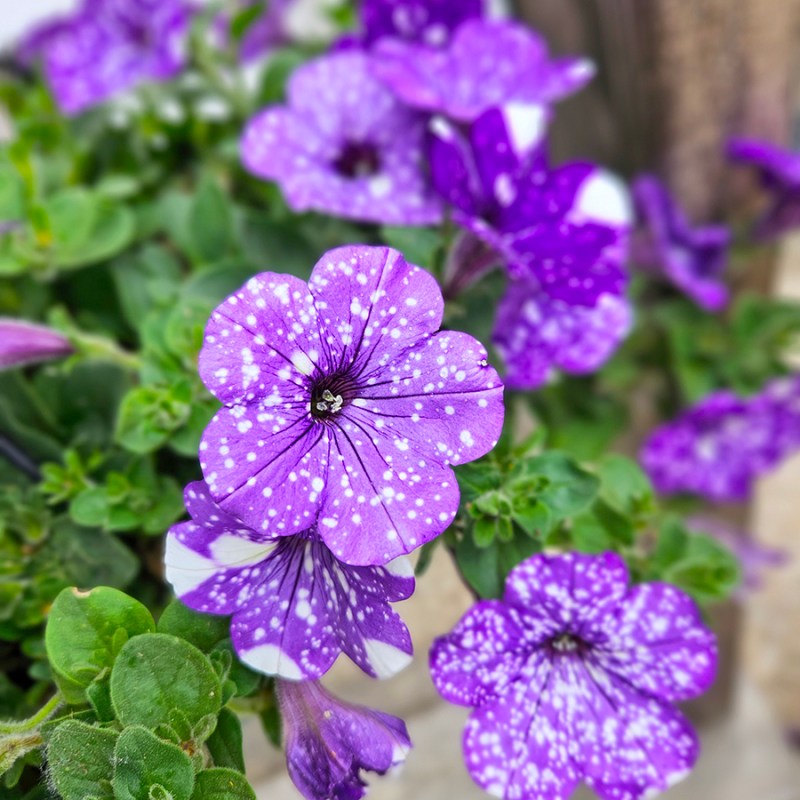
Petunia flowers come in loads of different colors, shades, and bloom styles. They are capable of producing bloom after bloom all growing season long and are perfect for beginners to seasoned flower growers alike.
Not only can they be planted directly in the ground, but petunias are also perfect for hanging baskets, pots, and containers. Basically, any vessel that has adequate drainage and access to full sunlight can support these vigorous blooming flowers.
But in order to keep them healthy and not withering in the hot summer sun, there are a few care tips to keep in mind. With just a few basic necessities, you will be able to enjoy their vibrant blooms from spring all the way until the first frost!
Types Of Petunias – Caring For Petunias
There are five main types of petunias based on how they grow and bloom. Not all of them will be easy to find in stores and garden centers, though.
The oldest type of petunia is grandiflora. Most of the grandiflora petunias grow in a mounding format of up to 12 to 15 inches tall, but a few do have a trailing habit. Although they have fewer single and double blooms, the blooms they do produce are up to 5 inches across. Unlike newer petunia hybrids, grandifloras tend not to be able to withstand harsh weather. In order to keep these flowers blooming, they require deadheading (more on this below).

The second type is multiflora petunias. You can find them with both single and double blooms that are smaller than grandiflora but grow in greater quantity. Blooms only grow to be around 2 inches across and are more compact. This allows them to be able to better withstand harsh weather. Multiflora petunias also require deadheading to keep producing blooms.
Floribundas are the third type of petunias available. They are a hybrid variety that is a mix of both grandifloras and multifloras. They feature large blooms like grandifloras but are more hardy and heavy-producing like multifloras.
Additional Varieties
The fourth type is Milliflora petunias. They are considered to be miniature, growing to only be around 8 inches tall and wide. They produce petite, 1 to 1-1/2 inch diameter blooms.
The last group of petunias is spreading or groundcover petunias. Just like the name sounds, this variety is low-growing and can spread to cover an area of up to four feet. They are low-maintenance and are heat and drought-tolerant. Two of the more popular varieties are “Wave petunias” and “Supertunias.” They are known for being fast-growing and don’t require deadheading.
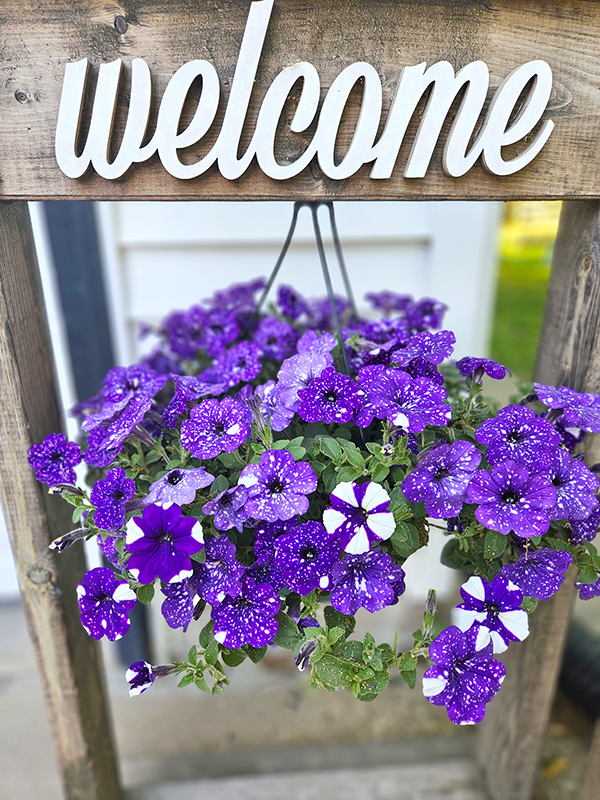
Planting, Growing, And Caring For Petunias
Seeds Or Transplants
Petunias are one of the most popular hanging basket or potted plants to purchase in late spring. However, you can also start them from seed as well. Going this route opens you up to more varieties that you otherwise might not be able to find as transplants in local garden centers or stores.
If starting the seeds indoors, sow them in loose, seed starting soil 10 weeks before your last frost date. They require light to germinate, so be sure to turn on your grow lights. Seeds should germinate in around one to two weeks. (You can read more about starting seeds indoors by checking out part one of my Seed Starting Series, “Starting Your Garden Seeds Indoors Series – Part 1: Sowing”.)
Most often though, people buy petunias by the individual seedling or pre-planted hanging baskets and pots. If you are purchasing transplants, look for plants that are compact with loads of tiny buds. If plants are already tall, leggy, and producing multiple blooms, you might struggle to keep them looking tidy and keep them flowering all season long.
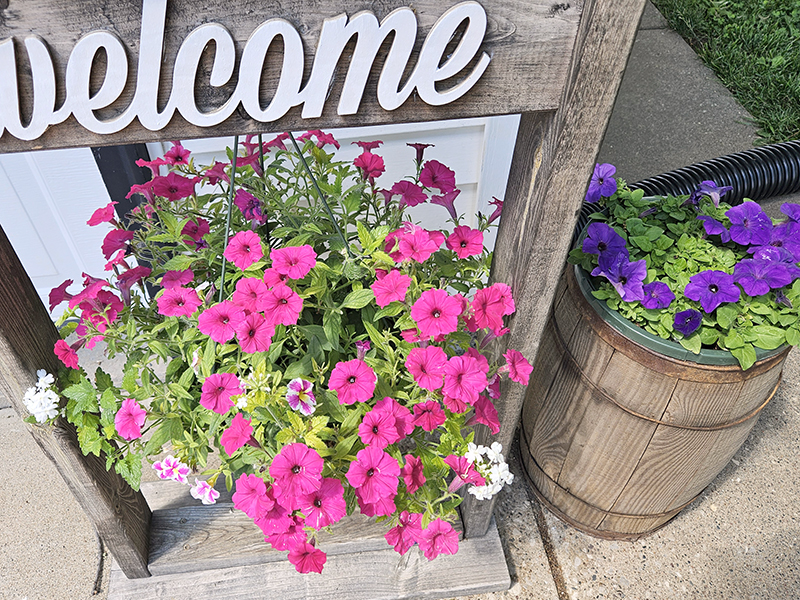
For in-ground planting, wait until the threat of frost has passed. Protect any young plants from any surprise, late-season cold weather (which is a common occurrence here in the Midwest!). Choose a location that has well-draining soil that doesn’t hold standing water after rain. Petunias will grow best in fertile soil, so amend the soil with finished compost before planting.
For pre-planted pots, hanging baskets, and containers, consider re-planting the flowers in fresh, new potting soil. Some of the potting soil that comes from stores isn’t the best quality and might affect how well the plants will flourish throughout the summer months.
Long-Term Care – Caring For Petunias
Keep your petunias in a location that receives full sun for at least 6 to 8 hours a day or more. Providing plants with too much shade will result in plants with few blooms and spindly growth.
Although petunias are supposed to be drought-tolerant, I have found that those growing in hanging baskets, pots, and containers need frequent watering in order to stay healthy and thriving. This is especially the case during the heat of summer, when I sometimes need to water my plants once or twice a day! Those growing in the ground can tolerate only watering once or twice a week.

When watering petunias, try to water them at the base of the plant. Avoid getting excess water in the tuba-shaped blooms. This can cause the blooms to fade much quicker. Also, water plants deeply as opposed to multiple shallow waterings. This will help to encourage the roots to grow deep into the soil.
As far as nutrients are concerned, petunias require a lot of resources to keep on producing blooms. Feed them a low dose of balanced fertilizer at least once a month. Both liquid fertilizers and granular fertilizers work well. Just be sure to read the package label for specific directions.
Pruning & Deadheading
As mentioned above, some petunia varieties can get by without deadheading. (Deadheading is the process of removing the spent or dying blooms.) However, doing so will help to keep plants looking tidy and full.
To deadhead spent blooms, don’t make the mistake I used to make! You can’t just pull the petals out of the bloom, even though they come loose so easily. Instead, you have to snip off the full flower head since this is where the seeds lie. (Otherwise, you aren’t really gaining anything by only removing the petals.)
A small pair of snips or pruners works well to accomplish this task. (And, it helps to keep your hands from being sticky!) These are the gardening snips I love – Product Link: Fiskars Micro-Tip Pruning Shears.
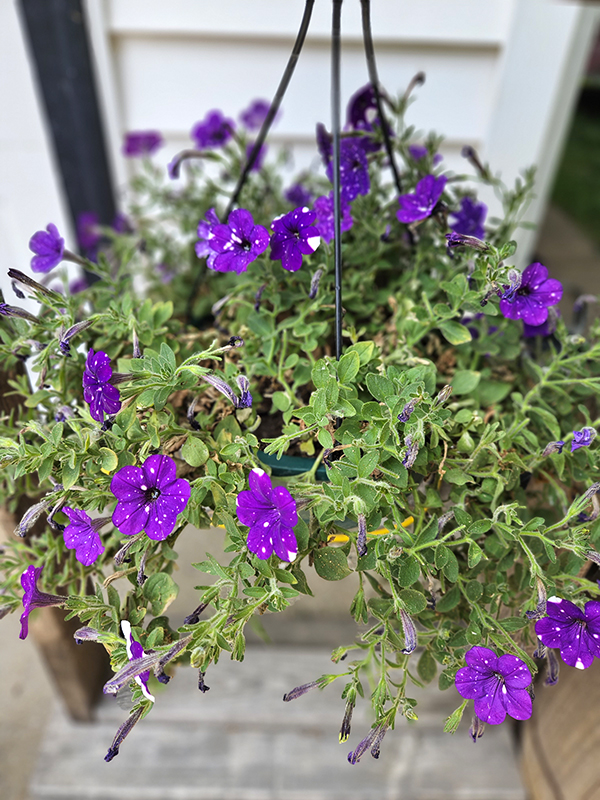
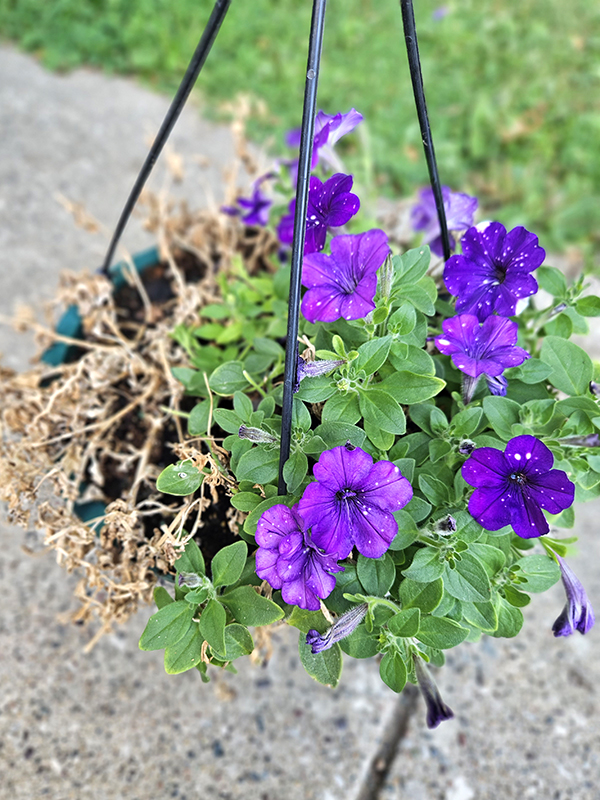
Toward the middle of summer, chances are your petunias will start to get leggy and a bit thin-looking. The best way to remedy this is to give them a bit of a haircut. In fact, petunias can take pretty heavy pruning.
Cut the leggy stems back about half their length. Most of the time, this will allow the stems to branch off, producing bushier plants with even more flowers and blooms. Yes, the plants might look a little worse for wear at first. However, most stems will bounce back with little to no issues at all. Just be sure to water and fertilize plants well after pruning.
Fall Care – Caring For Petunias
While petunias are considered “delicate” perennials in growing zones 9 to 11, most people treat them as annuals. Once the weather starts to cool down, the plants will start to slow way down on flower production. You can stop fertilizing plants at this point and focus on keeping the soil moist and flowers deadheaded.
If you have a night with freezing temperatures or a light frost forecasted, bring potted or container plants indoors for the night. For those planted in the ground, you can carefully cover them with a cloth or blanket. This can help prolong your growing season even further.
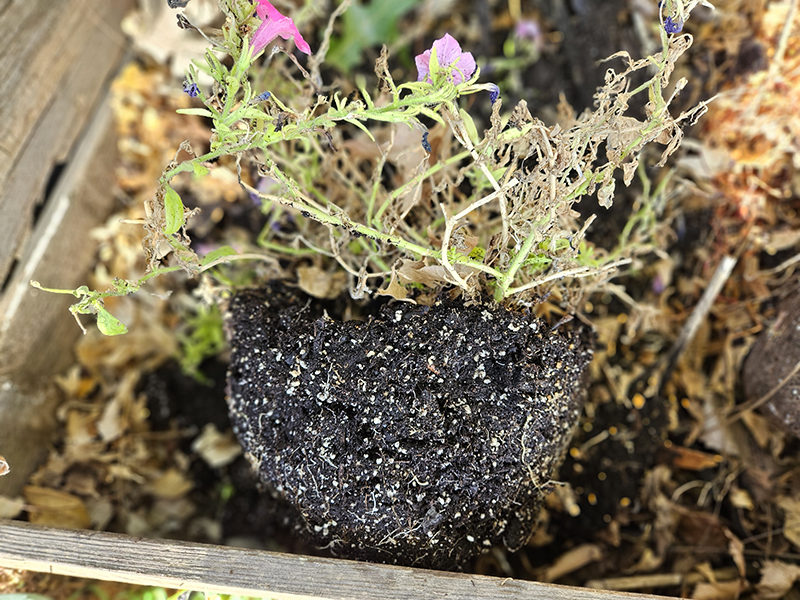
However, especially for those of us in the Midwest and North, the time will come for the plants to die back completely. When this happens, consider adding the potted plants to your home compost pile. Any remaining nutrients will get added to the compost, and the plant matter, as well as potting soil, will increase the organic matter in your pile.
By keeping these simple tips and suggestions in mind, you can enjoy caring for your petunias all growing season long!
Until next time, thanks for stopping by!
– Chelsea
*This post may contain affiliate links. These are products I have used personally and highly recommend. As an Amazon Associate, I may earn a small commission from qualifying purchases if you purchase items through my links. These links and the ads on this page help to support my family and our semi homestead, so Thank You!
Discover more from Semi Homestead Life
Subscribe to get the latest posts sent to your email.