
Looking for ways to prepare your chickens for winter before the temperatures drop? This article has you covered with how I winterize my chicken coop and run.
When you live in the Midwest like we do, it’s important to take a few steps to prepare your livestock for winter. For us, that means our flock of eight chickens.
Here in Illinois, the temperatures drop below freezing and stay there for a long period of time. We’ve even gone well below zero at times, which makes raising animals outside miserable – For you and for them!

There are a few things that we do to help our chickens prepare for winter. None of these steps are required since chickens can handle colder temps way better than hot summers. In fact, we specifically chose the chicken breed we did because they are cold hardy birds compared to other breeds.
However, I don’t have to stress when the temperatures drop low because we have these winterized tips in place. In addition, it makes my task of caring for the chickens much easier as well. I am not a huge fan of winter, so the less time I have to stay out in the freezing cold, the better!
Ways To Prepare Your Chickens For Winter
While there are ways to make sure your chicken coop is safe and prepared for all seasons, there are a few special steps you can take to get the coop and your chickens well-prepared for harsh winter weather. (See, “Chicken Coop Features For Healthy And Safe Birds“)
Heated Waterer
One of the best ways to help prepare your chickens and the coop for winter is to make or use a heated waterer. Animals of all types need fresh, clean water daily. Without it, their health as well as their livelihood will start to quickly suffer. It doesn’t matter if you are raising cattle or hogs or chickens, they all need a source of free-flowing water.
Well, if temperatures outside drop below 32º Fahrenheit (F), water freezes. Livestock simply cannot drink frozen water. Add the cold, howling winds of winter to the low temperatures, and you have yourself a major problem without human interference.

Frozen water requires you or someone in your family to go out to the water source and break up the ice chunks. Not only will your water quickly freeze overnight, but it will re-freeze during the day as well. That means you likely will have to make the trek to their water source and break up their water multiple times a day.
How To Use A Heated Waterer
Instead of having to walk out to the chicken coop multiple times a day, use a heated waterer. There are several different brands and kinds you can use, but the one we own is a Premier 1 waterer. (Product Link: Premier 1 Heated waterer)
I’ll admit that it’s not the cheapest compared to simple waterers, but we have had the same waterer for years. We’ve had such great success with it that it has quickly made up for the cost within the first year!
Not only does the water stay warm in the winter, but the insulated sides help to keep the water cool in the summer as well. So really it’s a year-round excellent source of fresh water. Also, it has a 3-gallon capacity which means we don’t have to refill the water every day for our little flock.
You can also purchase heat plates or other types of products that work with your existing waterer. However, we just purchased this one right from the beginning and have never looked back. There are also ways to create your own, but we decided to go this route instead.
The only downside to this setup is you do have to have a power source in your chicken run for the waterer to work.
Wrapping The Chicken Run In Plastic
Another step we take to help keep the chickens safe and warm each winter is to cover the run with thick plastic wrap. It may seem excessive and silly, but I know our chickens appreciate the extra effort on our part (due to the fact that they hardly go outside when there is snow on the ground!).
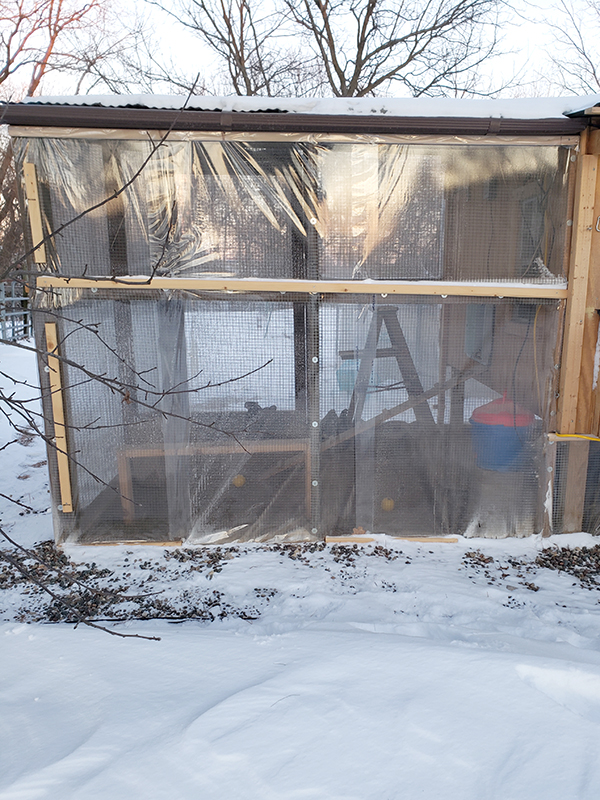
We use plastic that is formulated for -20º F and is ultraviolet stabilized. We have used the same roll for three years now, so the cost is minor when you break it down into multiple years. It is starting to tear in a few spots, but it’s nothing that little clear package tape won’t fix. (Product Link: Flex-o-glass plastic)
When the temperatures start to drop in late fall, we take a couple of hours and get the plastic warp up. We use thin wooden flashing strips to secure the plastic to the coop using screws. Don’t rely on staples since the plastic will likely rip under high winds.
I’m sure it doesn’t look perfect, but it definitely keeps the chickens warm and draft-free all winter long! It also provides them with a space to hang out where there isn’t snow or ice.
And, to be honest, it gives me a break from the cold wind as I go about doing the chicken chores!
You can purchase clear plastic like we do or you can save a little bit of money and get opaque plastic. Both work just fine, we just like the option of being able to see the chickens from inside the house.
Extra Entertainment For Chickens This Winter
Since the chickens are likely to be hanging out more inside the protected run, they can become bored. Bored chickens lead to pecking and even fighting chickens.
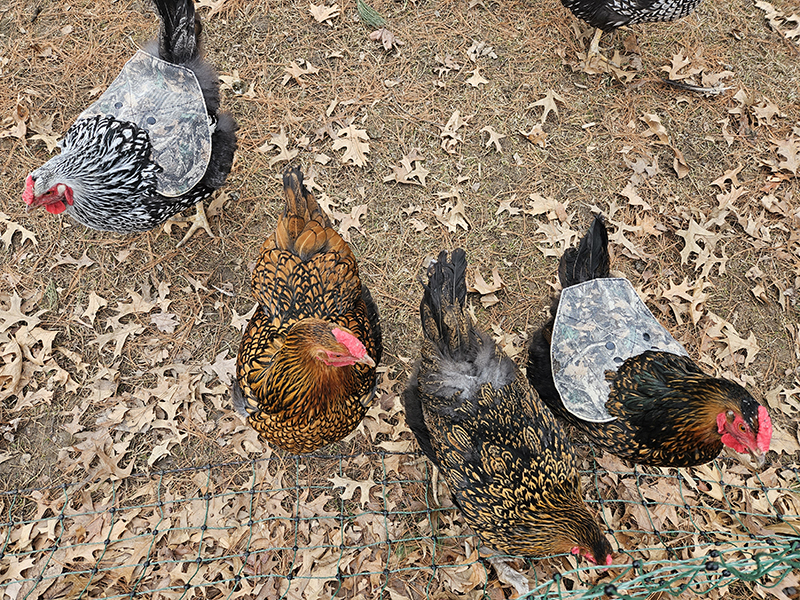
If chickens get bored, they can start pecking each other’s feathers. It’s a habit that is hard to break and can be passed to other chickens. This boredom typically increases in the wintertime.
My favorite way of combating boredom is by purchasing or making flock blocks. These blocks are cubes of hardened chicken treats. The chickens will spend a lot of their time pecking at the blocks and less time pecking each other.
We set the blocks out in our chicken coop for only a couple of hours each day. This way, the chickens have something to look forward to without giving them full access to treats 24/7. I keep my block in the chicken run and cover it with a plastic tote and a brick.
Another way to provide entertainment is to give the chickens alternative ways to eat their chicken feed. Place little containers around the coop for alternative places for the chickens to eat. Using small pet bowls that attach to wire cages is a great choice if you use hardware cloth around your chicken run.
You can even find little snack dispensers to help entertain your chickens in the winter. You fill the container with scratch, mealworms, or even their feed and the chickens have to work to move the ball around the run. As the ball rolls, it will release treats. (Here are the ones we use – Product Link: Lixit Chicken Feeder Toy)
Additional Tips & Tricks To Help Prepare Chicken Coops For Winter
In addition to the above, there are a few other ways to keep the girls comfortable in the winter.

First, we make sure that our batter-operated coop door is working correctly. This automatic door opens and closes at a specific time each morning and night. I know that the girls are tucked in nice and warm in their coop at night and that they can go into the run each morning without me having to get out of my warm bed.
We also have a flat panel heater that we hang in the coop near the roosting bars. This device only puts out radiant heat, so we don’t have to worry about overheating the chickens. It’s also much safer to use than heat lamps, which can be a bad fire hazard.
When it is really cold out, this heater helps to take the edge off. The chickens usually fight to be the ones to stand right in front of it at night. The best part is that you can use the heater with new chicks in the spring. (This is the one we have – Product Link: Cozy Safe Chicken Coop Heater)
If you implement these winterizing products and techniques, both you and your chickens will be able to enjoy the winter chill much better!
Until next time, thanks for stopping by!
– Chelsea
*This post may contain affiliate links. These are products I have used personally and highly recommend. As an Amazon Associate, I may earn a small commission from qualifying purchases if you purchase items through my links. These links and the ads on this page help to support my family and our semi homestead, so Thank You!
Discover more from Semi Homestead Life
Subscribe to get the latest posts sent to your email.