
There are a few things to keep in mind when you consider what breeds of chickens to get if you live in a location that experiences cold, frigid winters. If that sounds like your situation, you likely need to get cold hardy chickens or at least be prepared to give the feathered friends a helping hand when the temperatures drop.
Here in the Midwest (Illinois specifically), we experience winters well below 32º Fahrenheit (F). In fact, the months between November and March can be downright nasty in terms of weather. Frost, snow, ice, and debilitating winds can all create a winter wonderland and lots of red noses – and issues for our livestock!
Because of this, we have to keep our climate in mind when we pick out our chicks in the spring. Not all chicken breeds are as well-equipped to handle the cold weather as others.
This can be due to a variety of different reasons, like the size of their comb or even how many feathers they grow. So, having chickens that can withstand the cold not only helps to ensure the birds survive, but also helps them thrive in their environment.
Even if you purchase chicken breeds that prefer the heat, there are still some steps you can take to help them withstand winter weather. The tips I share below will help ALL your chickens feel toasty, warm, and safe this winter season!
Cold Hardy Chickens And How To Help Those Who Aren’t
What To Watch For In Chicken Breeds
Frostbite
There are some key characteristics that you should look for when choosing cold hardy chicken breeds. The first one is preventing frostbite in their combs and waddles. Frostbite can occur any time the temperatures drop below 32º F, which happens a lot here in the Midwest and North!

Frostbite is one of the most common issues with raising chickens in the wintertime. This is especially the case for those with larger waddles and combs. (Chickens can also get frostbite on their feet. However, their foot shape doesn’t really vary a ton across breeds.)
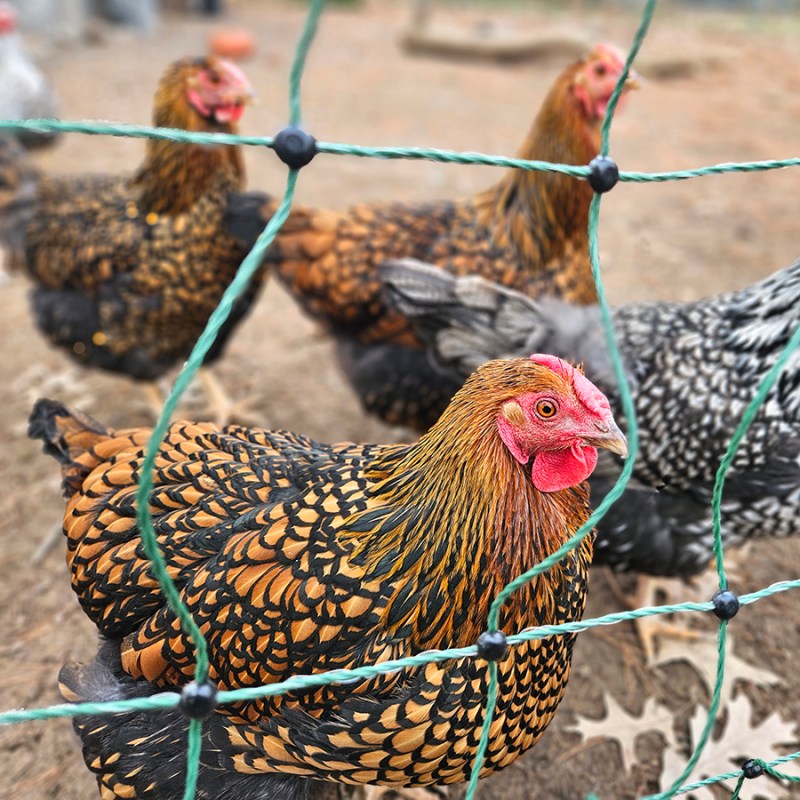
There are many different styles of chicken combs, including single comb, walnut, pea, rose, cushion, buttercup, strawberry, and v-shaped. The smaller and more compact the comb, the less likely they are to suffer from frostbite.
The worst type of comb for winter chickens is the single comb. It stands up tall on their heads and has distinct points. It’s common for these points to get frostbite. The best combs are cushion, pea, rose, strawberry, and walnut. Ameraucanas, Brahmas, Dominiques, Easter Eggers, Olive Eggers, and Wyandottes are all excellent breeds thanks to their smaller combs and waddles.
Fat & Feathers – Cold Hardy Chickens
When it comes to chickens, the fatter and more feathered, the better in terms of staying healthy during the wintertime. Now that doesn’t mean to feed the chickens loads of unhealthy table scraps to “fatten them up.” It just means that some breeds tend to be a bit on the beefier side than others. This added fat and muscle helps to protect them from the cold.

Some larger breeds that are well adapted to handling the cold, even despite maybe having a single comb. This includes Australorps, Barred Rocks, Cochins, Delawares, Orpingtons, Rhode Island Reds, and Speckled Sussex.
In terms of feathers, think of their feathers like a coat. A thick coat of feathers allows the chicken to retain its body heat much better than a light layer of feathers. In addition, these feathers help to keep wind and cold snow off their skin, further protecting them.
Anconas, Leghorns, and many Bantams are smaller breeds with fewer feathers. They tend to fare better in warmer climates. However, they can still exist in the winter in the Northern locations. Making certain adaptations to the coop and run will give them the best chance at staying healthy.
Adaptions To Your Chicken Yard For Non Cold Hardy Chickens
Prevent Drafts
Chickens need to have a protected space where they can go to get out of the snow and cold. This can be a barn, a large coop, or even a covered run (which is what we have).
Within this protected space, you need to make it draft-free during the wintertime. This is especially important for the coop where the chickens sleep at night. Make sure any windows are closed or covered. Patch up any holes or cracks where cold air and as well as pests could enter. It’s not just your chickens that want a warm place to stay at night!
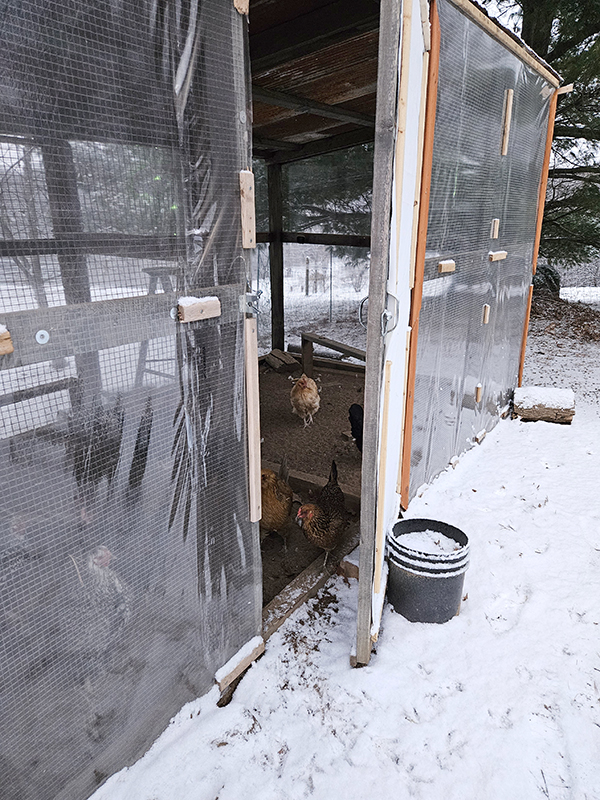
Since we have a smaller coop that the girls only use during the night and to lay eggs, we have to make their covered run draft-free. We do this by putting up plastic or tarps. This plastic helps stop the wind, rain, ice, and snow from getting into the chicken run. (Not only does it keep the chickens dry and warm, but it keeps me dry and warm doing winter chores, too!)
We use faring strips and screws to secure the plastic to the sides of the run. When the weather warms up again during the spring, we remove it. There is a bit of upfront cost to it, but it’s worth it in my opinion. (Here’s the plastic we use. It is a bit expensive, but it withstands our Illinois sub-zero temperatures as well as our super harsh winds. Product Link – Warp Bros Flex-O-Glass)
Provide Ventilation
Now that the girls have a protected, draft-free space, you have to watch out for a buildup of humidity and ammonia. This is especially the case if you use the deep litter method. As the droppings build up over time, ammonia also builds up. This can cause respiratory diseases and other issues.
In addition, a buildup of droppings can also increase the humidity inside an enclosed coop and run. The chickens breathing in and out at night also causes a rise in humidity.
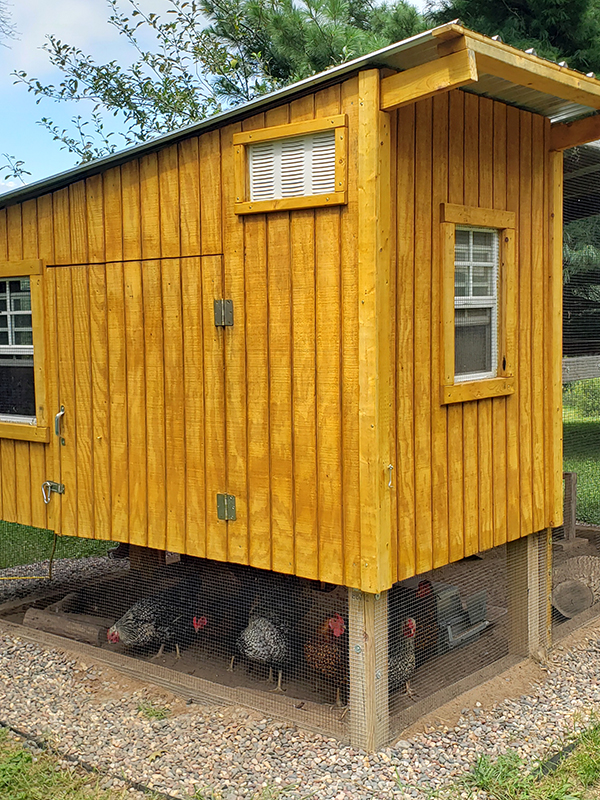
To prevent frostbite due to the excess moisture, make sure that there is some sort of ventilation in the coop and covered run. We have a couple of vents at the top of our coop. We also have about a one-inch gap around the roof.
The covered run is also not 100% airtight. That way, excess moisture can escape. All of the vents and openings are above the chickens’ heads. This prevents drafts from chilling the girls.
Keep Bedding Clean – Cold Hardy Chickens
There are several different materials to use as chicken litter. While some might call this “bedding”, chickens don’t actually bed down and sleep in it. That’s why I call it litter since that’s pretty much its purpose – to catch the chicken droppings.
If you are using the deep litter method, make sure the ammonia and humidity levels don’t get too high. If you almost get knocked over due to the scent when you go to do chicken chores, it might be time to clean it out and replace it with new.
We use sand in our coop and run as litter. It’s easy to maintain, and I can keep it clean in under 10 minutes with little work using a kitty litter scoop. No worry about ammonia, and no worry about moisture buildup. (It also helps to regulate temperature in our run and coop better than some other litter options.)
Provide Fresh Water Daily
Chickens require fresh water daily. During the winter, you must prevent the water from freezing. If that’s not possible, you need to make sure to go out and change the water at least once or twice a day.

If your schedule doesn’t allow that, you might need to invest in an electric insulated waterer. We have had the same one for multiple years, and it has saved me so many trips out to the coop. (Here is the waterer we have. It is a bit of an investment, but it has more than paid for itself year after year. Product Link: Premier 1 All-Season Heated Poultry Waterer)
There are homemade ways to heat water. However, always be careful to avoid fire hazards. On the topic of humidity again, check for leaks or drips and fix any that arise. You don’t want the waterer to contribute to the rise of the humidity levels.
Eggs Or No Eggs
During the winter, don’t be surprised if your hens stop laying eggs. This is especially the case for those who are a couple of years old.
In order to lay eggs, hens need daylight hours of at least 14 hours. As the daylight hours reduce, so does the egg laying. Most hens will stop altogether and not start again until the daylight hours increase. (This is normally around February for us.)
We usually allow our hens the winter off. I figure that they spend all spring through fall providing our family with fresh eggs, so the least I can do is give them a winter break. If you want, provide the hens with artificial light to mimic the sunlight. This can keep them laying eggs all throughout the winter.
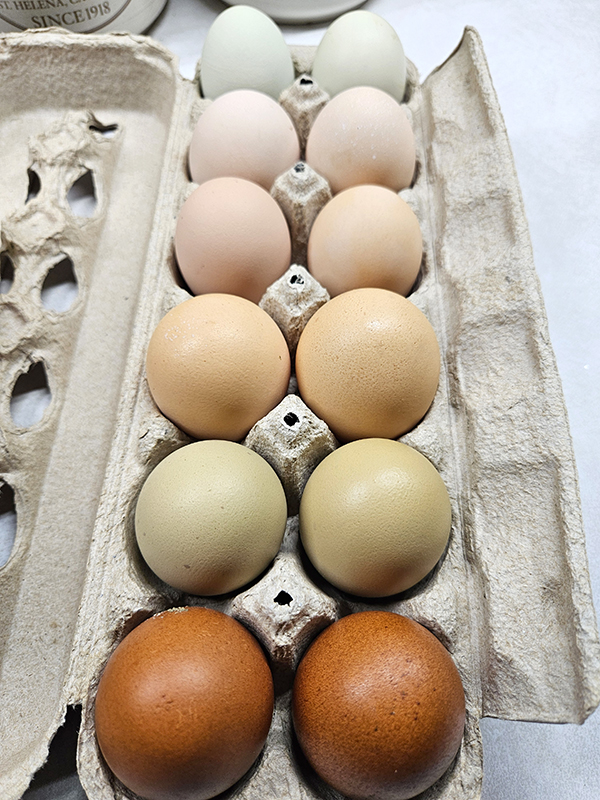
If you are lucky enough to get eggs in the winter, gather them often. Eggs will freeze if left outside for too long. If eggs are frozen and/or cracked, discard them.
Otherwise, place the eggs in the fridge after collecting. As cold eggs warm up, they can sweat and cause condensation on the sides of the shell. They then need to be refrigerated.
Other Tips
During the winter, chickens can get bored if they are “cooped up” all day long. Provide them with some sort of enrichment activities if you start to notice pecking or other behavioral issues.
Give them treats strung up from the rafters. Place multiple small feeders throughout the enclosed space to allow all the birds access to food. Switch to crumble feed instead of pellets to keep the chickens pecking at the food instead of each other.
If you want to supplement heat, use radiant heaters as opposed to heat lamps. I know that livestock raisers have used heat lamps for years, but the risk of fire doesn’t make it worth it.

Also, provide them with plenty of different places to sit and roost during the day. We have an assortment of ladders and handmade roosts for them to sit on at different levels in the enclosed run. This helps to make the most of the space you have.
Hopefully, by following these tips, you can keep your chickens warm, safe, and healthy all winter long!
Until next time, thanks for stopping by!
– Chelsea
*This post may contain affiliate links. These are products I have used personally and highly recommend. As an Amazon Associate, I may earn a small commission from qualifying purchases if you purchase items through my links. These links and the ads on this page help to support my family and our semi homestead, so Thank You!
Discover more from Semi Homestead Life
Subscribe to get the latest posts sent to your email.