
Looking for tips and tricks on defeating the dreaded squash vine borers? Not only can you take simple steps to prevent them from infesting your plants in the first place, but you can also try to get rid of the problem after they’ve already made your plants their home!
If you have ever grown summer squash, winter squash, or pumpkins, then chances are you’ve encountered squash vine borers. Even if you didn’t realize it at the time, most gardeners have had to deal with these horrible little creatures at one time or another.
The wasp-like adult moths arrive in late spring, landing on your young seedlings while discreetly laying their eggs at the base of your plants. The next thing you know, your once thriving and producing squash plant has started to look less than ideal – often in the span of just a day or two.
Before you know it, you are left with nothing more than a withering mass of dead leaves and stems. If that sounds familiar, you’ve likely become a victim of squash vine borers! These little buggers are infamous for killing zucchini plants from the inside out.
Thankfully, there are a few steps you can take to help prevent the adults from laying eggs in the first place as well as a little trick you can try as soon as you notice damage later on in the season!
Their Lifecycle
Before we talk about the steps to prevent and eliminate squash vine borers, it’s good to know the lifecycle of these pests.
Adult squash vine borers emerge from the ground typically during early to mid-summer. During this time, they fly around and lay tiny flat brown eggs at the base of host plants.

The adults don’t look or act like your typical moth. They act a lot more like wasps, flying around during the daytime hours. They have about 1/2-inch long bodies that are black with reddish-orange abdomen, legs, and head.
Plants like zucchini, pumpkins, and other gourds are most often the targets. (For some reason, they avoid butternut squash.) Since they lay their eggs singularly, they are not as easy to spot as other pest eggs like squash bugs that are laid in clusters.
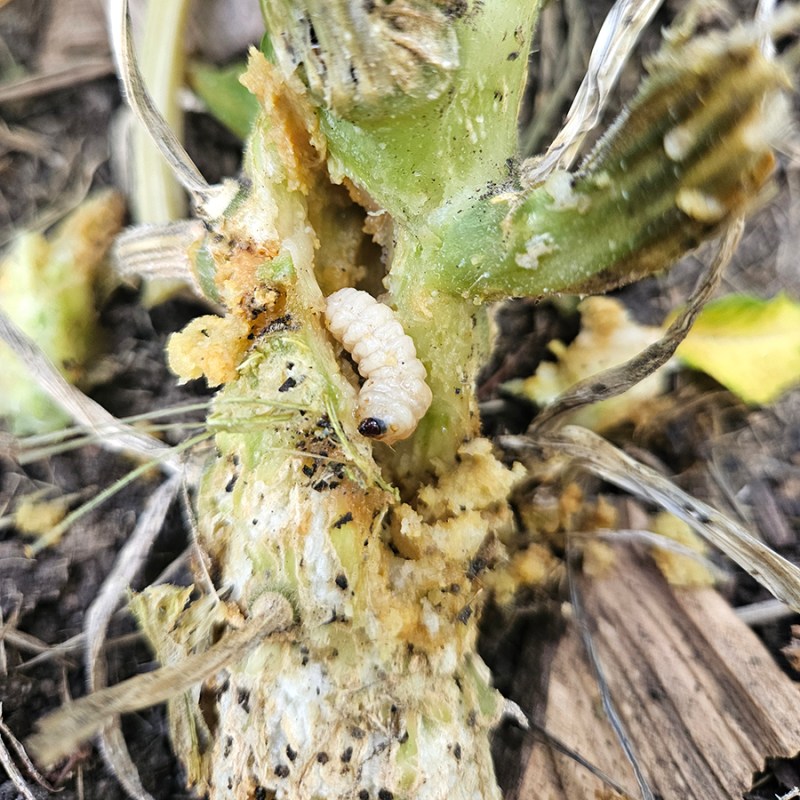
After about a week, the egg hatches and a larva emerges. It has a creamy white body with a brown head and resembles a maggot. They can grow to be about an inch long.
Once it emerges from the egg, the larva burrows down into the center of the host plant’s stem. There it will feed for about four weeks until it leaves the stem, burrows down a few inches into the soil, and turns into a pupa. There it overwinters until the following summer and the cycle starts all over again.
Identifying Squash Vine Borer Damage – Defeating Squash Vine Borers
The first sign of squash vine borer damage is wilted plants. If nothing is done to eliminate the squash vine borers, the plants will rot from the inside out and die altogether.

Unfortunately, there are a lot of things that can cause plants to wilt – excess heat, lack of water, etc. If you notice that your plants are starting to look a little droopy, especially in the early morning, take a look at the base of the plant. Even though squash vine borers feed on the inside of the stem, you can still see signs of their presence.
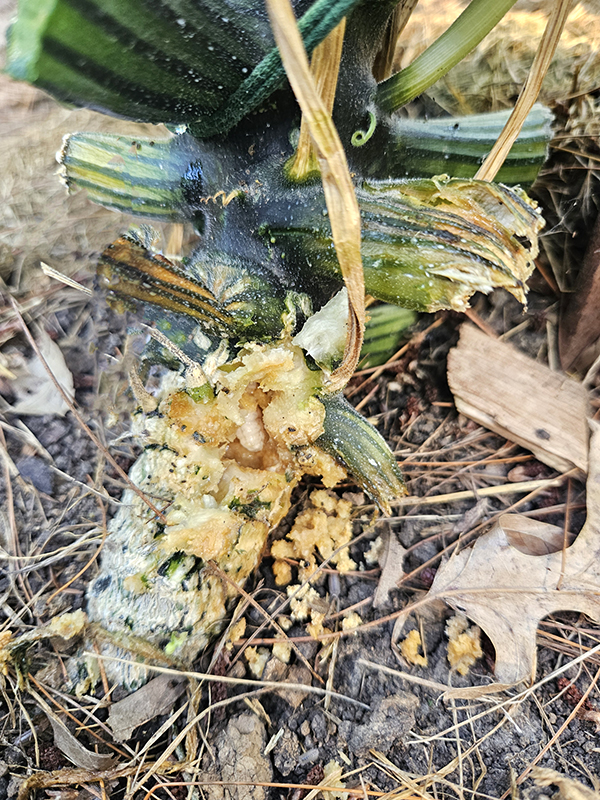
Often, you can see tiny holes at the base of the stem where it enters the plant. You might also see little pieces of soft plant matter and poop called “frass” around the base of the stem. If you touch the base of the stem, it might also be mushy and rotten in places.
These are all signs that squash vine borers are inside the stem of the plant. And yes, unfortunately, more than one squash vine borer might be feasting away.
Tips On Defeating Squash Vine Borers
Now that you know about the squash vine borers’ lifecycle and what to look for in terms of damage, what can you do to prevent and eliminate them?
Prevent: Crop Rotation & Planting Timing
First, make sure you practice crop rotation. Do not plant squash in the same location that you did the previous year. Not only can repeated plantings deplete the nutrients in the soil, but it’s especially important if you had issues with squash vine borers last growing season since the pupa overwinter in the soil. Try to avoid replanting crops in the same place for 3 to 4 years if you can avoid it.
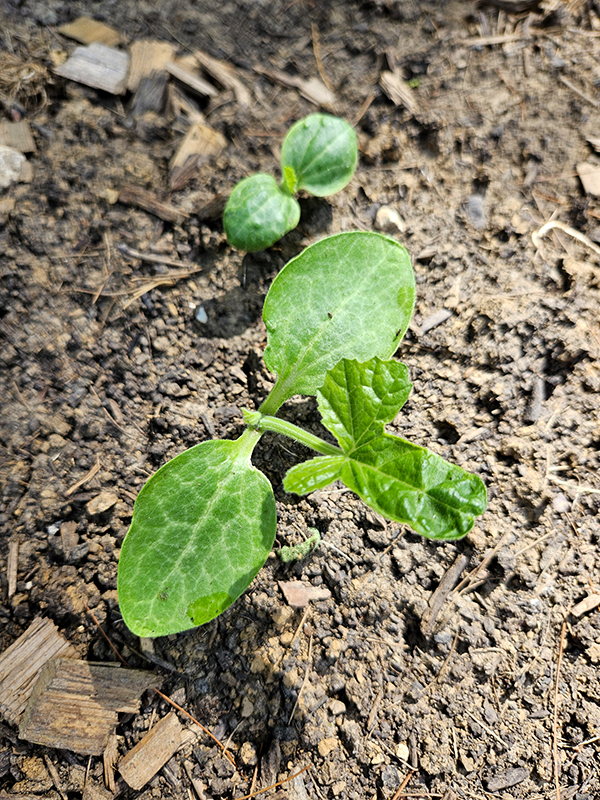
Next, you can delay planting. If you wait to plant your zucchini and other squash plants until early July, most of the adult vine borers will be long gone by then. No adults laying their eggs equals no squash vine borer larva killing your plants!
It’s definitely a method that might not be as appealing for some folks who have shorter growing seasons. However, I have more than once successfully done a second planting of zucchini and had great harvests from healthy plants before the first frost zapped them.
Prevent: Using Row Covers – Defeating Squash Vine Borers
Another option is to use row covers. Adding a light protective cover to your young squash plants during the month of June can help prevent adult moths from laying their eggs at the base of your plants. You can find row coverings at most garden centers or online retailers.
Just be sure to remove the covers once your plants start to put out blooms. Otherwise, pollinators will not be able to find their way to your plants.
Also, note that you shouldn’t use row covers if you planted squash in the same location the previous year. Since the pupa overwinters in the soil, adding row covers will only trap the adult moths inside with your plants – the total opposite of what you want!
Prevent: Tips With Mixed Results
Another option that has mixed results is wrapping the base of your zucchini plants with aluminum foil or florist tape. It is not a method I have personally tried but you do hear of success stories with it at times.

Don’t wrap the material too tightly because the plant will need to be able to grow and expand but tight enough to keep bugs out. Cover the entire base of the stem as well as about an inch below the surface of the soil. Every couple of weeks, the foil or wrapping will need to be replaced.
Lastly, a method you sometimes see on the internet that I have tried but doesn’t work is growing the squash plants vertically. I have grown zucchini up t-posts as well as let them grow along the soil and both have become infested with squash vine borers. (However, it does help save space in your garden!)
Eliminate: Removing The Larvae – Defeating Squash Vine Borers
Despite planting late or using row covers, you still might encounter squash vine borer damage. If you catch the issue early enough, you might be able to save your plants and your harvest. I have personally done this several times and still had a successful zucchini harvest.
First, make sure you are walking your garden frequently so you can quickly catch any issues or changes. Once you identify that one or some of your squash plants is showing signs of wilt or you see the sawdust-like frass, it’s time to take action. The quicker you find and eliminate the vine borers, the sooner the plants can heal and get back to producing.
The goal is to cut out and remove the larvae from each plant. Yes, it is somewhat tedious and a bit time-consuming, especially if you have several affected plants. Yes, there is a chance you can kill your plant. However, if done carefully and thoroughly, your plant will rebound and be just fine.
The only thing you need is a sharp knife, snips, or scissors and a place to dispose of the larvae (that’s where our chickens come into play). (Product Link: Fiskars Micro-Tip Rose Pruning Shears)
Cutting Out The Larvae
Start by slowly making an incision in the damaged stem. Go into the softest part of the stem and cut either upward or down about an inch at a time. The goal is to make a small enough hole to be able to locate and remove any larva without damaging too much of the stem.
Don’t be surprised if there is more than one larvae in a single stem. In fact, I have found six in one poor plant (the plant did bounce back just fine after I removed all of them).
Take your time and keep making the hole a bit longer as needed until you reach solid stem. Then go in the other direction until you once again find solid step and no signs of larvae.
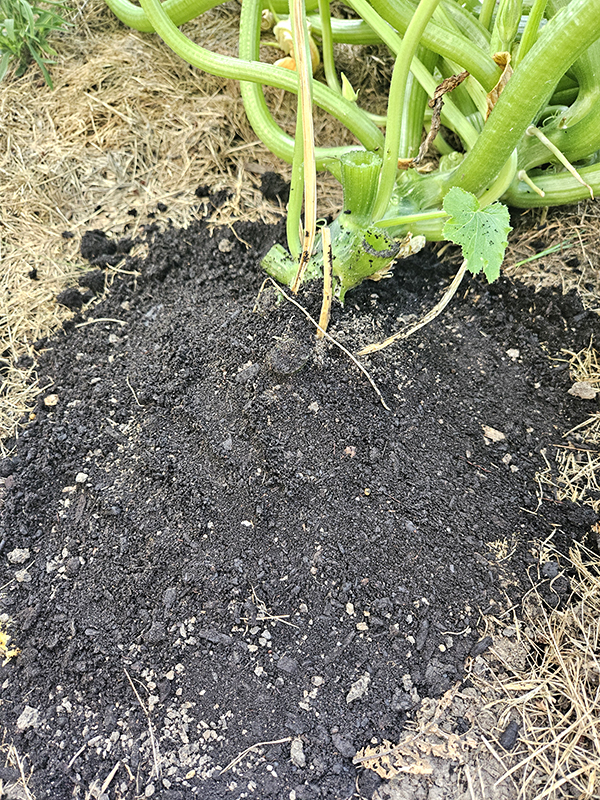
Now you need to cover up the damage. Use a mixture of moist soil and compost and bury the part of the stem you just cut up. This will help it heal and prevent any diseases or other pests from finding the damage.
When All Else Fails – Defeating Squash Vine Borers
If cutting out the vine borers does not help and your plant ends up dying anyway, remove the plant matter as soon as possible. Do not add it to your home compost pile. This will help prevent the next generation of vine borers from sticking around and overwintering in the soil.
Don’t give up on growing zucchini or other squash just because of the squash vine borer. Try these tips and hopefully you can have a pest-free growing season this year!
Until next time, thanks for stopping by!
– Chelsea
*This post may contain affiliate links. These are products I have used personally and highly recommend. As an Amazon Associate, I may earn a small commission from qualifying purchases if you purchase items through my links. These links and the ads on this page help to support my family and our semi homestead, so Thank You!
Discover more from Semi Homestead Life
Subscribe to get the latest posts sent to your email.