
If you are a backyard chicken keeper and are looking toward the late fall and winter months with dread due to a lack of egg production, then you should try to water glass your eggs! This old-fashioned technique is a simple way to preserve eggs to keep them shelf stable for months at a time.
As the daylight hours start to get shorter during the fall months, most chickens start to go through a molt. This occurs every year, although some chickens molt at different times. Molting is a natural process where the old feathers fall out and new ones replace them.
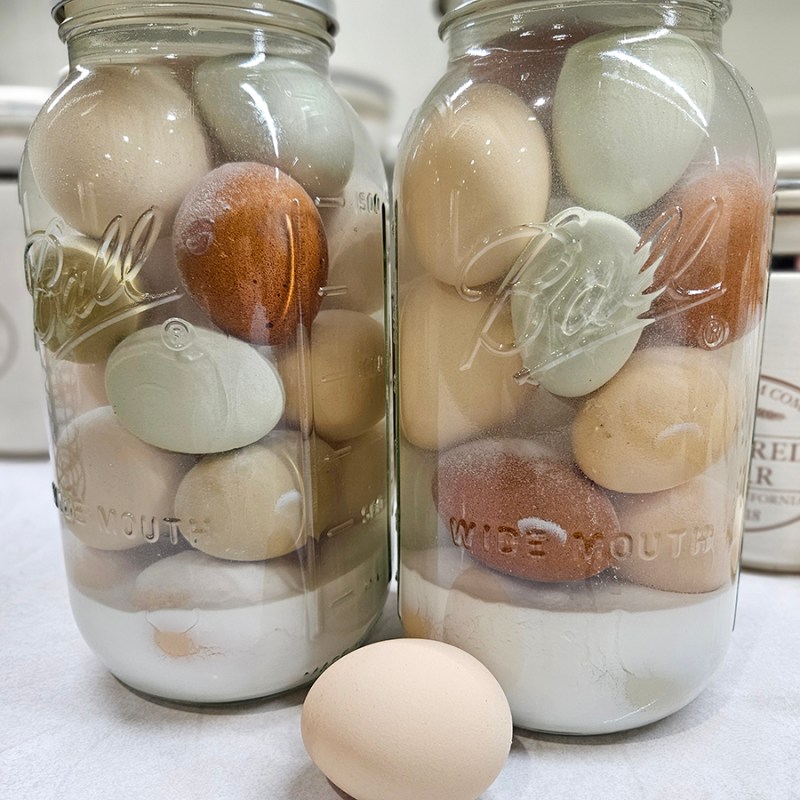
Because it takes a lot of protein and energy to produce new feathers, most chickens will put a halt on laying eggs during this time. Unfortunately, if you live in a location where daylight hours are short, then your chickens may not lay eggs again until at least February or later.
There are actually several different ways of ensuring you have eggs over the winter months. To begin with, most eggs are safe unwashed and refrigerated for about four months. You can also freeze or dehydrate eggs. So if you plan accordingly, you can easily have eggs throughout all of winter.
But egg glassing can be a fun way to try your hand at an old-fashioned technique. It’s quick, simple to do, and requires no refrigeration or freezing.
Please Note
I will say that there are some controversies about water glassing eggs on whether or not it is safe. You need to do what you feel is right for your family.
It is not an USDA-approved technique, if that is important to you. (Neither is storing your fresh, unwashed eggs on the counter either.) If you still want to give this technique a try, here are the simple steps on how to do it!
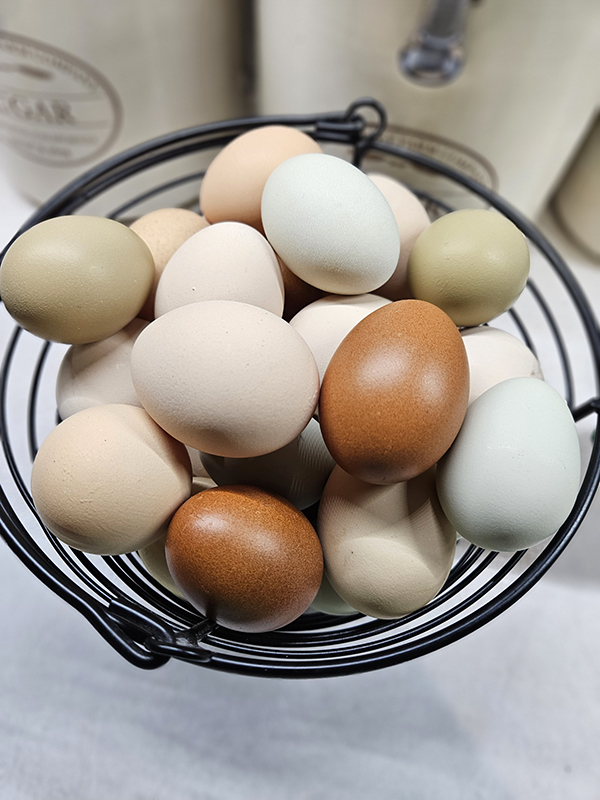
What Is Water Glassing?
Water glassing has been around since the early 1900s (some references state the 1800s). It is likely a method that your grandparents used if they grew up on a farm or homestead. Basically, water glassing is the process of submerging fresh, newly laid clean and unwashed eggs in food-grade pickling lime and water.
The lime helps to seal off the shells and allows them to be preserved for up to a year – if not longer. The result is an egg that tastes and acts almost exactly like eggs that were recently laid.
When using water glassed eggs, the yolk can be a bit runnier and the whites can be a little cloudy. The eggs are great for scrambling or using in baked recipes. Some people say that the flavor is a bit richer, but this can vary from person to person.
(Need help with ensuring your eggs stay clean and not covered in poop or straw? Then check out my article on “4 Must-Have Products For Raising Chickens For Busy Families” which includes what I use for nesting materials in my boxes.)
How to Water Glass Eggs
*Scroll down to the bottom of this post to see the full recipe, including exact measurements and amounts. You can also print out the instructions. I go into a bit more detail about the recipe here first, just in case you need it.
Ingredients
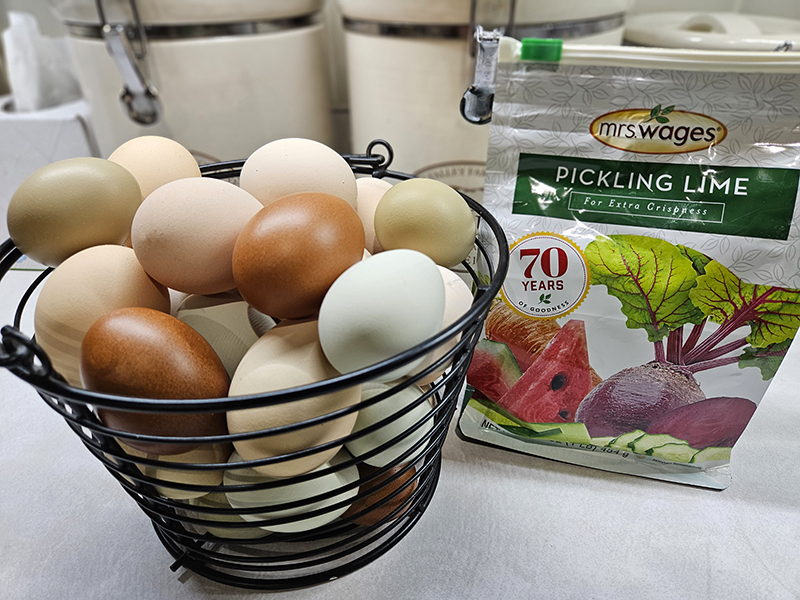
There are only three simple ingredients needed in order to water glass farm fresh eggs. However, each one has a few key points that are important to keeping this process safe.
Pickling Lime – It’s very important that you use food-grade pickling lime and not garden lime. These are two completely different products! You can usually find pickling lime in the canning section or on Amazon. (Product Link: Mrs. Wages Pickling Lime)
Water – This might seem like a simple ingredient, but you want to make sure you use filtered or distilled water for the safest results. You want to avoid using city tap water that has fluoride and/or chlorine added.
Eggs – This ingredient has a few more “rules” involved. First, use unwashed, recently laid eggs. You do not want to water glass store-bought eggs or eggs that have been stored in a refrigerator. In addition, the eggs need to be clean and have no signs of dirt or poop at all. You also don’t want any cracks or blemishes in the eggs. Basically, you only want to water glass the best of the best eggs!
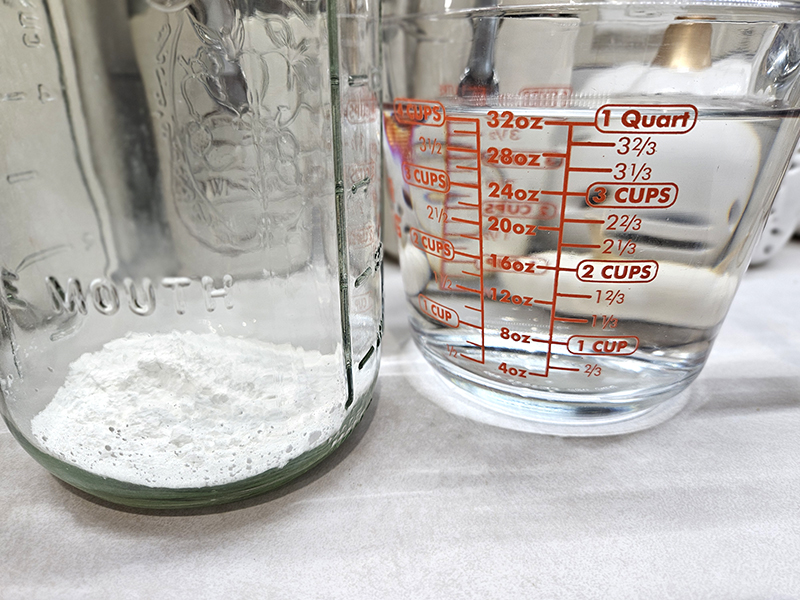
Besides those three ingredients, you need a food-grade container with an airtight lid. I like to use a half-gallon glass canning jar. Any food-grade container with a lid will work well for this. The recipe below is geared toward using half-gallon containers but can be scaled accordingly. (Product Link: Ball Half-Gallon Glass Canning Jars)
I also used a pair of long kitchen tongs to gently set the eggs into each jar without worrying about cracking them. Lastly, you need an inexpensive kitchen scale to weigh the lime before adding and a measuring cup. (Product Link: Kitchen Tongs 2-Pack)
Instructions To Water Glass Eggs
These instructions are based on using a half-gallon container. You will need to increase the measurements as needed depending on how many eggs you are water glassing and how large your container is. The key is to make sure your eggs are completely covered in the lime and water solution. The ratio will always be 1 ounce of pickling lime for every quart of filtered water.
First, measure out 1 ounce of lime and place it into your jar or container. I used a canning funnel to make this process a bit easier and less messy. Try not to breathe in the powdery substance while pouring.

Next, add one quart of filtered water. This should reach about halfway up your jar if using the same container as I did. Whisk this solution well. The lime will not get completely dissolved like salt or sugar would. In fact, the lime will eventually settle to the bottom of the jar – this is to be expected.
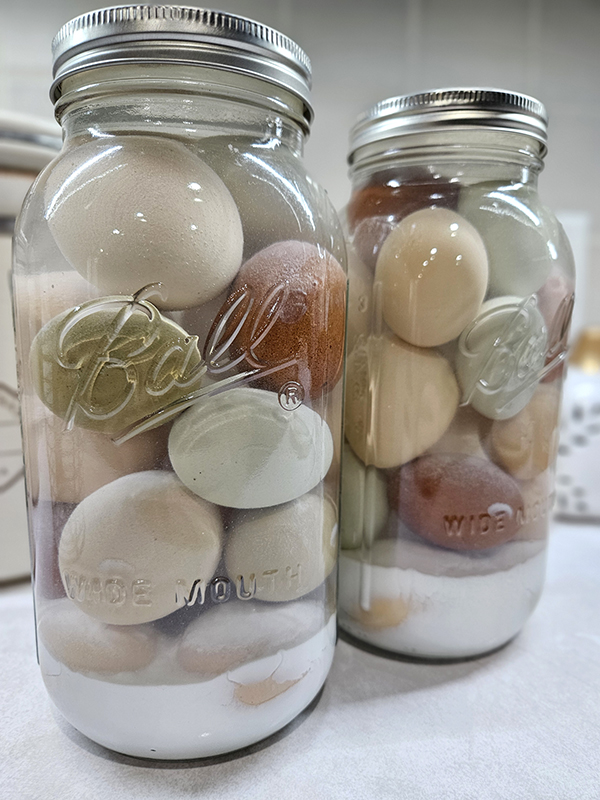
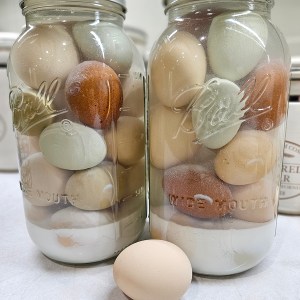
Carefully add your eggs one at a time into the jar with the pointy end down. This isn’t always possible and the eggs don’t always cooperate. Just do the best you can to have most of them pointy end down. You should be able to get about 18-20 eggs in each half-gallon jar. (I had a few more because some of our new layers still have smaller eggs.)
Storing The Water Glassed Eggs And Using Them
Add your lid, label the jar with the date, and store the water glassed eggs in a dark, cool location. The jars should be good for up to a year but some people have had success for even longer. Ours will only be stored for a few months.
Check on the eggs often. If there are any that crack or look off, discard the batch. That’s part of the reason why I like using smaller batches. (Again, there is some discrepancy on only needing to remove the one bad egg and then just putting the other eggs in a new solution of water and lime. However, I’d rather be safe than sorry. You do you, as always!)
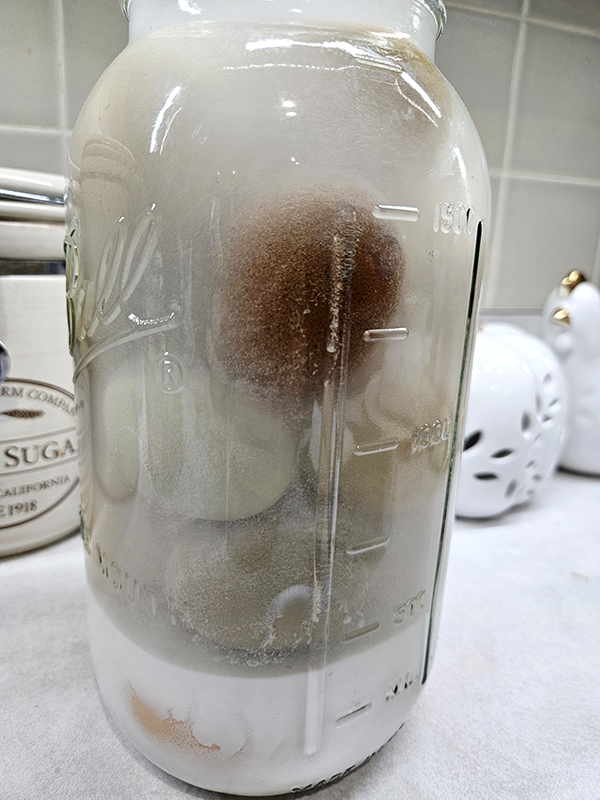
When you go to use the eggs, wash them off fully first. Refrigerate any that you don’t end up using after washing. Before adding them to your recipe, crack each one into a separate bowl. If any look off or have a strong odor, discard them immediately and do not consume.
You don’t have to use all of the eggs at the same time. Just ensure that the eggs left in the jar stay fully submerged with the lime solution. Keep the jar closed between use.
Until next time, thanks for stopping by!
– Chelsea
*This post may contain affiliate links. These are products I have used personally and highly recommend. As an Amazon Associate, I may earn a small commission from qualifying purchases if you purchase items through my links. These links and the ads on this page help to support my family and our semi homestead, so Thank You!
Water Glassing Eggs
Ingredients
- 1 ounce pickling lime
- 1 quart filtered or distilled water
- 18-20 fresh, clean room temperature eggs with the bloom intact
Instructions
- Place 1 ounce of pickling lime into a food-safe half-gallon jar. Add one quart of filtered water and mix with a whisk. The lime will not get fully dissolved like salt or sugar would. Don't be surprised if the lime sinks to the bottom of the jar – that's ok.
- Carefully add your eggs one at a time. Aim to have the pointy end down if possible. Ensure that all of the eggs are completely covered with the lime solution.
- Add a lid and label with the date. Store the container in a dark, cool location. Check it often for any eggs that look off or are cracked. Remove and discard immediately if you see any. (See my notes in the text about what to do with the rest of the eggs.)
- Before using the eggs, wash each one fully. Crack them into a separate bowl and check for any offputting smell or odd appearance. The yolks will be runnier than fresh eggs and the egg whites might be a little cloudy. Water glassed eggs are best for use in scrambled eggs or for baking.
Notes
Discover more from Semi Homestead Life
Subscribe to get the latest posts sent to your email.