
The early spring months are a great time of the year for planting fruit trees and adding long-living, heavy-producing crops to your property!
While we have planted fruit trees in the fall, the spring is also a great time to get these trees into the ground. As soon as the soil can be worked in early spring, you can get bare-root trees or potted fruit trees in the ground and on their way to becoming established.
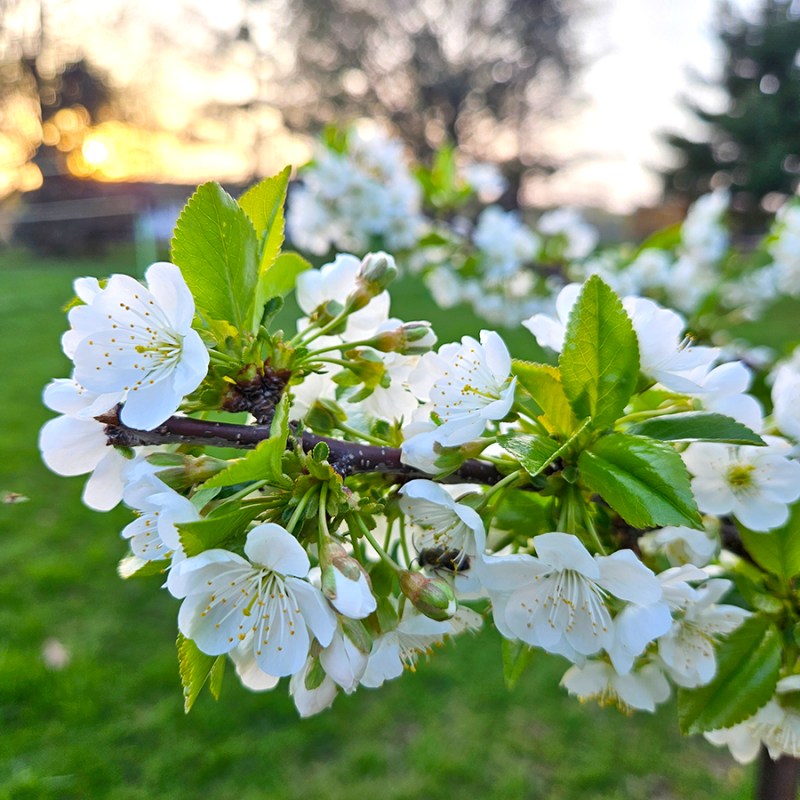
This allows the fruit trees to start to grow and adapt to your soil and location long before the stress and heat of summer arrives. Planting in the spring also allows you to not worry about unplanned freezes and harsh early winter weather that you can sometimes get with a fall planting.
The actual act of planting fruit trees in the spring isn’t difficult aside from a bit of planning and heavy digging. However, there are some vital things you need to keep in mind, especially during that first year so you can enjoy healthy and productive fruit trees for years to come.
Planting Fruit Trees In The Spring – Tips & Tricks
Choosing The Right Tree
There are several things to keep in mind when it comes to choosing the right type of fruit tree for your property. First, there’s making sure that the tree can handle your climate and temperatures.
Local nurseries should only carry varieties for your climate. But you can also purchase fruit trees online at reputable growers like Stark Bro’s. Just keep in mind that you will need to research what trees will work in your growing location from online retailers.
Then there’s choosing whether you want a dwarf, semi-dwarf, or standard-sized fruit tree. This will depend on your growing space as well as what your harvesting goals are. There’s also knowing whether or not the tree you choose is self-fertile or if it will need another tree of a different variety to cross-pollinate with.
What about choosing between potted fruit trees or bare-root plants? While potted trees tend to be a bit older and larger, they also come with a hefty price tag. If you are going to be planting a mini orchard or several trees, this can really add up!
Bare root trees, on the other hand, are often much cheaper and easier to plant. The downside is that they are usually younger and take longer to establish.
So there’s a lot to consider when choosing your fruit tree – long before you ever think about digging that hole in the ground!
Pick Your Planting Location Carefully – Planting Fruit Trees In Spring
Trees are not like small flowers or plants in that you can’t easily move a tree from location to location after it starts to become established. So, it’s super important to choose their growing location carefully!
Don’t plant the tree too close to other trees, plants, existing structures, property lines, or even power lines. Take into consideration the mature size of the tree and how tall as well as wide the tree will end up being when it is fully grown.
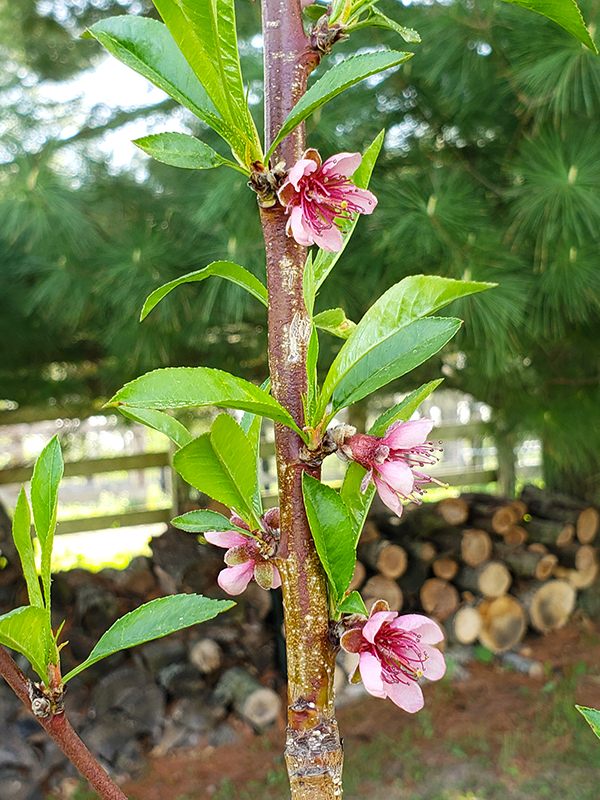
I can speak from personal experience on this topic! We made the mistake of planting a peach tree too close to a pine tree.
This large, towering pine tree ended up shading out the small peach tree. In addition, I think the peach tree struggled to get established and produce large roots because the pine tree’s roots were already overtaking the ground below. We ended up losing that peach tree recently, which really stinks because it had such delicious fruit! (It was another lesson learned the hard way!)
Other Location Requirements
When picking your planting location, also choose a spot that receives full sun. (Some varieties can tolerate partial shade, so be sure to read up on your specific fruit tree’s planting requirements.) Watch the growing location during each season and note how much sunlight that spot gets, especially during the summer months.
The soil in the location needs to be fertile and well-draining soil. Avoid planting in soil that frequently has standing water to prevent root rot from occurring. On the flip side, you don’t want to plant the tree in an elevated spot that tends to dry out quickly either.
Lastly, keep in mind the wind. During the summer and fall, fruit trees can get extremely weighed down by heavy, growing fruit. You don’t want to lose branches due to the harsh winds beating them around if you can avoid it. Since it can get SO windy here, we have to keep that in mind when planting our fruit trees. (It’s not just the Windy City that deals with the wind!)
Preparing The Planting Site – Planting Fruit Trees In Spring
After you’ve picked the perfect fruit tree (or trees) as well as the growing location, it’s time for the actual planting part.
If you are planting a bare-root plant, allow the roots to soak in water for about 4 hours prior to planting. This helps to prepare them for planting and new growth since they have been dry for so long.
For potted plants, keep the soil moist until you are ready for planting. We have successfully kept a potted peach tree healthy for several weeks due to heavy rains and being unable to plant when we wanted.
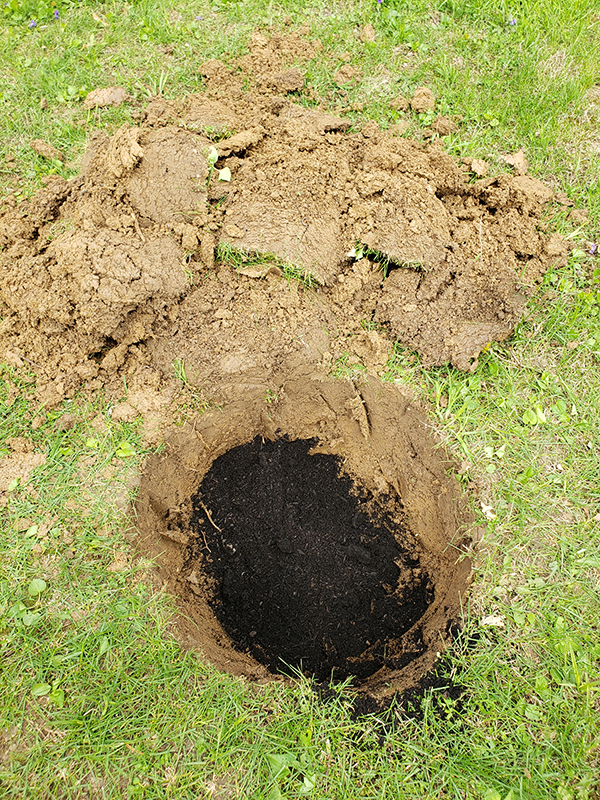
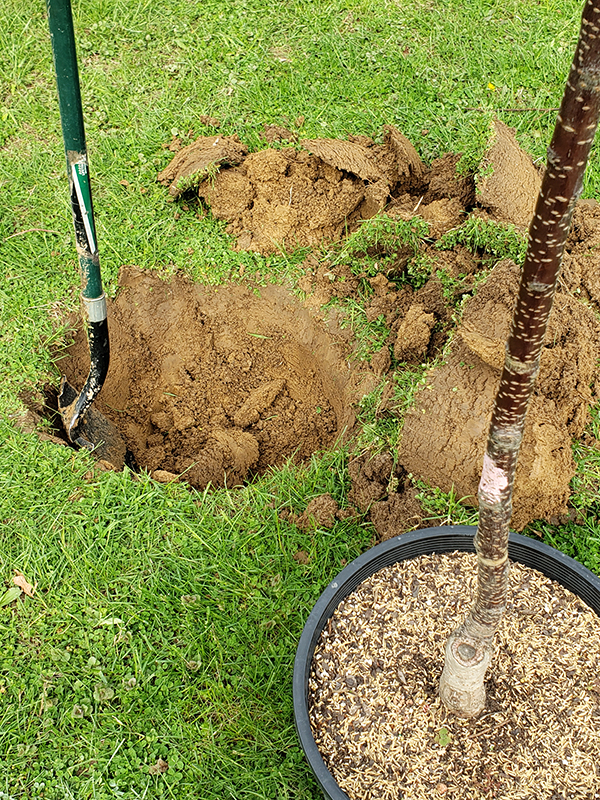
At the growing location, create a hole that is about two feet wider and a few inches deeper than the tree’s root ball. This will help to allow the tree’s roots to grow and expand easily. This is especially important if you have dense clay-like soil like we do here!
Add a few inches of finished compost into the base of the hole. Mix it in with the existing soil. The compost will help to provide a good boost of nutrients right at the tree’s roots.
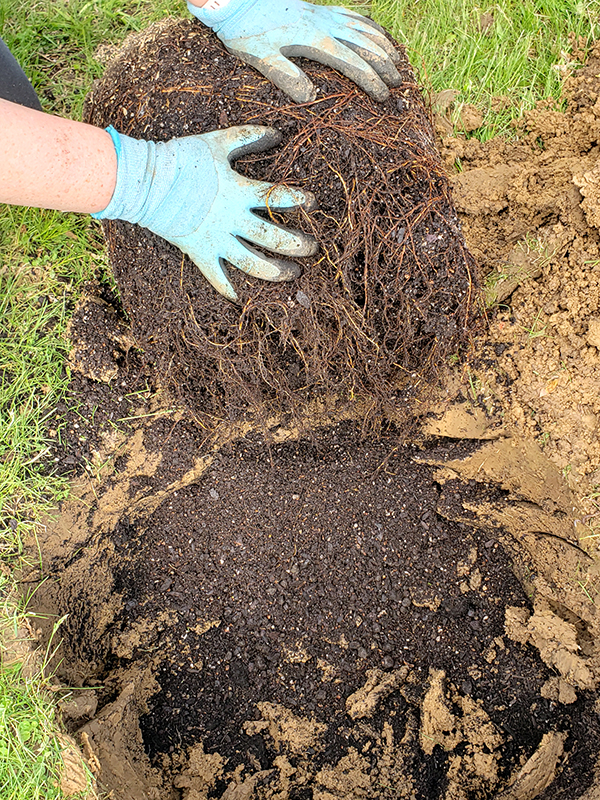
If you are planting a bare-root tree, create a mini “volcano” or cone of soil. Then, set the tree in the hole with the base resting on top of the “volcano” and the roots fanned out around it. For potted fruit trees, loosen up the plant’s root ball slightly before placing it in the hole.
Watch Out For The Graft – Planting Fruit Trees In Spring
Most fruit trees are grafted onto a rootstock that is known for being able to grow well in your growing location. Where the fruit tree meets the rootstock creates a sort of knot or bump. You do not want to bury this knot! Otherwise, the rootstock will start to grow as opposed to the fruit tree.
Instead, place the tree into the hole so its rootstock is a few inches above the soil line. If needed, add or remove soil and compost until the rootstock is about 2 to 3 inches above the soil line.
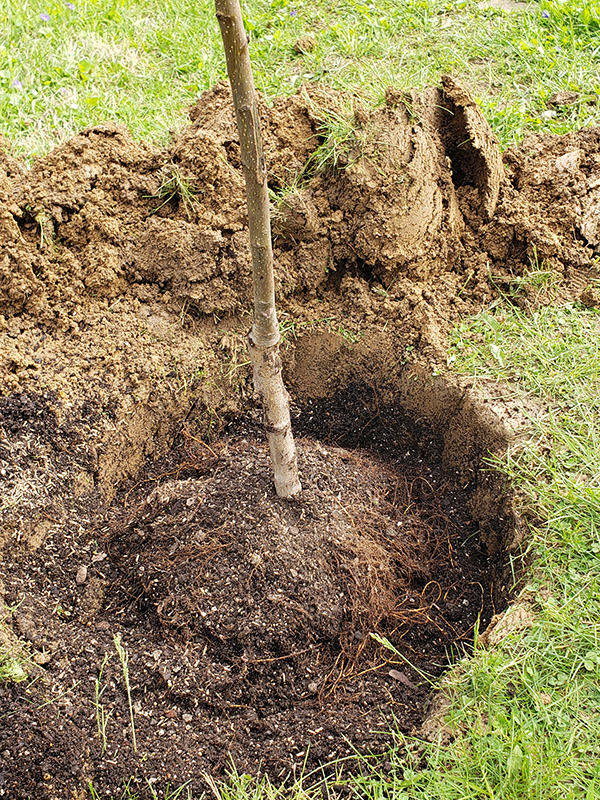
A simple trick to help with this process is to place a broom handle or something straight across the top of the hole. Now you don’t have to guess if the graft is above or below where it should be.
Backfill the hole with soil until it is about halfway full. Stop and check to make sure the tree trunk is nice and straight. You don’t want to fill all the soil in only to notice your fruit tree trunk is listing!
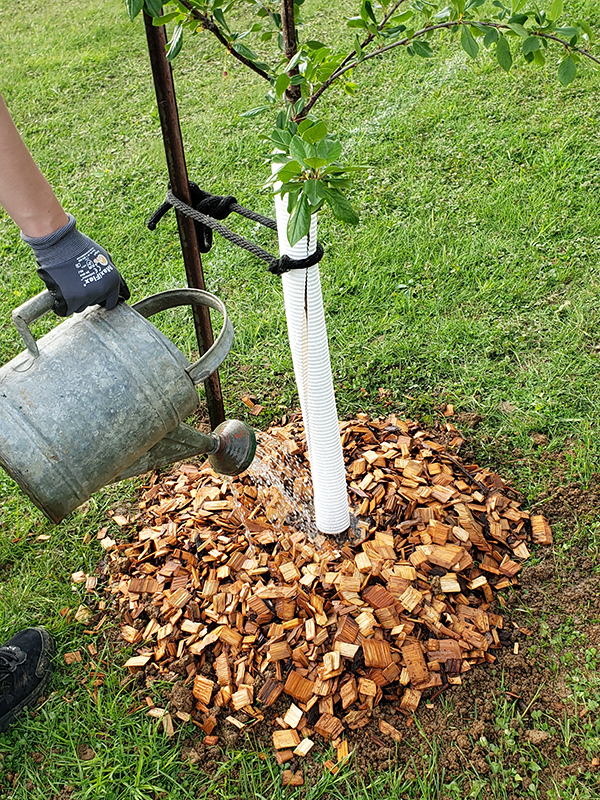
Carefully tamp down the soil so it fills in around the tree’s roots. Continue to add soil and compose until the hole is filled. Again, tamp down the soil, adding more soil if needed. Water the tree deeply. (I’m talking at least 5 gallons per tree!)
Protecting Young Trees
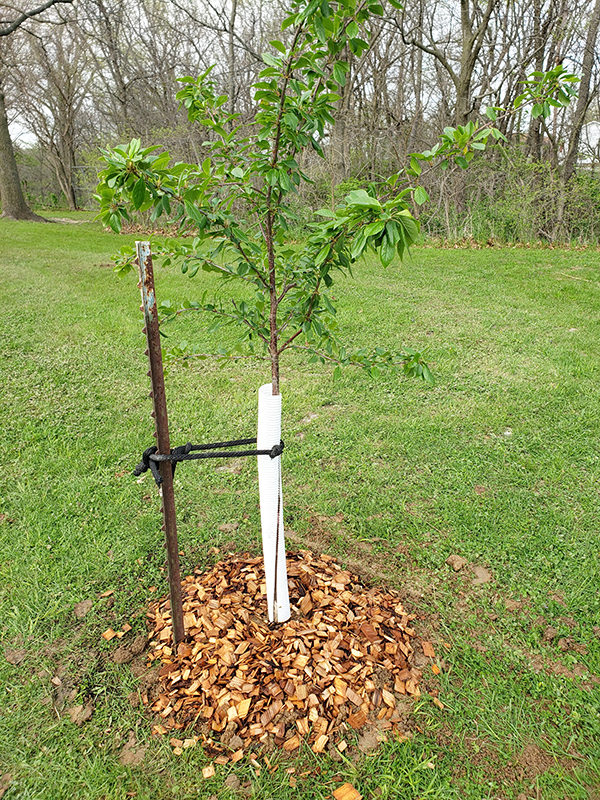
Add a piece of protective tubing around the base of the trunk. This will help to prevent pests and animals from nibbling on the tender young tree trunk. A large corrugated tubing slit lengthwise works well. Just be sure to remove the tubing as the tree grows.
Add a stake near the tree if wind is a concern for your location. Place it on the side that the wind typically comes from. Use a rope or some sort of tie to secure the tree trunk to the stake.
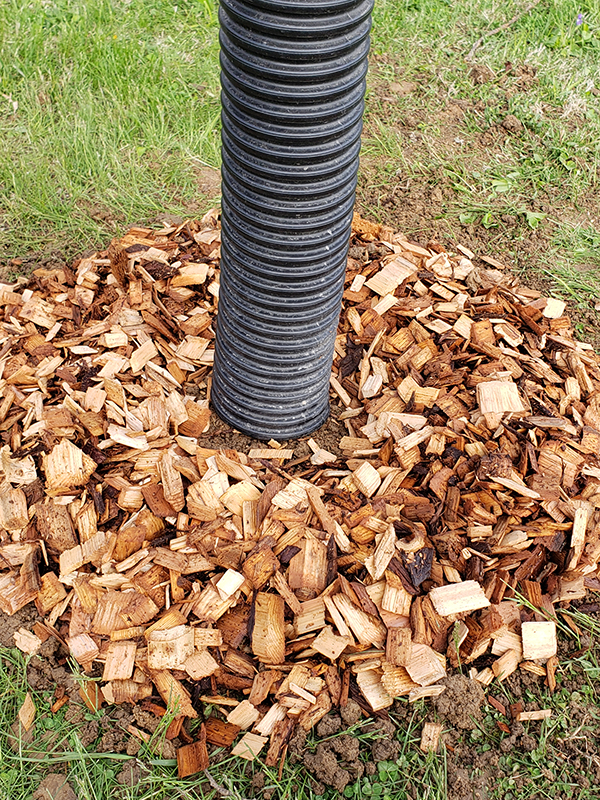
After planting, add several inches of mulch around the base of the tree. This helps to stop weeds from growing, helps regulate the soil temperature right at the base of the tree, and helps retain moisture.
When adding your mulch, be sure to do it in the shape of a donut as opposed to a volcano. You don’t want the mulch to actually touch the base of the tree.
Care During The First Year – Planting Fruit Trees In Spring
The first year after a spring planting is the most important. Trees without mature root systems can easily die due to environmental stresses. The key is to make sure they stay well hydrated, especially during the heat of that first summer.
Avoid watering the trees daily. Instead, provide young fruit trees with a good deep drink once or twice a week. This will allow the moisture to go down deep into the soil, also encouraging deeper root systems. After that first year, you can dial back on watering as long as you don’t go for long periods without rain.
In addition, stay on top of weeding around the base of young plants. Any grass or weeds will compete with these plants for nutrients and other resources. The mulch will help, but check it when watering and pull any unwanted weeds as needed.
During the first year, it is recommended to remove the blooms from your newly planted fruit trees. This helps to allow the tree to focus its energy on becoming established as opposed to producing fruit.
However – here comes the honesty part – I don’t usually follow this technique. I like to assume that Mother Nature knows what she’s doing in regard to blooms and will drop what is needed as the season goes along. You do what you feel is best for you and your trees!
With these planting and growing tips in mind, you can enjoy year after year of delicious fruit right from your own backyard!
Until next time, thanks for stopping by!
– Chelsea
*This post may contain affiliate links. These are products I have used personally and highly recommend. As an Amazon Associate, I may earn a small commission from qualifying purchases if you purchase items through my links. These links and the ads on this page help to support my family and our semi homestead, so Thank You!
Discover more from Semi Homestead Life
Subscribe to get the latest posts sent to your email.