
Most people associate planting fruit trees with the early spring weather, especially if you are from the Midwest. However, the fall is actually a great time to plant fruit trees and get them in the ground before winter hits!
In all honestly, you can plant fruit trees any time during the growing season. So as long as the ground isn’t frozen and the trees are active, you can successfully get them in the ground.
However, planting the warmer and sun-heavy spring and summer months can put a lot of undue stress on newly planted trees. (For the tree and for you as well!)
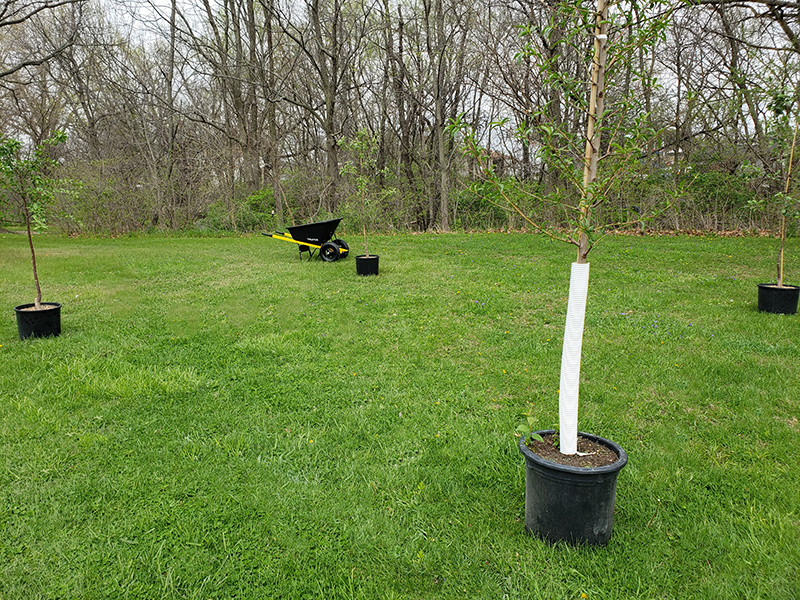
When you plant fruit trees in the fall, you are getting them in the ground and allowing their roots to become established before they go dormant for the winter months. No excessive heat or harsh sunlight to damage the new trees while they become acclimated to the ground.
Then once spring does arrive, the trees will really take off and start growing quickly! So here’s a quick look at how to get fruit trees in the ground this fall before the winter season hits.
How To Plant Fruit Trees In The Fall
Choosing The Right Fruit Trees To Plant
The fall is a great time to plant your fruit trees. It’s also a great time to get other crops that require a chilling period like garlic into the ground. (See “Planting Garlic In The Fall” for more information on growing garlic.)
However, the most important part of planting any type of crop on your property is to pick the right variety for your climate and growing location. And, not all fruit trees will succeed in all climates and growing zones.

There is a big difference in the type of fruit you can grow in a climate that has harsh, cold winters as opposed to one that never drops below 45º Fahrenheit (F). Some fruit thrive and actually require cold temperatures to produce blooms in the spring while others will struggle and die.
Apples are a great example of a crop that requires a period of cold weather in order to produce blooms in the spring. But not all apple trees can survive if temperatures drop below -10 to -20º F. So even within cold hardy crops, there are still some variables that can impact your decision.
In our growing zone here in Illinois (Zone 5b), we went with varieties that are cold hardy. On our homestead, we have cold-hardy varieties like Honeycrisp, Jonagold Jonathans, Golden Delicious, McIntosh, and Fuji apple trees planted because they need to be able to handle multiple days of single-digit temperatures.
Unfortunately, we aren’t able to grow most citrus trees whereas someone in California will have great success growing citrus. So knowing what growing zone you live in and what trees work in your particular zone is a must!
Check for Cross Pollinating Requirements
You also need to check to see if the particular tree variety you are purchasing requires a pollinator. Many types of fruit trees require at least two or more plants within so many feet of one another in order to get proper bloom pollination to occur.
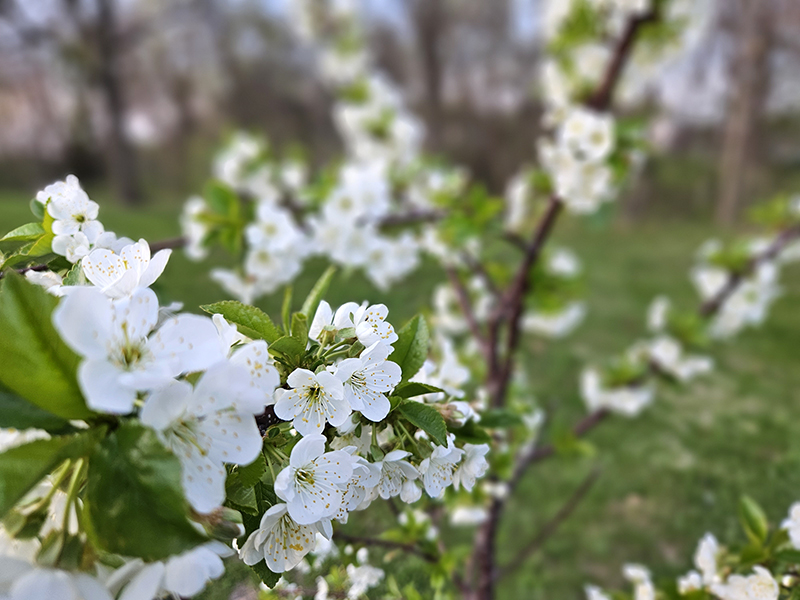
For example, most sweet cherry trees require at least two different cherry trees within 100 feet of one another in order to successfully produce fruit. Whereas most tart cherry trees are self-pollinating and don’t require a second tree.
So be sure to do a little research before purchasing your trees to make sure you have a compatible one nearby if needed (one that will be blooming at the same time as the tree you are wanting).
Where To Get Fruit Trees To Plant In The Fall
The next step is to order or purchase your fruit trees. Since the fall time isn’t as popular as the spring for planting fruit trees, you might have a bit harder time finding options, especially locally.
Some garden centers and nurseries will have trees available. One of the advantages of looking for trees at garden centers in the fall is that many will be discounted at this time of the year. (We purchased several of ours for over 50% off in the fall!) However, your options might be limited since you are usually choosing from the spring leftovers.

You can also search online for different tree varieties. StarkBros is a very popular website that sells trees online. Again, just be sure to search for your particular growing zone when ordering. And don’t forget the pollinators!
Choose Your Location Carefully
Now that you have your trees, it’s time to actually plant them – Well, almost! First, you need to take a bit of time to really plan out your planting location carefully.
Trees take up a lot of space. Depending on the variety you purchase, some can grow to be around 30 feet tall and several feet wide! So unlike a small tomato plant, you really need to be a bit more particular about where you want to plant it.
If you are a bit short on space, many types of fruit trees come in dwarf or semi-dwarf varieties so you can still enjoy fresh fruit, just on a smaller scale. Most of the trees we own on our homestead are semi-dwarf varieties.
So really look at your property and choose a spot that receives full sun and will be able to fit a mature tree in 5 to 10 years.
Now It’s Time To Plant!
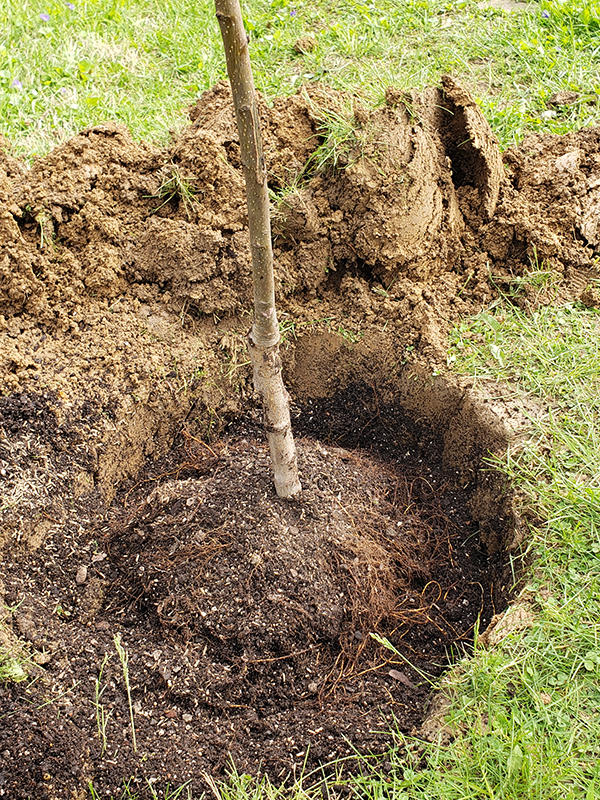
Alright, now it’s finally time to plant your fruit trees this fall! Dig a hole that is about 2 times wider and a few inches deeper than the current tree’s root ball. This helps to loosen up the nearby soil and allows the roots to really take hold once they start to grow.
If needed, add compost to the planting hole and backfill so that the tree sits in the hole with the graft above the soil line. Carefully loosen up the tree’s roots and spread them out evenly when placed in the hole.
Add in more compost and soil to fill in the remainder of the hole. Ensure that the tree is nice and straight as you add more soil.
Tamp down the soil around the base of the tree and water well. You may need to add more soil a few days later if it starts to settle and sink.

Fall Care
It’s a good idea to stake the tree to help support it and allow it to grow straight. In addition, we like to add a tree guard to help protect the young trunks from deer and other critters. (Product Link: Tree Guard)
Finally, add a few inches of organic mulch in a donut shape around the trunk of the tree. Do not make a volcano shape of mulch as this can cause mold and other issues with the tree’s trunk.
Water your newly planted tree every couple of days until the ground starts to freeze in the winter. Newly planted trees require a lot of water to help them become established and for the roots to grow. If needed, you can add more mulch before winter hits to help protect those new roots.
Once spring comes, your tree will already have a great head start on growing and producing blooms!
Until next time, thanks for stopping by!
– Chelsea
*This post may contain affiliate links. These are products I have used personally and highly recommend. As an Amazon Associate, I may earn a small commission from qualifying purchases if you purchase items through my links. These links and the ads on this page help to support my family and our semi homestead, so Thank You!
Discover more from Semi Homestead Life
Subscribe to get the latest posts sent to your email.