
A warm, hearty, and flavorful homemade vegetable beef soup cooked using a pressure cooker that can be adapted using whatever vegetables you prefer.
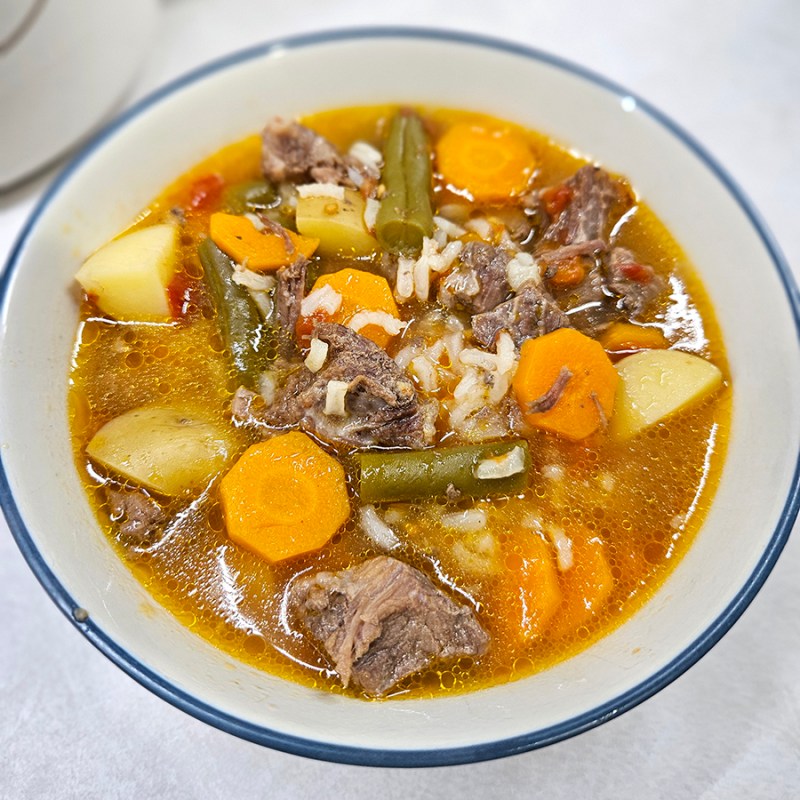
There’s nothing quite like the flavor and warmth that comes from a batch of homemade vegetable beef soup on a cold fall or winter’s day! Add a slice of homemade bread, and your meal is complete!
Unlike most slow cooker recipes, this soup is cooked in under an hour when you use a pressure cooker. While most people have converted to conventional Instant Pot-like devices now, there are still a few of us who like to use our stand-alone old school pressure cooker. These cookers are simple to use and don’t require any electricity to power.
Some people are a bit intimidated by pressure cookers, but it’s really pretty simple as long as you follow a few safety tips. Always read and follow the instructions for your particular pressure cooker model, but otherwise, the steps are pretty cut and dry for most recipes.
Once you get the hang of pressure cooking, you will be amazed at how many delicious recipes you can create! The best part is that meats cook quickly, resulting in tender, juicy dinners in no time at all!
How To Make Pressure Cooker Vegetable Beef Soup
*Scroll down to the bottom of this post to see the full recipe, including exact measurements and amounts. You can also print out the instructions. I go into a bit more detail about the recipe here first, just in case you need it.

Equipment Needed
To make this pressure cooker vegetable beef soup, you are going to need a 6-quart (or larger) pressure cooker. Again, I’m not talking about an electric Instant Pot, but an “old-school” pressure cooker that uses your stove and has a pressure regulator on top. (Here is the one I use that I got for my wedding years ago – Product Link: Presto 6-Quart Stainless Steel Pressure Cooker.)
The key to using pressure cookers when you are dealing with an item like soup is not to fill it more than halfway. Overfilling can cause the broth to spew out of the vent as opposed to steam. So make sure you don’t use a smaller cooker than your recipe calls for.
Before using your pressure cooker, become familiar with its parts and the instruction manual. If you’ve lost the manual, you can usually find those online with a simple search.
Always go through the proper safety checks, like making sure the seal is in good shape and that you can see out of the vent pipe. This ensures that the cooker is ready to use each and every time.
And don’t be intimidated! Yes, there are horror stories about using pressure cookers. But if you take the proper steps to check your cooker over and follow directions, there is no need to fear using one!

Ingredients For Pressure Cooker Vegetable Beef Soup
- Stew Meat – The nice thing about pressure cookers is that you can quickly cook meat from the thawed state or from frozen. I have done both with no difference in taste or texture. The only difference is that it takes a bit longer for the pressure to rise when using frozen meat.
- Beef Bouillon – While the beef itself will provide flavor to the liquid, the addition of beef bouillon helps to amp up the flavor profile even more.
- Water – You need the water to prevent the beef from scorching and possibly damaging your pressure cooker. It also creates the broth base for the soup.
- Salt – We add salt to help add flavor to the broth. Feel free to add the salt after cooking or adjust as needed.
- White Rice – While not necessary if you aren’t a rice fan, the rice helps to add a bit of body to the soup broth. Do not use minute rice.
- Diced Tomatoes – You can use one can of diced tomatoes, liquid and all, or you can use about 2 cups of diced fresh tomatoes. This is a nice option if you have a few end-of-the-season tomatoes that you need to use up. Frozen diced tomatoes can also be used.
- Mixed Vegetables – Here is where you can really play around with the soup and make it your own. We use all sorts of combinations of vegetables. You can use frozen vegetables or fresh ones. Some of our favorites to use are carrots, green beans, peas, and potatoes. If using canned vegetables, the recipe will be altered slightly. I’ve noted those changes in the instructions.

Instructions For Pressure Cooker Vegetable Beef Soup
I just want to note again that these instructions are based on using a 6-quart pressure cooker. This recipe has not been tested using an Instant Pot cooker.
I tried using my Instant Pot once in the past, but I had issues with broth spewing from the “quick release” valve after cooking when I released it. If I maybe had a larger Instant Pot or let the pressure release naturally, it might have worked. However, I like to stick to my pressure cooker for this recipe, so I haven’t played around with it much.
Always follow the safety protocols for your particular pressure cooker. Make sure to check all vents and seals prior to use each and every time.
Cooking The Beef
Place the beef stew meat in a 6-quart pressure cooker. The beef can be frozen or thawed out. If your stew meat is a bit on the fatty side, trim that now if needed. You can also do this step after the first round of cooking if your beef is frozen.
Next, add the beef bouillon, water, and salt. Close the lid and place the pressure regulator on top of the vent pipe.
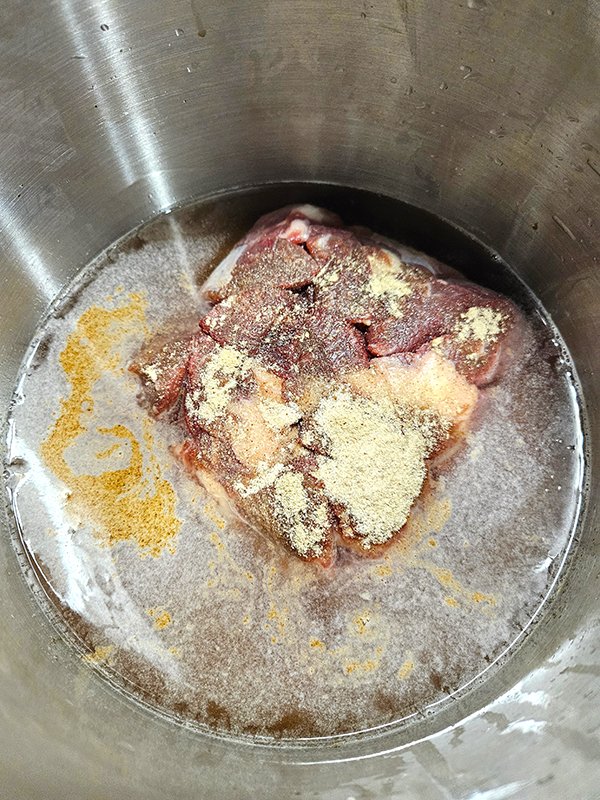
Using your stovetop, allow the contents to build pressure over medium heat. The air vent/cover lock will move up and down as the pressure builds before eventually locking in place. You will see visible steam during this process.
When the air vent locks in place, the pressure will start to build up in the cooker. Once the regulator starts to slowly rock, start the cooking time. You are going to cook the beef for 15 minutes. (Note: If you are using pre-cooked canned vegetables instead of raw or frozen, cook the beef for 18 minutes.)
Adjust the heat as needed to maintain a slow and steady rocking motion. You don’t want the regulator to rock too aggressively, or you will lose too much steam and therefore liquid. (See my quick YouTube Short video if you want to see a visual of a rocking pressure regulator.)
Release Pressure With Cold Water
After the 15 minutes (or 18 minutes) are up, turn off the heat on your stove. Wait a few minutes to allow the regulator to stop rocking before handling the pressure cooker.
Now, you need to cool down the contents of the cooker to quickly release the pressure. Whatever you do, DO NOT remove the regulator or try to remove the lid at this point! (The raised air vent should lock the lid in place – at least on my version – but don’t try to remove it with pressure still built up inside.)

To reduce the pressure quickly, carefully move the pressure cooker to your sink. Be careful not to tilt the cooker. Run cold water over the lid. Avoid getting water on the air vent/cover lock.
Continue cooling until the air vent drops. This signals that the pressure has been completely reduced. It is now safe to remove the pressure regulator and open the lid.
Cooking The Vegetables And Rice
Place the cooker back on the stove. If needed, remove the fat from the beef now. Then stir in the rice, diced tomatoes, and raw or frozen vegetables.
If you are using pre-cooked canned vegetables, you can skip this step. Just add the drained canned vegetables to the soup and allow the veggies to heat through before serving. (I still add my previously canned green beans along with the raw vegetables and cook. The green beans don’t become mushy, but some canned vegetables might.)
Close the lid, add the pressure regulator back on the vent pipe, and bring the pressure cooker back to pressure as described above. Once the regulator is rocking slowly and steadily, cook for an additional 5 minutes.
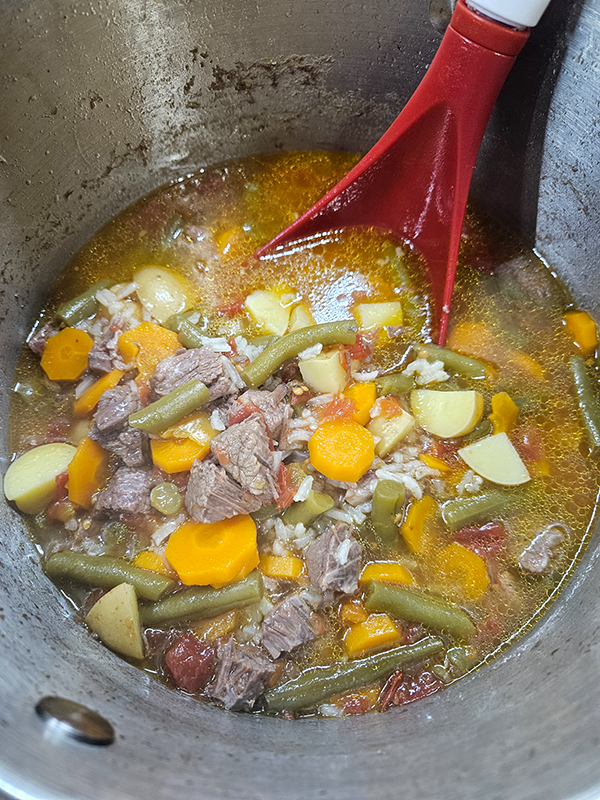
Carefully reduce the pressure the same way as above. Adjust salt or season as desired. Serve and enjoy! Leftover soup can be stored in the refrigerator for 3 to 4 days or cooled and then frozen for 3 to 4 months.
More Recipes
Are you looking for more delicious soup recipes? Here are a few I’ve posted, with more to come:
Until next time, thanks for stopping by!
– Chelsea
*This post may contain affiliate links. These are products I have used personally and highly recommend. As an Amazon Associate, I may earn a small commission from qualifying purchases if you purchase items through my links. These links and the ads on this page help to support my family and our semi homestead, so Thank You!
Pressure Cooker Vegetable Beef Soup
Ingredients
- 1 lb beef stew meat
- 1 tsp beef bouillon
- 4 cups water
- 1-1/2 tsp salt
- ¼ cup white rice
- 1 can diced tomatoes (or 2 cups raw)
- 3 to 4 cups mixed vegetables (or 16 oz bag)
Instructions
Safety Note
- These instructions are based using a 6-quart pressure cooker. The recipe has not been tested using an instant pot cooker. Always follow the safety protocols for your particular pressure cooker, making sure to check all vents and seals prior to use. See the above written instructions for more information.
Instructions
- Place stew meat in a 6-quart pressure cooker. The beef can be frozen or thawed out. Trim fat from meat if needed. Add beef bouillon, water, and salt.
- Close the lid and place the pressure regulator on top of the vent pipe. Using your stovetop, allow the contents to build pressure over medium heat. The air vent/cover lock will move up and down as the pressure builds before eventually locking in place. You will see visible steam during this process. Once the air vent locks, the pressure will start to build. When the regulator starts to slowly rock, start the cooking time. Cook for 15 minutes. (Note: If you are using pre-cooked canned vegetables instead of raw or frozen, cook for 20 minutes.) Adjust the heat as needed to maintain a slow and steady rocking motion. (See my YouTube Short for a visual if needed.)
- After 15 minutes, turn off the heat. When the regulator stops rocking, cool the contents by running cold water over the lid. Avoid getting water in the air vent/cover lock. Do not remove the regulator early! Continue cooling until the air vent drops, signaling that the pressure has been completely reduced. Only then can you remove the regulator and open the lid.
- Place the cooker back on the stove. Stir in the rice, diced tomatoes, and raw or frozen vegetables. (Skip this step if using canned vegetables and simply drain and stir them into the warm soup until vegetables are heated through. Serve.)Close the lid, add the pressure regulator back on the vent pipe/cover lock. Bring the pressure cooker back to pressure as described above until the regulator is rocking slowly and steadily. Cook for 5 minutes.
- After 5 minutes, reduce the pressure the same way as described above. Adjust salt or season as desired. Serve and enjoy! Leftover soup can be stored in the refrigerator for 3 to 4 days or cooled and then frozen for 3 to 4 months.
Notes
Discover more from Semi Homestead Life
Subscribe to get the latest posts sent to your email.