
While it might sound like a simple task, there are a few tips you want to keep in mind when it comes to correctly watering potted and container mums. Proper watering can help to keep these heavy-blooming fall flowers going strong all fall long – instead of looking weak and like they are on death’s door before Halloween even arrives!

Chrysanthemums, most commonly referred to as mums, are either annual or perennial flowering plants that many consider to be the unofficial flower of fall. (At least they are to me!) These cool-weather-loving plants start to push out loads of blooms during a time of the year when most annual flowers start to die off.
You can start to see potted mums gracing store shelves as soon as the “ber” months arrive. (You know the months I’m talking about: SeptemBER, OctoBER, NovemBER, and DecemBER.)
While there’s nothing wrong with purchasing a few plants early on, it can be hard to keep them thriving by the time October actually arrives, let alone surviving until November! And a lot of that is thanks to improper watering.
Not only does the frequency at which you water your mums matter, but also how you go about doing it. I’ve broken down these simple tips so you can have the best success with your potted mums, as well as a few additional tips thrown in there to keep your mums thriving strong all throughout the Autumn season!
Tips On Watering Potted Mums Correctly
Don’t Buy Them Too Early & Pick Ones With Buds
My first tip is to not jump right out there and purchase your mums the minute they arrive at the store shelves. Often (or at least if you live in a location like mine), you still have plenty of warm summer-like days ahead of you to deal with.

If you purchase your mums early in September, you are going to have a hard time keeping them happy and thriving until November. This is mostly thanks to the warmer, fluctuating temperatures September often brings.
When the temperatures are warmer in September, mums are going to require plenty of watering. This often means watering them at least once if not twice a day at times! Many people just don’t have the time (or thought) to do that, no matter how simple the task is.
In addition, those mums you purchase in the stores that are chock full of blooms are only going to look that beautiful for a few more weeks. If their blooming power is at the max right now, it’s only downhill from there!
Instead, look for mums that are just starting to produce buds. This will allow you to enjoy the entirety of their blooms instead of just the tail end of them. (For more tips on purchasing mums, check out my article, “Picking Out Mums – 4 Tips To Get The Most Out Of Your Fall Mums”.)
2. Consider Repotting – Correctly Watering Mums
Once you do purchase your mums, you have a choice. You can either leave the plants as-is in their container or you can repot them. This decision will likely depend on where you purchase your plants or if they are rootbound.
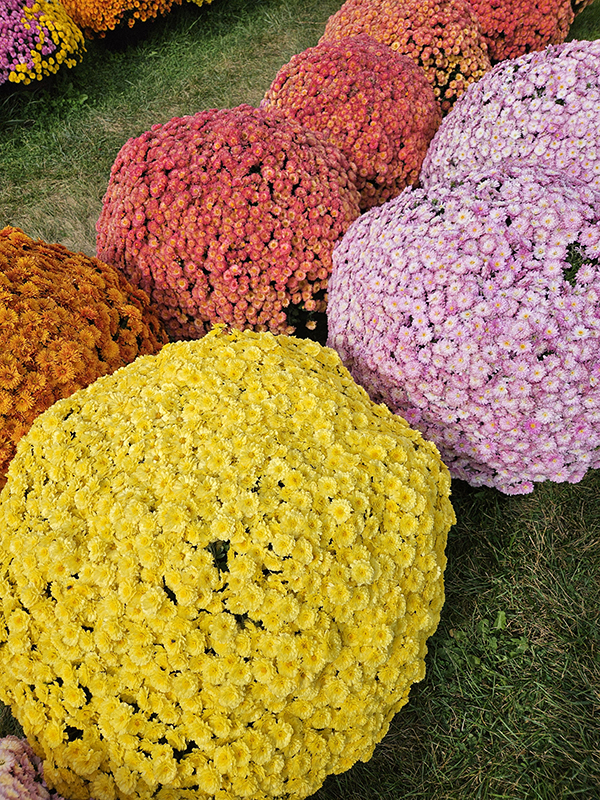
If you get your plants from a garden center, they might already be growing in a high-quality potting soil medium. However, if you purchase your mums from a big box store, chances are the potting soil isn’t the best quality.
Either way, it’s sometimes a good idea to consider repotting regardless of where you purchase them. Mums quickly become rootbound. This is especially the case for plants that are already blooming fully and filling up their entire containers.
Without enough soil around the roots, the mums will struggle to absorb moisture and nutrients from the soil. This results in plants that quickly become weak soon after bringing them home, regardless of how well you water them.
If the potting soil feels like it is low quality or if you slip the plants out of the container and it is rootbound, it’s time to repot. Place the mums into a new container that has plenty of space for the roots to grow and expand. Add a well-draining, high-quality potting soil. Immediately water after repotting.
3. Don’t Water Overhead
With any plants or flowers that contain blooms, don’t water them overhead. This is probably the biggest tip I can give you when it comes to watering mums correctly and keeping them looking beautiful.

Any water that gets directly on the blooms can drastically shorten their lifespan. With the cooler temperatures of fall, it can also invite a whole host of diseases and issues if the foliage stays wet for long periods of time.
Instead, water plants at their base. The best way to do this is to use one of those little plastic trays or drip guards. You can actually use any container for this purpose as long as the pot can sit in standing water for about 30 minutes. A bucket, a Tupperware container, basically anything with sides and a solid base works well.
Place the potted mum into the tray and add the water. Allow the mum to soak up the water for 20 to 30 minutes. If all of the water gets soaked up before that time, add more. Pour out any excess water after the 30 minutes is up.
To make the process simpler, I leave my potted mums sitting in their drip trays 24/7. Just be sure to check them after it rains for standing water if you go that route.
4. Use Warm Water – Correctly Watering Mums
If possible, use water that is room temperature or slightly warmer when watering your mums instead of water from the tap that is nice and cold. This is especially important right after bringing the plants home from the store or if the soil is completely dry.
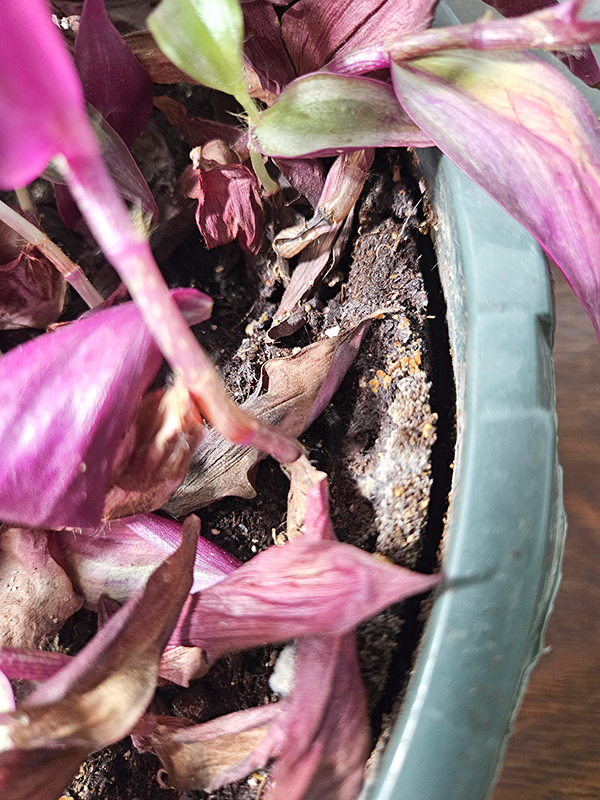
Hydrophobic soil (i.e., soil that repels water as opposed to soaking it up) does a much better job at absorbing warm soil. It also helps to prevent the shock that some plants can experience by using cold water. Make sure not to use hot water, though. This can damage roots or cause more issues than cold water.
As a side note, warm water also works great for watering houseplants if they’ve been neglected a bit too long. (Not that I’ve done that before or anything!) It’s great for using with seed starting soil that is dry to the bone when you bring it home from the store.
5. Water Often But Not Too Much
The frequency with which you water mums will depend on a lot of conditions like the weather, if the mum is in a full-sun location, how big the mum is, and its container size, etc. The goal is to keep the soil moist but not oversaturated.
Feel the soil a few inches deep in the container. If it feels dry, give the plant a good soaking. Another way to see if your mum needs watering is to pick it up (as long as the plant isn’t too large). The plant should feel nice and heavy. If you can easily lift it, chances are you need to water the plant.
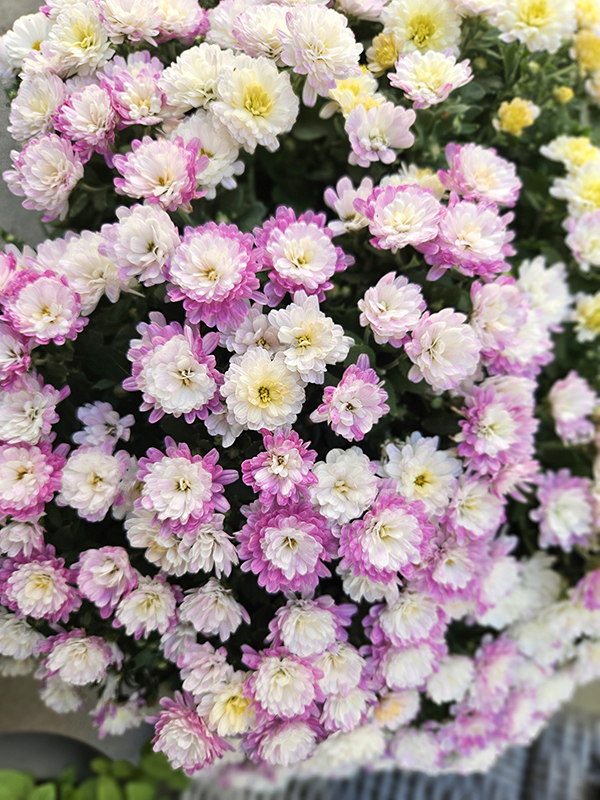
In most cases, you want to water your potted mums at least twice a week. When the temperatures are in the 70s here, I often water my mums daily. As the temperatures drop, I can start to space out watering to every other day or so.
If you notice signs that the plants are getting yellow leaves or the foliage looks dark and soft, you may be overwatering your mum. Space watering out by another day or so, and see if that helps. Just avoid letting the soil dry out completely between waterings for the best results.
Other Tips – Correctly Watering Mums
If possible, place the mums in a location that receives full sun for at least six hours a day. Plants growing in the sun will produce more blooms than those growing in the shade. As much as we love front-porch mums, they won’t be able to bloom to their full potential in these spaces.
However, I have had good success with my South-facing front porch since it still receives plenty of indirect sunlight. I just don’t get quite as many blooms as those mums growing in full sun. Afternoon or dappled sunlight is also beneficial to blooming mums.
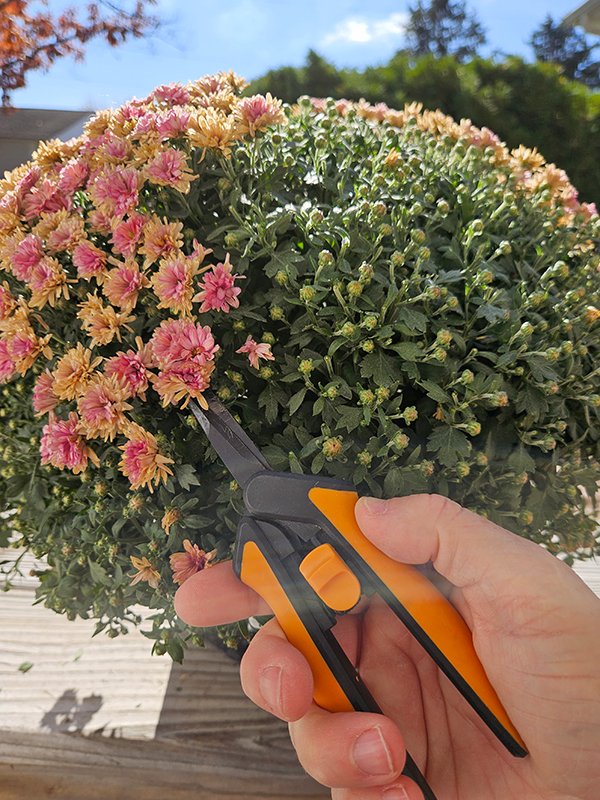
Prune any fading or dead blooms. This will help to encourage the plant to produce additional buds, prolonging blooming time. It also helps to keep the plants looking nice and tidy. (My favorite small pruners – Product Link: Fiskars Micro-Tip Pruning Shears.)
Lastly, check out which type of mums you bought. Mums that are labeled as “floral mums” are grown as annuals and will fade soon after blooming. Those labeled as “garden” or “hardy mums” can be planted in the soil when the temperatures are still warm and treated as perennials. This can give you more bang for your buck.
Hopefully, by following these tips about correctly watering your potted mums, you can keep them looking stunning and blooming strong all fall long!
Until next time, thanks for stopping by!
– Chelsea
*This post may contain affiliate links. These are products I have used personally and highly recommend. As an Amazon Associate, I may earn a small commission from qualifying purchases if you purchase items through my links. These links and the ads on this page help to support my family and our semi homestead, so Thank You!
Discover more from Semi Homestead Life
Subscribe to get the latest posts sent to your email.