
It’s a hot summer day, and you step outside only to hear a loud, rhythmic drone coming from the trees. It’s so loud that it is almost piercing to your ears. What’s that all about? The “singing” is most likely that of annual cicadas (also known as “Dog Day cicadas”).
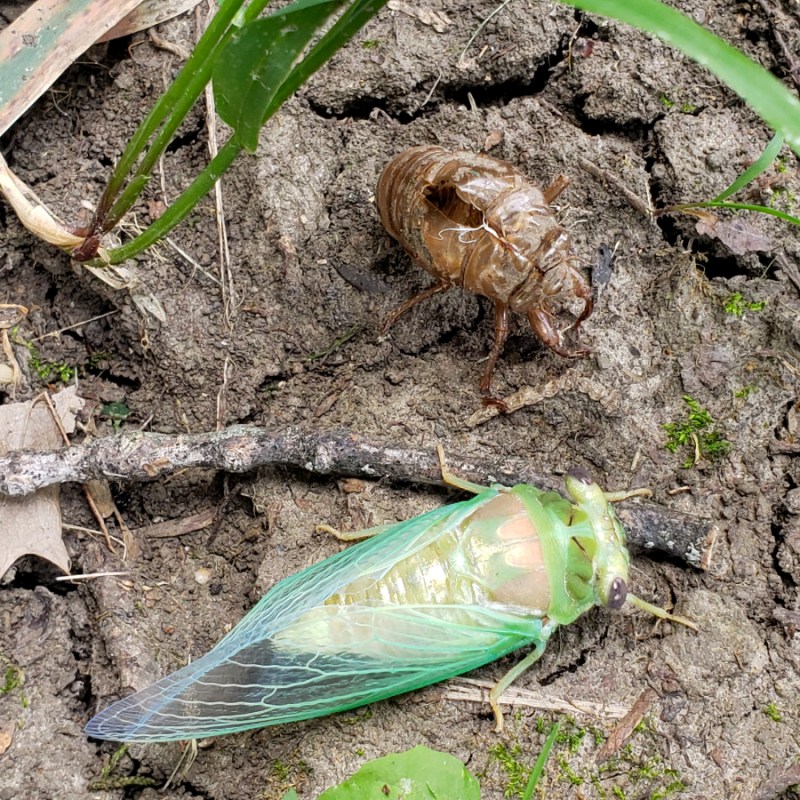
Cicadas have one of the most unmistakable sounds of summertime. During the summer months, their “song” might be something you simply hear and then go about your day. For people in other locations, it’s so loud and deafening that it makes being outside almost unbearable!
There are two main types of cicadas, annual and periodical. Annual cicadas make their appearance each summer, while periodical cicadas only emerge in large groups every 13 or 17 years during the spring months. Today, I am going to be focusing this article on annual cicadas.
What Is A Cicada?
Cicadas are a type of winged insect that are active during the warm summer months. You can find them most often in forested and wooded areas. Cicadas spend the majority of their lives in the soil, buried 6 to 18 inches underground near trees.
While they are underground, cicadas feed on the sap from the tree’s roots. After two to five years, when they are fully developed, the nymphs emerge and crawl up the nearest vertical surface (most often a tree).
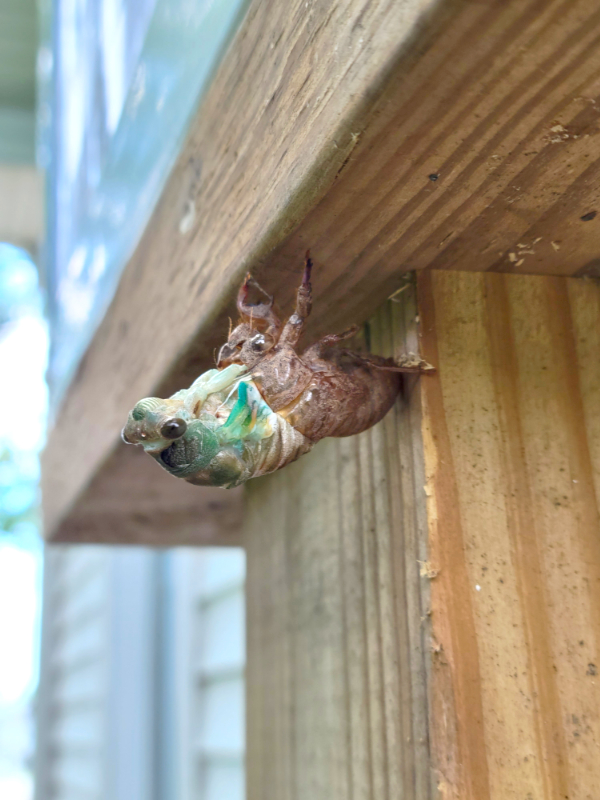
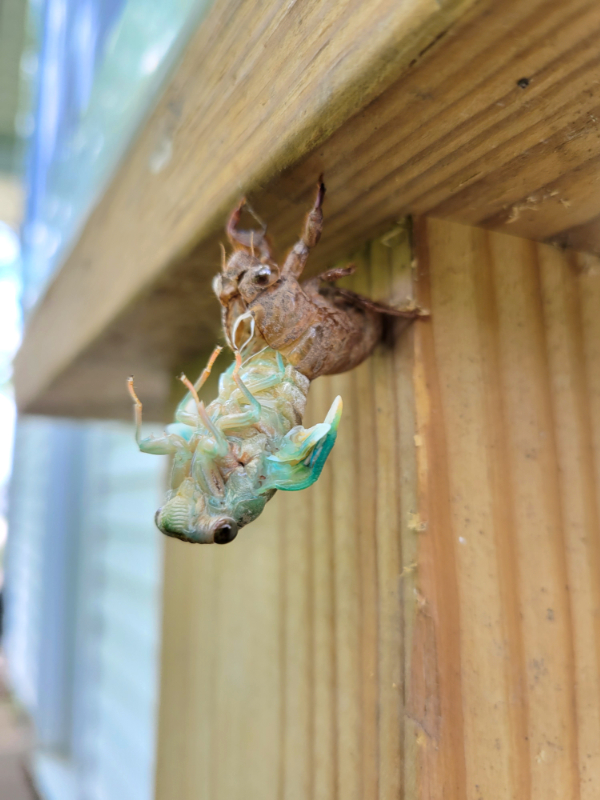

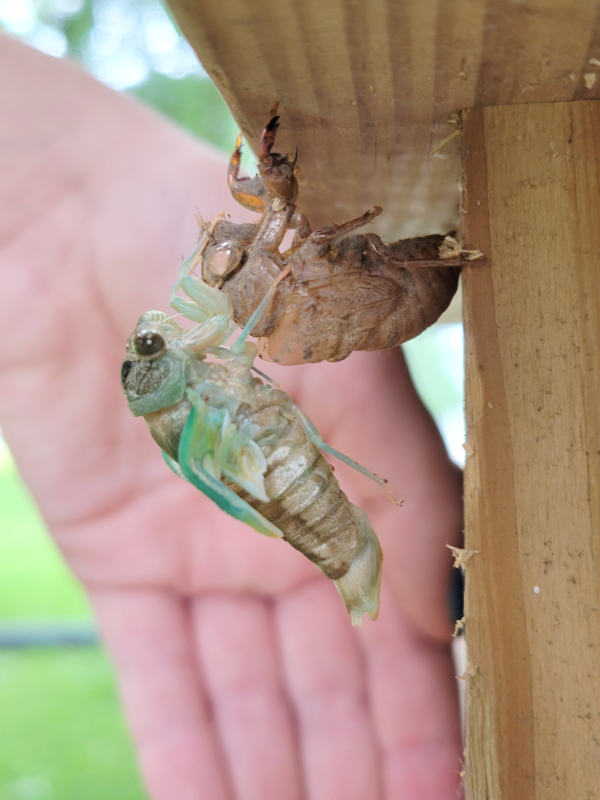
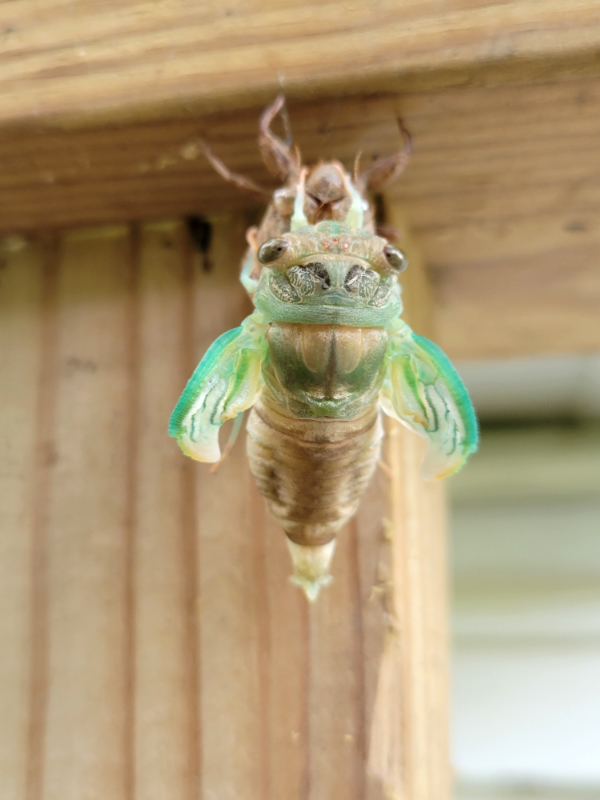
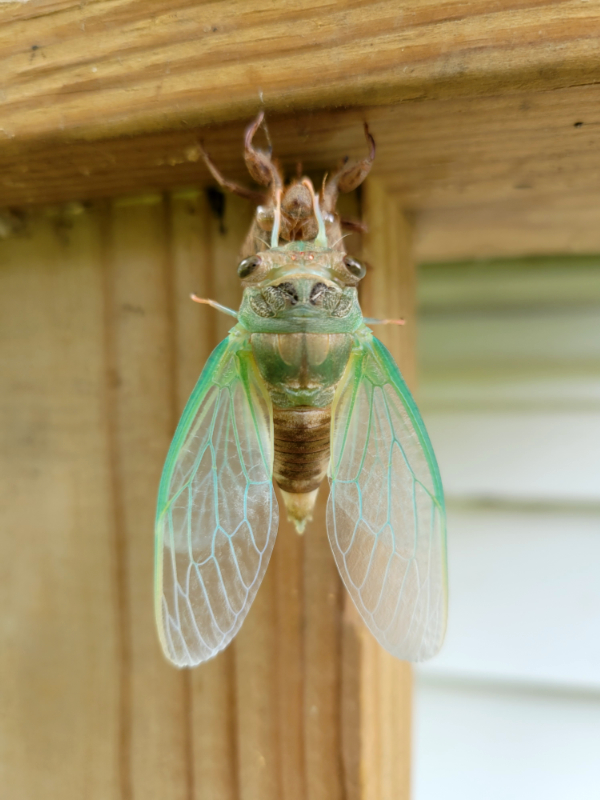
They then shed their exoskeleton, the brown, brittle outer shell that was protecting their wings and body while they were underground. The adults emerge fully equipped with working wings.
Once their wings are fully extended and dried out, they take flight, leaving the exoskeleton behind. You can often find these empty shells clinging to the sides of trees or structures if you look carefully enough.
Once emerged, the adults only live for around 3 to 4 weeks. During this time, their whole purpose is to mate and lay eggs for the next generation. After mating, a female creates a slit in a tree branch and lays her eggs (up to 600 eggs per female!). When the eggs hatch in 6 to 8 weeks, the tiny nymphs drop to the ground, burrow down, and the life cycle starts all over again.
Fun Fact:
The empty shells will actually “cling” to almost any vertical surface. When I was a kid, it was always a fun game to stick one on the t-shirt of a sibling or friend and see how long it took them to figure out it was there. (Please tell me I’m not the only one who did that!)
How To Identify Annual Cicadas
I grew up calling cicadas “locusts”. However, locusts are actually grasshoppers and are unrelated to cicadas, even though both show up in large batches during the same timeframe.
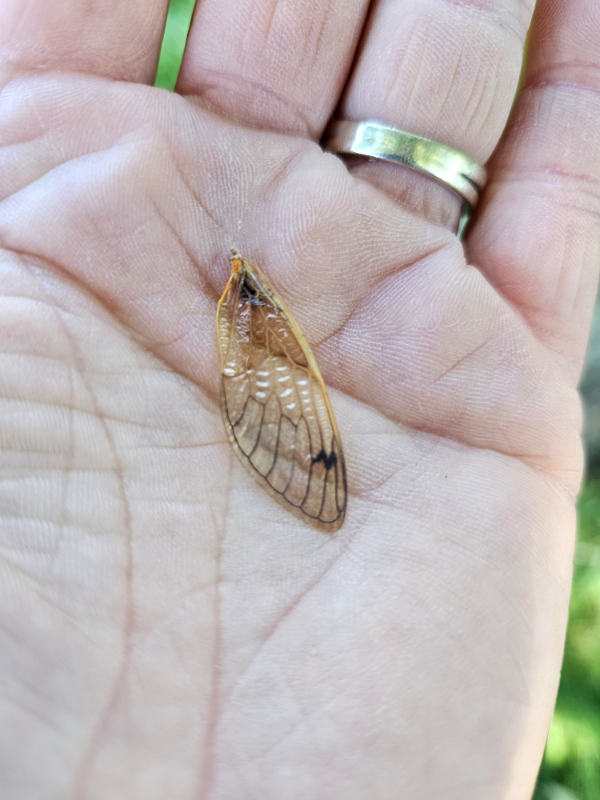
Annual cicadas are stocky insects and measure between 1.5 and 2.5 inches long as adults. (Periodical cicadas are smaller.) They feature four wings that are mostly transparent with a brown or green tint.
An adult cicada’s body is pretty camouflaged, with its colored patterns of black, green, and brown. Their undersides are whitish in color. The nymphs are brown or tan in color, wingless, and feature two large front legs that are adapted for digging and climbing.
Adult cicadas feature two wide-set beady black or brown eyes. Complete with short antennas, they have an almost alien-like appearance, if you ask me. (They rank up high on my creepy factor, similar to praying mantises.)
Cicada nymphs are only able to crawl. Adults are capable of flying, but neither can jump. While cicadas might look creepy, they are not a threat to people since they don’t bite.
What’s With The Noice Cicadas Make?
You can thank the adult cicada males for that shrilling noise you hear in late summer. The goal of the noise is to attract females for mating. Think of it as a sort of obnoxious courtship.
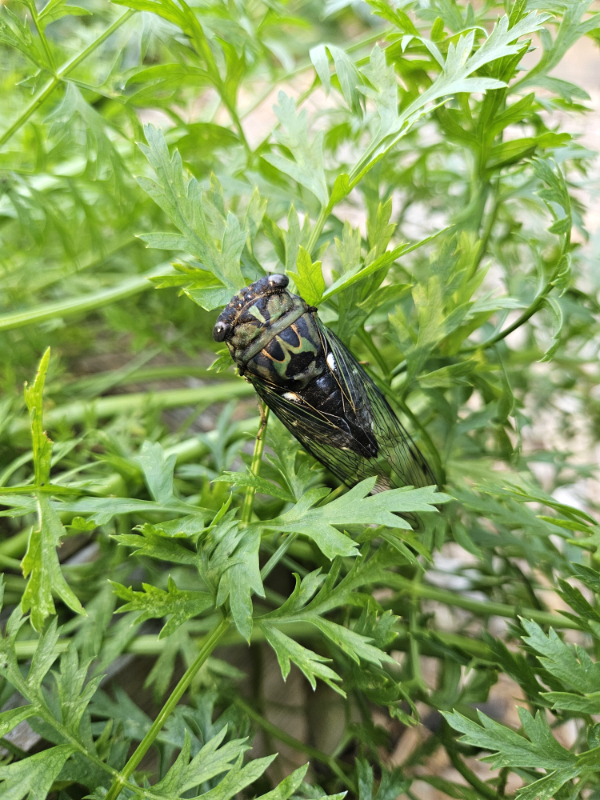
The sound is produced by rib-like structures on their abdomens called “tymbals”. As these tymbals vibrate, the sound is emitted. Females lack this particular structure.
A group of adult males in the same location can put on quite a concert. In fact, they can actually reach between 80 and 120 decibels (dB), making them some of the loudest insects in the world. That’s pretty crazy when you consider the average rock concert is around 100 to 115 dB!
The Benefits Of Cicadas – All About Annual Cicadas
Thankfully, cicadas are not harmful to people or the landscape. Adults do eat. They use their straw-like mouthparts to drink the sap from trees and shrubs. However, since they are only alive for a short time, they do very minimal damage. In fact, there are actually a few benefits to having cicadas around.
First off, cicadas are a great food source for several different birds and other predators. (I’ve personally witnessed a cicada killer wasp taking one down mid-flight!) Here in Illinois, cicadas are a huge treat thanks to their high protein content for Blue Jays, Cardinals, Raptors, Robins, Sparrows, Turkeys, Woodpeckers, and more. Oh, and don’t forget that your free-range chickens will snack on them as well if the opportunity arises!

In addition, cicadas can actually help the soil. The nymphs aerate lawns to some extent as they live underground. This helps not only to get oxygen deeper down into the soil but also improves water filtration. As cicadas die off and drop to the ground, they decompose. What’s left behind are nutrients and resources that the soil can benefit from. (It’s organic matter at its purest form!)
While it isn’t common here, some people in other countries eat cicadas. (Yummy . . . not!) You can also use cicadas as fishing bait, although I’ve never personally tested that benefit.
Don’t Fear The Cicadas
So the next time you walk outside and hear that rhythmic sound of the males, you can rest assured that it won’t last long and no harm is being done . . . aside from maybe your eardrums aching!
Until next time, thanks for stopping by!
– Chelsea
*This post may contain affiliate links. These are products I have used personally and highly recommend. As an Amazon Associate, I may earn a small commission from qualifying purchases if you purchase items through my links. These links and the ads on this page help to support my family and our semi homestead, so Thank You!
Discover more from Semi Homestead Life
Subscribe to get the latest posts sent to your email.