
There are so many different types and varieties of cucumber seeds and seedlings available on the market today that it can be a bit overwhelming when trying to decide which ones to get.

In general, the type you buy will vary depending on what your goals are with those cucumbers. Do you want to enjoy eating them fresh in salads and other recipes? Do you want to can and process them to make crisp, delicious pickles to enjoy all year long? Maybe you want to turn them into a healthy summer drink.
And what’s all the talk about “burpless” cucumbers? What does that even mean, and why does it matter to you and the cucumber varieties you choose? Bush varieties. Vining varieties. Hybrids. Open-pollinated. The list of options goes on and on.
In this article, I’ll break down the two main types of cucumbers, the two main ways the plants can grow and produce, and provide a few other tidbits that will help you decide what variety to choose for your garden. For more in-depth information on growing cucumbers in general, you can check out my article, “Growing Cucumbers – How To Plant, Grow, And Harvest Cucumbers”.
Two Different Types Of Cucumber Plants
There are many different varieties of cucumbers. However, they are mainly categorized into two main types: Slicing cucumbers and Pickling cucumbers.
1. Slicing Cucumbers – Different Cucumber Types
Most likely, if you close your eyes and picture a cucumber, a slicing one would come to mind. American Slicing Cucumbers, specifically, are the most recognizable and most commonly purchased varieties in grocery stores.
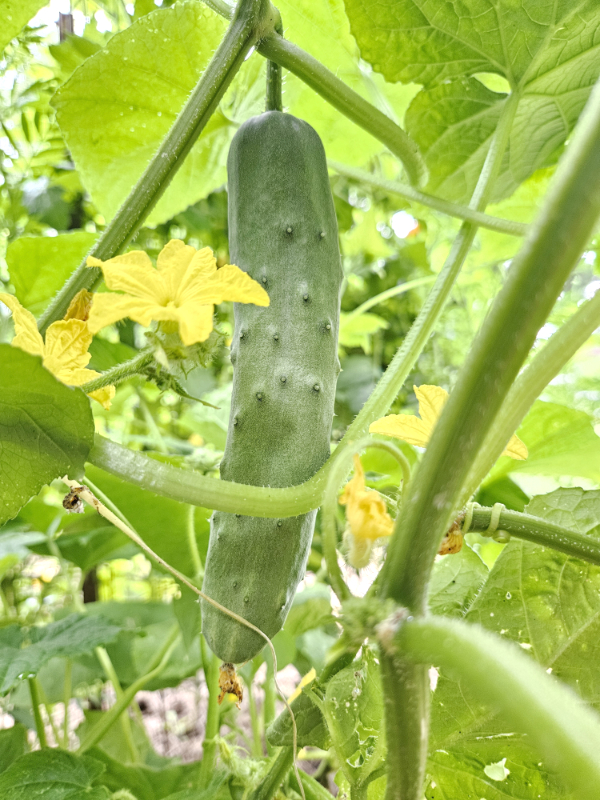

These cukes are usually around 6 to 10 inches long and feature dark green skins. They have a thicker, waxy skin that can leave them bitter. Because of this, most are better peeled before using in fresh recipes. (There are English Slicing Cucumbers that avoid these issues, but more on that in a minute.)
Slicing cucumbers are usually reasonably priced and great for buying in bulk. Due to their tough skins, larger seeds, and high water content, they do not make good pickles at all. Instead, enjoy them as is fresh, or peel and de-seed them to use for relishes and other recipes.
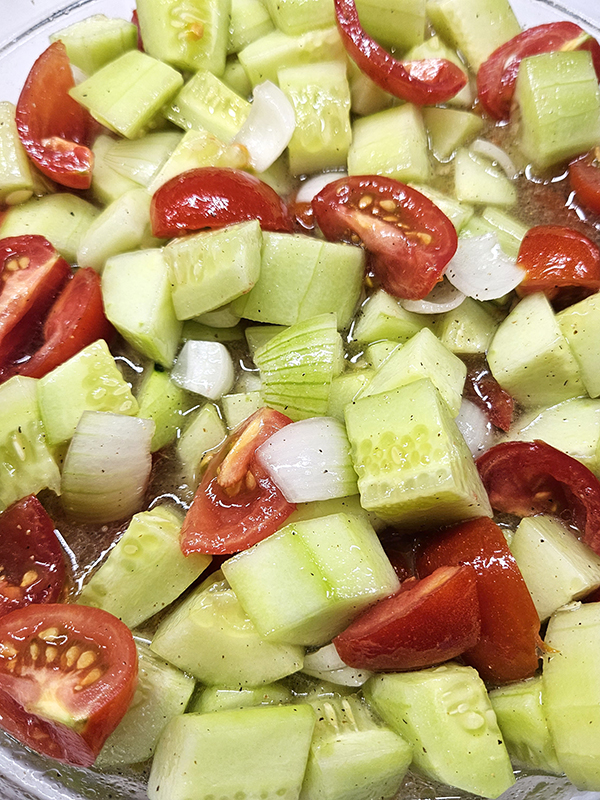
I love using them for my Tomato, Cucumber, and Onion Salad as long as the seeds aren’t too big. If they are, I just cut out the middle of the cucumber with the seeds. My chickens always enjoy eating that part!
What About English Cucumbers?
Have you ever gone to the grocery store and seen those long, skinny cucumbers often individually wrapped in plastic? They are usually quite a bit more expensive than the regular cucumbers sold in bulk bins. Chances are, those are English Cucumbers. They are also sometimes called “hothouse” or “seedless” cucumbers.
English cucumbers are a type of slicing cucumber. They are most often around 10 to 18 inches long and only a few inches thick. They have extremely thin skin, tiny seeds, and a high water content. Thanks to their thin skins, English cucumbers are also considered to be “burpless”. (More on this below.)
English cucumbers require no peeling and are great for slicing and eating fresh, like their American counterpart. They also work great for turning into drinks or dips since the seeds are so tiny. However, they aren’t great for pickling because they tend to get soggy due to their high water content.
This is the only type of cucumber that I don’t have any experience growing. I have always had either American slicing or pickling cucumbers in my own garden.
2. Pickling Cucumbers – Different Cucumber Types
Pickling cucumbers are known by all sorts of names, including Kirby, Gherkin, etc. They grow small and abundantly on plants.
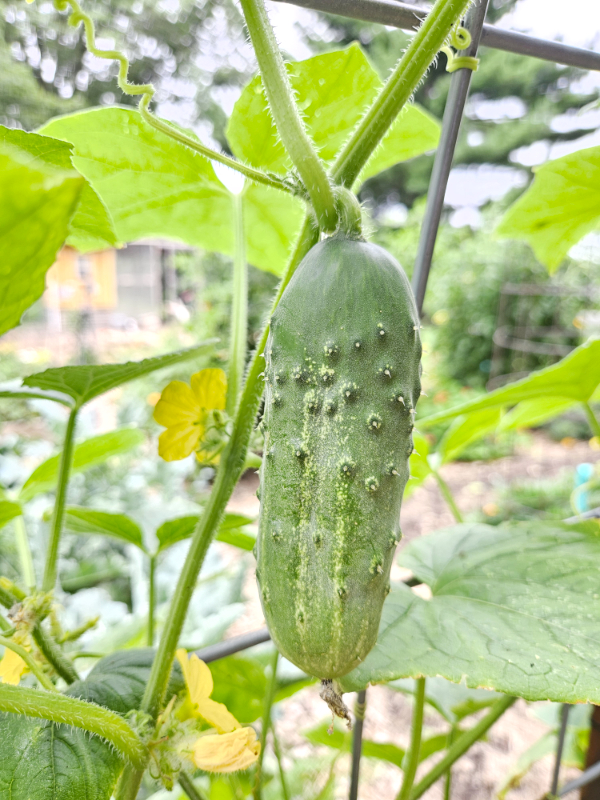
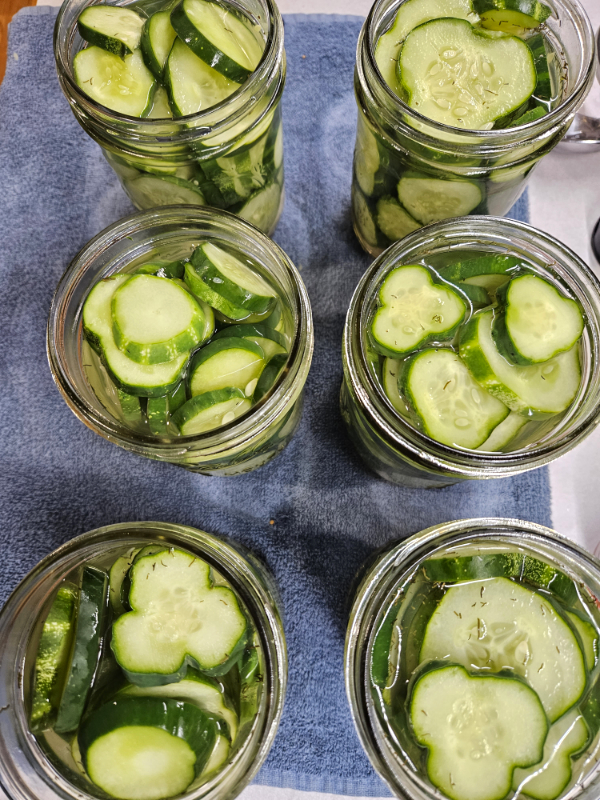
Their thin skins, small seeds, and low water content make them perfect for turning into pickles and relishes. They can also be consumed raw for a nice, crispy snack. However, most varieties do feature a bumpy skin that makes them a bit less appetizing for fresh eating.
When growing pickling cucumbers, harvest them early and often for the best results. Remove them from the vine when they are around 3 to 5 inches long. For gherkin-sized pickles that are canned whole, harvest them when they are 1 to 2 inches long. Pickling cucumbers hold up perfectly to processing and canning without the need to remove the skin. Use them to make homemade dill pickles, sweet pickles, relishes, etc.
What Are Burpless Cucumbers?
Cucumbers naturally produce a compound called “cucurbitacin”. This substance is concentrated in the fruit’s skin and the stem end of the fruit. So the thicker the skin, the more cucurbitacin there is.
The issue with this substance is that it can cause the cucumbers to be bitter. In addition, it can cause indigestion for some individuals, causing them to have gas and burp.
English cucumbers are naturally burpless. However, you can now also find many different slicing and pickling cucumber varieties that are considered “burpless” as well. This is thanks to selective breeding and hybridization. Varieties that have thinner skins and smaller seeds will have less cucurbitacin, which helps make them burpless.
Bush vs Vining Cucumber Plants – Different Cucumber Types
As far as the type of growth, there are two main categories: Bush and Vining cucumber plants.
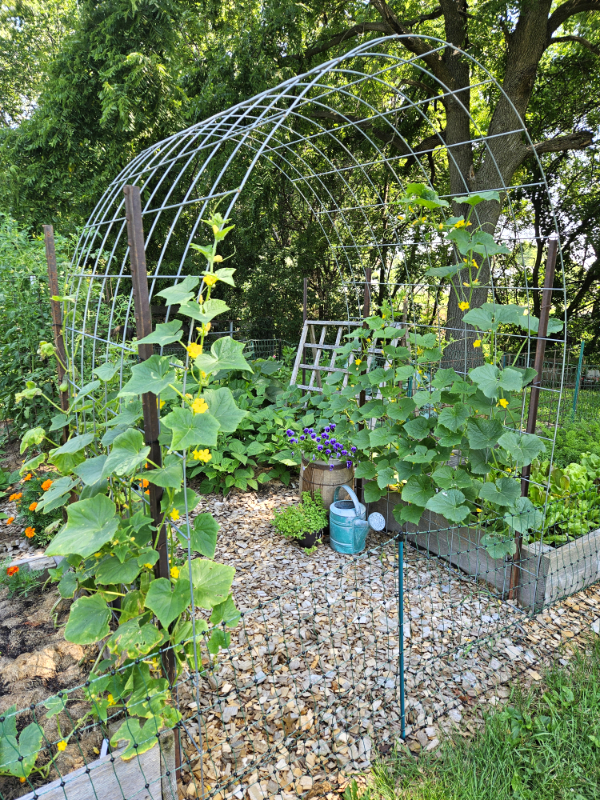
Bush plants are compact, only growing a couple of feet tall. This makes them great for smaller garden spaces or container gardens since they don’t require trellising or supports (at least large ones). The downside is that the yields are on the small side so you end up getting fewer cucumbers per plant. Most are considered to be “determinate” plants. This means that they produce and ripen their fruit all at the same time, similar to determinate tomatoes.
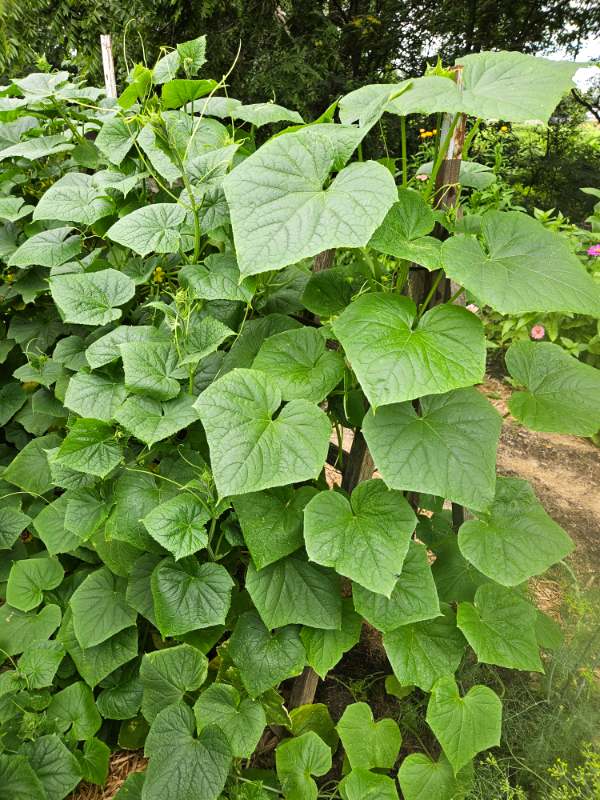
Vining plants, on the other hand, can grow to be 6+ feet long. They are considered to be “indeterminate” plants, which means that they will continue to grow and produce fruit as long as the growing season allows. As long as your plants stay healthy, are harvested regularly, and kept pest-free and well watered, you should be able to harvest loads of cucumbers all summer long.
Vining plants require some sort of trellising or support for best results. As the plant grows, it will send out these tendrils that will curl around nearby fences, branches, etc. This helps to keep plants healthy and off the soil. It also helps to improve airflow to the plant’s foliage. Better airflow can help reduce diseases like powdery mildew.
Heirloom/Open-Pollinated or Hybrid Varieties
Another thing to keep in mind when purchasing your cucumbers is whether you want an heirloom/open-pollinated variety or a hybrid.
Heirlooms are a type of Open-Pollinated seed. These seeds are considered “true”. This means that when you plant the seeds, the new plant will be a copy of the adult plant. Their seeds can be saved and grown again in future years without wondering what type of plant you are going to end up with.

You can get both slicing and pickling cucumbers as open-pollinated varieties. They are cherished for their history and their superior flavor. Marketmore is a popular slicing variety. Boston Pickling and National Pickling are both open-pollinated pickling cucumber varieties.
Hybrids, on the other hand, are created by combining two different varieties together to create a new variety. They are normally bred for better disease resistance, yields, pest resistance, etc. If you save the seeds from hybrid plants, the new plants will not grow to be the same as the parent plant.
These seeds are often marked with “F1” in their name or simply include the word “Hybrid”. Golden Bush Slicer Hybrid, Straight Eight, and Burpless Beauty are all hybrid slicing cucumbers. Pick-a-Bushel Hybrid and Picklebush are both hybrid pickling cucumbers.
Specialty Varieties – Different Cucumber Types
There are also loads of speciality cucumber varieties. Long ones that grow over 18 inches long. Some that grow in the shape of a large egg. Cucumbers with rust-colored skin that resemble a muskmelon. All sorts of fun varieties.
No matter what you are after, there’s likely a cucumber variety that you will love!
Until next time, thanks for stopping by!
– Chelsea
*This post may contain affiliate links. These are products I have used personally and highly recommend. As an Amazon Associate, I may earn a small commission from qualifying purchases if you purchase items through my links. These links and the ads on this page help to support my family and our semi homestead, so Thank You!
Discover more from Semi Homestead Life
Subscribe to get the latest posts sent to your email.