
If you are looking for a productive crop that is easy to grow both in traditional gardens, raised beds, and containers, then look no further than growing cucumbers!
Cucumbers and summer go hand in hand. From adding them to salads to turning them into sweet or dill pickles, most gardens wouldn’t be the same without a few cucumber plants – mine included!
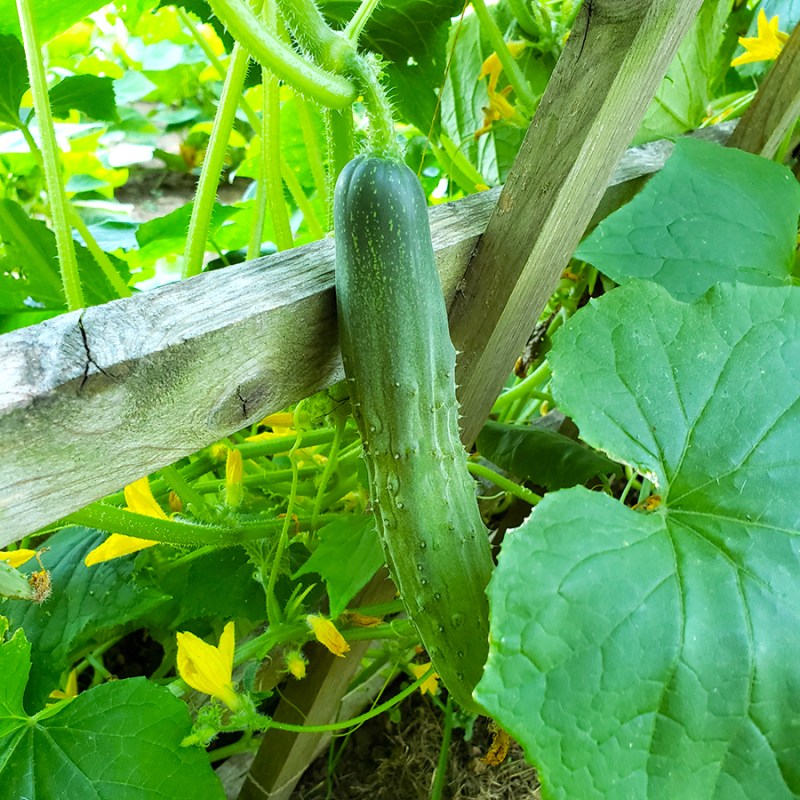
Like tomato and pepper plants, these heavy-producing crops thrive in the hot summer conditions. The warmer and more humid the weather, the better.
Not only are they one of the most popular crops to grow but they are also one of the easiest. Cucumbers grow quickly from seed. As long as you water them well and keep them pest-free, they will continue to produce fruit all growing season long.
Yes, botanically speaking, cucumbers are fruit since they grow from flowers and contain seeds. However, they are treated as a vegetable in the kitchen. No matter what you call them, learn how to grow cucumbers from planting all the way to harvesting!
Tips On Planting, Growing, And Harvesting Cucumbers
Type Of Cucumber Plants
There are two main types of cucumber plants. Which you choose will depend on your planting location and your harvesting goals.
One type is bush cucumbers. They are perfect for growing in containers or smaller places like patios or raised beds. While they don’t produce as many cucumbers, they are perfect for succession planting.

The most common cucumber type that you see is vining cucumbers. These plants push out long vines with large leaves that continue to grow and extend up until the first frost. With proper care, the plants will provide you with plenty of cucumbers to harvest. Vining cucumbers do best when trellised or supported.
Amongst the two main types are multiple different cucumber varieties. There are some that are bred specifically for slicing and adding to salads and fresh eating. Then there are some that are specifically for turning into pickles. These cucumbers often grow smaller and have fewer seeds than their slicing counterparts.
Starting Indoors Vs Direct Sowing
Cucumbers can be started indoors early in the late winter or they can be directly sown.
If you want to start them by seeds or purchase them as transplants, please know that they really don’t like their roots being messed with. You will likely have much better luck by just being patient and starting them from seeds right in your garden.
I’ll be honest, I have done both. I usually start a few plants from seeds in late winter as well as plant a few seeds directly in my garden. When I do this, typically the ones I plant without needing to transplant grow at just the same pace if not better than those I started early.

As long as the soil is nice and warm, the seeds will quickly germinate and take off. So if you can, hold off and save the indoor seed starting containers for your longer-season crops like tomatoes and peppers.
Planting Requirement For Growing Cucumbers
Cucumber seeds need to be planted in a location that receives direct sunlight for at least 6 to 8 hours each day. The more sunlight, the better for these cucurbits.
Choose a location with fertile soil or amend your soil with plenty of compost. We have very heavy, clay-like soil so after we loosen up the soil for planting, we work in a few inches of finished or aged compost. The compost not only helps to loosen the dense soil but it also adds nutrients and plenty of organic matter as well.
The soil also needs to be well-draining. Avoid planting in locations where you get standing water after it rains.
When To Plant The Seeds
If you are starting the seeds indoors, sow them about 3 to 4 weeks before your last frost date. You can follow all my tips and steps for that process here: “Starting Your Garden Seeds Indoors Series – Part 1: Sowing“.

If you are sowing directly outside (which I highly suggest), wait until the soil has reached 65 to 70º Fahrenheit or warmer for best results. Yes, that’s the soil temperature, not the air temperature.
For people in the Midwest or other colder climates like ours, you can help speed up this process by laying down a black tarp or plastic covering over the soil prior to planting. I have never found this to be necessary though.
Planting either cucumber transplants or seeds too early before the soil has had a chance to warm up will likely result in stunted plants or plants that fail altogether. Cucumbers are extremely sensitive to frost and colder temperatures. So be patient and allow the soil to warm up before planting.
Time For Planting
Cucumber seeds grow best in hills or mounds. This helps ensure that they do not end up in standing water for too long. If going this route, create a mound of soil that is a few inches higher than the ground. Space each hill about 1 to 2 feet apart.
Plant 3 to 5 seeds spread apart into each hill. Cover with about an inch of soil or compost. Once the seeds have germinated and are a few inches tall, thin so you only have 1 to 2 plants per hill.

You can also plant the seeds in rows. Space each seed about a foot apart if the plants will be trellised. You can always plant more seeds than intended and then thin them out after they have germinated if you want.
After planting, apply a thick layer of natural mulch around the growing area. Our favorite mulch to use is grass clippings, but straw and shredded leaves also work well. Water the seeds well and keep the soil moist.
Maintain a 4 to 6-inch layer of mulch around the plants throughout the entire growing season. This will help to reduce the amount of competing weeds around your cucumber plants as well as help retain moisture and regulate temperatures in the soil.
Trellising Growing Cucumbers
After planting cucumbers, add in your trellises or supports. Don’t wait until the plant starts to push out roots before adding your supports. You risk the chance of damaging the plant’s roots if you wait too long.
As far as trellising goes, there is a whole host of different materials and techniques you can use. I’ve used many types, but the main goal is to have a support that is strong enough to hold multiple plants and their growing fruit as well as keep the plants up off of the ground.
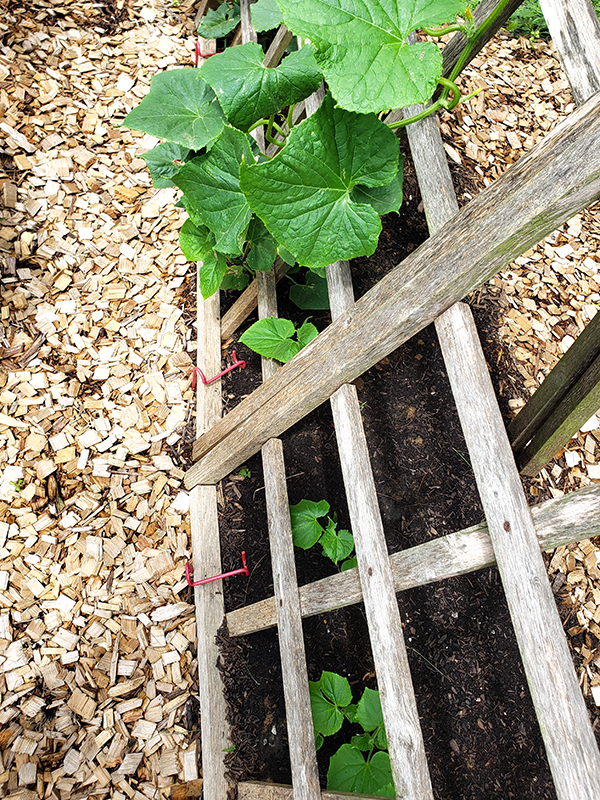
Trellising helps to prevent pests, soil-bourne diseases, and powdery mildew. If you are growing bush cucumbers, you can likely get away without using any type of support at all.
Growing And Maintaining Cucumbers
If you have had issues with pests and insects in previous years, it’s a good idea to add a row covering or netting to the growing area. Keep the covers in place until the plants start to set blooms. (You don’t want to keep the bees and other pollinators out, too!)
Cucumbers are drinkers. If they don’t get frequent drinks or are watered irregularly, their fruit can become misshapen and/or bitter. Cucumbers need around an inch of rainwater or hand watering each week. I like to water my cukes about every other day, especially during the heat of summer.
Water at the base of plants as opposed to overhead whenever possible. This helps to avoid getting the leaves wet for extended periods of time, which can encourage mildew and other diseases. Add an all-purpose fertilizer as plants are starting to set blooms.

Check plants frequently for pets like squash bugs and cucumber beetles. Powdery Mildew is also an issue for some varieties of cucumber plants, especially during extra wet seasons or if plants don’t get proper airflow.
When To Harvest Cukes
Once the cucumber plants start setting fruit, check them every couple of days for any fruit that is ready for harvesting. Check under large leaves because the small ones like to hide from you at times! The more you harvest from the plants, the more blooms they will set.
Use a pair of clean pruners or a sharp knife to cut the cucumber from the plant. Pulling can cause damage to the fruit as well as the vine. (Product Link: Fiskar Bypass Pruning Shears)
Cucumbers have better flavor and texture when they are harvested and picked young. If you allow a slicing cucumber to grow for too long, it can become bitter and the seeds will be tough. If the fruit is left for too long, it can become waterlogged and turn yellow. (Those go to my chickens!)

What Length To Harvest At?
For most slicing varieties, harvest them when they are about 6 to 8 inches long. Pickling cucumbers should be between 2 to 6 inches long, depending on how you will be slicing them for canning. Check your seed packet for specific information on how long your particular variety should grow before harvesting.
Store cucumbers in a zip-lock bag in your refrigerator. They should keep for about a week when stored this way. If you plan on canning, the quicker you can process the cucumbers after picking them, the crunchier the pickles will be. (To get my dill pickle recipe, read my article, “Homemade Dill Pickles – Say Goodbye To Soggy Slices!“.)
Enjoy using your homegrown cucumbers for all sorts of yummy summer recipes. My personal favorite is Tomato, Cucumber, and Onion Salad – it’s a perfect way to celebrate the flavors of the garden!
Until next time, thanks for stopping by!
– Chelsea
*This post may contain affiliate links. These are products I have used personally and highly recommend. As an Amazon Associate, I may earn a small commission from qualifying purchases if you purchase items through my links. These links and the ads on this page help to support my family and our semi homestead, so Thank You!
Discover more from Semi Homestead Life
Subscribe to get the latest posts sent to your email.