
When it comes to gardening, there are all sorts of different bugs, insects, and winged creatures that hang out in the garden, and one of the most interesting ones is the praying mantis.
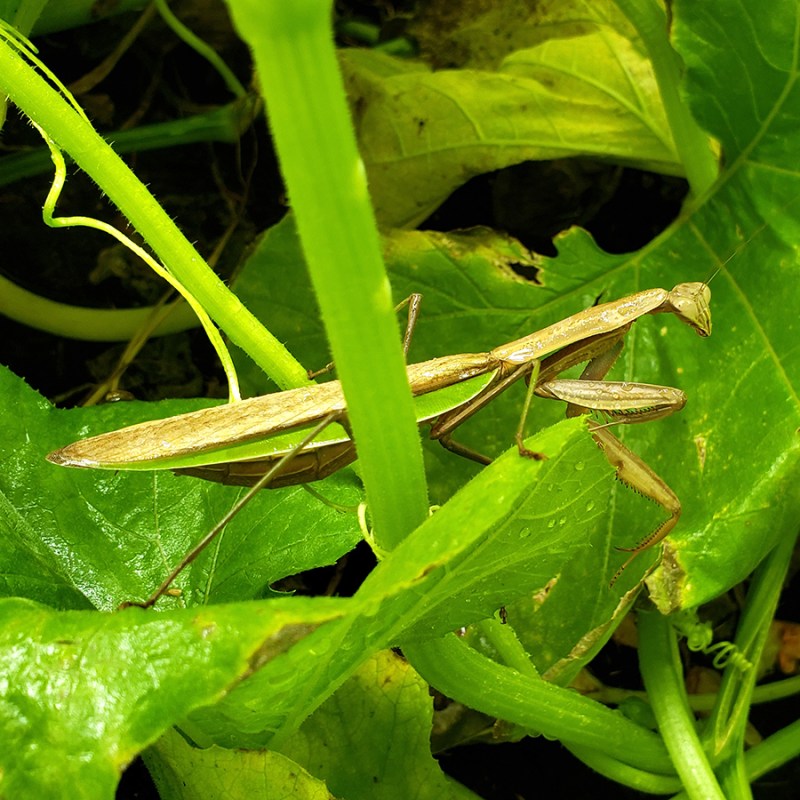
These long, thin creatures have beady little eyes and triangular heads that can swivel from side to side. They are masters at hiding thanks to their natural colors of tan, brown, gray, and green.
Praying mantises get their name from their two long and strong front legs. When the insect isn’t using them to walk or climb, the limbs are pressed together and folded as if in prayer.
Some gardeners consider them to be a friend of the garden because they like to eat pests like aphids, moths, and caterpillars. However, they are considered “generalists”, which means they will also eat butterflies, beneficial caterpillars, and maybe even hummingbirds!
So, should you be welcoming praying mantises to your garden space with open arms, or trying to persuade these creatures to find other hunting grounds?
All About Praying Mantis & Gardening
Just a Note: Even though the correct term to use is “Mantid” since it refers to the entire order of insects, I will be using “mantis” throughout this article since that is the most commonly used word. (“Mantis” refers to specific members of the genus Mantis.) The terms tend to be used interchangeably.
Types Of Praying Mantises
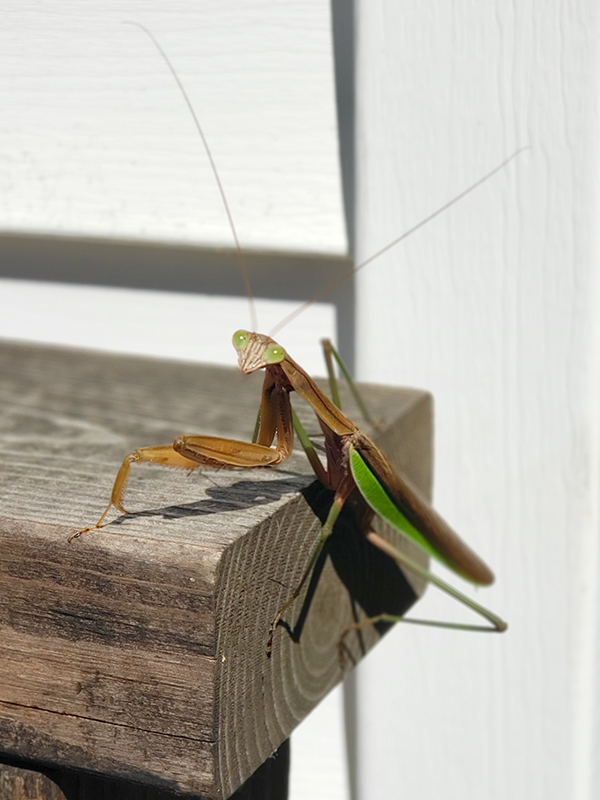
There are several different types of praying mantises, but three are most commonly seen around the United States. The most common native mantis is the Carolina Mantis.
The other two popular non-native species are the Chinese Mantis and the European Mantis. (Chinese Mantis are the species that I most often see around our neck of the woods.)
Carolina Mantises are often mottled gray and pale green in color. They measure around 2 to 2-1/2 inches long. The space between their beady eyes is wider (more rectangular in shape).
Chinese & European Mantis
The Chinese Matis is native to East Asia but was accidentally introduced to the US in 1896. However, the US later imported them on purpose with the goal of eliminating or reducing the amount of certain pests here in the US. (Source: Missouri Department of Conservation)
The Chinese Mantises are also pale green but more tan in color. They can measure between 2-1/4 inches long, all the way up to 4 inches or longer.
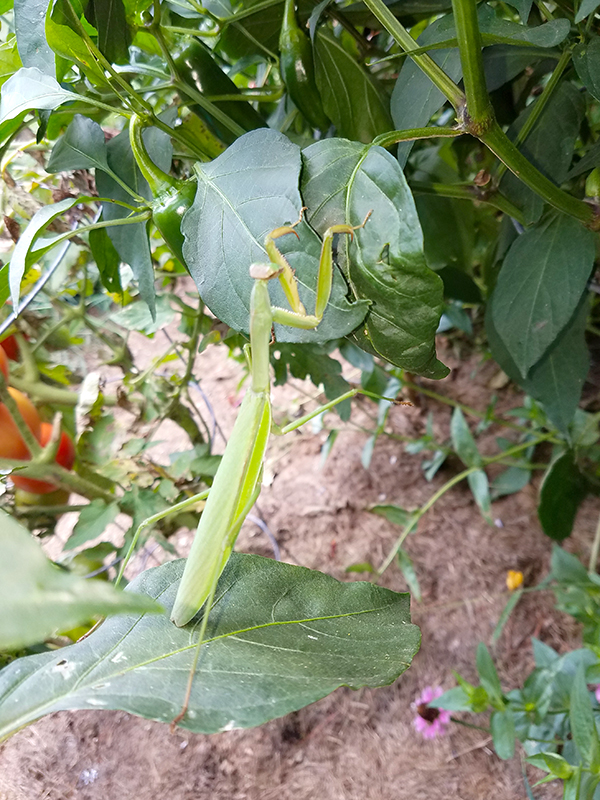
Unfortunately, thanks to their larger size and the fact that they are carnivores, the Chinese Mantis is part of the reason why the Carolina Mantis is declining in numbers. (They will actually eat the Carolina Mantis!)
European Mantis are a bit rarer than the other two species. They were introduced accidentally to the US in 1899, but were later imported on purpose as a means to eliminate certain pests. They are tan, cream, or a yellowish green in coloring and only grow between 2 and 3 inches in length.
Praying Mantis Eggs
All species of praying mantises keep their eggs contained within an ootheca. This is a hardened egg sack that protects the eggs from predators and the elements. It looks like styrofoam in texture and can contain anywhere between 50 and 300+ eggs. The ootheca is most often attached to a twig, stem, fence, or the side of a wall.
Praying mantises lay their eggs during the late summer or fall months. Once the weather warms in spring and late summer, the baby mantises will hatch and disperse.

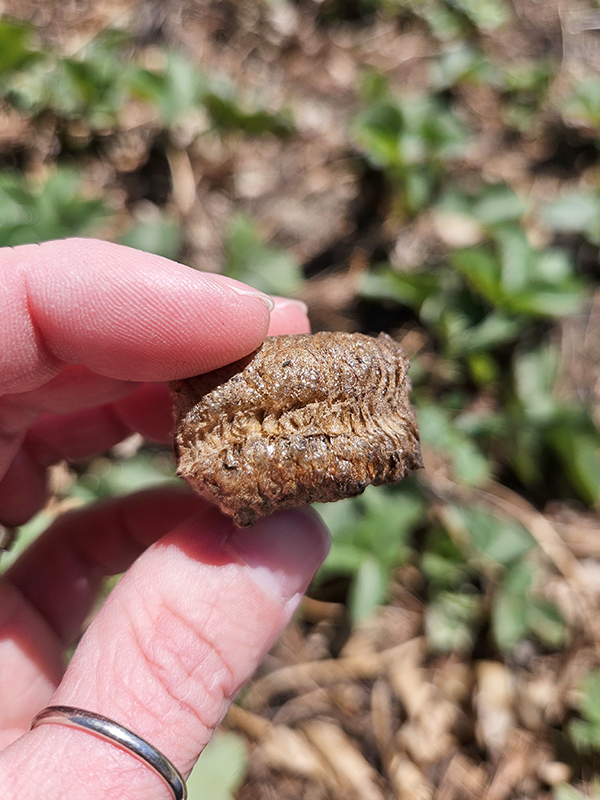
A Carolina Mantis’s ootheca is long and more narrow. A Chinese Mantis has a wider ootheca that is often referred to as a toasted marshmallow in color and shape. European Mantises lays oothecas that are more egg-shaped with very distinct layers.
Habitat and Food – Praying Mantis & Gardening
Praying mantises most often live in heavily vegetated areas that are open. So your garden, with all its plants and foliage, is a perfect location. Other popular places are open pastures or fields, or along the edges of wooded areas.
As far as their diet, praying mantises eat a wide variety of items. They are carnivores, so pretty much any flying, walking, or crawling insect is a go. Larger ones will also occasionally eat small amphibians or reptiles.
Praying mantises use stealth-like movements to ambush and attack their prey. They will sit quietly or slowly stalk their prey, blending into the surrounding foliage. Then they will quickly extend their bodies and snatch their prey in quick movements.
Are They Beneficial Or Dangerous?
In terms of gardening, are praying mantises beneficial or dangerous? Unfortunately, that isn’t a one-size-fits-all answer because they are actually both.
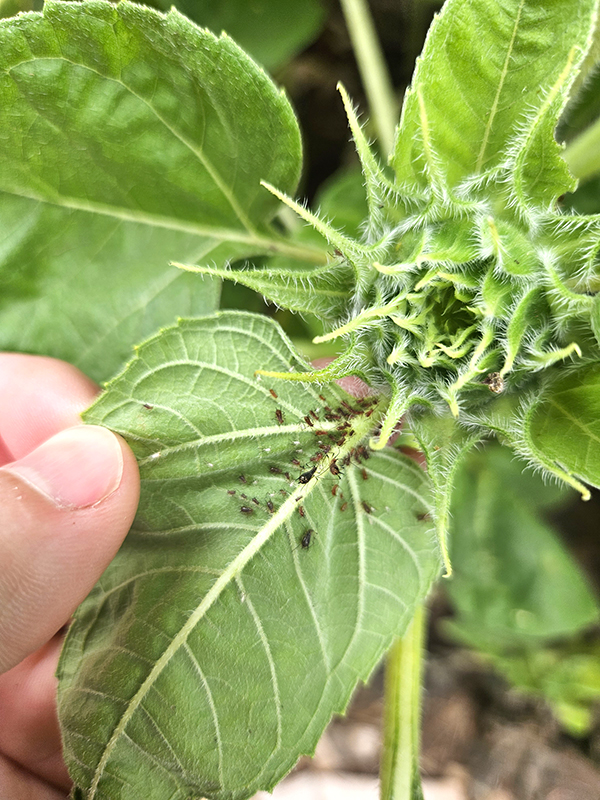
Do mantises eat pests and insects that can also be a problem for gardeners? Yes. They often dine on pests like aphids, thrips, stink bugs, earwigs, moths, squash bugs, mosquitoes, caterpillars, grasshoppers, beetles, and more.
HOWEVER, praying mantises are not picky eaters and will also dine on beneficial insects. They don’t distinguish between good garden bugs and bad garden bugs. It’s all food for them.
For example, they don’t care whether the caterpillar they are eating is a Japanese Beetle grub or a butterfly larva. In addition to flying insects like cabbage moths – a pest gardeners definitely don’t want – they will also eat good moths and butterflies. Ladybugs and bees, two types of very beneficial insects, can also become victims.
Do They Eat Hummingbirds?
Now this is one question that most gardeners want to know: Do praying mantises eat hummingbirds?
The real answer is that it depends on which species of mantis you are referring to. Due to their size, it is very unlikely that a Carolina or European Mantis will dine on larger birds and animals.
However, the female Chinese Mantis has been known to feast on small amphibians and reptiles. And, there are a few rare instances where a hummingbird has become the target. So, is it common? No, but it does happen.

The Overall Takeaway – Praying Mantis & Gardening
Based on what you’ve learned today (if you made it this far), what should you take away from praying mantis and gardening?
In my opinion, having one or two praying mantises hanging around your garden isn’t going to make or break your growing season. It’s all about balance in nature. (Also note, many spiders eat beneficial insects and pollinators, but I don’t see anyone banning them from their garden!)
Having a praying mantis amongst your plants might help reduce the number of unwanted pests and insects a little bit. Will it also consume a few beneficial insects along the way? Probably. Will it make or break your garden? Very unlikely.
Now, I wouldn’t suggest you go out and purchase an ootheca specifically with the goal to hatch them in your garden space to eradicate garden pests. In addition, if you happen to see an ootheca from a non-native praying mantis species amongst your garden foliage over winter, I do suggest cutting the branch off, taking care not to disturb the egg sack as much as possible. Move the ootheca and branch to a location far away from your garden space.

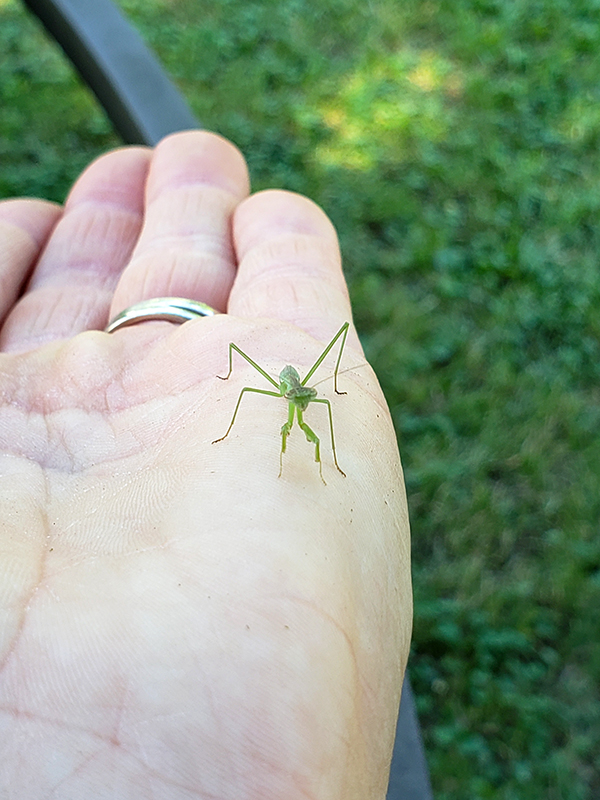
If you see native praying mantises or their ootheca in your garden, that’s up to you on whether you move them or not. I’d be more apt to welcome a native species with open arms. (The more we can promote native species, the better!)
But as always, to each their own. I personally will leave the one or two praying mantises I see each year alone. There are plenty of pests and insects to go around!
Until next time, thanks for stopping by!
– Chelsea
*This post may contain affiliate links. These are products I have used personally and highly recommend. As an Amazon Associate, I may earn a small commission from qualifying purchases if you purchase items through my links. These links and the ads on this page help to support my family and our semi homestead, so Thank You!
Discover more from Semi Homestead Life
Subscribe to get the latest posts sent to your email.