
When it comes to gardening and growing vegetables, fruit, and flowers of all types, there aren’t many pests that are more disliked than Japanese beetles, and finding ways to get rid of them is a must!
These flying insects can threaten an entire crop or orchard in just a matter of a few days. One minute, you see just a couple of bugs dotting the leaves of a plant here and there. Before you know it, hundreds have overtaken the entire plant and left a shredded destruction in their wake before moving on to the next.
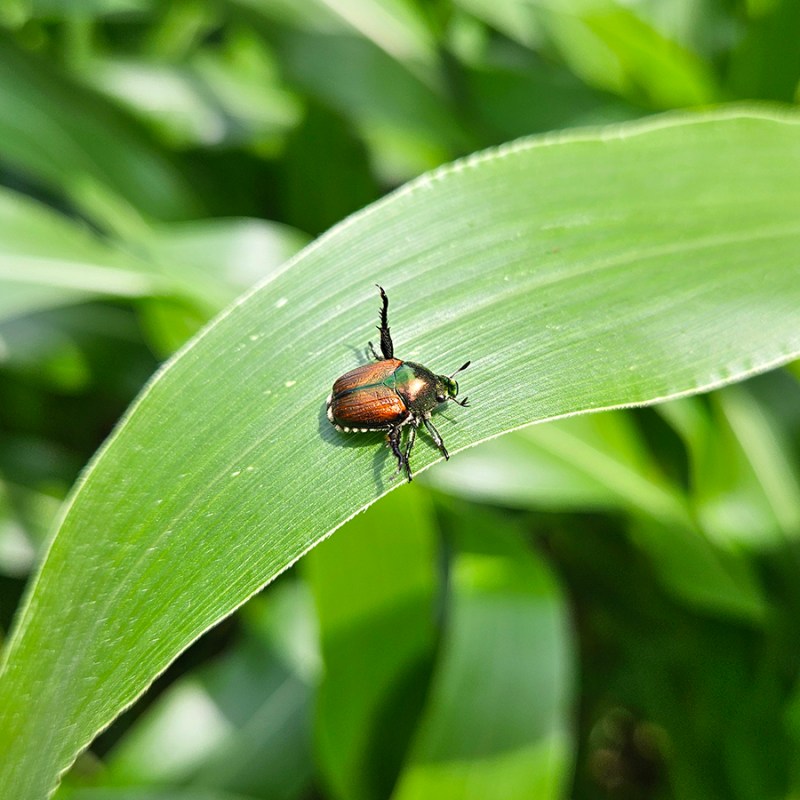
While the iridescent insects might be pretty to look at, they are hated by most homeowners and growers who have ever had the (dis)pleasure of dealing with them – Myself included! But it’s not just the adult beetles that are a concern.
Japanese beetles in the larval form (often referred to as “grubs”) can also cause considerable damage to your lawn. With severe infestations, patches of dead grass can be seen throughout your yard, and that’s before the pests even emerge from the ground!
If you are a lover of all things that are creepy or crawly or that have wings, then I suggest you click away now. However, if you have ever had to deal with the destruction that Japanese beetles can cause to a wide variety of your plants in the blink of an eye, then this is the place to be!
The Damage Is Done
Unfortunately, younger garden plants or seedlings are often killed by the damage caused by Japanese beetles. Established vegetables can usually tolerate an infestation. However, the plants might become stunted, and/or they will fail to produce fruit or vegetables.
Flowers are the same way. Mature annuals and perennials can typically withstand the pests. However, you will likely have a great reduction in the blooms, which is unfortunate for annual plants since they only live for one season.
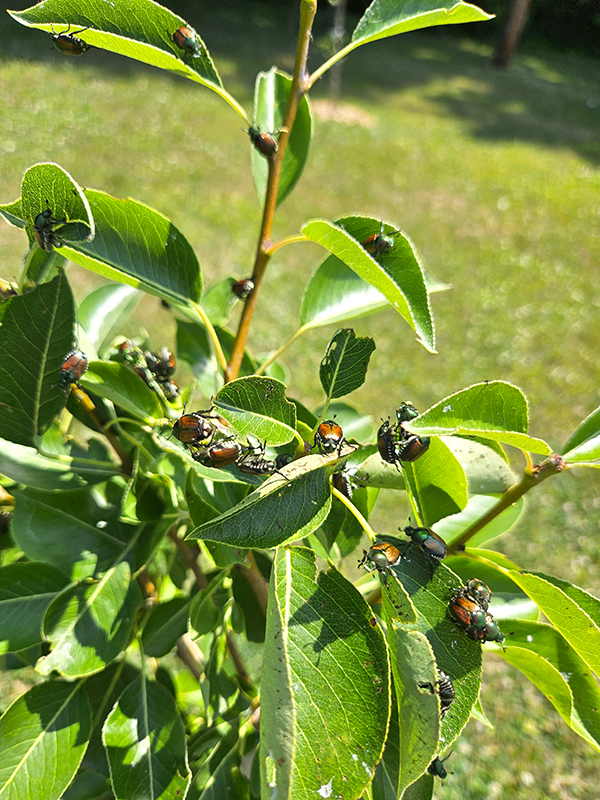
Large, healthy, mature shrubs and trees can usually withstand a large infestation without long-term damage. While they might look a little worse for wear during the current year, they should bounce back just fine the next year.
Even if your plants fare just fine, however, you still want to take measures to stop the adults now. Not only will the adults continue to reproduce and multiply quickly, but you are setting the stage for the following years as well.
7 Ways To Get Rid Of Japanese Beetles
The sooner you start taking measures to eliminate the Japanese beetles around your property, the better. Not only will stopping the adults now help to save this year’s crops, but it will also help lessen the amount of grubs overwinter and affect next year’s gardening season.
There are a few ways to control the beetles. Their success will vary depending on how bad your infestation is and how well you keep up on the prevention.
If you want to read more general information about Japanese beetles, what they look like, and how to identify their damage, check out my article, “All About Japanese Beetles – Everything you need to know & more!” Otherwise, let’s talk about ways to get rid of them.
1: Hand Picking
This is the first method I use to remove Japanese beetles around my property when I start to see the adults flying around. It works best for smaller plants, vegetables, and dwarf trees and shrubs since it might be hard to reach taller plants (at least safely).
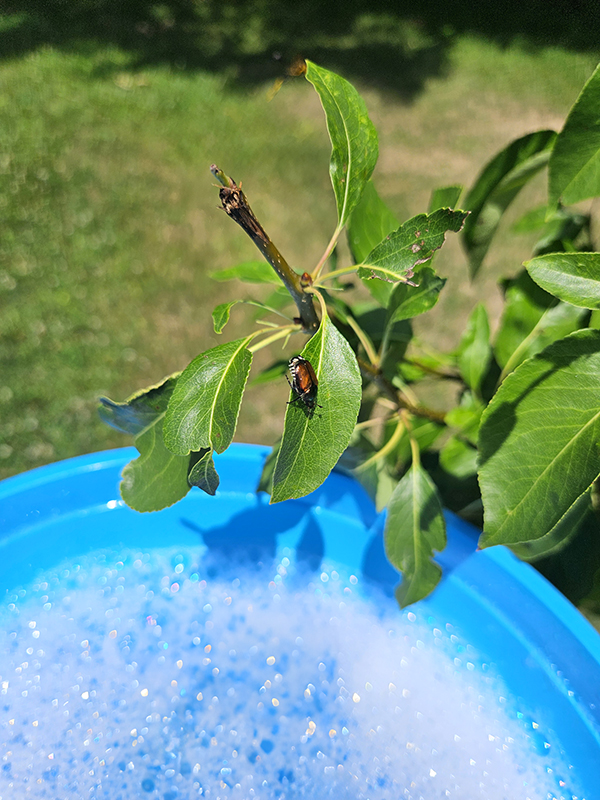
For hand picking, walk around your property with a bucket of warm, soapy water. You can then simple flick the beetles off into the water. Once they hit the water, they won’t be able to get out and will eventually drown.
Removing them this way is the best method since when Japanese beetles are killed, they often release a pheromone that attracts other beetles to your location. The scent isn’t released using the soap bucket method like it would be if they were squashed.
This method will take a few days of consistently going out and doing this. Going out twice a day is often a good idea for heavier infestations or if several bugs fly away during the first sweep. Each time you go out, their population should get less and less. Continue hand-picking the bugs off the plants until you no longer see any around.
2: Neem Oil – Get Rid Of Japanese Beetles
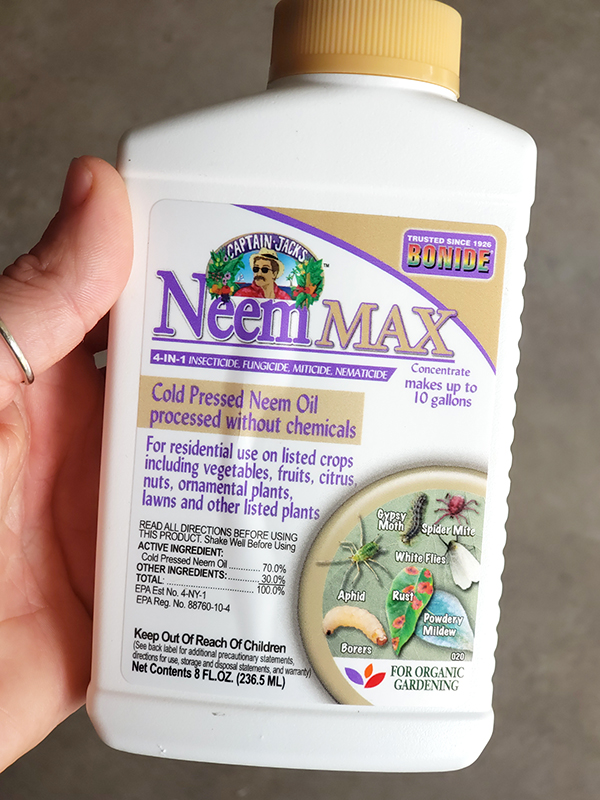
Neem oil is a natural product that is considered to be safe for organic gardening when used properly. It is the oil that is produced by pressing the seeds of the neem tree. It is often used as an organic pesticide as well as a fungicide. (This is the brand I use when needed – Product Link: Bonide Captain Jack’s Neem Oil.)
It is a bit smelly, but it works well to deter and control a whole slew of different pests and diseases, including Japanese beetles. At the same time, it is low risk to beneficial insects like bees when used properly. However, avoid using it around lakes, rivers, and other bodies of water.
Neem oil can be used as a deterrent before an attack occurs, as well as a way to kill small infestations. It works to disrupt all stages of an adult Japanese beetle’s life, including their reproduction and feeding.
You can find neem oil in concentrated formulas that you have to mix with water. Or, you can find ready-to-spray products. It works well for larger plants and trees if you use a pump sprayer to get hard-to-reach spots. When spraying the plant, try to get both the bottom and top of the leaf if possible. Reapply often, especially after heavy rainfall.

3. Grow Least Liked Varieties
There are some trees and plants that tend to attract Japanese beetles more than others. Those with floral and fruity scents are especially tempting. Keep the following in mind if you are going to be planting brand-new trees and shrubs on your property.
Japanese beetles tend to go after Birch trees, some maple tree varieties (specifically Japanese and Norway), Pin Oak trees, Roses, and Crab Apple trees. Fruits also seem to be on their favorites list in terms of edible shrubs and trees. Trees like apple, apricot, cherry, peach, and plum, as well as grape vines and raspberry bushes, are frequently visited.
Unfortunately, what variety you are growing doesn’t really matter for the most part. Japanese beetles don’t care if your fruit tree is a Fuji, Jonathan, or Yellow Delicious. They just care that it is a tasty apple tree!
When you are talking about vegetables, you tend to see Japanese beetles on asparagus, all types of corn (i.e., sweet corn, popcorn, ornamental corn, and field corn), soybeans, and other vegetables. We often see the iridescent pests on our rhubarb plants as well.

4. Grow Companion Plants & Trap Crops
While some plants are more tempting to the insects, there are some that produce an aroma that Japanese beetles do not like. Herbs like parsley, dill, sage, oregano, thyme, chives, and basil are all great options that tend to send the pests in other directions.
Crops like onions and garlic are also great companion plants due to their strong scent. Some other plants to include in your garden are catmint, lavender, yarrow, lilac, and some geraniums.
You can use some plants as trap crops to help lure the beetles to them instead of more desirable plants. Marigolds and zinnias can be used this way. Just keep in mind that the crap crops will end up with damage and might draw in more pests.
5. Attract Natural Predators
While there aren’t very many natural predators of Japanese beetles here in the United States, there are a few that will help eliminate the insects. Unfortunately, none of them do an amazing job yet at keeping their population in check due to their vast numbers.
However, any bit of help is welcome. You can try to attract these natural predators to give you a helping hand in controlling Japanese beetles. Predators like parasitic wasps, assassin bugs, spiders, predatory stink bugs, and some birds are all predators of the beetles.
There are also the trachinid flies, which are a type of parasitic fly. They not only help with Japanese beetles, but also other many other garden pests. If you see little white eggs attached to the back of a Japanese beetle, then leave it alone! Those are the eggs of the trachinid flies (or another type of parasitic insect). Once the eggs hatch, the larvae will start to dine on their host. (Gross but interesting to say the least!)

6. Control The Grubs – Get Rid Of Japanese Beetles
Don’t forget about controlling the grubs, too. Getting rid of the grubs will help reduce the number of flying insects that are allowed to turn into hungry adult beetles!
One way of doing this is by using a product like GrubGONE! that contains a naturally occurring bacteria that lives in the soil. Bacillus thuringiensis galleriae (Btg) works to kill only certain grubs like Japanese beetle grubs. Beneficial bugs like pollinators and beneficial nematodes aren’t bothered.
Another option is Milky Spore, which is another naturally occurring bacterium that specifically targets Japanese beetle grubs. It uses the bacterium, Paenibacillus popilliae, and works to eliminate the pests at the larval stage. Both of these products are usually applied either in the spring or the fall months.
7. Sprays And Chemicals – Get Rid Of Japanese Beetles
When worse comes to worst, you may have to resort to using insecticides or sprays to get rid of the beetles. I try to only use this as a last option, but it is sometimes needed, especially during heavy infestations.
Always way the pros and cons of using an insecticide and decide what is best for you and your situation. I am not telling you that you HAVE to use sprays. I just know that personally, we have used them when nothing else has worked and the situation is getting out of hand. You do you, as always!

What To NOT Do
Personally, I would not use traps if you are trying to get rid of Japanese beetles. Commercial traps are intended to draw in the insects and then kills them once they get stuck in the containers.
However, while that might sound all good and fine, you will likely end up attracting way more Japanese beetles to your location than would come naturally. If you have a large property and can place the traps on the very outskirts, then the traps might be effective. However, for most people in most cases, the traps will only do more harm than good.
Hopefully, these tips will help prevent Japanese beetles from getting out of hand and ruining your plants and trees this year – and next!
Until next time, thanks for stopping by!
– Chelsea
*This post may contain affiliate links. These are products I have used personally and highly recommend. As an Amazon Associate, I may earn a small commission from qualifying purchases if you purchase items through my links. These links and the ads on this page help to support my family and our semi homestead, so Thank You!
Discover more from Semi Homestead Life
Subscribe to get the latest posts sent to your email.