
Tomatoes are one of the most popular vegetables (actually fruit) to grow in home gardens, but did you know that some plants require pruning in order to have the best success at a huge harvest?
It’s true that home-grown tomatoes have SO much more flavor and amazing texture than store-bought. In fact, grocery store ones don’t even come close! And with so many different flavor profiles, colors, shapes, and styles, it’s no wonder that so many people like to grow them in their gardens!
Tomato plants are broken down into two main varieties, determinate and indeterminate tomatoes. Both benefit from proper pruning at the base of each plant. However, indeterminates also benefit from a different type of pruning throughout the growing season.
Without it, plants can grow to be rather unruly, wild, and disease-prone. What’s worse, not pruning your tomatoes can actually cause a reduction in the amount of fruit you harvest!
While it might sound like a daunting task, pruning tomatoes is extremely easy and only takes a couple of minutes once or twice a week if you stay on top of things. So let’s get going!
All About Pruning Determinate and Indeterminate Tomatoes
2 Types Of Tomato Plants
As I mentioned above, tomatoes are broken down into two main categories, determinate and indeterminate plants. Which type you grow makes a difference in how you prune and harvest from your tomato plant.
Determinate tomatoes only produce blooms for a short period of time. Once that time is up, the plant stops pushing out blooms. It then focuses its energy and resources on ripening the fruit. Then it is done.

Determinate tomato plants are great for those who want a whole bunch of ripe tomatoes at the same time. If your goal is canning or bulk selling, then determinants are ideal. They are also a good choice if you are short on growing space in your garden since many are smaller and more bush-like compared to indeterminate tomatoes.
I like to grow determinate dwarf tomato plants because they are one of the fastest to produce in the summer. In addition, they are easy plants to grow in almost any empty spot in your garden. In fact, one of my favorites, Tiny Tim, grows to be around 12 inches tall! (Product Link: Tiny Tim Tomato Seeds)
Another one of my favorite varieties, Orange Hat, only grows to be around 6 to 8 inches tall. Yet I still get a great harvest from each plant!
Indeterminate Plants
Indeterminate tomatoes, on the other hand, are considered to be vining plants. They will continue to grow and push out new blooms up until the first frost. Indeterminate tomatoes are the ones that need a bit more care to prevent them from growing unruly.
While they won’t produce as many ripe tomatoes at the same time, indeterminates are great for harvesting all summer long. Most of your large slicing tomatoes and your paste tomatoes are indeterminate varieties.

Since determinate and indeterminate plants grow and produce fruit differently, they need to be pruned differently as well. (If you want to go more in-depth about determinate and indeterminate tomatoes, check out my article, “Determinate And Indeterminate Tomatoes – All You Need To Know”.)
Pruning They Both Need
Regardless of whether your plant is a determinate or indeterminate tomato, they both benefit from base pruning. What I mean by that is removing the bottom 12 to 18 inches of the plant, or up to the first fruiting stem. (For dwarf varieties, I usually only remove the bottom stem or two.)
After the tomato plant starts to get established in your garden (or raised bed, container, etc.), remove the bottom few stems. Pretty much any stem that is low on the plant and touching the soil needs to go.
Tomatoes are well-known for getting all sorts of different diseases and pest issues. Many of those diseases are soil-borne, which means that the pathogens live in the soil.
By removing any tomato plant stems that touch the soil, you help to reduce the chance of those diseases getting on the foliage of your plants. (You can also help by adding mulch and watering plants at the base of each plant as well. More on that here.) Pruning the base also helps to create better airflow for the plant.

Just take a pair of clean, sharp pruners and snip off any lower side stems from the main stem. On my larger plants that grow over a couple of feet tall, I try to remove about 12 to 18 inches of growth from the base of each plant.
You should only have to do this pruning task once or twice early in the growing season. However, some stems will start to regrow, so you might have to do an occasional maintenance prune here and there. If you do no other pruning throughout the growing season, at least do this!
Additional Pruning For Indeterminate Tomatoes
Since indeterminate tomato plants continue to grow and expand all growing season long, they benefit from an additional type of pruning. This type of pruning involves removing the suckers that grow on the plants.
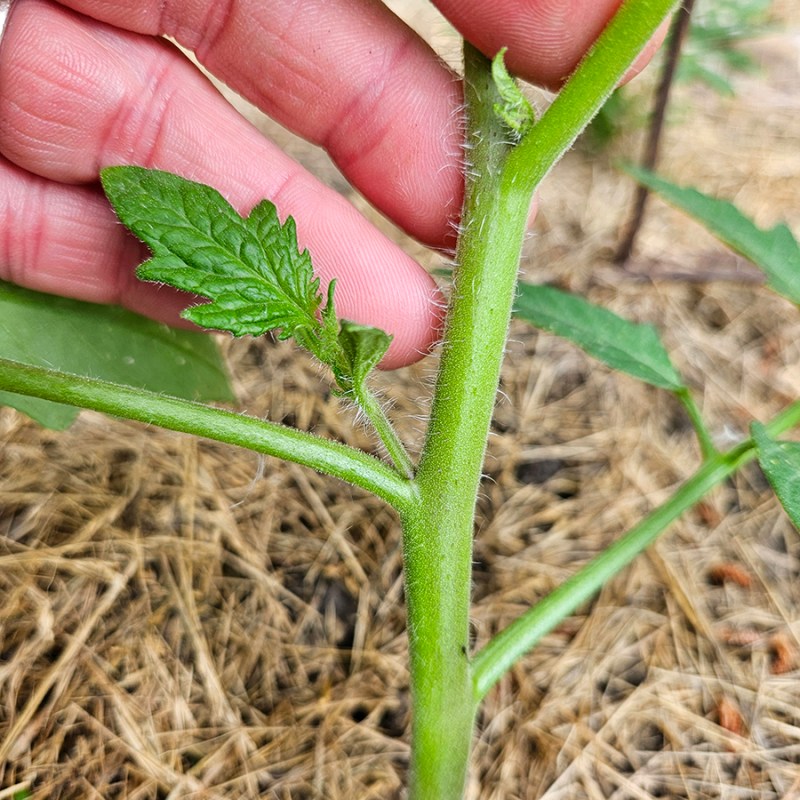
First, let’s talk about what I mean when I refer to the word “sucker.” These are the side shoots that tomato plants produce.
Tomato plants have one main stem that grows up the middle of the plant. It is usually the thickest stem on the plant. Off the main stem, you will also get stems that produce only foliage, stems that produce the fruit, and suckers.

The suckers grow out of the “axil” of a stem. (I like to refer to that as the “armpit” of the plant since it is in between a main stem and a stem of leaves.)
Eventually, the suckers turn into their own main stem that also produces leaf branches, fruit branches, and their own suckers. It’s a process that can go on and on and on. You can imagine just how large and unruly a plant can get if these suckers are all allowed to grow and produce!
While having more stems and branches might sound like a good thing (more branches = more possibilities for fruit), that isn’t usually the case. The suckers can actually cause a reduction in not only the amount of fruit your plant produces, but also the size of that fruit.
Advantages Of Pruning Indeterminate Tomatoes
Probably the biggest reason for pruning tomato suckers from indeterminate plants, in my opinion, is keeping the plants in check. A plant left to its own devices can quickly outgrow not only its support or cage, but also your garden! I have had more than a few plants get to the point where they are so big that I can’t take it anymore and chop them off in rage. (I’m looking at you, Chadwick Cherry!)
Another great benefit from pruning tomatoes is the improved airflow. Having proper airflow allows the foliage of a plant to dry out faster. This means there are fewer chances for diseases to take hold under moist conditions. It also allows for better pollination and easier harvesting.

When a plant is less dense, there is also a better chance of catching early signs of diseases or pest damage. I’m not sure if you’ve ever come across a tomato worm, but those darn things are good hiders! You can only imagine how hard it might be to spot one in dense foliage.
Another advantage of pruning tomatoes is that you will get rewarded with larger fruit. It takes a lot of energy and resources to grow foliage and new stems. By removing this new growth, the plant will be able to focus its energy on growing bigger, better tomatoes off the main stem instead.
How To Prune The Suckers
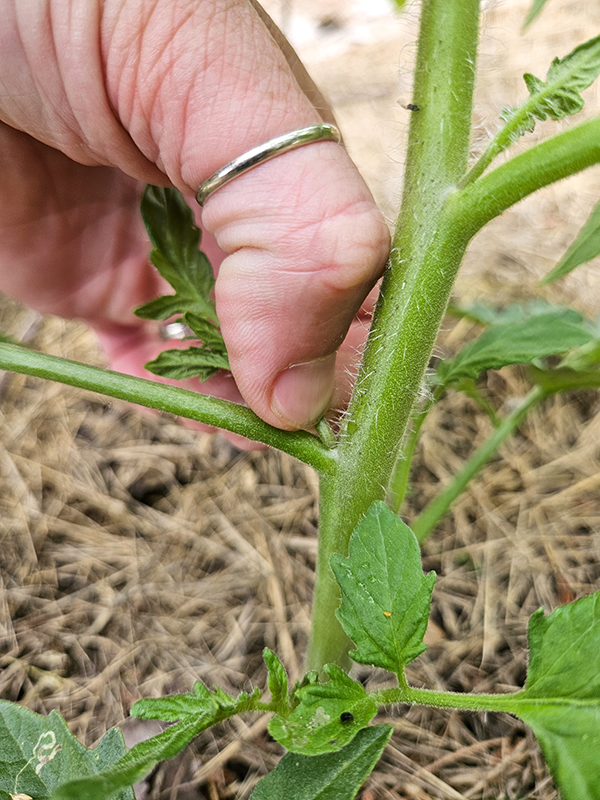
Pruning the suckers is really quite easy, especially if you stay on top of the task and remove them early on. As soon as you start to see a sucker growing out of the “armpit” of the plant, use your fingernails to snap it off. Suckers that are only an inch or two long should come off relatively easily.
If you’ve let this task slide a bit, I recommend using a pair of small snips or pruners to tackle the task. They just make a cleaner cut when the stems get to be a bit too thick. (These are my absolute FAVORITE snips to use for pruning in the garden – Product Link: Fiskars 6″ Pruning Scissors.)
You only really need to prune the suckers about once a week. Just walk through your garden and snip off any new suckers you see. If you want, you can allow a couple of the suckers to grow so you have 2 to 3 main stems early on. That usually doesn’t create too much chaos. Just stay on top of pruning those guys as well.
Now For The Truth
Here’s the part where the truth comes out. While I always prune the bottom of my tomato plants, I’ll admit that I don’t always prune my indeterminate tomato plants like I should. And I usually have to pay for that laziness as well, either by a reduction in fruit or by disease issues.
You need to do what works for your garden setup and your situation. If not pruning allows you to still enjoy a few tomatoes here and there, and you don’t have issues with diseases, then go for it. But if you’ve been disappointed with your production the last few years, give pruning a try and see if it helps.
You might even be able to cram more tomato plants in your growing space if you prune them properly to only one or two main stems. This will overall give you way more tomatoes to harvest in the long run.
As always, you do you! I think the most important part is that you are able to grow your own food and enjoy the gardening process at the same time.
Until next time, thanks for stopping by!
– Chelsea
*This post may contain affiliate links. These are products I have used personally and highly recommend. As an Amazon Associate, I may earn a small commission from qualifying purchases if you purchase items through my links. These links and the ads on this page help to support my family and our semi homestead, so Thank You!
Discover more from Semi Homestead Life
Subscribe to get the latest posts sent to your email.