
I figured since I’d written about easily cutting up a watermelon and a pineapple, it was time to also show you how I cut up a muskmelon. There are several different ways you can go about this task; This is just the method I use that I find the easiest.
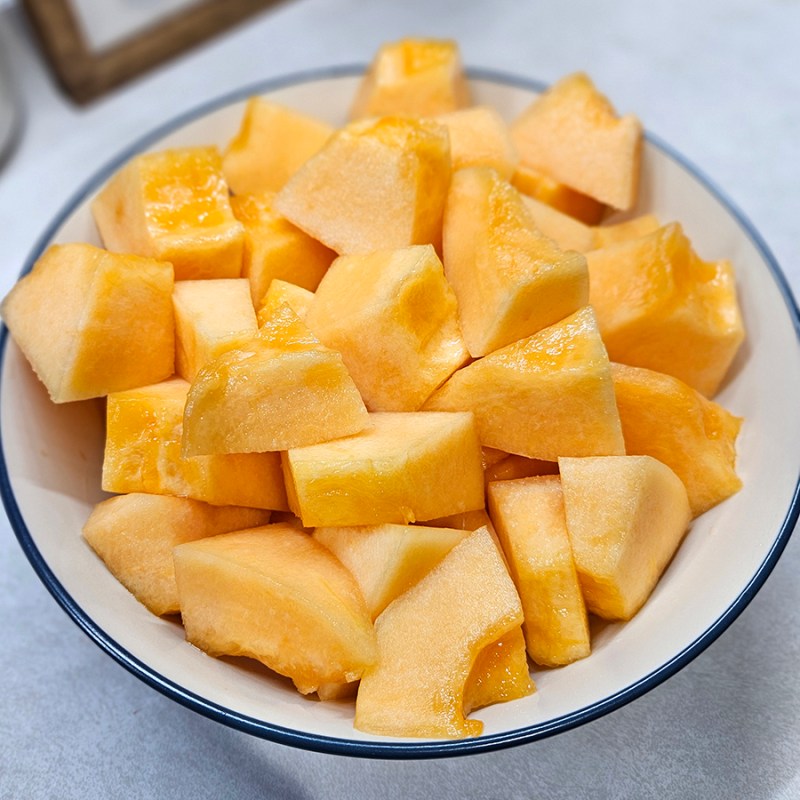
Muskmelon is a broad term for several different types of fresh melon fruit, including Cantaloupe, Canary melon, Casaba, and Honeydew. The round fruit features either a netted, ribbed, or smooth skin with a “musky” aroma, which gives the fruit its name. (Cantaloupe and Honeydew are the most popular where I live.)
It belongs to the gourd family and is closely related to watermelon, squash, and pumpkins. Often, you will hear people using “muskmelon” and “cantaloupe” interchangeably, but while all cantaloupes are muskmelons, not all muskmelons are cantaloupes. (Confused yet?)
Whatever you call it, muskmelon can be a bit of a pain to try to separate the rind from the rest of the fruit. Not to mention the center of gooey seeds to deal with. So I thought I’d walk you through exactly how I open up and cut up a muskmelon as well as talk about how to pick out a perfectly ripe one.
Health Benefits Of Muskmelon Fruit
Summer is the perfect time of year for enjoying fresh fruit. Whether you grew the muskmelon in your garden, bought it at a local farmer’s market, or purchased it from the grocery shelves, muskmelon is a great choice for those hot summer days!

Muskmelons are not only delicious, but they also contain a wide variety of vitamins and minerals. Two of those are vitamin A and C, which help boost your immune system and prevent diseases.
In addition, muskmelon is a great source of fiber and has a high water content, helping you stay regular and hydrated during the summer months. Since they are also low in calories, snacking on muskmelon is a great way to fill up without adding a ton of calories to your diet.
Picking A Ripe Muskmelon
Now for the sometimes tricky part, picking out a ripe melon. It can be so disappointing to purchase a muskmelon only to have it be either too underripe or overripe when cutting it open.
Give the melon a little sniff. If you don’t smell anything, it’s likely underripe. On the other side of things, if it smells rotten, it is likely overripe. A perfectly ripe melon should have a sweet, slightly musky scent.
Avoid purchasing any that have punctures, soft spots on the rind, or that have discoloration that looks like bruising. Be sure to check the stem-end of the melon for soft areas, indicating that the fruit is already starting to rot from the inside out.
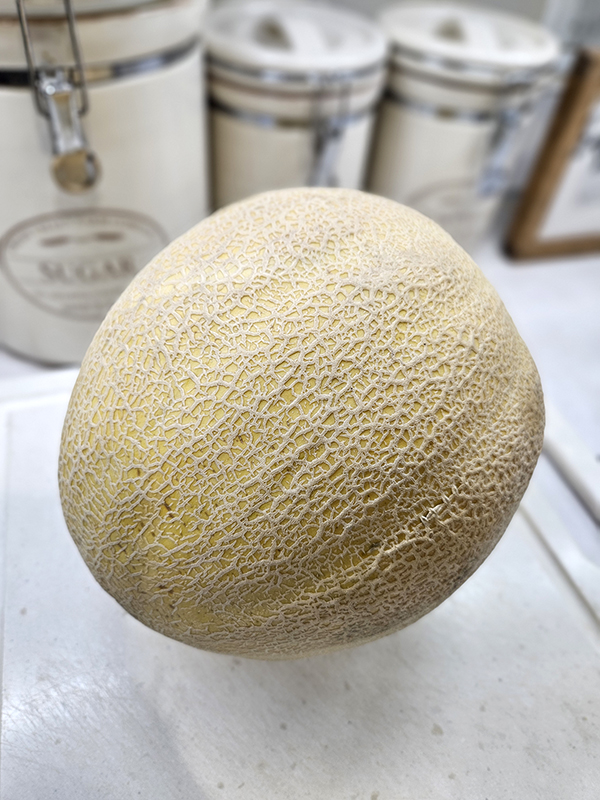
Also, if the stem is still attached, pass on that one. This usually indicates that the fruit was harvested before it was ripe enough to come away from the plant. The stem spot may actually be indented slightly, which is a good sign.
Look at the opposite end of the stem and press on that area. It should provide a little give when pressed, while the rest of the rind should be fairly firm to the touch. Also, the melon should feel heavy in your hands. A lightweight muskmelon often indicates that it isn’t ripe enough yet.
Once you purchase your muskmelon, keep it in a cool, dry location. Avoid storing a whole melon in your refrigerator until it is sliced.
4 Steps For Cutting Up A Muskmelon
Step 1: Wash, Halve, And Scoop
The first step is to wash your muskmelon. Since you are slicing into it, you don’t want to transfer any bacteria or other unwanted goodies into the flesh of the fruit. Just use good old water and a scrub. Dry well after washing.


Next, slice the muskmelon in half using a large, sharp knife. I like to run the blade from stem end to blossom end, cutting the ends in half. (This is the knife set I have, and I use the chef knife for slicing melons – Product Link: Cuisinart Knife Set.)
There really is no right or wrong way to do this because you will open up the fruit no matter which way you cut it in half. If your muskmelon is more oblonge shaped, I would cut it so you have two longer halves. (That will make the next few steps easier.)
Now that you have the melon in two pieces, you can see the seeds inside. They are usually surrounded by a sometimes gooey pulp. If you’ve ever cut up a pumpkin for carving, then you kind of know the type of goo I’m talking about, just on a much smaller scale!
The easiest way to remove the seeds I’ve found is to use a soup spoon. Use that to gently scrape around the center cavity until the pulp is separated from the flesh of the fruit. Don’t dig down too deep or you’ll end up scraping out the edible flesh! The pulp and seeds can be tossed, but our chickens go nuts over it and enjoy the little summer treat!
Step 2: Turn Into Slices – Cutting Up A Muskmelon
Now that you are working with two halves sans the seeds and pulp, set one of the halves aside for right now. With the other, cut it in half lengthwise. You should now have two pieces (plus the other half you set aside).
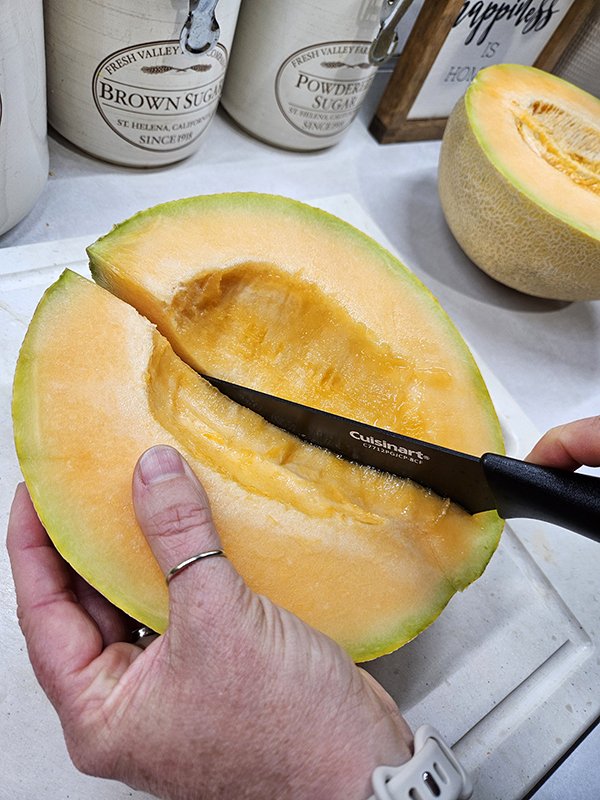

Take each of the quarters and cut them in half again. Repeat with the other pieces of melon. When all is said and done, you should wind up with eight slices of melon altogether.
Now, depending on the size of your muskmelon, you may need to cut each of those into halves again. Normally, eight pieces are the perfect size for the next step.
Step 3: Peel
Take one of the slices and note where the flesh changes color as it goes into the peel. You want to remove the flesh at this point.
So, for example, in the photos I took, I am working on a cantaloupe. The orange flesh turns into green right before the rind. I want to run my knife along the rind so none of the green is cut off, and as little as possible of the orange is left on the rind.
Starting at the tip of one end, place your knife so that it is parallel to the rind. Gently slice back and forth, working your way down along the rind until you reach halfway. Rotate the slice and do the rest of the peel starting from the top of the other side in the same manner until the cuts meet in the middle. (The video I link below might make this easier to understand if my text and images don’t make sense here.)


If the melon is ripe, it should slice pretty easily. An underripe melon will give you a bit more resistance, but it still should slice easily.
Repeat this step with all of the slices until all of the peel has been removed. Toss the rinds into your compost. Or, depending on how much “transition” flesh was left behind, the peels also make for great chicken treats!
Step 4: Cube – Cutting Up A Muskmelon
Depending on the width of your slice, you may want to cut it in half again before cubing. But now you can cut your muskmelon into whatever size cubes you want. Or just cut the slice in half and leave it as little moon-shaped pieces if you prefer.
Just like with cutting up a watermelon and a pineapple, the finished-sized pieces are a personal choice and totally up to you. We prefer cubes in our household, but you can make them whatever size and shape you want!
Once the melon has been cut up, store the pieces in your refrigerator in a covered container. This will help keep the fruit fresh for about three to four days.
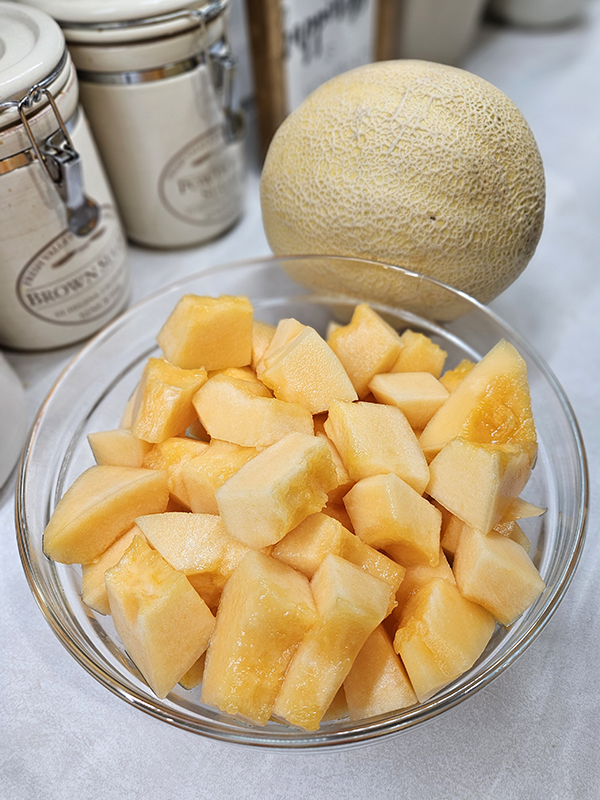
Hopefully, the step-by-step directions and pictures helped make slicing a muskmelon a little easier for you! If not, I also posted a little walkthrough video on my YouTube shorts below if you want to check that out. Nothing like watching it in action if you are a visual learner like I am!
Until next time, thanks for stopping by!
– Chelsea
*This post may contain affiliate links. These are products I have used personally and highly recommend. As an Amazon Associate, I may earn a small commission from qualifying purchases if you purchase items through my links. These links and the ads on this page help to support my family and our semi homestead, so Thank You!
Discover more from Semi Homestead Life
Subscribe to get the latest posts sent to your email.