
If you’ve grown almost any type of vegetable in your garden, then chances are you’re no stranger to battling squash bugs! These pesky insects have a way of just showing up out of nowhere.
One day, you’re walking your garden rows, looking at all the beautiful, healthy plants. The next day, those same plants are riddled with creepy crawly bugs that are literally sucking the life out of your plants!

Contrary to their name, squash bugs don’t actually just infest members of the squash family like zucchini, pumpkins, and winter squash. They also infest members of the cucurbit family like cucumbers, watermelons, and cantaloupes. So all sorts of different crops in your garden are at risk of damage.
Young, tender plants and seedlings are their first choice of victims. Their presence can leave their leaves wilted and dead, eventually overtaking the plants altogether. However, even healthy, mature plants are also at risk.
I’ve put together information to help you identify and understand the squash bug lifecycle, as well as tips on how you can keep them from ruining your plants this year, and for future years as well!
Tips On Finding And Battling Squash Bugs
Identifying Adult Squash Bugs
Adult squash bugs are flat, dark brown to gray insects that measure around half an inch long. Their bellies have alternating brown and orange stripes. They often hang out at the base of plants or along the stems.
Even though the adults do have wings, they often prefer to scurry around on plants and the soil. That might sound like an advantage for someone trying to eliminate them. However, squash bugs are very good at darting away quickly and hiding under the foliage of the plant.


Squash bugs are often mistaken for stink bugs, another common pest that looks very similar in both size and color. In addition, both pests smell when they are squished. However, if you were to compare the two side by side, stink bugs have wider, rounder bodies while squash bugs are a bit thinner and more elongated.
Squash Bug Eggs
Not only are the adults recognizable to most gardeners, but so are squash bug eggs. The yellowish-brown football-shaped eggs are extremely tiny, but the females lay them in clusters of about 20 to 30 eggs. This makes them a bit easier to spot.
The cluster of eggs is unlike squash vine borers, another common garden pest. They often lay their eggs individually and at the base of plants.
Squash bug eggs are most often found on the bottom side of the plant’s leaves. This can make finding them a bit harder if you are just walking through your garden and looking at the top of the plants.
Their Lifecycle – Battling Squash Bugs
Around late April and early May, adult squash bugs emerge and start to search for a mate as well as host plants. Once they find both, the females eventually lay their eggs on the bottom of the leaves of said host plant.

About two weeks later, the eggs hatch. It takes up to six weeks for the nymphs to turn into full-sized adults. This process can continue all summer long, with several generations of squash bugs occurring each year. (That’s how a small infestation can turn into mass chaos in no time at all!)
Once the weather starts to cool down, any young nymphs or eggs are killed off by the freezing temperatures. The adults, however, overwinter in plant debris, under rocks, and around buildings. When spring rolls around, the process starts all over again.
Identifying Their Damage
Even if you don’t see squash bugs, you can still identify their damage. The adults feed by sucking the sap from the leaves, stems, and even the vegetables of their host plants or those nearby using their sharp mouthparts.
Affected plant tissue will start to turn yellow, wilt, and eventually die. While parts of the plant might look completely healthy and untouched, those that have damage will prevent nutrients and moisture from traveling through the plant.

While otherwise healthy, mature plants can usually handle a small infestation, younger plants might not be as lucky. Also, keep in mind that a small squash bug problem can quickly turn into a big infestation if you don’t do anything to stop it. That can mean lights out for any plants, mature or otherwise!
Battling Squash Bugs & Their Eggs
Now that you know what to look for, it’s time to talk about how to take care of and eliminate squash bugs. As stated earlier, if left unchecked, just a few bugs will turn into a nightmare not only for the current growing season, but for the following ones as well.
The best defence against squash bugs is early detection. The sooner you spot the bugs, the sooner you can put a stop to their damage and multiplication.
Walk your plants at least every couple of days. Don’t just quickly glance at your plants. Take the time to really inspect them, especially the plants that squash bugs like to visit. Look over the tops of leaves as well as underneath for any egg clusters or adults.
Hand Removing The Eggs – Battling Squash Bugs
If you see any eggs, you can easily remove them by hand. While it can be a bit time-consuming to check each leaf one by one, it is well worth it to keep each one of those eggs from turning into a mating, reproducing, and feasting adult!

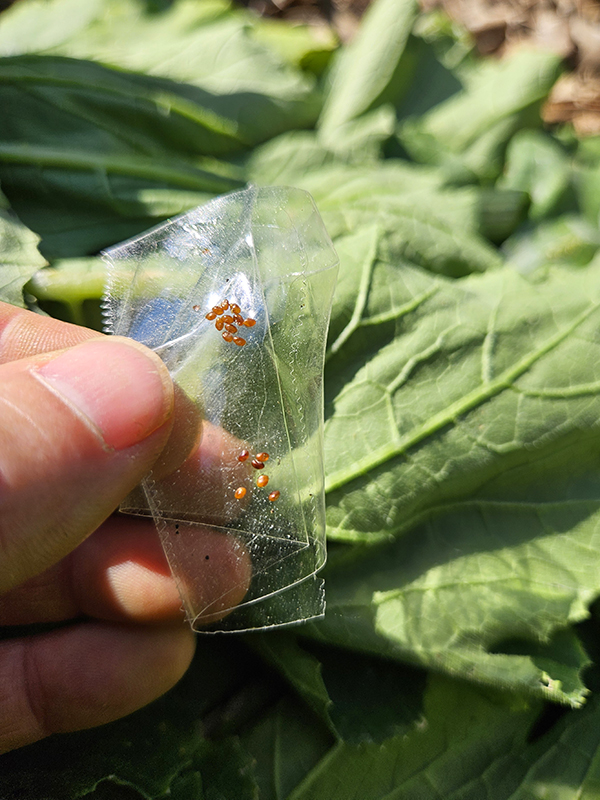
The simple way I like to remove the eggs is to use a piece of packaging tape or duct tape. You want a type of tape that is heavy-duty and stronger than your typical Scotch tape. (Product Link: The Original Duck Brand Duct Tape)
Make a donut with the tape and gently press the tape against the squash bug eggs. Most of them, if not all, will come away with the tape. Repeat until all of the eggs are picked up by the tape. You can then fold the tape over the top of the eggs and dispose of them.
Another way is to carefully scrape the eggs off using your nail, a stick, or a knife. Just be careful not to damage the plant if possible.
Getting Rid Of The Adults
You can often see the adults moving around when you water your plants at the base of each one. For small adult infestations, pick each one off the plant and drop them into a small bucket or bowl of soapy dish soap. They will try to scurry away from you, but keep at it and eventually you can win.

If you don’t want to use soap, just squish the bugs as you see them. (This is the method I often use because I don’t always have a bucket of soapy water with me when I spot the little buggers.)
Another method for the adults requires placing a small piece of lumber or a few newspapers onto the ground next to your infested plants. Both the adults as well as the nymphs will gather under the lumber or paper during the night. Then, in the morning, you can go out and get rid of the bugs. Just be sure to move quickly!
Once you notice adult squash bugs or the eggs, continue to check your plants daily. Most likely, there will be more. After being consistent for a week or so, you should get a good grasp on the situation.
End Of Season Tips – Battling Squash Bugs
While some people try to tell you to leave your dead plant debris in the garden for all the “good” bugs and pests, you are also helping out the bad and unwanted pests as well.
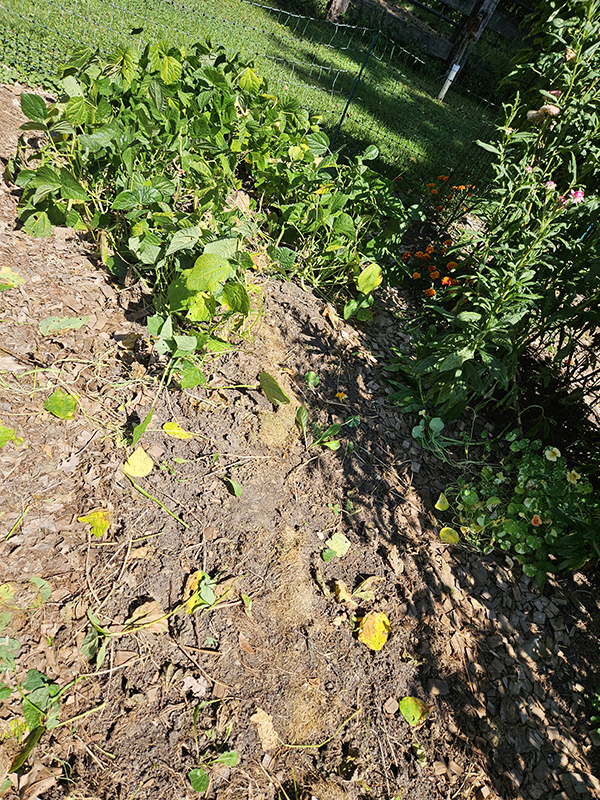
I always tell gardeners to clean out their gardens at the end of the growing season. The chances of more unwanted pests overwintering are much higher than the good ones. It just isn’t a risk I don’t want to take! There is plenty of other timber and plants nearby that the good bugs can head to if they want, just not in my garden space.
In addition, leaving plant debris also raises the chance that diseases and other soil-borne issues will hang out in your garden as well. This is especially the case with vegetable plants like tomatoes, which often harbor diseases. So as soon as your plants start to die back, get them out of there!
Hopefully, by following these tips and learning about the lifecycle of the squash bugs, you can get the upper hand when battling against them and their eggs!
Until next time, thanks for stopping by!
– Chelsea
*This post may contain affiliate links. These are products I have used personally and highly recommend. As an Amazon Associate, I may earn a small commission from qualifying purchases if you purchase items through my links. These links and the ads on this page help to support my family and our semi homestead, so Thank You!
Discover more from Semi Homestead Life
Subscribe to get the latest posts sent to your email.