
Have you ever walked around an antique store, an estate sale, or someone’s home and seen these big and bulky stoneware crocks and jugs sitting around, either for sale or on display?
What are all these pieces, and why do you see so many of them? What could they possibly have been used for, and why are they still around today?
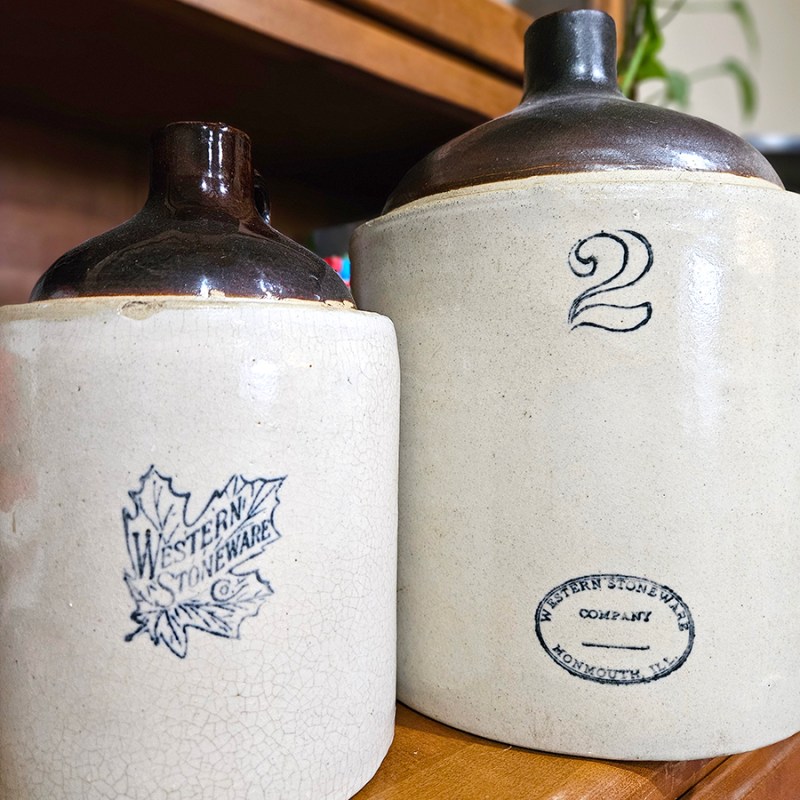
One of the main reasons is that back in the day, most homes used crocks and jugs for food storage and preservation. Refrigeration is a luxury that we take for granted nowadays. However, home refrigerators were considered a luxury item back in the 1920s and 1930s. They didn’t really become commonplace until the late 1940s.
So way back, even before refrigerators were invented (we’re talking late 18th century through the early 20th century), people had to turn to other ways of keeping their food fresh and edible. That’s where these stoneware pieces came into play.
Thanks to their waterproof designs and durability, antique stoneware pieces were built to work and last. That’s why we see so many of them still in existence today. And even though you might not use them in the same manner, they can still be a great addition to your home!
All About Antique Stoneware Crocks, Jugs, And More
What Are Crocks & Jugs
Stoneware crocks and jugs have been around North America since the early 18th century. By the mid to late 1800s, it was very common to see various types of stoneware pieces in most homes. They were used for a whole slew of practical reasons.

Stoneware is a type of durable pottery. The process of creating them involves firing certain types of clay at extremely high temperatures. This creates a waterproof, non-porous piece. The finished product is an item that is sturdy, durable, and doesn’t chip or break as easily as other types of pottery.
To aid in its appearance, give the piece even better resistance to acidic products, and provide the piece with a glossy finish that is easier to clean, a glaze was often added. Some of the most common types of glaze are Salt Glaze, Bristol Glaze, and Albany Slip.
Most Stoneware products vary in color from all shades of gray to beige. Some pieces are darker than others. This is partially thanks to the amount of iron in the clay as well as the glaze used on the stoneware pieces.
Stamps And Marks
Antique stoneware crocks and jugs were often decorated with cobalt oxide to identify and decorate the pieces. Early on, these marks were done by hand. As the 19th century came to an end, most companies transitioned to molds and stamps/stencils to help mass-produce the products. Some markings were also etched or drawn into the clay before it hardened.
These marks often included drawings of birds or other animals early on. Logos and other makers’ marks are also commonly seen. For example, on some Western Stoneware pieces, you will often find the iconic Maple Leaf logo. (You can see one of those leaf stamps in the first photo in this article.)

In addition, some crocks and jugs also include the number of gallons they hold. So if a crock has a number “3” on the outside, it can hold three gallons.
Having a stamp or mark can help you identify where the crock or jug was made. It can also help in ascertaining the value of the piece. Unmarked pieces are often much cheaper than those from a specific company.
Most Common Uses – Antique Crocks And Jugs
Larger crocks that could hold several gallons were typically used for curing meats in a brine. You’d often find two-piece stoneware weights that would fit inside the crock and help to keep the meat submerged in the liquid. A lid would be added, and the crock would be stored in a cool location out of the elements.
The larger crocks were also used to help with everyday chores, such as washing laundry or storing large quantities of household items. (Can you imagine having to use a large crock for washing your jeans nowadays?)
Smaller crocks were used for all sorts of different ways in the kitchen and home. Just like we use glass canning jars nowadays for preserving the garden harvest, crocks were used to preserve goods, especially fermented and pickled items.
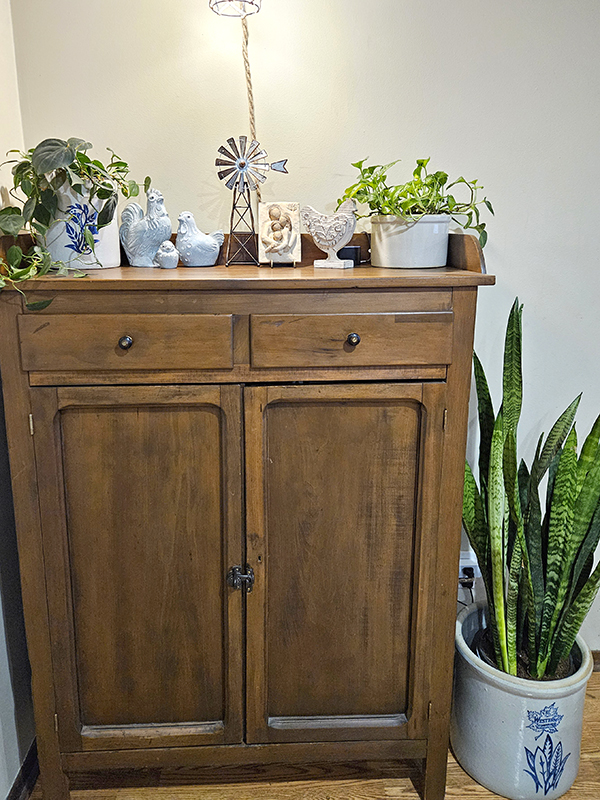
They were also used for making and storing butter; making sourdough; and storing pantry goods like grains, flour, sugar, salt, eggs, and more. Stoneware jugs were used to store liquids like cider, juice, milk, and alcohol.
You can also find antique stoneware bowls, pitchers, butter churns, water coolers, and even chicken feeders. Some companies even produced decorations and clay sewer pipes.
Popular Stoneware Companies
Your location will somewhat dictate which stoneware company was/is the most popular in your area. Some companies made primarily artistic types of containers, while others were more utilitarian in nature.
Around here in the Midwest (specifically Illinois), the most common company was Monmouth Pottery. It was founded in the early 1890s and was later purchased by Western Stoneware Company. At one time, Monmouth Co. claimed to be the world’s largest pottery company, pushing out over 6 million gallons of stoneware products every year. (Source: Stoneware Museum of Monmouth, IL)
Western stoneware was comprised of seven different plants, each with the ability to use its own branding. These plants included Monmouth Pottery Co., Macomb Pottery Co., Macomb Stoneware, Weir Pottery Co., Clinton Stoneware Co., and a few others.

Some other popular companies are Red Wing Potteries, Robinson-Ransbottom Pottery, and many others. Again, the companies popular in your area are possibly different than those in mine. Many of the older stoneware plants were destroyed by fires and never rebuilt, including the small stoneware company that was in existence in my own hometown.
Whether you own one of these antique stoneware pieces or have just seen them around, hopefully you can appreciate them a bit more now.
Until next time, thanks for stopping by!
– Chelsea
*This post may contain affiliate links. These are products I have used personally and highly recommend. As an Amazon Associate, I may earn a small commission from qualifying purchases if you purchase items through my links. These links and the ads on this page help to support my family and our semi homestead, so Thank You!
Discover more from Semi Homestead Life
Subscribe to get the latest posts sent to your email.