
If you want to add an annual flower to your vegetable garden that benefits your plants as well as yourself, then you need to grow nasturtium! Not only does nasturtium add pops of bright color and interest to your garden, but it also helps to repel pests as a trap crop. To top it off, nasturtium is edible!
In fact, the leaves, immature seeds, and beautiful flowers are all edible. They have a peppery taste that makes them great for adding to salads, pesto, and pasta or for adorning cakes and pastries.

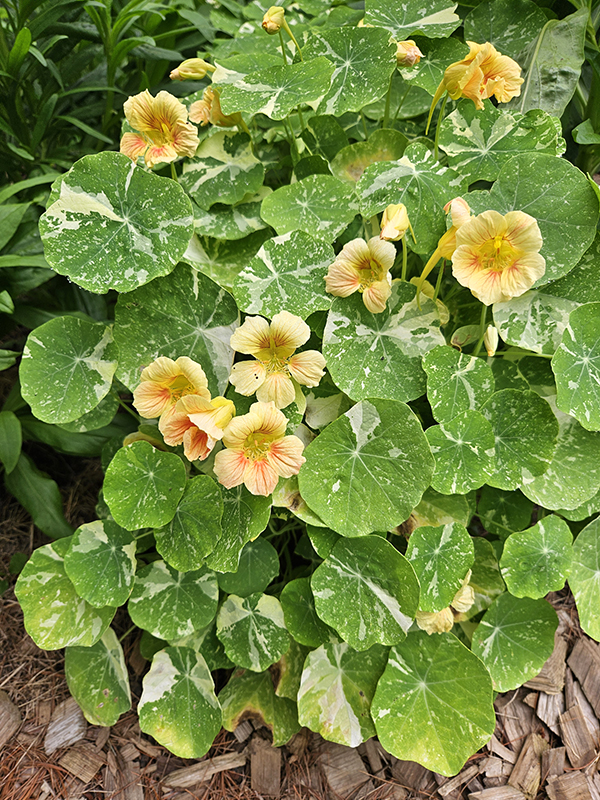
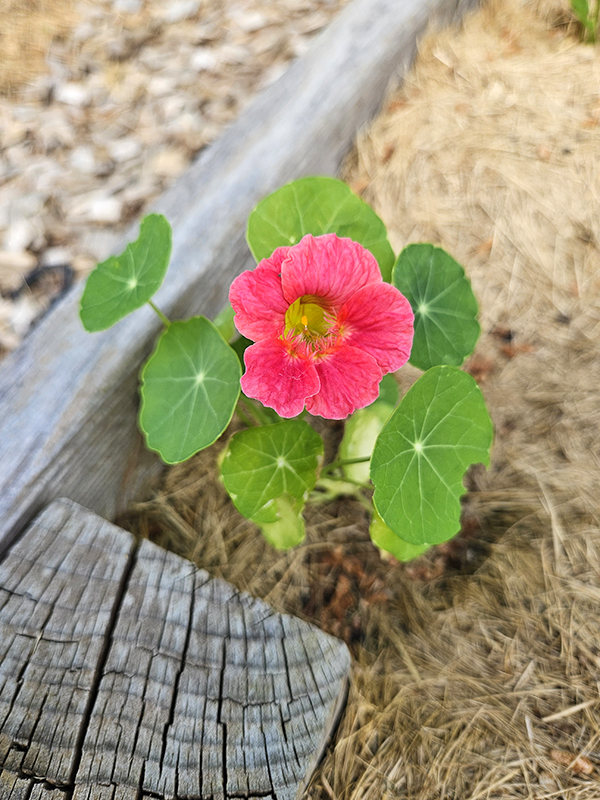
Nasturtium blooms come in a variety of different jewel-toned colors, helping to attract all sorts of different pollinators to your vegetable garden. But it’s not just their flowers that are attractive. You can even find their lily-pad-like foliage in different shades of greens as well as variegated varieties.
Some nasturtium plants are bush varieties (Tropaeolum minus) that have a mounded appearance while others are climbing or trailing types (T. majus). The bush type, sometimes called dwarf nasturtiums, is great for smaller garden spaces or containers. The climbing ones are great for growing up trellises or cascading over hanging baskets and window boxes.
In addition, nasturtiums are super easy to grow, often thriving on neglect. At the end of the growing season, you can easily save their seeds to replant again the following year.
The Benefits Of Nasturtium And How To Grow Them
All About Nasturtium Benefits
One of the most obvious benefits of growing nasturtium in your vegetable garden is its ability to draw in loads of pollinators. Bees, butterflies, wasps, and even hummingbirds are all attracted to their beautiful blooms.

But nasturtium does more than attract pollinators. It is often used as a trap crop or “sacrificial crop” for many garden pests. If you grow nasturtium near your more sensitive crops, the pests will be attracted to the nasturtium and leave your vegetables alone.
Grow nasturtium next to tomatoes, cucumbers, eggplant, and squash to help draw away aphids, whiteflies, cucumber beetles, flea beetles, and squash bugs. You can also try to arrange nasturtium and marigolds around the border of raised beds or your garden to keep these pests away from your crops altogether.
In addition to pest control, nasturtium is also an attractive plant to add to your garden. We love to grow the mounding varieties around the base of our tomato plants and around the edges of our raised beds to add color, interest, and protection for the plants.
At the end of the growing season, I make sure to allow some of the seeds to dry out on the plants. Then I can gather them up and store them for next year’s garden. (You can read more about saving the seeds here, “Saving Nasturtium Seeds – Grow Amazing Plants All For Free!”
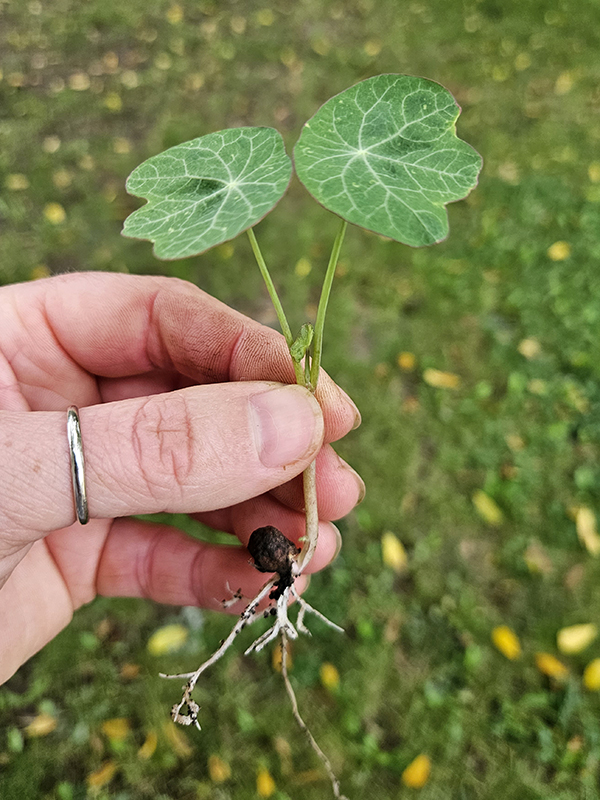
Growing Nasturtium From Seed vs Transplants
Nasturtium plants are super easy to grow from seed. While you can start them indoors by seed, they grow so easily and quickly that direct sowing is often recommended. I have done both with great success as long as care is taken not to disturb the seedling roots much.
If you decide to start them indoors, plant them in seed starting soil and well-draining containers about 2 to 4 weeks before your last frost date. The seeds should start to germinate in around 7 to 12 days. Keep the soil moist and provide them with a source of light after germination occurs.
Once the soil warms to around 55 to 65º Fahrenheit (F), plant the seedlings outside. Be sure to harden plants off before transplanting. You can read more in-depth about starting seeds indoors starting with part one of my series: “Starting Your Garden Seeds Indoors Series – Part 1: Sowing”.
If you are planting seeds directly outside in the soil, again wait until the soil reaches a temperature of between 55 to 65º F. Plant one seed every 5 to 6 inches apart. Once seedlings are a few inches tall, thin so you have only one plant every 10 to 12 inches.
Use the same spacing of 10 to 12 inches apart for planting transplants. Cover young seedlings if there is a late-season frost or low temperatures since they are sensitive to frost damage.
Choosing The Planting Location
Nasturtium requires a location that has full sun of at least 6 plus hours a day. While they can grow in partial shade, the blooms will be greatly reduced. In hot growing locations, some afternoon shade can be beneficial.
These flowering beauties actually prefer soil that is of poor quality as long as it drains well. They do not like to sit in overly moist soil for too long.
If you are growing vining or climbing varieties, be sure to provide nasturtium with either plenty of space to expand or trellises to grow up. Mounding varieties can grow about anywhere, but since plants are self-seeders, they will expand quite a bit throughout the growing season.
Long-Term Care – The Benefits Of Nasturtium
Nasturtium plants are somewhat drought tolerant, so you can allow the soil to dry out in between waterings. However, plants thrive when they are watered deeply (or they receive rainwater) about once a week. Just avoid overwatering and standing water. Those grown in containers or raised beds will need to be watered more often than those grown directly in the ground.
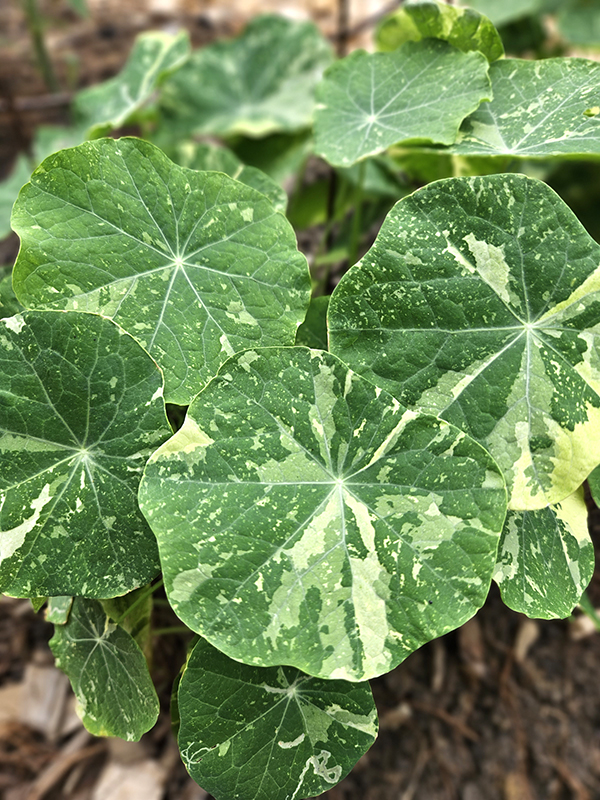
Do not fertilize nasturtiums. These plants do better in poor soil. Providing plants with too much nitrogen will cause the plants to focus their energy on producing foliage as opposed to creating blooms.
Deadheading – or cutting off spend blooms – can help to prolong blooming. Simply take a pair of pruners or snips and cut off the bloom. (These are my favorite pair of pruners for deadheading – Product Link: Fiskars Micro-Tip Pruning Shears.)
Plants might slow down or stop setting blooms when temperatures get too high in the middle of summer. Keeping the soil moist and mulching around the base of plants can help with this.
Harvesting & Saving Seeds
You can harvest the leaves and blooms of nasturtium at any point for consumption. If you want to eat the seed pods, harvest them while they are still green and tender.
For saving seeds, allow the seed pods to dry out naturally on the plant. Or, harvest them while they are nice and plump and allow them to dry out on a paper plate or towel. They will turn brown and shrivel up when they are dry and ready for storage.

Something to note, nasturtiums are self-seeders. If the seeds dry up and fall off plants, they may reseed throughout the growing season, expanding as the seeds germinate.
The seeds can sometimes overwinter in the soil and germinate the following spring as well. It can be a welcoming site or a bit of a pain if you don’t want nasturtium growing in the same spot two years in a row!
Hopefully, you consider adding nasturtium to your list of garden flowers this spring and enjoy all the benefits that go along with growing them!
Until next time, thanks for stopping by!
– Chelsea
*This post may contain affiliate links. These are products I have used personally and highly recommend. As an Amazon Associate, I may earn a small commission from qualifying purchases if you purchase items through my links. These links and the ads on this page help to support my family and our semi homestead, so Thank You!
Discover more from Semi Homestead Life
Subscribe to get the latest posts sent to your email.