
Did you know that black walnut trees can negatively affect how well – or not so well – your vegetable garden plants grow? This was a fact that we unfortunately learned AFTER our garden was established. I’m hoping that this article can explain why they are so toxic and what you can do about it if your property has several black walnut trees on it and you are looking to start a new garden.
Black walnut trees are native to the United States and are extremely common in states like Illinois (where we live). They are large landscaping trees that feature long trunks and wide open canopies, making them a popular choice with homeowners.
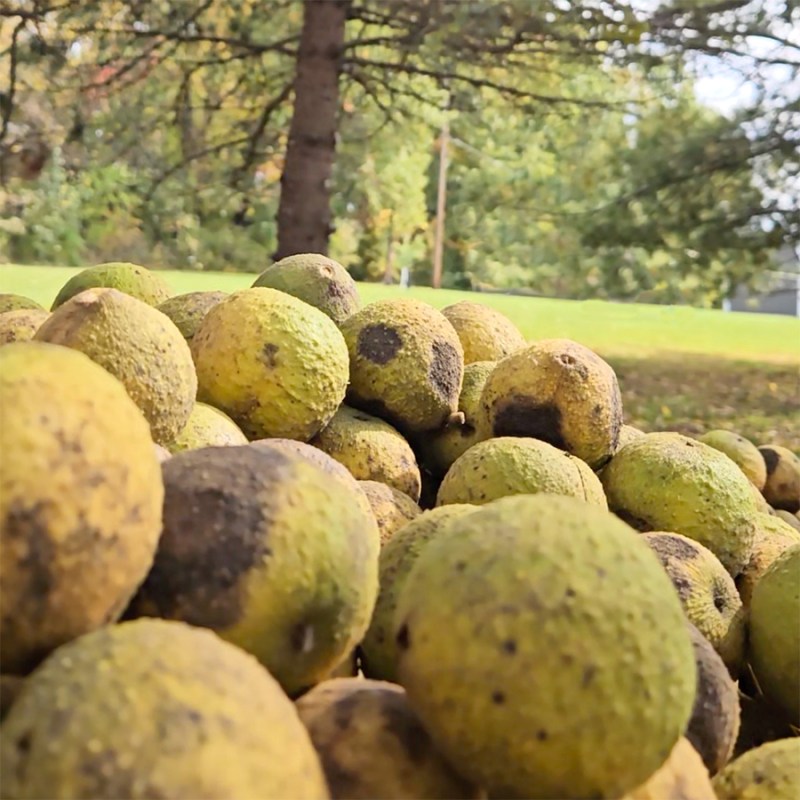
The hardwood of black walnut trees is considered highly desirable by woodworkers due to its ease, strength, durability, and beauty. In addition, black walnuts can actually be harvested and eaten. Many of your grandparents might have enjoyed snacking on black walnuts while growing up (not to be confused with English walnuts though.)
Even though woodworkers and squirrels both cherish black walnut trees, gardeners do not! This is thanks to a toxic chemical that the trees produce – a chemical that can kill many of your favorite garden vegetables.
This was a lesson that we had to learn the hard way, wondering why many of our crops were dying mid-season. However, we’ve figured out how to work with our situation and are still able to grow an amazing garden even though we have a black walnut tree not 5 feet away from our garden fence.
What To Know About Black Walnut Trees And Vegetable Gardens
The Issue With Black Walnut Trees
Black walnut trees produce a chemical called “juglone”. This chemical is not only in the round green fruit that falls to the ground but also in the leaves, branches, hulls – pretty much every part of the tree. Even the tree’s roots contain juglone. If that wasn’t enough, every time it rains, juglone is leeched out into the soil by rainwater touching the tree matter that is on the ground.
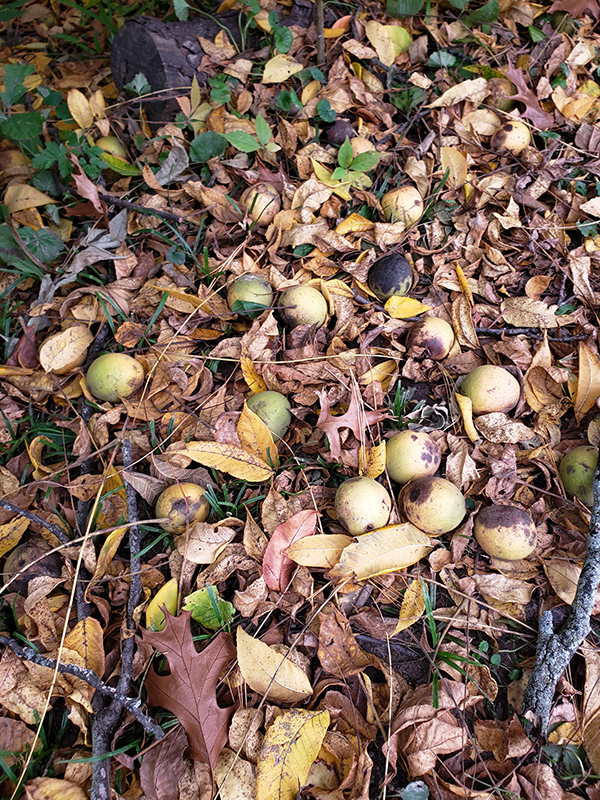
The purpose of juglone is to inhibit the growth of anything under and around the tree. It’s kind of a survival mechanism that the tree has adapted. It allows the tree to have more water, nutrients, and other resources all for itself. Other trees like black locust, hickory, black cherry, red oak, and sassafras all have similar adaptations.
Unfortunately for gardeners, juglone is also effective at killing many different types of vegetable plants. While the vegetables might start out growing fine, it doesn’t take too long before the plant dies.
So why not just cut them down and remove them from your garden space? Well, unfortunately removing the tree doesn’t help the issue. Decomposing roots still give off juglone. In fact, it can take several years before the ground is fully rid of all traces of juglone.
What Does Walnut Toxicity Look Like
Different plants are affected differently from juglone. Some will not be able to germinate right from the beginning. Others might germinate just fine but be affected a few weeks later. At first, the foliage will start to turn yellow and the leaves will begin to wilt, turning brown. Eventually, the entire plant dies.

This usually is more apparent in warm, dry weather. The plants might look like they are struggling from a lack of moisture but watering does nothing to cure their wilting leaves.
Those plants growing directly under the tree’s dripline are the most susceptible to this toxic chemical. However, even sensitive plants further out can succumb to walnut toxicity thanks to the tree’s long root systems.
What Plants Are Most Sensitive
Some plants are more sensitive than others to juglone. Tomatoes, eggplants, peppers, potatoes, peas, cabbages, and asparagus are all vegetable crops that will struggle to grow and thrive near black walnut trees. Rhubarb is another crop that is extremely sensitive to juglone.
Other plants that will not do well when planted by black walnut trees include rhododendrons, blueberries, chrysanthemums, peonies, forget-me-nots, petunias, hydrangeas, lilacs, azaleas, and lily-of-the-valley.
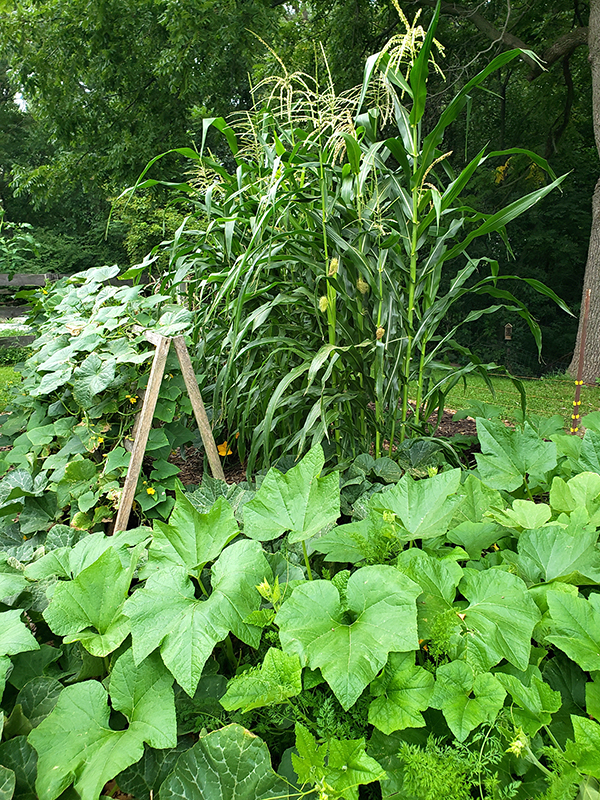
Most other plants can tolerate black walnuts and the juglone. In fact, some plants aren’t fazed by black walnut trees at all. Those vegetable plants include beans, beets, carrots, corn, melon, onions, parsnips, and squash.
Our Garden Situation
When we first started our garden, I knew nothing about black walnut trees and juglone. I just picked a spot in our yard that was toward the back of our property that received plenty of sunlight. For the first year or so, we didn’t have any issues. This was probably because the garden was smaller and not as close to the walnut tree’s canopy.
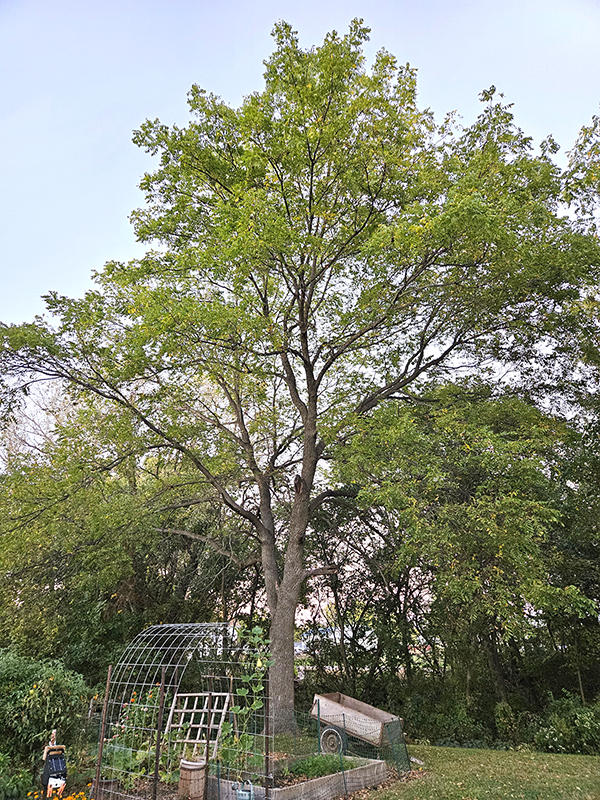
Well, once we expanded the garden closer to the black walnut tree, we started to notice issues with some of our crops. After doing some research, I came to find out that the nearby tree that helped provide me with refreshing morning shade as I worked in the garden was also what was killing some of my plants!
One of the worst plants to succumb to the walnut toxicity was our rhubarb. We were given three divisions by someone in town, and I planted them on the side of our garden closest to the tree. Fast forward and two of the three died within a year.
The other one lived but it was extremely behind and lacking. It would start pushing out new growth but then became stunted not too long after the first few leaves were grown. It definitely didn’t resemble those full, beautiful rhubarb plants you normally see. Once I realized that rhubarb was extremely sensitive to juglone, I moved it to the completely opposite side of the garden. Now, it is growing beautifully!
Another issue with having our garden near a mature black walnut tree is that the squirrels like to bury the fruit in our garden soil. Then, when spring arrives, we have TONS of little black walnut trees sprouting up all over our garden that we have to pull.
What Can You Do?
All is not lost if you have black walnut trees on your property and you still want a garden. My garden is proof of that. First off, you can do what we do and plan your garden accordingly. I just make sure to plant more tolerant plants on the tree side of the garden. I grow the more sensitive plants as far away as possible each year and they do just fine.
Another option is to use raised beds or containers. While this won’t help with the leaves and fruit that fall from the tree, it will still help tremendously by preventing the plants from coming into contact with the roots.

Just be sure to remove any plant debris from your raised beds as soon as they fall. We use a nut gatherer to help us pick up the walnuts. I HIGHLY recommend getting one of these if you have black walnut trees (we have multiple on our property). In fact, we even purchased two because my kids used to fight over using them! (Well, until they got older and realized how boring it was to pick up the entire yard!) (Product Link: Large Garden Weasel Nut Gatherer)
Hopefully, this will shed a little light on why you might be having some issues with your vegetable plants if you have a black walnut tree nearby – or why you should start your new garden in a location as far away from a black walnut tree as possible. But even if you don’t have that option, you can still have a successful and thriving garden just like mine!
Until next time, thanks for stopping by!
– Chelsea
*This post may contain affiliate links. These are products I have used personally and highly recommend. As an Amazon Associate, I may earn a small commission from qualifying purchases if you purchase items through my links. These links and the ads on this page help to support my family and our semi homestead, so Thank You!
Discover more from Semi Homestead Life
Subscribe to get the latest posts sent to your email.