
One of the most frustrating things about gardening is going to pick a ripe tomato only to see a dark, sunken-in spot on the bottom of it. This spot is called blossom end rot, and it can cause big issues for gardeners.
Oftentimes, the plant foliage looks completely fine and healthy, but the fruit tells another story. What starts out as a little bruise on the flowering end of the tomato eventually grows and expands up the sides until the whole thing is rendered inedible.

You most often hear about blossom end rot when talking about tomato plants. Unfortunately, it isn’t just tomatoes that can be affected by the issue. Peppers, squash, cucumbers, eggplants, and melons are also susceptible to blossom end rot. But what exactly is it, and what causes it?
The good news is that the damage isn’t a result of a disease or some sort of pest issue. The problem occurs when there is a lack of calcium within the plant, and it causes the flowering end of the fruit to break down and rot.
Any fruit that has already started to show signs of blossom end rot cannot be fixed. However, you can still prevent future tomatoes from having the same issue. The key is finding out why your plants are lacking in calcium and taking the steps needed to prevent it from happening again.
How To Identify And Fix Blossom End Rot Issues
Recognizing Blossom End Rot
Unlike some tomato issues like early-season blight or tomato septoria leaf spot that can be hard to distinguish from one another, it’s fairly easy to identify blossom end rot. While most diseases and pests damage affect the entire plant and foliage, blossom end rot only affects the fruit.
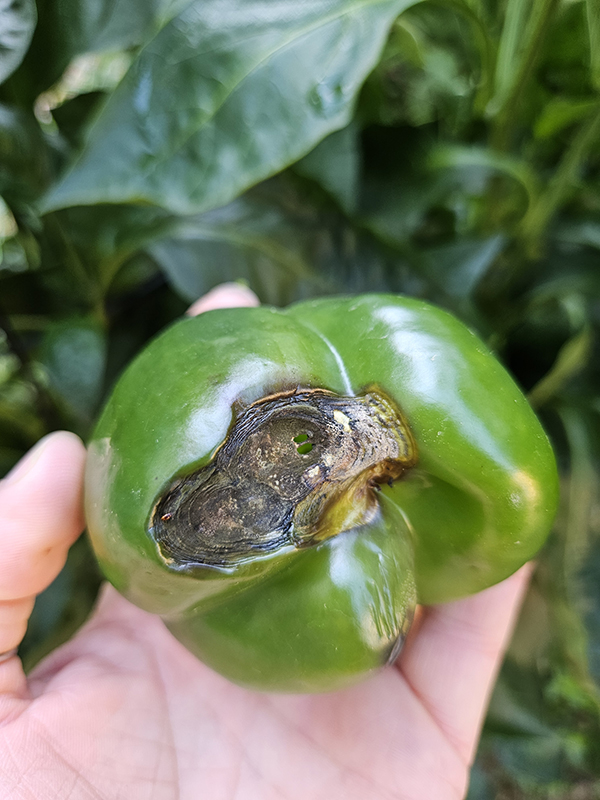
Blossom end rot usually appears on the fruit while it is still green and unripe. It starts out as a light tan spot that quickly darkens until it looks almost like a bruise. Over time, the spot grows and becomes sunken. It will turn dark brown to black in color and have a rough texture/feel.
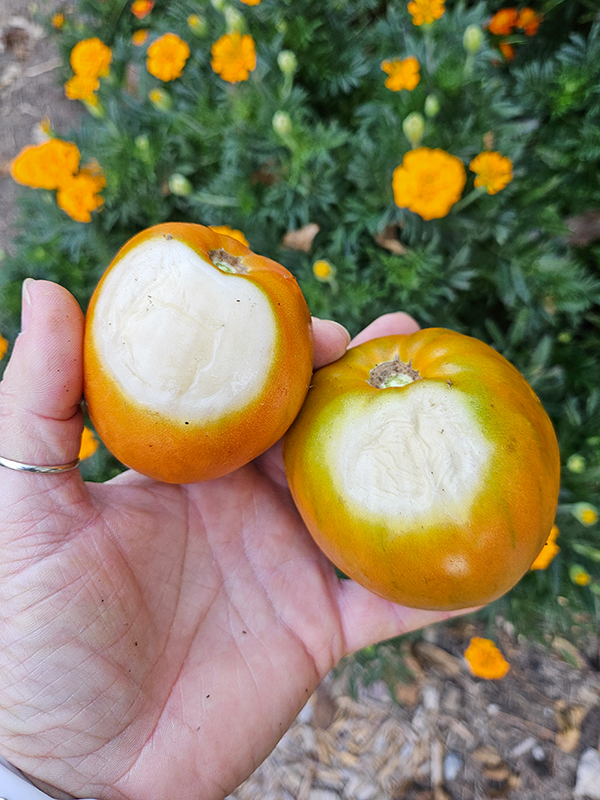
Sometimes, the early light-colored spot can be mistaken for sunscald due to its initial tan coloring and soft texture. However, sunscald normally occurs on the top, shoulders, or sides of the fruit as opposed to the very bottom.
The dark spots might not be easily visible right off the bat, especially with tomatoes since the problem starts on the bottom of the fruit (the side opposite the stem). In fact, you may not even know the fruit has blossom end rot until you go to harvest it. In terms of peppers, however, the spots often spread up the sides of the fruit, making it a bit easier to recognize early on.
What Causes The Issue?
The reason blossom end rot occurs is that there is a lack of calcium in the fruit. This can be caused by a variety of reasons.
Sometimes, there isn’t enough calcium in the soil for the plant to absorb. Even though the soil is healthy and the plant foliage looks normal, the lack of calcium causes the spots to appear on the fruit.
More often than not, however, there is plenty of calcium available in the soil. Instead, the plant is unable to absorb the calcium for one reason or another. Damaged roots, inconsistent soil moisture, drought, stress, cold soil, and excess amounts of fertilizer can all cause plants to be unable to absorb the much-needed calcium.
The most common cause of blossom end rot for home gardeners though is inconsistent moisture levels. This includes both overwatering as well as underwatering plants.
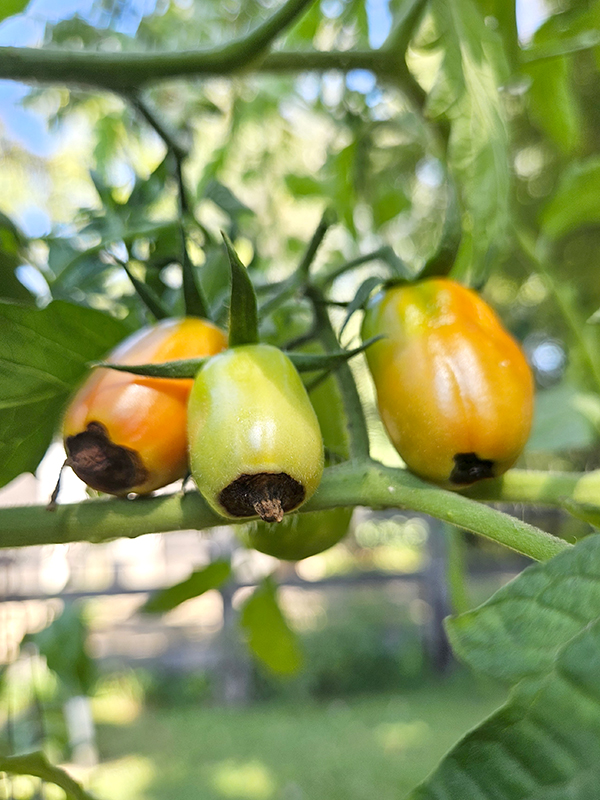
Long periods of drought can cause the soil to dry up. Dry soil can’t absorb moisture, nutrients, and calcium into the plant. On the flipside, excess moisture can also cause just as much of an issue for plants. When there is too much moisture in the soil, the plant’s roots and stems start to swell. This swelling prevents the plants from absorbing any nutrients from the soil, including calcium.
The Purpose Of Calcium
Now that you know what causes blossom end rot issues, why is calcium so important for growing plants in the first place? Just like calcium plays an important part in the growth and health of us humans, it is also vital for playing various roles in growing and producing plants.
Early in the growing process, calcium helps young plants form and develop roots and new leaves. As the plants grow, calcium is used to help distribute nutrients throughout the plant. In addition, calcium also aids in the production of pollen and fruit development.
Lastly, calcium helps to reinforce the cell walls, keeping the fruit firm and solid as it grows and ripens. Without this reinforcement, the fruit walls start to collapse and eventually turn to mush – thus causing blossom end rot.
How To Prevent Blossom End Rot Issues?
How you prevent or stop blossom end rot depends on why there is a lack of calcium within the plant. Again, this can be because of improper watering, excess fertilizer usage, or low amounts of calcium in the soil.
If you feel like the soil doesn’t have the proper amount of calcium, you can perform a soil test. These tests can be obtained at most extension offices or purchased online.
Soil tests measure calcium and pH levels of your soil as well as many vital nutrients like Nitrogen, Potassium, Phosphorus, and Magnesium. Many can also test the type of soil you have, the amount of organic matter within the soil, and the water retention of the soil.
You can then use those results to adjust and improve your garden soil. Once you fix and improve the soil any plants growing should be healthier and more productive.
Be Patient And Don’t Panic
A lot of these fixes aren’t immediate and take time to adjust the way plants absorb calcium. While it can be frustrating to deal with the blossom end rot, it doesn’t mean your whole growing season is shot.
Also note, if you have a few tomatoes early in the growing season showing signs of blossom end rot, don’t immediately panic. Sometimes it takes younger plants a little bit to adjust and get the hang of distributing nutrients properly.
If you continue to see the rotting, however, then it’s time to act. Here are a few tips to try to prevent or stop having issues with blossom end rot:
1. Regulate Moisture Levels
The first step is to see if you are over- or underwatering your tomato plants. It’s the most common reason why plants get blossom end rot.
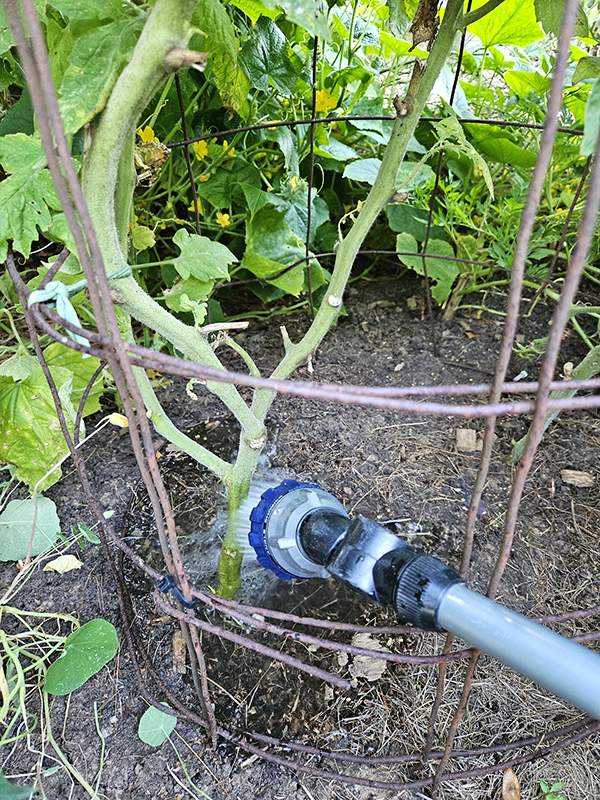
The goal is to water plants consistently and evenly. While you can’t control the weather, you do have control over how you hand water plants.
Tomato plants require at least one inch of rainwater or hand watering weekly. Instead of watering plants lightly here or there, water them once or twice a week deeply. This helps get the moisture deep down into the soil where the roots are.
As far as the weather is concerned, if you are having an overly wet spring or summer, provide plants with extra drainage. Using mulch around plants can also help regulate and maintain moisture levels.
2. Don’t Over-Fertilize
You might think that if your plants have signs of blossom end rot, then you need to provide them with more nutrients. However, the opposite usually ends up being the case. This causes you to wind up overfertilizing.
Too much nitrogen in the soil can cause issues with calcium absorption. This is especially the case if the nitrogen in the fertilizer is made from ammonia. There are also likely higher levels of potassium and magnesium in the soil. This causes blossom end rot to worsen instead of improve.
When choosing a fertilizer, pick one that uses nitrate nitrogen instead of ammonia-based nitrogen. In addition, look for a fertilizer that has the addition of calcium. Always read and follow package directions and be extremely cautious about over-fertilizing once plants start producing fruit.
3. Add Calcium To The Soil
If the results of your soil test show low calcium levels, chances are that is what is causing the blossom end rot. To remedy it, amend the soil with additional calcium. Seems simple enough, right? But where do you find calcium?
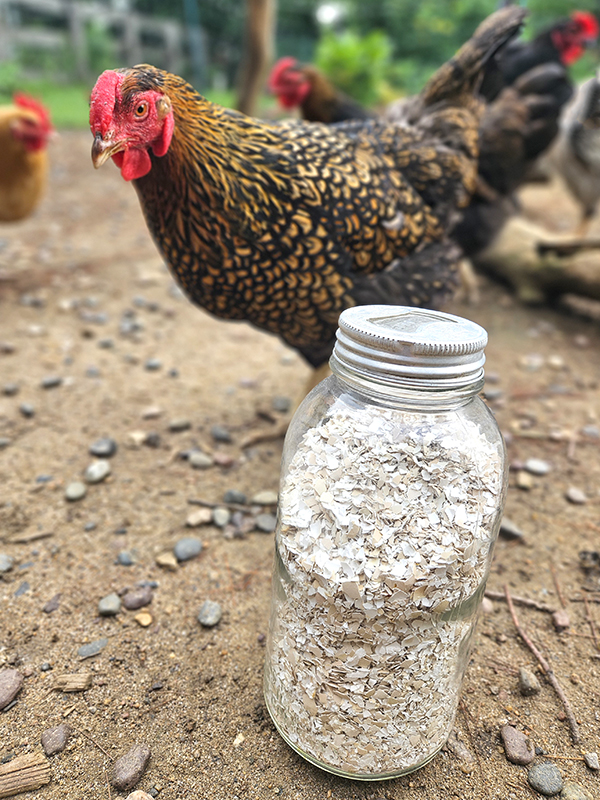
You have likely heard gardeners (myself included) talking about adding crushed or powdered eggshells to the soil to provide extra calcium. While that is all good and true, it actually takes eggshells – even in powder form – a long time to break down enough to be able to be absorbed by the plants. So it isn’t the best option if you need calcium fast. (I still add eggshells to the soil for the long-term benefits, though.)
Instead, add bonemeal to the soil for better, faster results. Bonemeal is easily absorbed through the plant’s roots, and it starts to work fast. (Product Links: Burpee Bone Meal Fertilizer)
4. Adjust pH Levels
If the soil test showed that the soil pH level is low, that can be a reason for the tomatoes or peppers having blossom end rot. Plants with low levels of pH struggle to draw in calcium and other nutrients. (For most vegetable plants, a soil pH of around 6.5 is ideal.)
You can help naturally raise the pH level of your soil by adding fast-acting garden lime. As an added bonus, the lime contains calcium, so it’s sort of a double whammy.
Wood ash is another way to raise the pH levels in your vegetable garden, but it doesn’t work quite as well as lime. Wood ash does best when it is added to the soil during the winter months, so it’s not a quick fix.
To lower pH levels, you can add organic matter to the soil (like compost), acidic fertilizers, or sulfur compounds. Be careful when using sulfur compounds because they can burn the roots of delicate plants.
Hopefully, by either adjusting your moisture levels, the amount of fertilizer you are using, or the amount of calcium in the soil, you can prevent or stop blossom end rot issues from occurring.
Until next time, thanks for stopping by!
– Chelsea
*This post may contain affiliate links. These are products I have used personally and highly recommend. As an Amazon Associate, I may earn a small commission from qualifying purchases if you purchase items through my links. These links and the ads on this page help to support my family and our semi homestead, so Thank You!
Discover more from Semi Homestead Life
Subscribe to get the latest posts sent to your email.