
There is just something so special and unique about buying and displaying a piece of antique stoneware in your home, whether you were handed down the piece or purchased it at an estate sale.
Antique crocks, jugs, bowls, churns, and more were common household products back in the late 18th century through the early 20th century. They were used for all sorts of different reasons, but mainly for preserving food and storage.

We’re talking way back in time here, before there were refrigerators and other ways of keeping food from spoiling. Meats, dairy, vegetables, fruit, eggs, grains, and more couldn’t just be thrown into the refrigerator or put into vacuum-sealed containers. That’s where the crocks and other stoneware pieces came into play.
Nowadays, antique crocks and jugs are mostly used for collection, home decoration, or sometimes for storage. Thankfully, since most of us own refrigerators, we don’t need to rely on them for food preservation and safekeeping anymore. However, stoneware pieces are still a great addition to your home.
I have several antique crocks and jugs throughout my home, partially thanks to my late grandparents and partially because I enjoy the history and look they provide my home. Whatever the reason, if you are in the market for a piece of history for yourself, here’s a list of tips on purchasing the stoneware pieces as well as ways to use them.
Tips On Buying And Displaying Antique Stoneware Today
Where To Get Antique Crocks and Jugs
If you are interested in owning a few pieces of history, then there are a few ways to get your hands on these relics. The first place to look is your older relatives.

Both of my late grandparents owned and used crocks, and I was lucky enough to get a few great pieces handed down to me after their passing. While I love some of the pieces I’ve purchased over the years, the ones that were my grandparents are the most special to me.
The next place to look is at local estate sales and yard sales. Often, people will sell these antique crocks without realizing their true value. Check out towns or places that are near where stoneware companies used to be in production.
Online marketplaces like Facebook can sometimes have good deals on crocks as well. This is especially the case if you are local and can drive to the location to pick it up. As you can imagine, shipping is pretty hefty considering the size and weight of these stoneware pieces, and most people don’t want to deal with shipping and possibly damaging them.
Other Places
Next, check out flea markets and thrift stores. You can often find unmarked crocks and stoneware containers for just a few dollars here and there. These are typically hot ticket items, so check back frequently.
Lastly, look at antique shops, auctions, and online resellers like eBay. The reason I mention these last is that they can also be a bit more expensive.

Most of the time, these shops are in business to make money and will mark up their prices so they make a profit. There is nothing wrong with this, but it can make purchasing crocks, especially less common ones, extremely difficult for the everyday person.
In terms of eBay, you are usually purchasing something from a seller who lives far away from you. The shipping costs can really rack up more than the cost of the actual crock of jug.
Tips on Purchasing Crocks & More – Buying Antique Stoneware
The price of a crock or stoneware jug can really range from just a few bucks to thousands of dollars. This will all depend on the age, design, condition, maker, and popularity of the piece.
My first tip is to do some research on the crock you want to purchase. Is there a particular shape or style you have your eye on? Maybe it’s the stamp or painting that you are after. Search online or join a stoneware group on Facebook to get some perspective about the pieces you are after.
You can usually find unmarked crocks for pretty cheap. Since there is no maker’s mark, they aren’t as sought after. However, marked crocks from desirable stoneware companies can fetch a pretty penny!
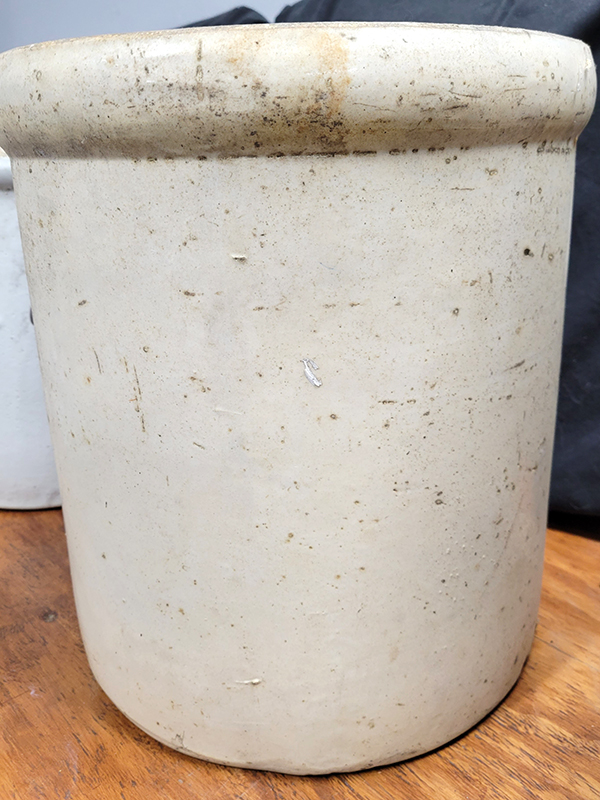
For example, the stoneware company that operated in my hometown was only in production for a few short years. That makes their pieces highly sought after by collectors and resellers. It’s not out of the question to see a rare piece go for several thousand dollars at auctions or in antique shops!
Age will also come into play. An older, hand-painted crock will likely be more expensive than one made using a mold and stamp that was mass-produced. Also, some stamps aren’t as common, so these pieces will be more expensive. (It’s really all an issue of supply and demand.)
Look The Piece Over
When you find an antique stoneware piece you want to purchase, look it over for any cracks or chips. While these products were built to last and were extremely durable, age and misuse can cause the pieces to crack or chip. (Check out my article, “Antique Crocks And Jugs – All About American Stoneware”, for information about how these pieces were made and what they were used for.)
A hairline crack that is just on the surface won’t be as big an issue as a crack that is running through both the front and back of the piece. In fact, it’s not uncommon to see small hairline cracks on these pieces. Most antique stoneware won’t be in pristine condition thanks to its age.
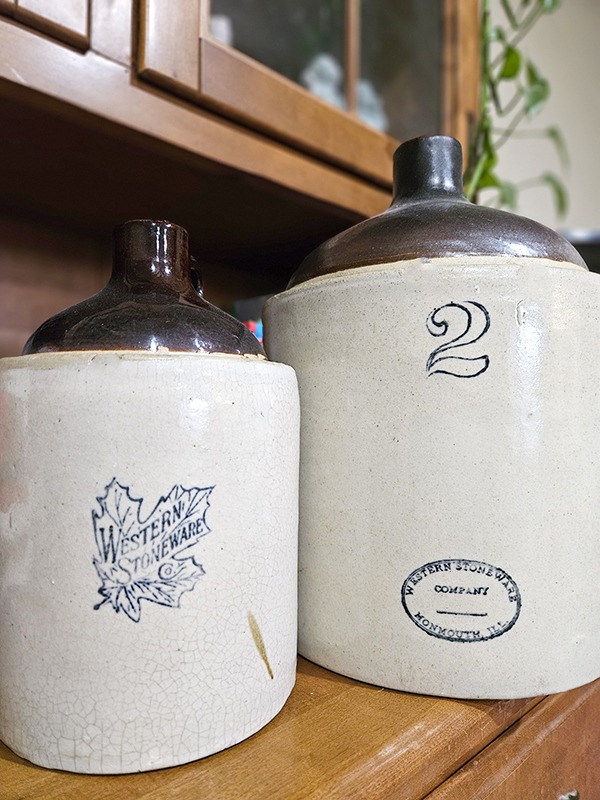
If there is a stamp or marking on the piece, the cleaner and crisper it is, the better. Many of the crocks I own have stamps that are missing parts or the lettering isn’t perfect. While that can be the error of whoever was stamping the piece, sometimes the stamp itself had an error in it, and the issue was replicated over and over again.
Different Glazes
Also, look at the glaze of the stoneware piece. Some were done better than others. In addition, older glazes will be worth more than newer ones. Some of the different types of glazes include Salt Glaze, Bristol Glaze, and Albany Slip.
I have a small jug from my Grandma that has a large drop of dark glaze on it. Some people might find this mistake annoying, but I love this little feature. It gives the jug character as well as shows how the pieces were done by hand as opposed to machines like most of our products nowadays.
All of these features of the antique stoneware pieces will make a difference in their price. And again, there’s a saying that a piece is only worth what someone is willing to pay for it.
Today’s Uses For Antique Stoneware – Buying Antique Stoneware
Nowadays, most people purchase or own antique crocks and jugs for storage or for display. A select few might use them for fermenting, but that isn’t as common. Think outside the box when it comes to using crocks. Use them for storing your kitchen utensils, rolling pin collections, craft storage, and so forth.
Larger crocks are great for storing bulky items. Think blankets, umbrellas, firewood, and so forth. If you add a flat wooden lid, large crocks work great as end tables. (You can use thick wooden discs as the lids. I made one of mine using lumber from Menards. Look for “Mastercraft Edge Glued Round Panels”. They come in various sizes. Acacia boards are also beautiful lids.)

Some people use the larger ones as trash cans (lined with bags, of course). My parents actually have a large 10-gallon one that they use to store their bulk cat food in. Really, the possibilities are endless.
My favorite way to use them, aside from just decorations, is as plant containers. I keep the plants in their nursery pot or another container that drains water and place those inside the crock on a small platform or dish. The extra container helps to reduce the chances of me overwatering while protecting the crock at the same time (even though they are waterproof).
However you wish to use your antique stoneware, it’s great to give new life to these old yet historical pieces today.
Until next time, thanks for stopping by!
– Chelsea
*This post may contain affiliate links. These are products I have used personally and highly recommend. As an Amazon Associate, I may earn a small commission from qualifying purchases if you purchase items through my links. These links and the ads on this page help to support my family and our semi homestead, so Thank You!
Discover more from Semi Homestead Life
Subscribe to get the latest posts sent to your email.