
Even though tomato plants are one of the most common plants to grow in home vegetable gardens, they sure come with their fair share of issues and problems, and one of those is Septoria Leaf Spot.
There is nothing quite like the fresh flavor and texture of a perfectly ripened homegrown tomato. It’s a flavor that has spoiled me so much so that I can hardly stand buying tomatoes from grocery stores during the off-season months!
We’ve grown tomatoes in our home garden since day one. Big old slicing heirloom tomatoes, tiny round cherry tomatoes, hearty paste tomatoes – we’ve grown them all. And along with growing tomato plants, we’ve also had to face our fair share of tomato plant diseases and issues!
There are so many different diseases and fungi that can attack tomato plants that it can be difficult to identify what the problem is. From early and late season blight to pest damage to leaf spot, tomatoes can be one of the hardest crops to diagnose.
Hopefully, this article will allow you to identify Septoria Leaf Spot and show you what to do if your plants start to show signs of the disease. Thankfully, if caught early enough, you can still enjoy a great tomato growing season!
All About Septoria Leaf Spot & 7 Tips To Help Your Tomato Plants
What Is Tomato Septoria Leaf Spot?
Septoria Leaf Spot is a tomato plant disease that is caused by the fungus Septoria lycopersici. It is often seen in crops that are grown in locations that have overly wet, humid conditions for long periods of time.

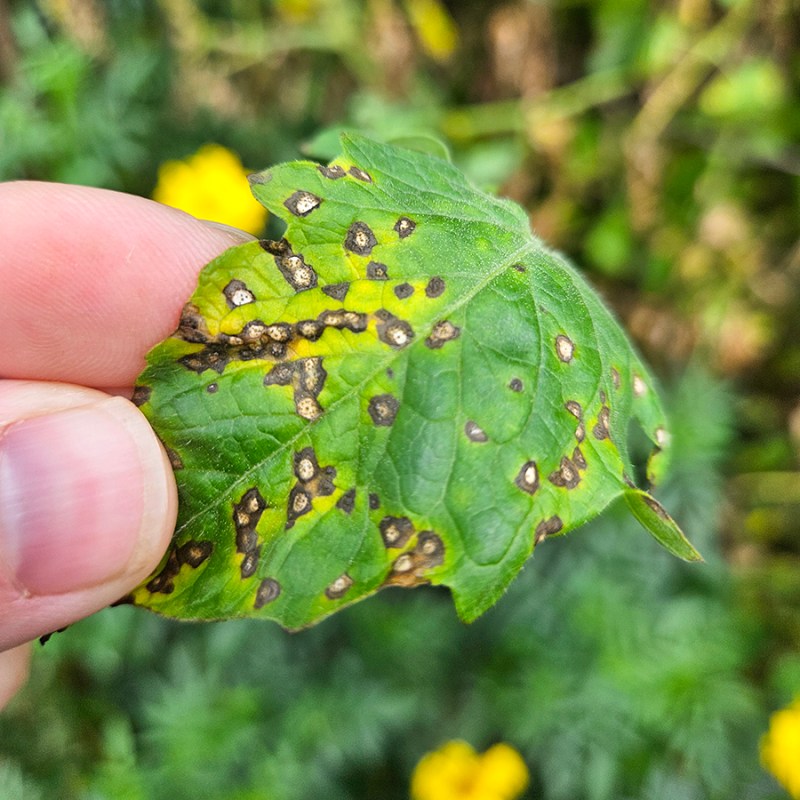
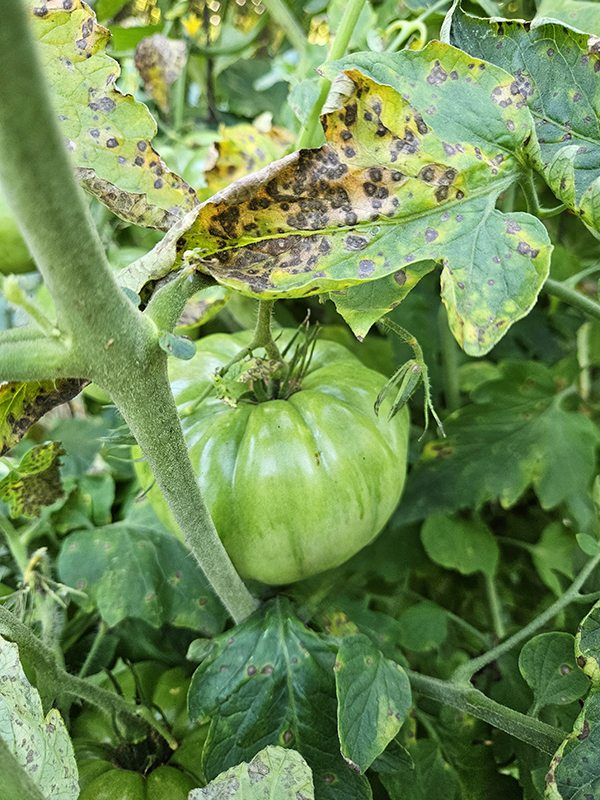
The disease looks like tiny spots on tomato plant leaves that are less than a sixteenth to a quarter of an inch in diameter. There are usually a ton of these lesions all over the leaves, as can be seen in my photos.
The middle of the posts will be light brown or tan in color. Some more advanced spots will have teeny tiny dark black spots in the center. These black spots are actually the fruiting bodies. These fruiting bodies are what produce the millions of spores when the weather is hot and humid.
Eventually, the leaves will turn yellow, dry up, and die. With severe leaf loss, plants will slow down or stop fruit production. Septoria Leaf Spot can easily be transferred from plant to plant, so any nearby tomatoes are also at risk of getting leaf spot.
Thankfully, Septoria Leaf Spot does not affect the fruit itself. You can still consume tomatoes harvested from these plants. In addition, you can still save seeds from the diseased plants as well. If you have healthy plants, though, save the seeds from those plants instead.
Don’t Confuse It With Other Diseases
Unfortunately, Septoria Leaf Spot can often be difficult to differentiate from other tomato diseases. One that is commonly mistaken for the disease is Early Tomato Blight.
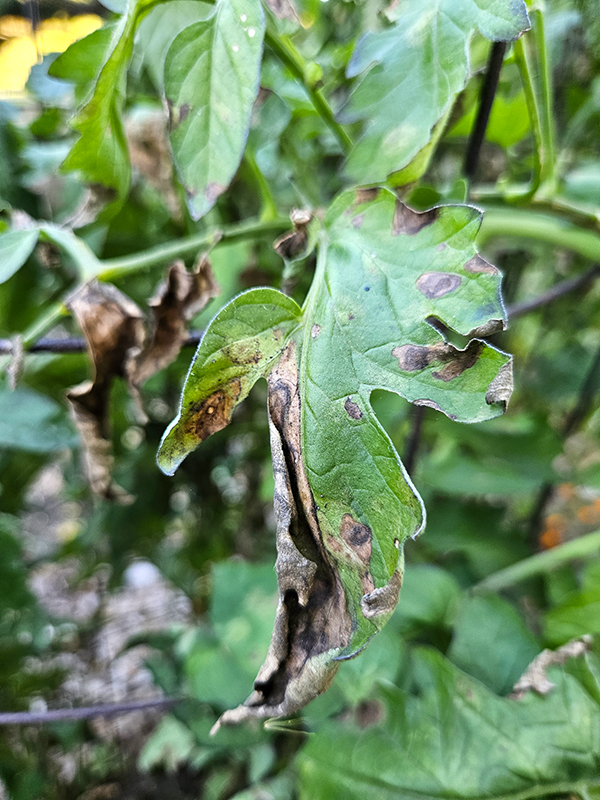
Tomato Blight is a common disease that is also soil-borne. However, blight causes larger, irregular, dark sunken spots on the leaves. These spots often look like they have rings and can grow to be over half an inch wide. In addition, leaf spot usually occurs and advances more rapidly than blight does.
Another issue that is sometimes mistaken for Septoria Leaf Spot is Bacterial Spot. This disease does not produce the fruiting bodies. So if your tomato leaves have spots with little black dots, it’s Leaf Spot and not Bacteria Spot. In addition, the underside of the leaf will often have water-soaked spots that look greasy or wet.
7 Tips To Prevent Or Slow Its Spread
1. Stake Or Trellis Plants
In order to keep tomato plants up off the soil, they need to be staked or supported somehow. You should ideally do this step at the same time as planting. This prevents the stakes from damaging or cutting any roots below the surface of the soil as they are inserted into the ground.
There are so many different ways to stake tomato plants. If you are growing indeterminate tomatoes, I would avoid getting the cheap cages that most big box stores sell. Instead, invest in some bigger, heavy-duty supports.
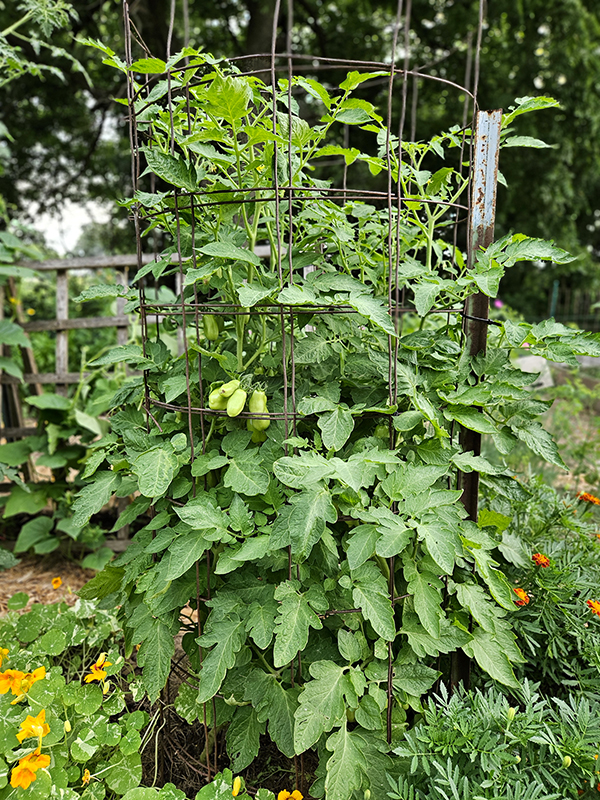
We actually have several commercial tomato cages that we use to grow our tomatoes in. These cages are over 5 feet tall, and most of our indeterminate tomato plants end up growing up and over the tops of them by the end of August. We also place t-posts to prevent the plants from being top-heavy and blowing over in the high winds Illinois is notorious for.
You can also tie up tomato plants using cattle panels and some t-posts. Some people like to use something called the Florida or Basket Weave, which involves using posts and string. Whatever you use, the goal is to get the plant foliage up and off the soil where Septoria Leaf Spot spores live.
2. Mulch Around Plants
Since Septoria Leaf Spot is a soil-borne disease, applying a thick mulch around the base of each plant can help. The mulch provides a blanket that covers the soil and prevents any soil (and thus the spores) from splashing up onto the leaves when it rains or you water plants.
We like to use a thick layer of grass clippings as the mulch in our garden. The only issue with grass clippings is that they start to break down about halfway through the summer months. Maintain a good 3 to 4-inch layer of clippings and reapply as needed.

You can also use other mulches like straw or shredded leaves. A good quality landscaping fabric can also be used, but we like to try to stick with using materials that can break down and add to the soil composition over time.
3. Water At The Base Of Plants
To help avoid splashing the fungus spores up onto the bottom foliage of the plants, always water plants at the base as opposed to overhead. Aside from morning dew and the occasional rainfall, watering at the base of plants keeps the foliage nice and dry the majority of the time. It (in combination with using mulch) also helps reduce the chances that the spores splash up onto the plants from overhead droplets.
While it can be a bit of a pain to drag out the water hose and walk around to water each plant at the base, it really is more efficient and beneficial. Not only are you directing the water right at the base of the plants where they need it the most (i.e., the roots), but you also avoid having much of the moisture evaporate in the hot summer sun, like it would if it were on the plant’s leaves.
So instead of setting up a sprinkler and letting it run for 30 minutes or so, use a hose and sprayer nozzle to give the plants a good, long drink. Or, install some sort of drip irrigation system for hands-off watering. (This is almost identical -same brand – to the long-handled wand I have that makes reaching the bottom of plants easy without bending over constantly – Product Link: Orbit 56044 Front Trigger 10 Pattern Turret Wand.)
4. Don’t Handle Wet Plants
Along with not watering plants overhead comes not handling wet plants. The bacteria are at their strongest in wet conditions and are more apt to spread.

Any moisture and spores on your hands or pruners can then get transferred to healthy plant tissues. This also applies to the gardening tools you use.
Instead, wait until the plants are completely dry before you go to work weeding or harvesting. Usually, this means waiting until later in the morning hours after the sun gets a chance to dry out any morning dew.
5. Prune & Clean Tools
Unfortunately, once your plants get Septoria Leaf Spot, there isn’t a way to completely get rid of it. You should, however, prune at the first sign of damage or disease. You can safely prune up to a third of a mature plant without having many issues with loss or production. Any more and the plants might struggle to produce or even live.
When pruning, carefully remove any foliage that has signs of the disease. Do NOT compost this plant matter! Instead, burn it if your community allows, place it in a bag and take it to a local composting facility, or toss it in your trash. (This really goes for any tomato plant material – healthy or not.) Also, remove all plant matter at the end of the growing season in the same manner.
After pruning a plant, disinfect your pruners to reduce the chances of it spreading from plant to plant. You can purchase disinfectant wipes or just use 70% isopropyl alcohol. Or, for a stronger cleaning, soak pruners in a solution of 1 part bleach to 9 parts water for 10 minutes, then rinse with fresh water.
6. Provide Air Circulation
This is really a tip that comes about at planting time, but that is to provide your tomato plants with plenty of air circulation. This will help to dry out plant foliage faster. You can do this by using proper plant spacing when planting and by implementing tip #1 above.
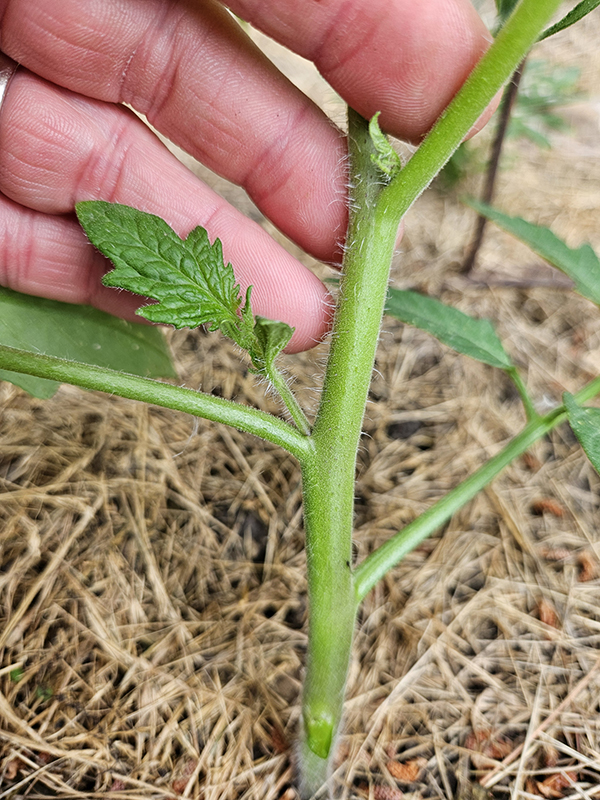
However, since you are reading this article, chances are it’s now the middle to end of summer, and what’s done is done as far as planting is concerned! What you can do is prune back your plants to provide a bit of airflow.
All indeterminate tomato plants produce what’s called “suckers.” These suckers will grow into main stems that produce fruit as well as additional foliage. You can help provide better airflow to your plant by removing these suckers and only allowing three to four main stems to grow.
You can read more about tomato suckers in my article here: “Pruning Tomatoes – Which Tomato Plants To Prune, Why & How”.
7. Rotate Crops
This last tip is really for next year’s garden. If you have Septoria Leaf Spot this year, that means the spores are already in your soil. If you go to plant tomato seedlings in that same space next year, guess what’s going to happen? Yep, you guessed it!
To help prevent next year’s crops from getting leaf spot, rotate your crops around your garden. So, for example, if you planted tomatoes in one of your growing rows or raised beds, plant them in a different one next year.
Avoid planting tomatoes in the same location for at least two years if possible. The same goes for other plants that can also get Septoria Leaf Spot, like peppers, eggplants, and potatoes.
Hopefully, you can avoid Septoria Leaf Spot on your tomato plants completely. If not, these tips should at least allow you to continue enjoying a great tomato harvest and protect next year’s crops at the same time!
Until next time, thanks for stopping by!
– Chelsea
*This post may contain affiliate links. These are products I have used personally and highly recommend. As an Amazon Associate, I may earn a small commission from qualifying purchases if you purchase items through my links. These links and the ads on this page help to support my family and our semi homestead, so Thank You!
Discover more from Semi Homestead Life
Subscribe to get the latest posts sent to your email.