
Did you know that grass clippings are the best, completely free, and readily available resource you can use to help mulch your vegetable garden and raised beds? And the benefits of using mulch are huge for your plants as well as your soil!
For most people, early spring and summer bring about one common chore: mowing the lawn. Whether you use a push mower or a ride-on, mowing is pretty much a part of summer in one way or another for most people.
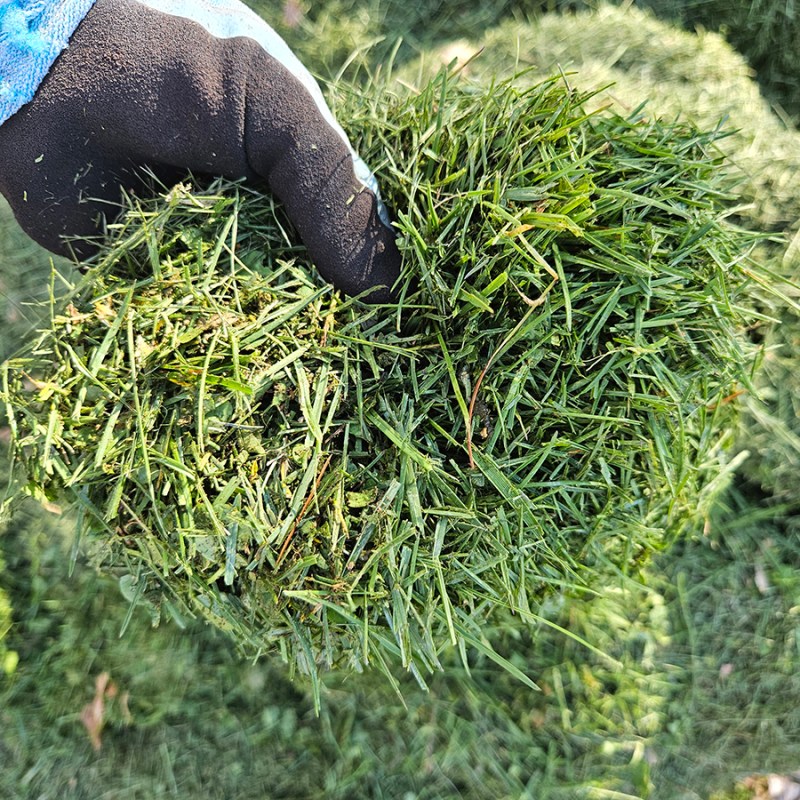
One of the results of mowing – other than getting a well-manicured lawn – is loads of grass clippings. Most often, the grass clippings fall to the ground and you don’t give them much thought at all.
However, you can put those clippings to a much better use in your vegetable and flower garden as mulch! Unlike some other types of mulches, you have a constant supply that you can gather to top off as the mulch breaks down over the summer months.
So let’s take a look at why you should mulch in the first place, why grass clippings are such a great option, and how to use them to protect and power your garden this summer!
Why And How To Use Grass Clippings As Vegetable Garden Mulch
The Benefits Of Mulch
There are so many benefits of using mulch in your garden. It’s a product that we’ve been using for years in our garden and it’s allowed our soil to get better with time (hello dense clay-like soil!).
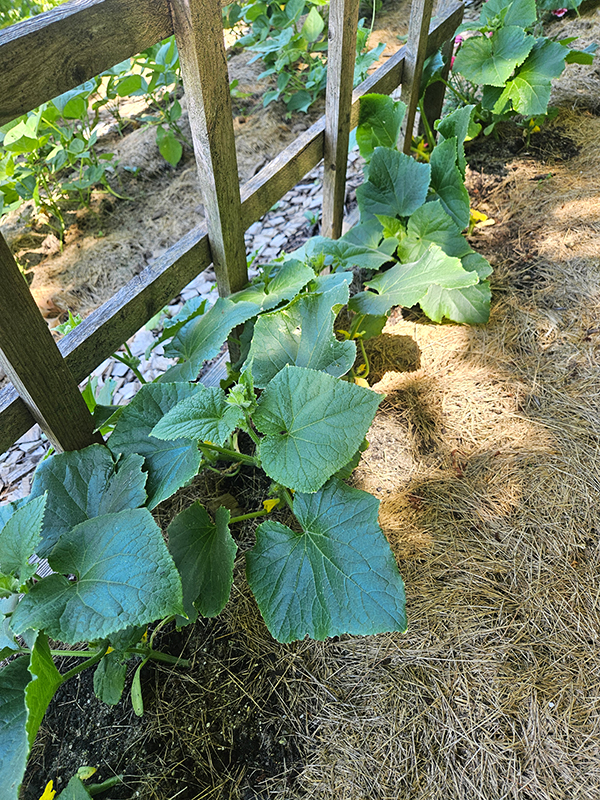
In fact, I am such a believer in using mulch that I have an article dedicated just on the benefits it brings to your garden soil and your plants. You can read that here, “Why To Use Mulch In Your Garden – Weed Less & Improve The Soil“.
To hit the high points though, mulch helps to prevent unwanted weeds from growing in your soil. Weed seeds love bare soil and will take any chance they can get to grow. This is especially the case in fertile soil like what is in your vegetable garden.
The mulch helps to cover the naked soil and suppresses the weeds so any weed seeds can’t germinate and grow. This cuts WAY back on your need for weeding. (That alone is enough of a reason to use mulch in my opinion!)
But Wait, There’s More!
In addition, mulch helps to regulate the soil’s temperature and helps maintain moisture levels. This results in fewer fluctuations of hot and cold temperatures (a common issue with living in the Midwest) and reduces the amount of watering you have to do.
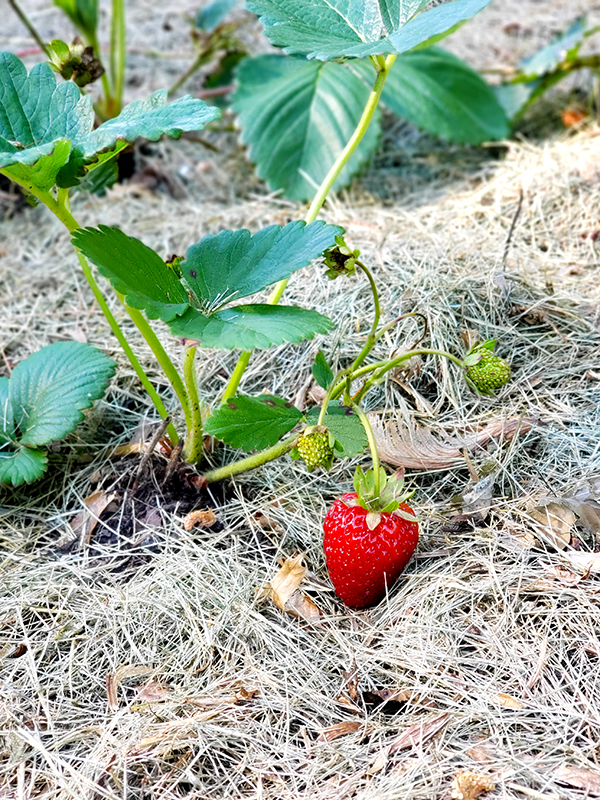
Lastly, mulch helps to improve your soil’s structure by adding loads of organic matter as it breaks down. That’s why it’s so important to use one that can be mixed with your garden soil over time. (This is unlike woodchips and other mulches you see more in flowerbeds or walkways.)
Our dense, clay-like soil has been greatly improved just because of using mulch. After the end of the growing season, the mulch breaks down and gets turned back into the soil, loosening it up and improving it year after year.
Types Of Garden Mulch
Some of the most popular choices of mulch are straw, shredded leaves, pine needles, and – you guessed it – grass clippings. We’ve personally used them all to varying degrees of success.
To be honest, our least favorite option is straw. It isn’t as easy to get, it can get rather expensive depending on where you source it, and it becomes a mess in our particular growing location due to high winds. (One 3-cubic foot bag of shredded straw on Amazon costs around $40 as of writing this!)
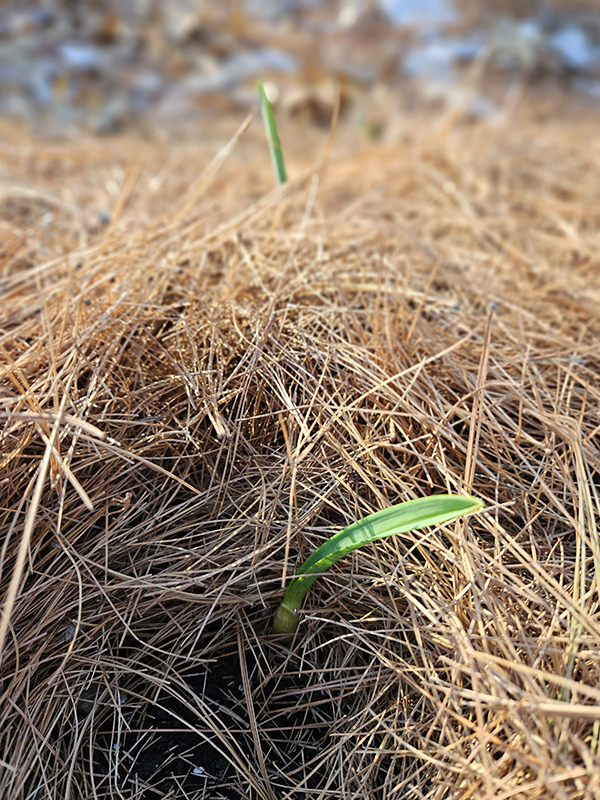
Shredded leaves and pine needles are both great options for covering and protecting the soil during the fall and winter months. They are in good supply during this time and prevent unwanted weed seeds from landing and taking hold. We also use them to help protect our fall-planted garlic bulbs.
But hands down our favorite mulch to use in the late spring and summer months is grass clippings.
Advantages Of Grass Clippings As Garden Mulch
As mentioned earlier, probably one of the best reasons that we use grass clippings is that it is readily available. We own about an acre of land, so we have quite a bit of lawn to mow. That results in a lot of grass clippings.
Normally, we let them fall to the ground to mulch the lawn. But a few times each year, we bag them up to use in our vegetable garden and raised beds. As the clippings break down halfway through the summer, I don’t have to go out to a local feed store to purchase more mulch. I just have to mow the lawn and collect more clippings!
Grass clippings are perfect for use around all sorts of plants and vegetables. They can be layered up in a thick mass without creating an airtight block. The garden soil can receive oxygen and moisture as needed. (Leaves can sometimes create a solid barrier if used, that’s why we use shredded leaves as opposed to whole ones.)
At the same time, the clippings will prevent weeds from growing. You may have a stray weed or two where there is a thinner layer of mulch, but most are snuffed out.
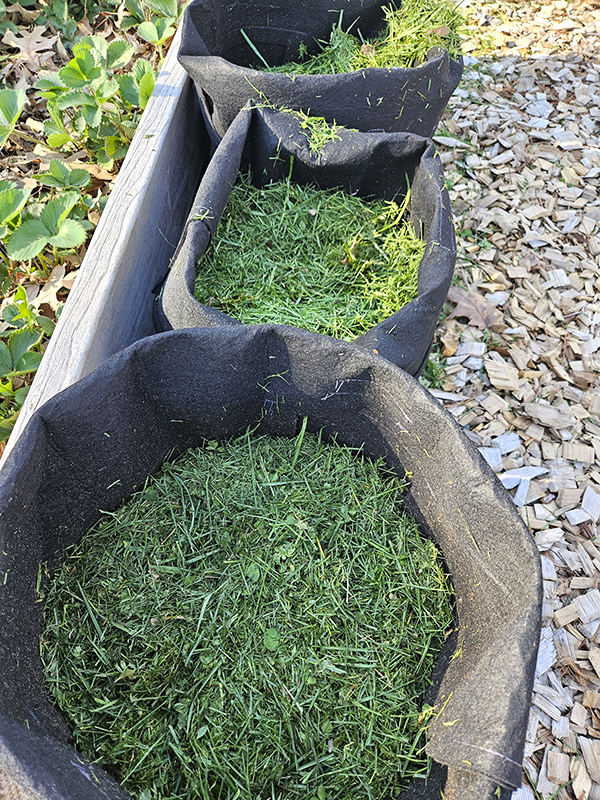
Oh, and did I mention that grass clippings are free? Even if you don’t have a large yard, there are likely neighbors or family members who would be more than happy to allow you to rake up their clippings for free!
Tips On Using Grass Clippings As Garden Mulch
While using grass clippings is fairly self-explanatory, there are a few things to keep in mind. First off, you want to make sure that you are using clippings from a lawn that hasn’t been treated with chemicals and sprays. If you’ve recently sprayed your lawn with weed killer or even bug repellent, choose a different type of mulch for your garden.
You can use either freshly cut green clippings or dried ones. It really doesn’t matter. We use fresh clippings because they don’t blow around as much right after you place them on the soil. Sometimes, fresh clippings can start to mold a little bit, but there is no harm to your garden. They will simply break down and decompose a bit faster is all.
The Process
After we’ve planted the garden in the spring, we borrow our father-in-law’s riding mower that has a bagger on the back. As we mow the yard, the clippings get collected in the bagger. I simply have to dump them onto my growing rows and raised beds and spread them out.

If you don’t have a bagger, you can always just rake your clippings into piles and do the same thing. It will just take a little more time and effort on your part. (It’s also a great chore for your kids to help with!)
When laying out the clippings, create a nice, thick layer all over the bare soil. Keep the clippings about 2 to 3 inches away from the vegetable or flower’s stem. This helps prevent the mulch from actually touching the plants.
Aim for a depth of around 4 to 6 inches. Maintain this depth throughout the growing season. We usually have to add more mulch about halfway through the growing season.
That’s really all there is to it! The mulch will work to protect your plants all while improving your soil and making you weed less all spring and summer long!
Until next time, thanks for stopping by!
– Chelsea
*This post may contain affiliate links. These are products I have used personally and highly recommend. As an Amazon Associate, I may earn a small commission from qualifying purchases if you purchase items through my links. These links and the ads on this page help to support my family and our semi homestead, so Thank You!
Discover more from Semi Homestead Life
Subscribe to get the latest posts sent to your email.