
One of the best types of organic mulches to use in your garden is dried fall leaves, and I’ve got a simple new way to mulch them!
After you have cleared out your garden in late summer or early fall, it’s not a good idea to leave your soil bare. Bare soil is just asking for weed seeds and other issues to take hold. That’s where using mulch comes into play.
There are a lot of different organic sources you can use for mulching the top of your garden soil. One of our favorites during the summertime is grass clippings.
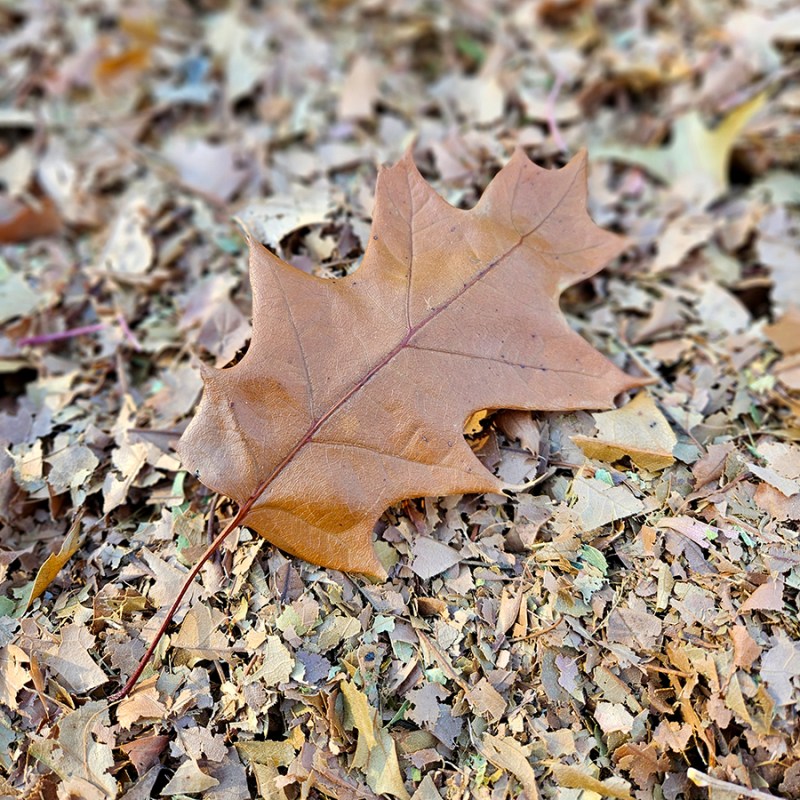
But during the fall, grass clippings are hard to come by as yards start to dry up and die off. Thankfully, there’s one source that is in huge abundance in the fall – dried leaves!
From helping add more carbon to your compost to creating leaf mold to being used as a soil protectant, fall leaves are a great, free resource! However, when you use them in any of these applications, you don’t want to use the leaves whole. Instead, they need to be mulched.
Why Mulch Is Important In The Fall
It’s never a good idea to have bare soil – or naked soil as I like to call it! In fact, soil doesn’t want to be bare if it can help it.
Bare soil tends to erode. Wind, rain, melting snow, etc. can all wash soil away without there being any roots holding the soil together or items covering the top.
Naked soil is also an open invitation for weed seeds to land and take hold. Even during the fall and winter months, weeds have a way of making it onto your bare soil. Whether it’s animals, birds, or even just the wind, seeds will find your soil if it isn’t protected.
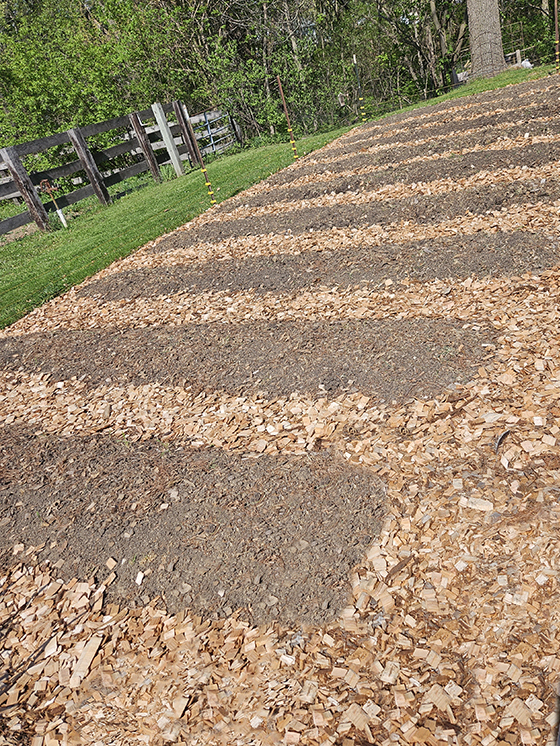
Those weed seeds will sit dormant all winter long and then start to germinate as soon as the weather starts to warm up in the spring. This leaves you with a big chore of weeding even before you get your spring crops in the ground.
While growing a cover crop is a great way to prevent bare soil in your garden spaces, sometimes you have to use alternative methods. For example, when I plant my garlic cloves in the fall. I don’t want to plant my cover crop on top of the cloves. So instead of leaving the soil around the garlic bare and susceptible to weeds, I mulch it. And what better to use for mulch than fall leaves?!
Avoid Using Whole Leaves
One word of caution when you use leaves is not to use them whole. Whole leaves can create an almost impenetrable blanket. While this will definitely prevent weeds from making their way down to the soil, it will also prevent oxygen and water from getting through as well.
In addition, whole leaves take a lot longer to break down and decompose, which can be an issue when used with your garden soil. The sooner the leaves can break down, the quicker they can add organic matter to your soil. So make sure to break them down into smaller pieces before using them as mulch.
Our New-To-Us Way To Easily Mulch Leaves
Typically, you would want to use a leaf mulcher to mulch leaves. You can also use a mower with a bagger attached as well. However, not everyone owns these items. In addition, along with picking up the leaves, you would also be picking up anything else that is lying in your yard – grass; sticks; and well, your little dog’s daily deposits!
We do have a push mower with a bagger attached, but we decided to try something a little new this year to mulch our fall leaves because of the reason above. It’s an idea we saw online (of course!) and decided to give it a try. Little did we know just how easily it would work!
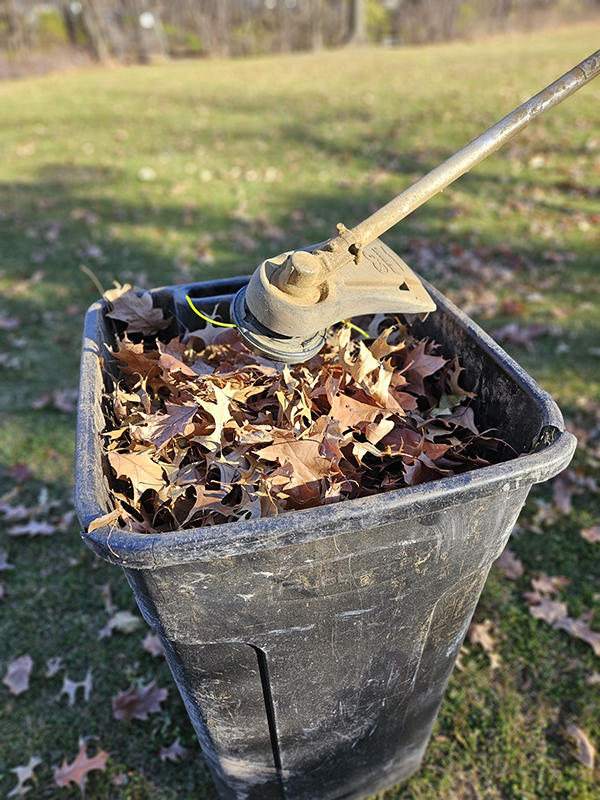
All you need is a large trash can or durable container and a weed eater/string trimmer (or weed wacker as I grew up calling it). You also want to make sure to wear eye protection and possibly even a mask if the wind is blowing too much. (Product Link: Echo String Trimmer)
Gather The Leaves – A New Way To Mulch Leaves
The first part is to gather up your dried fall leaves. The best tree leaves to use are from maple, oak, ash, willow, poplar, and fruit trees. Stay away from leaves that come from black walnut, eucalyptus, and buckeye trees. All of these varieties contain a compound that is poisonous to some garden vegetables and plants.

While we have several walnut trees on our property, those leaves are now long gone. In fact, walnuts are one of the first types of trees to lose their leaves in the fall. (They are also one of the last to sprout in the spring so they have a very short growing season.)
Rake the leaves into a pile or use a leaf blower to make gathering easier. We then laid our trash can on its side and raked the leaves into it rather than taking armfuls and dumping them. Either way would work though.
Use Your Weed Eater – A New Way To Mulch Leaves
Next, make sure you are wearing a pair of safety goggles and possibly even a mask since this next part can get dusty. Take your weed eater and get it running.
It works best if you go a few inches down and start to mulch. If you go right on the surface, then you will likely end up with a face full of mulched leaves. Leave about a 6-inch barrier above your weed wacker to help prevent them from blowing up in your face.
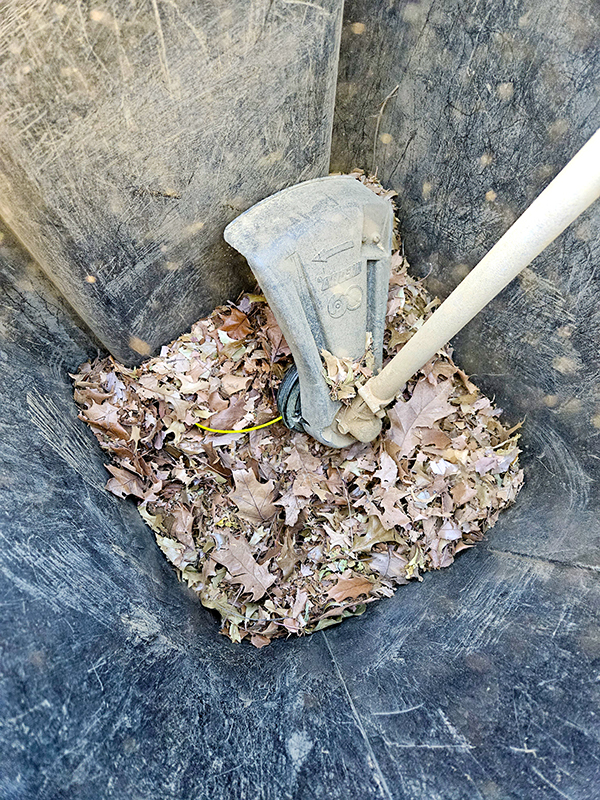
Move the weed wacker up and down a little bit to help quickly break apart and mulch the leaves. If you want to see exactly how the process works, I attached a quick YouTube Short below.
You will be amazed at how quickly a trash can full of leaves will turn into a small pile of mulched leaves. It honestly takes about a minute or less to do a full trash can. You can then just take the trash can over to your garden soil and dumb the mulched leaves wherever you need them.
The entire process is quick, simple, and not labor-intensive. This will definitely be a new method that we use each year to help us break apart our dried fall leaves to use as wonderful (and free!) garden mulch!
Until next time, thanks for stopping by!
– Chelsea
*This post may contain affiliate links. These are products I have used personally and highly recommend. As an Amazon Associate, I may earn a small commission from qualifying purchases if you purchase items through my links. These links and the ads on this page help to support my family and our semi homestead, so Thank You!
Discover more from Semi Homestead Life
Subscribe to get the latest posts sent to your email.