
In order to keep your petunias looking stunning all summer long, you need to be deadheading the blooms. However, there’s a right and a wrong way of going about doing this in order to keep the plant flowering strong.
Petunias are one of the most popular flowering annuals to grace front porches and potted containers everywhere. It’s hard to resist those bright, vibrant blooms that blanket the plants during the warmer months.
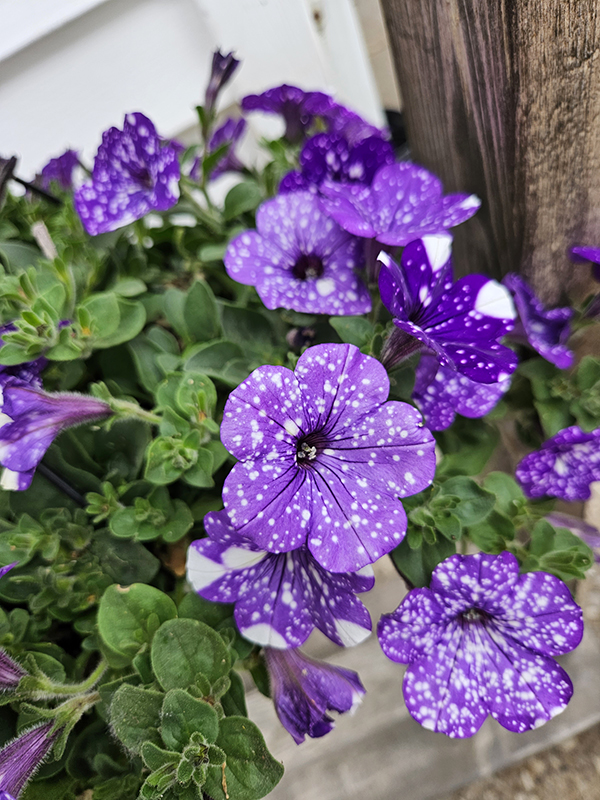
You can find petunias in a wide range of colors and bloom types. Whether you grow them in pots, containers, hanging baskets, flowerbeds, or directly in the ground, there’s a petunia variety that would look perfect for your location.
However, after a few weeks, those once stunning plants can quickly start to look a little worse for wear, despite regular feedings and waterings. While some petunia varieties are capable of self-cleaning, many can’t and thus benefit from deadheading.
It’s a quick and simple process that results in healthier, fuller-looking plants. Armed with a small pair of pruners or just your fingers, you can tackle the task in just a few minutes!
All About Deadheading Petunias
What Is Deadheading?
Deadheading is the process of removing the spent blooms from a plant. Not only does this help keep the plant looking tidy and clean, but it also helps to encourage more blooms to form.
As a bloom starts to die back, the plant shifts its energy to maturing the seed. But when you remove the bloom and seed head, that energy and the resources can instead be spent on producing brand new blooms instead of going to seed production.
Not all flowering plants require deadheading. Some annuals and perennials like Lantana, Black Eye Susan, Impatiens, Coneflowers, and Begonias all produce loads of blooms regardless of deadheading. The same is true for some varieties of petunias, too.
Varieties like Supertunias and Wave petunias were actually created to be “self-cleaning.” This means that these plants drop their blooms and seed heads automatically. While you can still remove the spent blooms to keep plants tidier and speed up the process, it isn’t required.
Other types of petunias, however, do benefit from regular deadheading. Without it, only the petals will fall off the plant, leaving the seed head behind to use up what precious energy is left in the soil.
A Flower’s Plant’s Goal
For the most part, the whole goal of flowering plants is to create brand-new baby plants. While we think of flowers as only producing these beautiful blooms for us to enjoy, the plant is actually focusing its energy and spending its time on creating seeds.

In general, the petals are simply there to help draw in pollinators like bees, butterflies, moths, hummingbirds, etc. Sure, they look pretty and may smell nice to us, but they are just part of the seed-making process.
Once the job of the petals is done, they shrivel up and die, leaving behind the seedhead. The plant then switches its focus to growing and maturing the seeds so that they can someday drop into the soil and create new plants.
If the seedhead is removed, however, the plant tries to attempt the whole process over again by creating new blooms (and thus, new seed heads). With petunias, it’s a cycle that continues until the plant either runs out of energy or the first frost of winter arrives.
When To Deadhead – Deadheading Petunias
There is no set timeframe for deadheading petunia blooms. It’s not like the plants bloom like crazy one week and then none the next. They will continue blooming all summer long, making deadheading a task that needs to be done on a regular basis.
But don’t fret because it’s a simple process! Just get into the practice of regularly checking your plant every day or so, especially during the heat of summer.
I like to check mine when I water them. Since most potted and container plants often need watering daily, I use that time to also check my plants over and quickly snip off any spent blooms I find.
If you stay on top of things, the whole process should only take a minute or two tops. If daily checks aren’t possible, at least deadhead blooms once or twice a week.
How To Deadhead Spent Blooms
The first step is to identify any blooms that have started to fade or that look damaged and wrinkled. The spent blooms will start to look limp and not as wide open as fresh, new blooms. Really old blooms will shrivel up as they start to dry out.
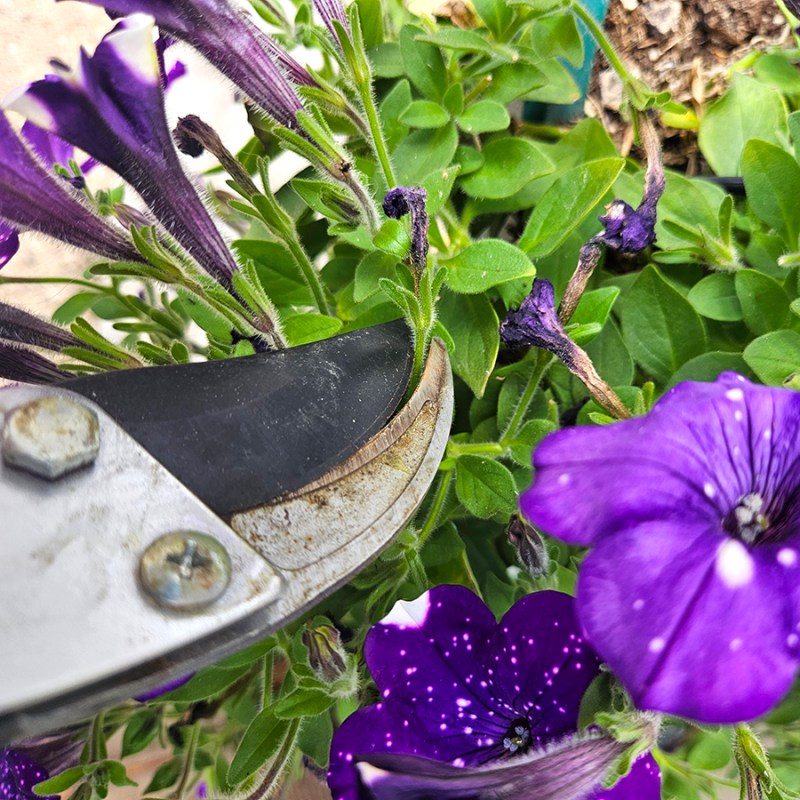
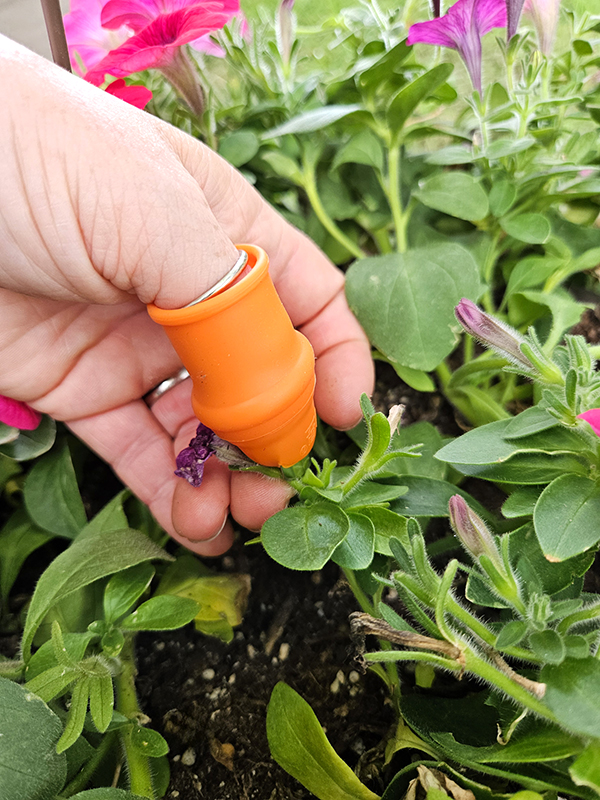
Next, take a pair of clean pruners or microsnips and cut the petunia bloom completely off from the plant. You can also use a gardening thumb knife or just your fingernails to snip off the blooms. (These are my favorite Microsnips to use when deadheading petunias – Product Link: Fiskars 6″ Pruning Scissors for Flowers.)
If you use your fingers, don’t be surprised if they get sticky after a while. Petunias produce a sticky sap that helps to protect the plant from insects and bugs. However, it doesn’t usually cause irritation to most people.
Remove The Whole Bloom
Now this is the part that some new gardeners mess up, myself included!
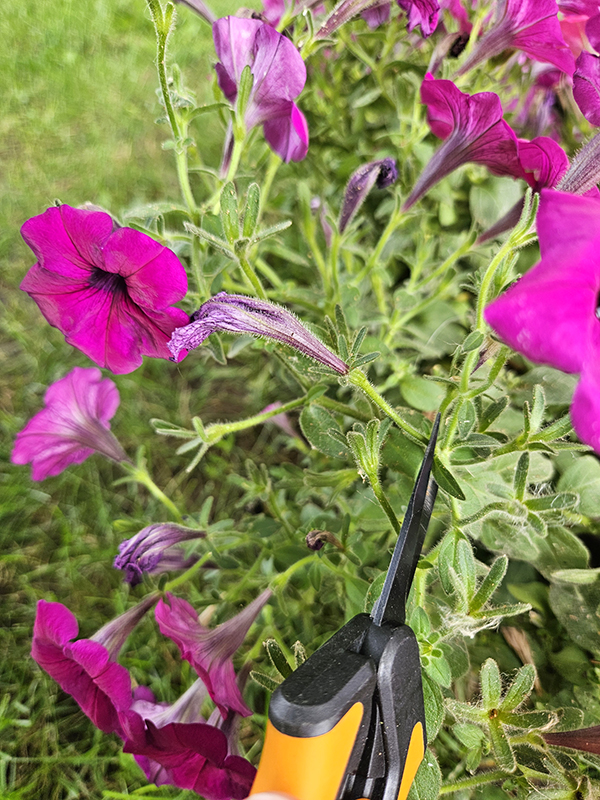
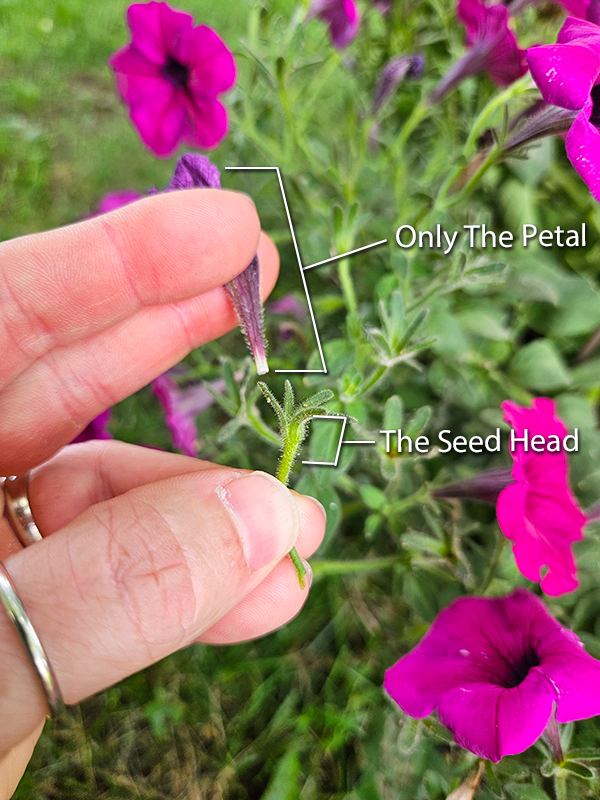
The petals of a petunia bloom can easily be pulled from the plant without much resistance. However, if you only pull out just the spent petals, you still leave behind the seedhead. This defeats the whole purpose of deadheading, unfortunately.
Instead, you need to remove the entire bloom AND the seedhead at the same time. (Once the petal is pulled out, it can be tricky to locate the right seedhead since it looks just like one that is about to produce a new bloom. So snipping them both off at the same time is the best option.)
Just make sure when you are cutting off the spent bloom that you go down about an inch or so behind the flowerhead and cut there. In fact, you can trim all the way down to a side branch or another flower bud. This will ensure that you are removing everything properly.
That’s really all there is to deadheading petunias! Don’t toss the trimmed seedheads into your compost since most piles don’t get hot enough to kill off seeds. You might just end up with loads of petunias growing in your compost!
Other Ways To Encourage Blooming
If you want to learn about growing petunias in general, check out my article, “Caring For Petunias – One Of The Most Popular Flowering Annuals”. But for a few quick tips on keeping petunias blooming strong, keep the following in mind.
- Provide plants with plenty of direct sunlight. Petunias grown in partial shade will produce fewer blooms and have slower growth.
- Petunias require a lot of water to stay blooming strong. Those grown in pots or containers need to be watered daily, especially during really hot days. Give plants a good, long soaking at the base of the plant early in the morning. Try to keep as much of the water off the blooms as possible.
- Prune back leggy petunia stems. This can be done two or three times during the growing season to help keep plants full. Only remove about a third of the plant at a time though. Yes, you will have to sacrifice a few blooms to do this, but the plant will benefit in the long term. The petunia will go a week or two without any blooms after heavy pruning, but most plants will bounce back with loads of new blooms after a good trim.
- Fertilize petunias with a balanced, all-purpose fertilizer after pruning them back. This will help to encourage fast growth.
- Provide plants with an all-purpose, balanced fertilizer every two to three weeks during the growing season. Flowering annuals require a lot of nutrients to produce blooms. Fertilizing helps to replenish those nutrients back to the soil. You can also use compost tea when watering as well for an easily absorbed fertilizer.
Hopefully with proper deadheading and the above tips, your petunias will stay blooming strong all summer long!
Until next time, thanks for stopping by!
– Chelsea
*This post may contain affiliate links. These are products I have used personally and highly recommend. As an Amazon Associate, I may earn a small commission from qualifying purchases if you purchase items through my links. These links and the ads on this page help to support my family and our semi homestead, so Thank You!
Discover more from Semi Homestead Life
Subscribe to get the latest posts sent to your email.
One thought on “Deadheading Petunias For Continuous Blooms All Summer Long”
Comments are closed.