
Are you dealing with powdery mildew in your garden and wondering if there is anything that can be done to slow down the disease’s progression? How do you stop getting powdery mildew on your plants in the first place?

If you’ve gardened for any length of time, then chances are you’ve had a run-in with powdery mildew, even if you haven’t realized it. This fungal disease is a common issue that can pop up on a wide variety of vegetables, flowers, and perennials.
What starts out as a light dusting of fuzzy white spots on the top of leaves soon turns into dry, crusty foliage. However, powdery mildew not only affects the foliage but also the plant’s growth and production of new blooms if left unchecked. Before long, the entire plant can succumb to the disease.
Unfortunately, it’s not just one or two types of garden plants that can be affected by powdery mildew. Under the right conditions, the disease can easily spread to cucumbers, squash, melons, pumpkins, peas, beans, tomatoes, peppers, and eggplants. (In fact, no plant in your garden is immune; Those are just the most common victims.)
Even though it can be hard to get rid of powdery mildew once it starts showing up on the plant’s foliage, all is not lost. This article will walk you through how to identify, prevent, and treat powdery mildew naturally and safely.
Tips On Identifying And Dealing With Powdery Mildew
What Is Powdery Mildew?
Powdery mildew is a type of fungal disease that shows up on various plants in your garden. Unlike most fungi, powdery mildew thrives and spreads easily in dry, 60 to 80º Fahrenheit (F) days with high relative humidity levels, especially at night. (Hello, late spring and early fall in the Midwest!)

Since these are often the same weather conditions we have here in Illinois, it’s a disease that I have to fight personally in our semi homestead on a yearly basis. We see it most often with our curcubit plants during late summer and early fall. During spring, we can usually squeak by unscathed.
Plants grown in shaded locations are often more at risk than those in full sun. During periods of wet, rainy weather, the spread of the spores slows down. Temperatures above 90º F also help to slow down the disease. That’s why you don’t often see outbreaks during the heart of summer.
What It Looks Like & How It Spreads
Powdery mildew is caused by multiple different types of fungi, but they all cause the same issues. The fungi create patches of white or grayish mycelium (i.e., the spreading body of the fungi) all over the plant’s surface.
This mycelium is what absorbs the nutrients from the plant as well as grows and spreads. It also produces spores that can be released into the air, causing the infection to spread to other nearby plants via wind or other avenues. The spores can also overwinter on dead plant debris and spread to healthy plants the following year.
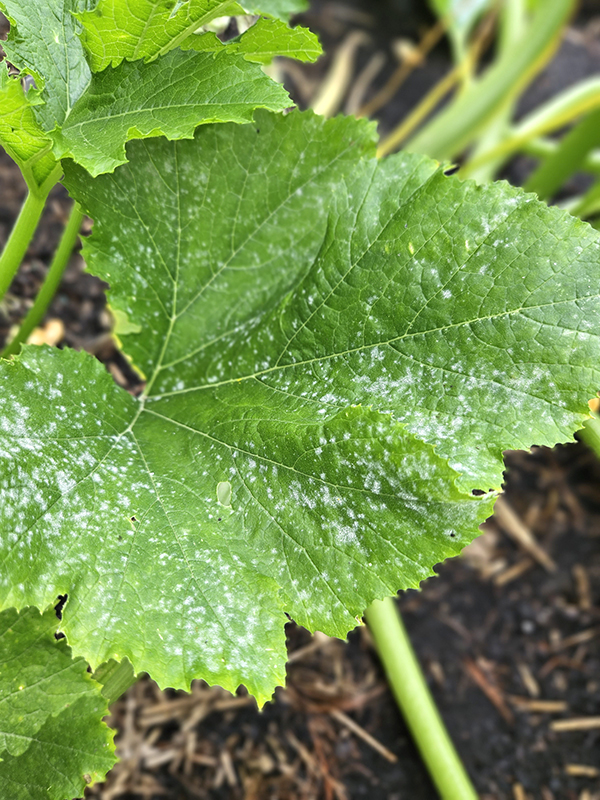
The white or gray patches of mycelium appear fuzzy or “powdery” in appearance, hence the disease’s name. The patches first show up most notably on the top of the plant’s leaves. However, they can also coat the stems, flowers, and growing fruit.
Signs Of The Disease
The easiest way to identify powdery mildew is to look for the patches of white or gray on the foliage and stems. If you take your finger and run it along the surface, the white patches should easily wipe off.
Don’t mistake some variegations in leaf coloring for powdery mildew. There are some curcubit plants that have white coloring on their leaves that looks similar to powdery mildew. However, these white spots won’t wipe off and aren’t raised off the surface of the leaf. (I’m only mentioning this because I used to worry about this early in my gardening career with some of my zucchini plants.)
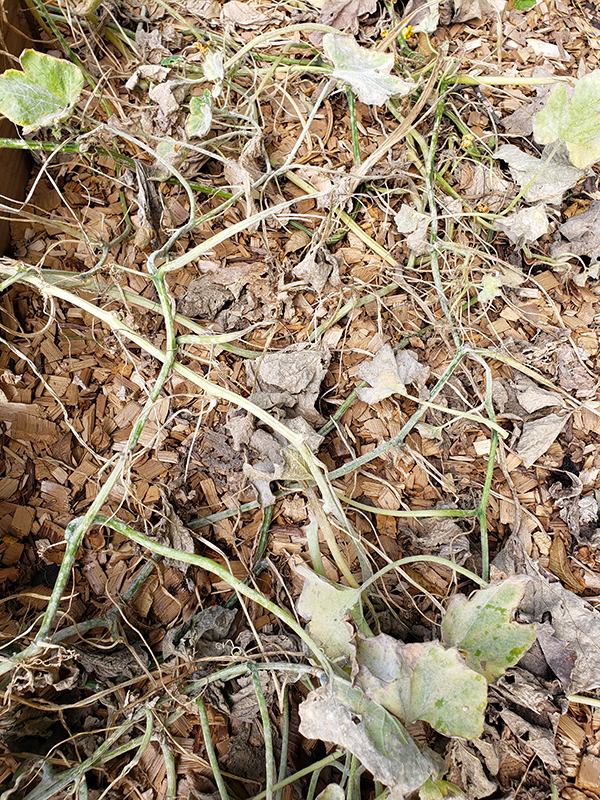
The next sign is yellowing and wilting leaves. If the disease is bad enough, it will start to disrupt the absorption of nutrients in the foliage, causing it to yellow.
The next step is dried, crumbling leaves. As powdery mildew takes over, the entire leaf will start to dry out and disintegrate. This is a progression that usually starts at one end of the plant and works its way up, especially with vining crops like zucchini and squash.
Preventing Powdery Mildew
The best course of action when dealing with powdery mildew is prevention. Once a leaf or part of a plant gets powdery mildew, you can’t remove the mildew without removing the plant matter as well. So prevention is key.
When Planting
If you know you typically have issues with mildew (like we do), look for powdery mildew-resistant varieties when choosing your plants or seeds. These crops have been cross-pollinated to create disease resistance.
Next, you want to keep air circulation in mind when planting. While I don’t really follow the recommended plant space requirements to a “T”, I do keep in mind air flow and the plant’s mature size.
Plants that are growing extremely close together create higher relative humidity and are more apt to get powdery mildew. Proper spacing also reduces the chances of the disease spreading if it does appear on one plant.

Along the same lines, keep in mind the amount of sunlight all areas of your garden receive when planting. There is usually more moisture on and around plants growing in shade since the sunlight can’t dry it as quickly.
For example, the East side of my garden starts to receive less sunlight by late summer/early fall. This makes vulnerable plants like cucumbers or squash more susceptible to powdery mildew if I plant them in that part of our garden.
After Planting
Next, keep plants as healthy as possible with proper watering, fertilizing, and weeding. Weak plants that are stressed from environmental issues are more likely to get powdery mildew than healthy ones.
If you did end up planting crops too close together, prune them to help improve the air circulation. Be sure to wipe down your pruners with alcohol wipes when moving between plants. This helps to prevent any diseases already on the plants from spreading to healthy ones.

If you’ve followed me for long, then you know I always say not to water plants overhead whenever possible. Excess moisture sitting on the foliage as well as in the air can encourage powdery mildew growth. Instead, water at the base of each plant. (See my article, “Watering Garden Tips – How Often, When, Where & How Much”.)
Lastly, do not fertilize plants that are infected with powdery mildew. Any new, tender growth is much more susceptible to powdery mildew than older growth.
Treating The Spots
Even if you do everything right in the book and follow all the tips, you might still wind up with powdery mildew. It’s not always a huge cause for concern, but your garden plants will fare better if you take quick steps to treat and slow down its progression. Chances are, you won’t entirely eliminate the mildew, but you can slow down or stop its progression.
First, make sure you are walking your garden every day or so. This allows you to spot early signs of diseases, damage, or pest issues. If you catch it early enough, you can quickly deal with it before it gets out of hand.
Once you see the infamous fuzzy white spots, it’s time to take action. Prune off any foliage or plant materials that show signs of powdery mildew. Carefully remove the plant debris from your garden, trying your best not to spread the spores. Do not compost the diseased plant matter. Wipe your hands and the pruners with alcohol wipes after to prevent spreading the spores to healthy plants.

To help stop the disease from happening next growing season, remove dead and diseased plant debris from your garden as soon as possible. Since powdery mildew spores live on plant foliage and debris, you want to get those spreadable spores far away from your garden. Otherwise, they will overwinter and be ready to go as soon as spring arrives.
Natural Sprays For Dealing With Powdery Mildew
Instead of using harsh chemicals, you can make a number of different homemade sprays to try. You can use most of these as a preventative. For preventative methods, spray on plants once every two weeks or after heavy rainfall. To slow down the spread of powdery mildew, use the sprays once every 3 to 4 days and after rain.
You can find the first product right in your refrigerator: Milk! Use 1 part milk to every 2 to 3 parts water. Spray this onto all parts of the plant. This spray seems to work the best out of all the homemade sprays on this list, so maybe try it first.
Another option to try is Baking soda. It does a better job at preventing powdery mildew, but you can try using it as a treatment as well. Mix 1 tablespoon of baking soda in one gallon of water. Add in about 1/2 a teaspoon of biodegradable liquid soap. Shake well and spray this on all parts of the plant.
Swap out the baking soda for potassium bicarbonate using the same product ratios. While baking soda works great for preventing powdery mildew, potassium bicarbonate does better at slowing down the spread of the mildew.
Other Options
You can also use Vinegar to try to alter the pH of powdery mildew, which can help stop powdery mildew. Add four tablespoons of 5% acidic vinegar for every gallon of water. Spray this on all parts of the plant.
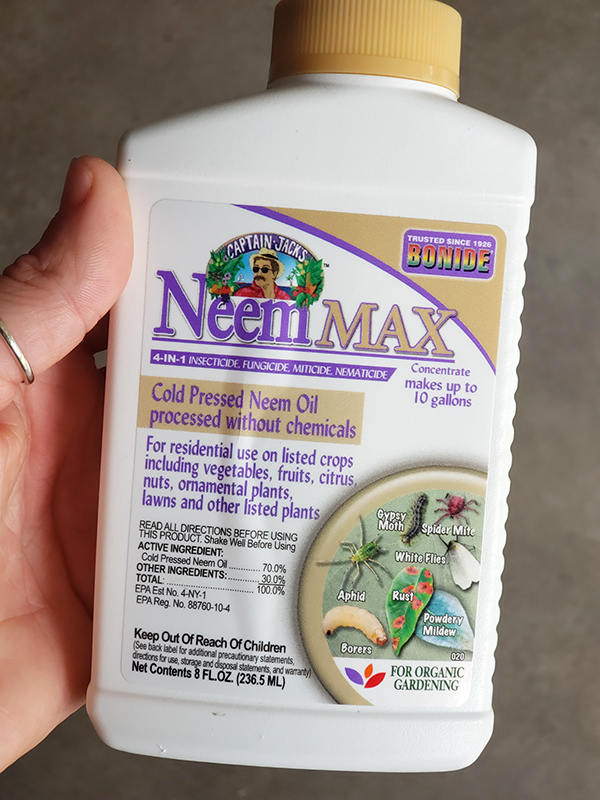
The last one is a bit more controversial, and that is neem oil. If you use it correctly and according to the package directions, neem oil is considered safe for pollinators and is approved for organic gardening. You can find neem oil in concentrated forms as well as ready-to-go sprays. (I have used this brand of Neem oil for various issues with great results – Product Link: Bonide Captain Jack’s Neem Max.)
Hopefully, by implementing these tips, you can learn ways of dealing with powdery mildew and slowing down the progress of the disease – no harsh chemicals involved!
Until next time, thanks for stopping by!
– Chelsea
*This post may contain affiliate links. These are products I have used personally and highly recommend. As an Amazon Associate, I may earn a small commission from qualifying purchases if you purchase items through my links. These links and the ads on this page help to support my family and our semi homestead, so Thank You!
Discover more from Semi Homestead Life
Subscribe to get the latest posts sent to your email.