
While they might be beautiful and majestic to watch frolic and play, deer can really wreak havoc on your garden and property, so that’s why you need to deer-proof it!
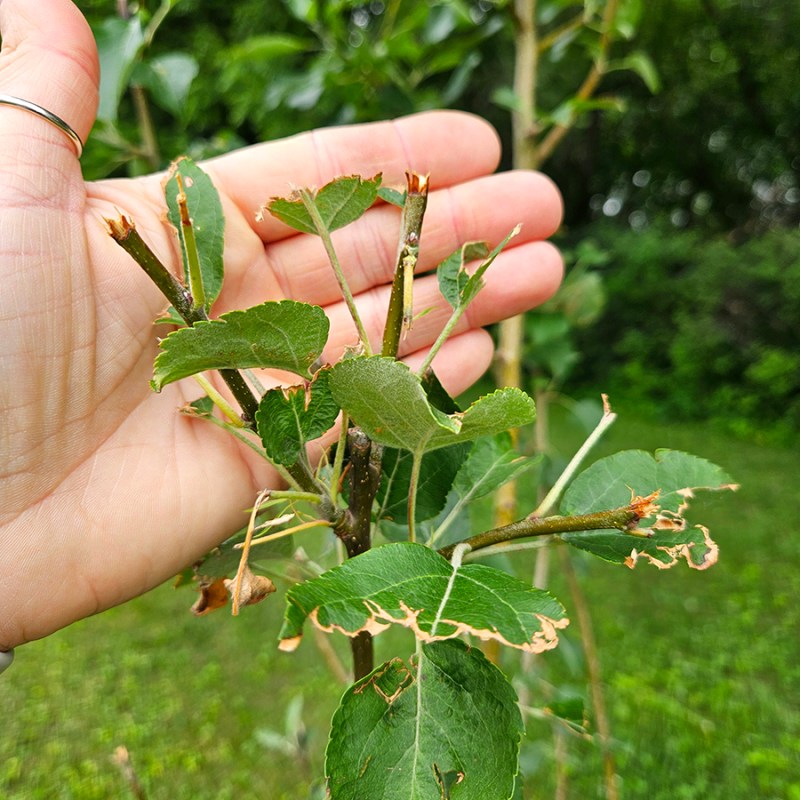
If you live in a rural location, chances are that you’ve had a run-in with a deer or two. (And no, I don’t mean the ones sprinting across the road at dusk!) In fact, you’ve most likely had a few deer helping themselves to your garden or landscape plants, possibly without you even knowing!
There are just some plants that deer can’t seem to get enough of, and many of those are popular landscape plants and trees. Hostas, rose bushes, daylilies, tulips, geraniums, hydrangeas, ivy, arborvitae, and more are all up for grabs by hungry deer.
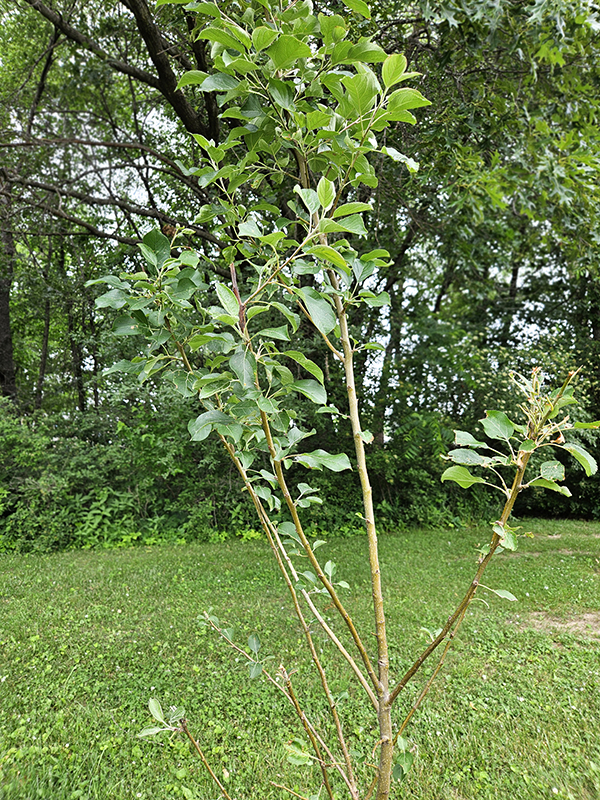
In addition, many vegetables growing in your garden are also likely victims. Crops like lettuce, sweet corn, broccoli, peas, cauliflower, carrot tops, beans, and more. Don’t forget the young fruit trees and bushes like berry bushes, apple trees, pear trees, plum trees, and more. (Fruit trees seem to be a favorite on our property!)
Thankfully, you don’t have to be a hunter to help deer-proof your garden and property. I’ve put together a list of 4 safe ways to keep these beautiful creatures away from your plants while still allowing you to enjoy their presence.
Signs Of Deer Damage
Unfortunately, deer aren’t the only living creature that likes to dine on plants and trees throughout your garden and property. However, there are a few telltale signs you can look for to help you decide whether it is deer or not. (Read all about my tips on dealing with rabbits: “How To Deter Rabbits – Keeping Bunnies Out Of Your Garden”.)
First, look for the obvious: hoof prints. Deer have very distinct prints that look like an upside-down heart with a gap in the middle. Next, you can look for their droppings nearby. Deer scat looks like small, oval pellets. They will be dark colored and are usually left in a small pile.
The next tip is to look at the plant for damage itself. The ends of the branches and stems will be snipped off and look jagged and shredded. This is caused by the deer biting on the branches and jerking their heads to pull the foliage away from the plant. If the cuts are clean like a pair of pruners did the work, then chances are it’s not deer.
The last tip is found more in heavily wooded locations, but look for deer rubs. These are markings or scrapings on tree trunks and saplings. Bucks (male deer) scrape their antlers to remove the soft velvet covering and/or to “mark” their territory with a scent. This leaves trees scraped and scarred.
How To Deer Proof Your Garden And Home
While many of these suggestions work great to help deer proof your garden and landscape, you need to have an open mind. Just because something works for me doesn’t mean it will be perfect for your situation.
Consider trying several of these options in combination with one another. Although it might take some trial and error, you should find a tactic that works for you and your property.
1. Deer-Resistant Plants
The first tip is to plant items that deer typically pass over without sampling. Some plants are more appealing and tend to be at the top of their menu, while others can help keep the deer away.
There are some plant characteristics that deer dislike. One of those is plants with spiky or prickly foliage. Globe Thistle, Juniper, and American Holly are a few examples of this. Also, look for plants that exhibit odd-textured foliage, whether it be fuzzy or bristly. Examples of these are Heliotrope, Yarrow, Lamb’s Ear, Poppies, and more.
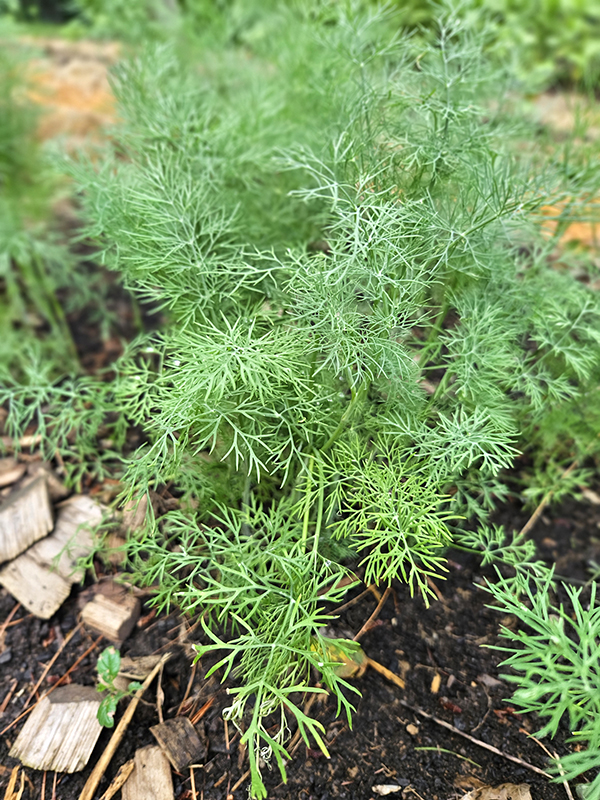
Lastly, look for plants that produce a strong odor. In your vegetable garden, consider planting Dill, Mint, Sage, or pretty much any fragrant herb. Many different flowers are also potent when it comes to fragrance, including Bee Balm, Lavender, Bleeding Hearts, Salvia, Marigolds, Astilbe, Coneflowers, Geraniums, and so much more.
2. Sprays and Repellents
Whether you create your own homemade spray or purchase one in the store, sprays and scents are a great way to deer proof your garden and property without harming your plants. Since deer are sensitive to scents, pretty much anything you make that has a strong odor will work (as long as it’s safe for your plants).
To make a homemade version, mix any combination of stinky items like cayenne peppers, garlic, eggs, vinegar, essential oils, etc., with water. (You can find loads of other recipes online.) For example, thoroughly blend three eggs with one gallon of water. Spray this onto the ground and the foliage until wet. Reapply every two weeks and after rain.
These sprays work great for repelling deer, but you have to be consistent with applying them. Use them as described on the container and make sure you reapply them after rain. It’s a bit more of a hands-on method, but it does work. Again, as long as you are consistent!
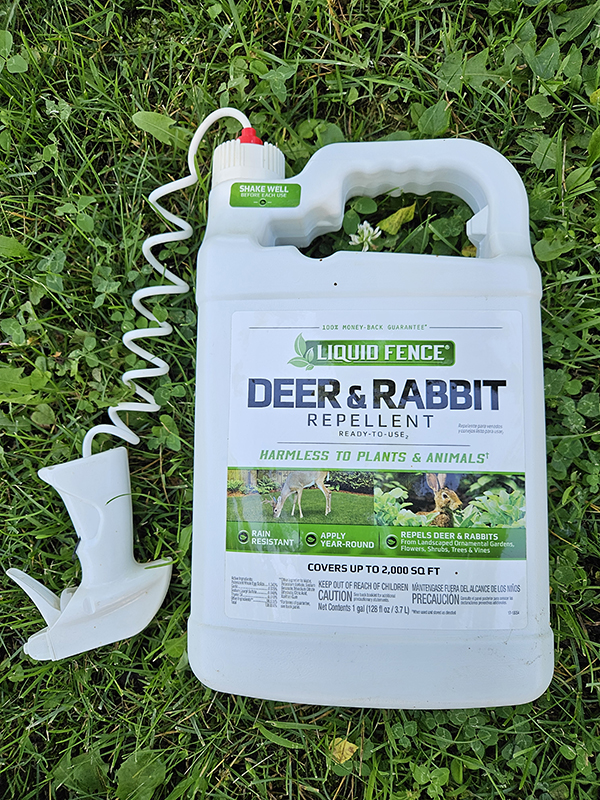
I’ve personally used store-bought sprays and have had great success with them. However, I’m not the best at staying consistent, so we had to use more drastic measures on our semi homestead. (Here is the spray we’ve had good success with – Product Link: Liquid Fence Deer And Rabbit Repellent Ready-To-Use.)
You can also try using strongly scented bars of soap. (One of the most popular is Irish Spring.) String the cars of soap or pierce them with a skewer and place them around the plants.
3. Scare Them – Deer Proof Your Garden
Sure, you can stand out in your garden with a large spoon and a pot and bang on it to make noise when deer come near, but that’s not quite what I mean when I say to “scare them.” (It also might get you a few strange looks from your neighbors and people driving by!)
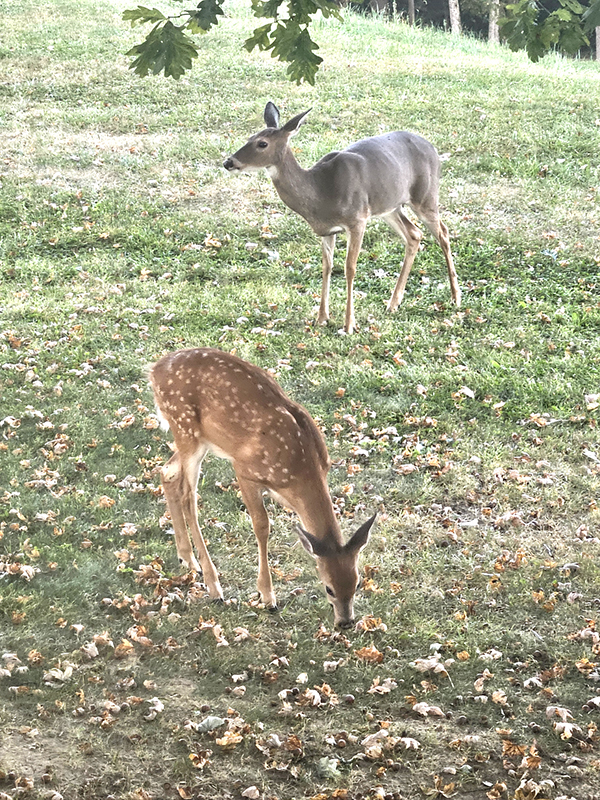
Since deer are prey animals, they are always on high alert for predators that might be lurking around. We can use that to our advantage by creating a space that might scare them and keep them away.
One way you can do this is to place something that moves or makes noise in your garden space or around the susceptible plants. This can be anything from those little spinning pinwheels to CDs or aluminum cans hanging by a string. The key though, is to move the items around from place to place often so the deer don’t get used to it.
There are also products you can purchase, like motion-sensored devices that can spray water, turn on a radio, etc., that can keep the deer guessing. They might cost a little more money upfront, but they can be very effective.
4. Deer Fences & Living Barriers
The best method we’ve personally had the most success with is to use an actual fence. We placed one around our mini fruit orchard because the deer were constantly clipping off all the ends of my young fruit trees.
The key to having success with a fence is to make sure it is tall enough to stop deer from jumping over it. Deer are able to jump over 8 feet, especially if they are frightened or hungry enough. Because of this, the fence needs to be at least 7 to 8 feet tall. The taller, the better!

If you are worried about the appearance of a fence, you can buy or make one that is almost invisible to the eye. String fishing line to create an invisible fence. Just be sure to add the string at several different heights.
If that tall of a fence isn’t an option, consider adding a double fence instead. Space out two fences 3 to 5 feet apart from one another. The deer won’t jump over something if they can’t see a clear landing space.
If a fence is a no-go, use a living barrier to keep deer from parading around your property. Grow plants that deer detest around or amongst other plants that deer enjoy. Add herbs and other strong-scented plants around the perimeter of the vegetable garden. Or use a living fence of boxwoods and other shrubs. Think outside the box here by letting nature work for you!
Hopefully, by experimenting with these suggestions, you should be able to find a way to deer proof your garden and property – all without harming the deer!
Until next time, thanks for stopping by!
– Chelsea
*This post may contain affiliate links. These are products I have used personally and highly recommend. As an Amazon Associate, I may earn a small commission from qualifying purchases if you purchase items through my links. These links and the ads on this page help to support my family and our semi homestead, so Thank You!
Discover more from Semi Homestead Life
Subscribe to get the latest posts sent to your email.