
Looking for some simple tips on properly watering your vegetable garden so you can keep your plants healthy and producing well all summer long?
For most gardeners, in order to have success keeping their plants healthy and productive, they will need to hand-water their plants from time to time. As much as we’d all love for Mother Nature to do the job for us, it doesn’t always work out.
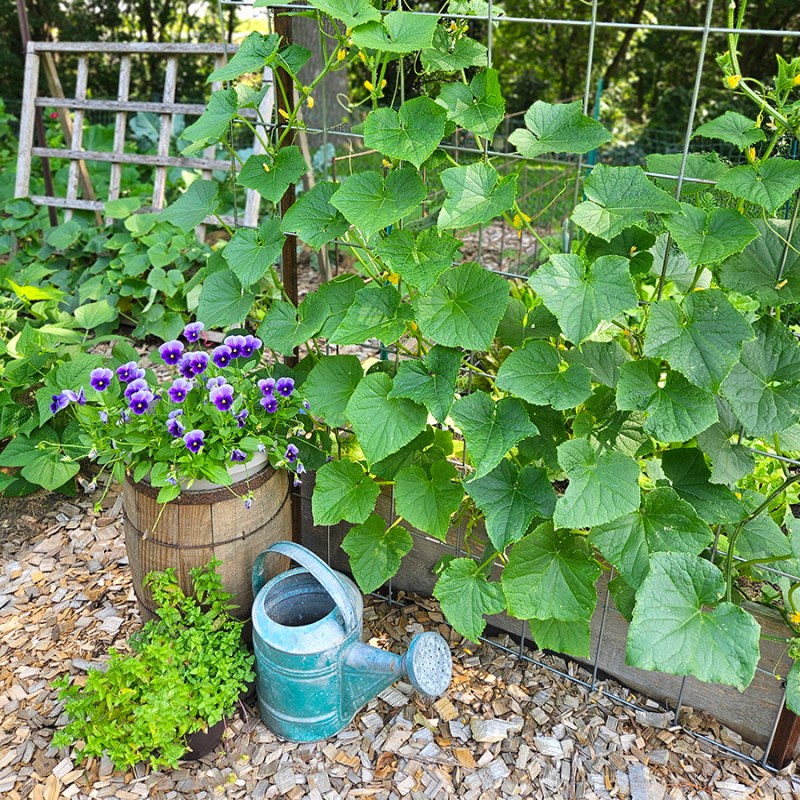
If it’s been about a week or two and your precious plants haven’t even seen a single drop of rain, it’s probably time to bust out the watering can. However, there are a few tips to keep in mind when it comes to watering properly.
Sure, you can set up your oscillating sprinkler and let it fly for 30 to 60 minutes each day, and you will have successfully provided your plants with a cool drink. However, it’s not always the best method. And sometimes, even though you have good intentions, watering incorrectly can introduce all sorts of issues to your plants, like insects and diseases.
Even though there is no “one size fits all” situation when it comes to watering your plants, there are still a few basic tips that you should keep in mind. In this article, I’ll walk you through the best way to water your garden, from the timing to how often it should be done to the best technique.
5 Tips On Watering Your Garden For Success!
1: How Often To Water
The answer to that question is that it depends. (I know, a disappointing answer right from the start!) The reason for this is that there are several variables that come into play. These variables can impact when and how much your plants need to be watered.
The method you are using to water them (e.g., using a hose with a sprayer nozzle set to “shower” or a drip irrigation system), what type of soil you have, the temperature outside, if the wind is blowing, how much sunlight the location receives, whether or not you are using mulch (you better be!), and even what type of plants you are growing all affect the amount of water needed.
So there isn’t a “one size fits all” answer here, unfortunately.
What To Use As A Gauge?
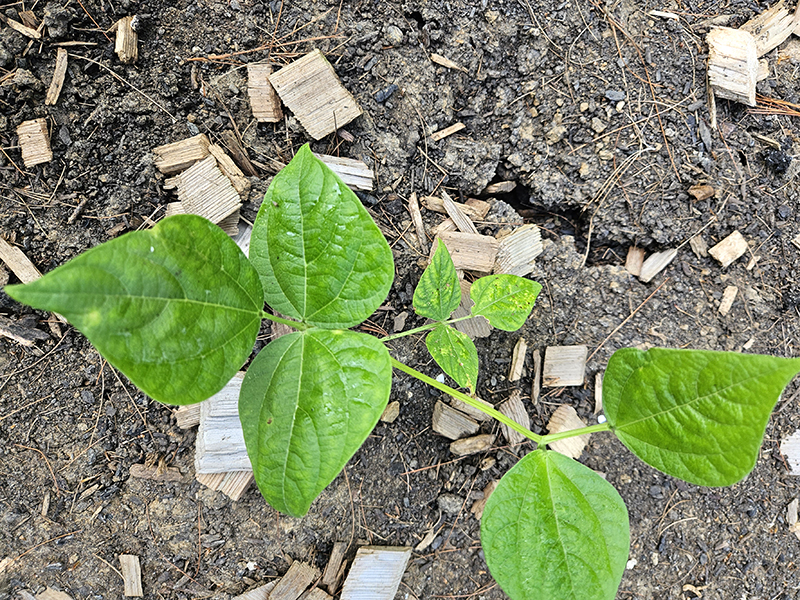
The biggest way to tell if your garden needs watering is the look and feel of your soil. Now, I’m not just talking about the first inch or two of soil. If I went by that appearance, my clay-like soil would need to be watered every day! The surface of our soil often looks cracked and desert-like.
However, if I dig down deep, the soil 4 to 6 inches below might still have plenty of moisture. That’s where you need to be checking whether or not you need to water, not at the surface.
This is because the roots of most vegetable plants grow deep down into the soil. In fact, you will find very few roots just at the top couple of inches in the soil. Since deep down is where the roots are, that’s where you need to check in order to see if there is enough moisture or not.
To do this, you can use either your finger to dig down deep into the soil. Or, you can use an inexpensive moisture meter if you want to be precise. The moisture meter will take the guesswork out of the process. (Product Link: XLUX Soil Moisture Sensor Meter)
2: When To Water – Watering Garden Tips
The best time to water your vegetable garden is in the early morning when the sun is just starting to come up. At this timeframe, the air is typically a bit cooler, the sunlight is less intense, and the winds aren’t as strong.
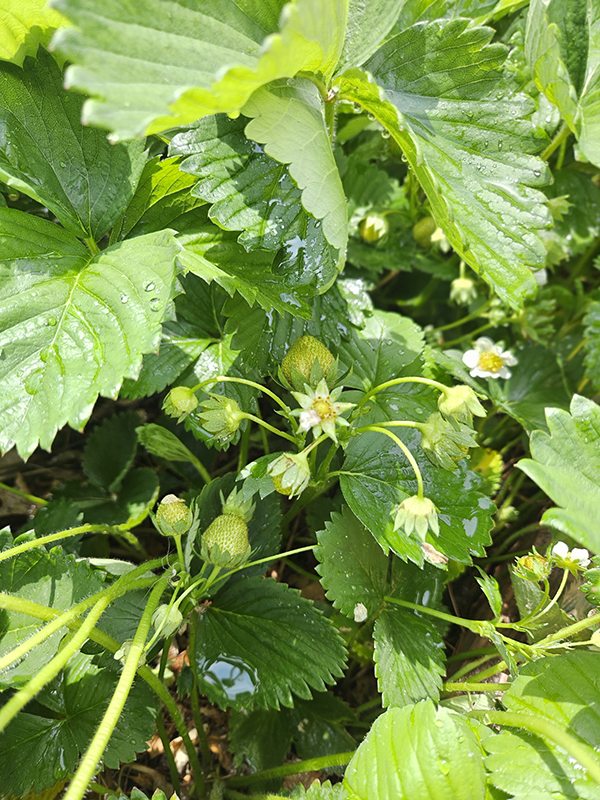
If you water your plants in the middle of a hot summer day, most of that water will evaporate away. The same thing occurs on windy days. The goal of watering your garden is to get the moisture to soak down deep into the soil. (Not add to the humid air we already get here in the Midwest!)
In addition, you want to avoid watering right before nightfall. The warm, moist soil and somewhat cooler temperatures during the night will provide environmental conditions that can increase the likelihood of mold and fungus growth. (Also, the mosquitoes tend to be a menace during that timeframe as well!)
Yes, I have been known to water at night a time or two. But I try to avoid it if I can. Sometimes my morning routine just doesn’t allow the time for hand watering that day. Sometimes I am counting on a summer storm to provide the garden with moisture, but it ends up fizzling out. During those times, it might be better to water at night than let the plants go without.
3: Where To Water
When most people water their lawn, they probably set up a simple sprinkler system on oscillation and let it run for 30 minutes to an hour. However, that isn’t the best option for your vegetable garden. Yes, it will work and your plants will receive water; It just isn’t the best option.
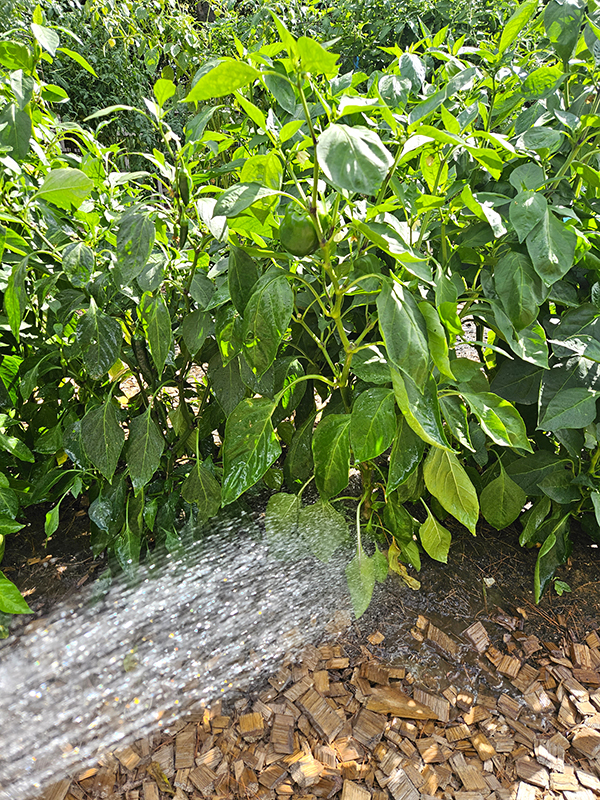
Watering overhead can cause a couple of issues for your vegetable garden that you can easily avoid. First, watering overhead gets the foliage of the plant saturated. This can be a good thing to help remove any built-up dust or dirt. However, if the plant is very large, most of the moisture may never actually make it to the soil. That’s where it is needed most! In addition, excess moisture on the leaves can invite fungi and mold issues to take hold.
Instead, water plants at the base where the stem goes into the soil. Yes, it can be a bit of a pain to water each plant low on the ground like that, but it really is worth the effort.
4: How Much To Provide?
You’ve probably read online that most plants require around 1 to 2 inches of water per week. This weekly amount includes the water that Mother Nature provides as well as any hand watering you might have to do.
Ok, so what does “1 inch” really mean in regards to watering? Well, it’s pretty simple when it’s raining because you can use a rain gauge to see how much rain you received during the last shower. However, it’s not quite that easy when it is you doing the watering!

Now, if you want to get all technical, an inch of water corresponds to about 0.62 gallons per square foot. I don’t know about you, but I don’t plan on walking around my garden refilling a gallon milk jug! So I go more off the look and feel of the soil as opposed to trying to hit exact amounts. (Go back to tip #1 above.)
In general, I typically water my garden about twice a week during most summer weeks. Sometimes a bit more, sometimes a bit less. This depends on how hot the temperature is and if we get any rain during that timeframe. If you have different soil, you might need to water more often. For example, sandy soil requires more water since it doesn’t retain moisture well.
5: How To Water – Watering Garden Tips
When watering your garden, do so deeply. Again, the goal is to get the roots of our plants to grow down deep into the soil. This will help to anchor the plants down, provide them with better access to nutrients and moisture, and provide the best foundation possible for growing and producing produce we can harvest.
So instead of watering each plant with several light “sips” of water every day or so, provide them with a long, deep drink once or twice a week.
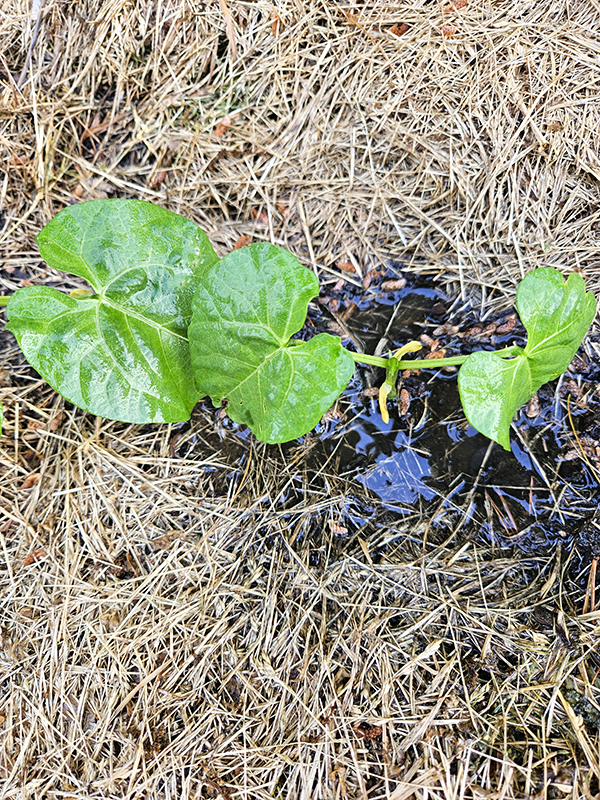
Sometimes, if the soil is extremely dry, it gets hydrophobic (i.e., can’t absorb water well). In this case, you need to water the soil just a little bit to get the first few inches damp. Then, come back in a couple of minutes later and give the soil a deeper drink. This will prevent the water from simply running off the top of the dry soil and instead allow it to really soak in.
Things To Note – Watering Garden Tips
When all things are said and done, you have to do what will work for your schedule, your location, and your plants. Not everyone has the same experiences when it comes to watering their plants.
Some people have great success with overhead watering. Other people use a drip irrigation system for watering their garden. If that’s what works for you, then go for it! The tips here are just things I have learned over the years watering our garden and from research I’ve done.
One Key: No matter what, if your plants are showing signs of heat stress like wilting, get them watered as soon as you can! Providing them with moisture is more important than following any type of tips or rules. The goal is to have healthy, happy plants that can provide us with plenty to harvest and enjoy all summer long!
Until next time, thanks for stopping by!
– Chelsea
*This post may contain affiliate links. These are products I have used personally and highly recommend. As an Amazon Associate, I may earn a small commission from qualifying purchases if you purchase items through my links. These links and the ads on this page help to support my family and our semi homestead, so Thank You!
Discover more from Semi Homestead Life
Subscribe to get the latest posts sent to your email.