
If you are looking to add a delicious yet unique vegetable to your garden that will provide you with years worth of tart-flavored baked desserts and sauces, then look no further than growing and harvesting rhubarb!
Rhubarb is one of the first edible plants to start growing after winter. It’s such a joy to see little signs of life start to come up through the ground even as early as February. It’s a sign that winter has finally started to make its way out and that spring will soon be here.
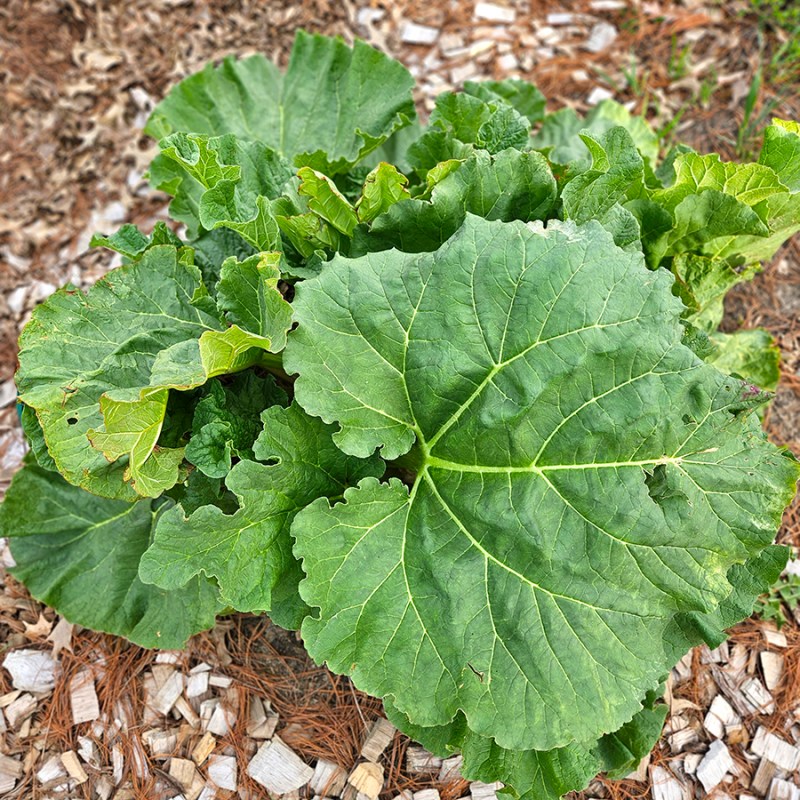
Not only does rhubarb start growing soon after winter, but it is also one of the first crops that can be harvested. For most locations, you can begin harvesting in March and keep harvesting in moderation until the plant starts to wind down due to heat in late June.
Rhubarb is a huge perennial plant that can live for over 10 years with proper care. Because of this and the fact that it can grow to be over 3 feet wide as well as tall, rhubarb requires a permanent spot in your garden. It’s a spot that is well-earned at our homestead!
From providing us with loads of fresh rhubarb for pies, crisps, jams, cakes, and sauces, rhubarb is a favorite crop to grow. It’s relatively hands-off, grows easily, and can provide you with year after year of tart-flavored, fruit-like goodness!
All About Growing And Harvesting Rhubarb
Rhubarb is a perennial crop that thrives in cooler climates and temperatures. This makes it a perfect choice for people in Northern locations like us here in Illinois (Growing Zone 5). Rhubarb actually requires a period of cold dormancy in order to store up enough energy and resources to start producing again in early spring.
This perennial grows best in zones 3 through 7, sometimes 8. As long as the ground freezes during the winter months, you should have good success growing and harvesting rhubarb.
Rhubarb plants produce long stalks in green and red colors depending on the variety. Atop the thick stalks are huge leaves that add texture and interest to your garden space.

Even though the leaves grow to be quite large, only the stalks are edible to humans. In fact, the leaves are actually poisonous, so care needs to be taken when harvesting (more on this later).
Even though rhubarb is technically a vegetable, it is treated like a fruit when it comes to baking and use. It is quite tart and sour to eat raw, so it is often sweetened with sugar and cooked before consumption.
Planting Rhubarb
Rhubarb needs to be planted either in the fall or in the spring when the ground can be worked. The soil should be around 50º Fahrenheit or warmer.
Most often, rhubarb is planted using 1-year-old crowns. You can find them in garden centers, mail-order catalogs, or at several reputable online retailers. You can also grow rhubarb from divisions taken from a previously established plant. Neighbors and family members are a great place to look for those!
Sometimes, you can also find young plants that are growing in nursery pots and are ready for transplanting into your garden. While you can grow rhubarb from seed, it is usually not recommended and can be quite difficult to achieve success.

Choosing The Right Location For Growing Rhubarb
Choose a location that receives full sun for at least 6 to 8 hours a day. Rhubarb can grow in partial shade, but you will have happier, more productive plants in full sun.
The soil should be fertile and well-draining since rhubarb is very susceptible to root rot. If needed, amend the soil with several inches of compost prior to planting. The organic matter and easily absorbable nutrients will be needed for these heavy-feeding plants.
Dig a large hole that is several inches deeper and wider than the rhubarb crown. Loosening up the soil allows the plant to easily grow and expand. Add in plenty of finished compost. Plant the crown so that the eyes are about two inches below the surface of the soil. Backfill and water well.
If you are planting and growing more than one rhubarb plant, space additional plants at least 3 to 4 feet apart. This gives each plant plenty of space to expand.
Steer Clear Of Black Walnut Trees
Don’t make the same mistake we did by planting your rhubarb anywhere near black walnut trees. Rhubarb is extremely sensitive to a toxic chemical that black walnut trees produce, juglone.

While some plants and vegetables in your garden can handle juglone, rhubarb definitely is not one of them. (You can learn more about black walnut trees here, “Black Walnut Trees & Vegetable Gardens – What To Know & Grow”.)
We learned this the hard way when I was given two rhubarb plants from a sweet neighbor and planted them on the side of my garden that has a walnut tree nearby. The plants never got established and grew very poorly for a couple of years (gardening is definitely a “learn-as-you-go experiment!”). Eventually, one of them died altogether.
I have since dug up the one remaining rhubarb plant and moved it to the opposite side of my garden and it has been thriving in its new location.
Growing Tips For Rhubarb
After planting, mulch heavily around the plants using an organic material like straw, grass clippings, or shredded leaves. The mulch will help to prevent weeds from growing while also helping to retain moisture in the soil.
Continue to water your rhubarb plants throughout the growing season. They need around an inch of rainwater or hand watering each week. Instead of providing plants with multiple little drinks, give them a good deep drink every so often. This will help to encourage the roots to grow deep and help anchor the plants.

There is no need to fertilize rhubarb during the first year if you add plenty of compost at the time of planting. However, the following spring once the ground thaws and each spring thereafter, provide plants with an additional topdressing of compost or use an all-purpose balanced fertilizer. (Product Link: Dr. Earth All Purpose Fertilizer)
In the fall, allow the leaves to die back naturally. Once the foliage is dead, remove it and add a few inches of mulch on top of the rhubarb crown. This will help to protect the plant during the winter months.
Flower Stalks & Dividing Plants
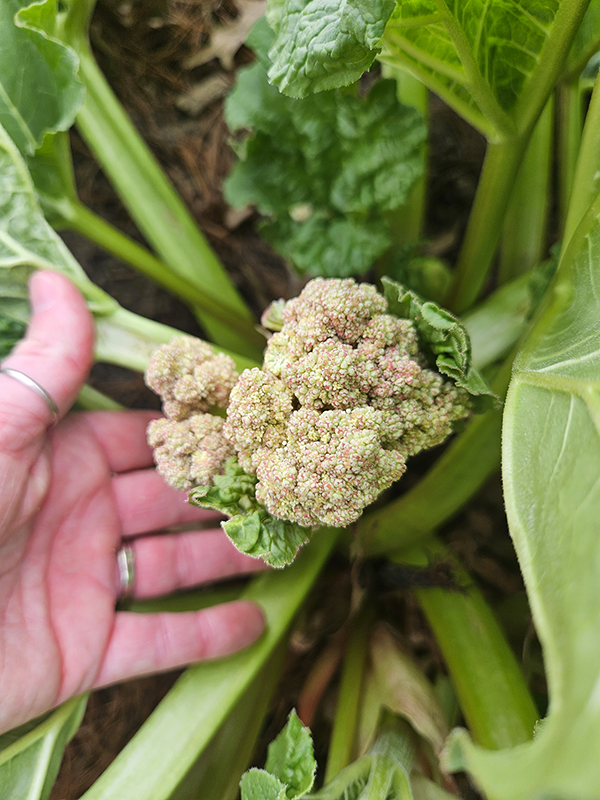
Some rhubarb plant varieties tend to push out more flower stalks than others. Rhubarb can also push out flower stalks because of stress such as high heat or infrequent watering.
If you see the flower stalks, cut them out as soon as possible. They will only continue to drain energy and resources that the plant should be using to push out new rhubarb stalks or roots instead.
You will likely need to divide established plants every 5 to 10 years. If the plant starts to push out only spindly stalks or there is no longer growth occurring in the center of the crown, it’s time to divide. Wait until plants are dormant before dividing (so early spring or fall).
Dig up around the entire crown and cut up the roots into clumps that are at least 2 to 3 inches across. Replant the healthiest sections in a new location following the tips above. (Or give them to other friends and neighbors so they can grow their own rhubarb plants!)
Properly Harvesting Rhubarb – Growing Rhubarb In Your Garden
During the first year after planting, avoid harvesting any of the rhubarb. Just leave it alone to grow and let it die back naturally in the fall. As hard as it might be, being patient will pay off in the long run! Waiting helps the plant to become established in its new location and creates a good foundation for future years of growth.
During the second year, only harvest the leaves sparingly. Again, you want to allow this long-living perennial to become fully established in its new location. The plant will start to grow larger and produce bigger, longer stalks with each passing year.
Finally, during the third year, you can start to harvest from the plant regularly. While it might be tempting, don’t harvest all of the leaves. Only take up to a third or half of the stalks at a time and allow new ones to grow in before harvesting again.

You can usually harvest from rhubarb plants during an 8 to 10-week period when the plant will continue to push out new growth. After that, the stalks start to become tough and not as pleasant to eat.
Important Harvesting Tips To Remember
Harvest the stalks when they are around 12 to 18 inches long. After harvesting, immediately cut off the leaves and toss them into your compost bin. The leaves contain high levels of oxalic acid which is toxic if consumed. You only want the long stalks for consumption.
Now, here’s an important thing to remember with harvesting: Do not cut out the stalks from the plants! Instead, you need to gently but firmly pull and twist the stalk from the base of the plant. This will help to signal to the plant that it needs to produce additional stalks. Cutting the stalks will not do this.
Once July arrives, it’s time to stop harvesting the plant’s leaves. Stalks grown during the hotter months are typically tougher and not as tender as the cool-weather growth. In addition, putting a halt on harvesting allows the plant to start storing up energy for next year’s production.
Storing And Using Rhubarb
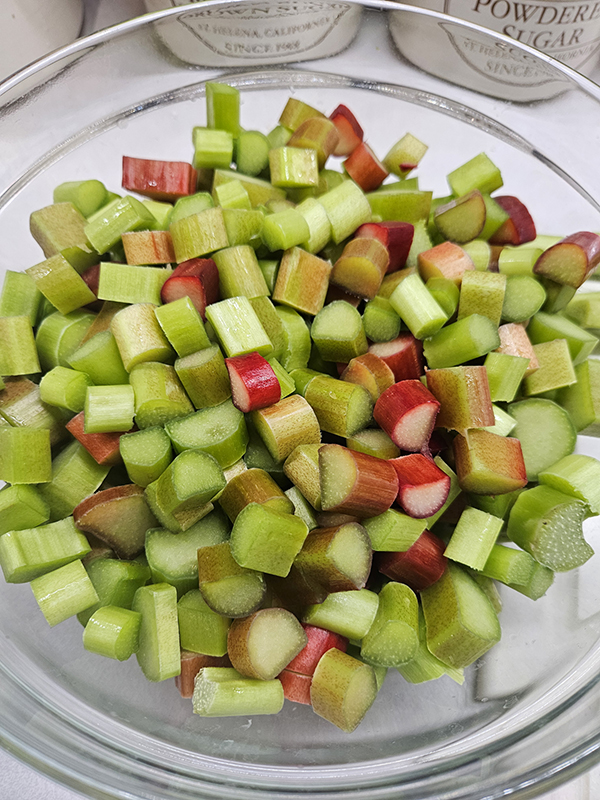
Rhubarb can washed and stored whole or cut up in a refrigerator for one week in a ziplock bag or a sealed container. You can also wash and cut up the rhubarb into 1 to 2-inch pieces to freeze for later use. (There’s nothing like a freshly baked rhubarb crisp in the middle of winter!)
With simple proper care, you can enjoy growing and harvesting your rhubarb plants for several years to come!
Until next time, thanks for stopping by!
– Chelsea