
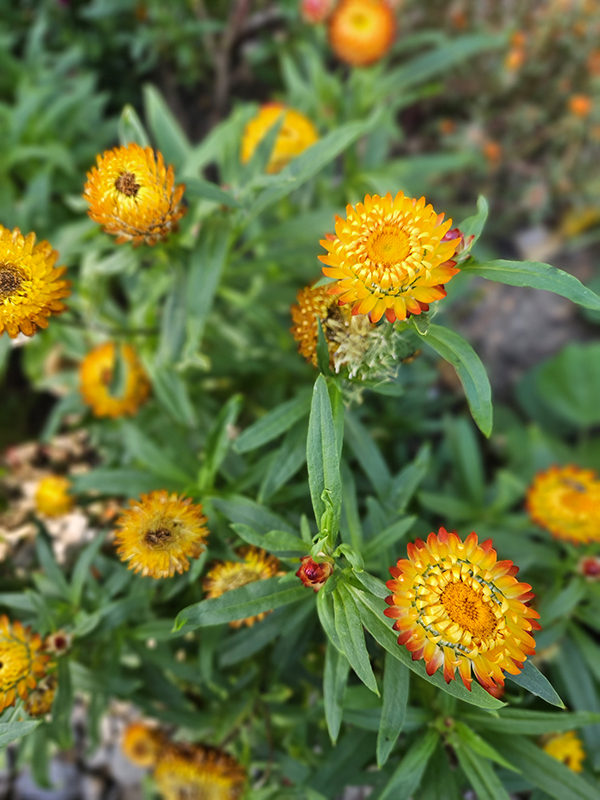
Known as everlasting flowers or paper daisies, strawflowers are a great addition for growing in your vegetable garden. Not only do they add bright pops of stunning color, but they also help to draw in loads of pollinators.
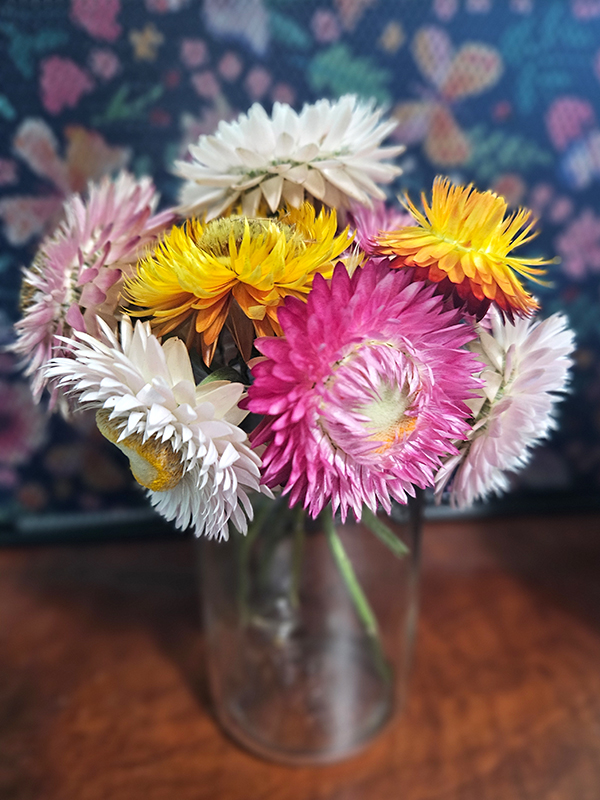
What makes these annuals truly so special, though, is their papery blooms. Strawflower blooms don’t lose their shape or color when you harvest and dry them, making them truly everlasting! Once dried, you can use them in all sorts of craft projects and decorations throughout your home.

Strawflowers are considered to be perennials in growing zones 8 through 10, but most gardeners treat them as annuals. While they take a bit to start blooming, strawflowers continue to push out blooms from summer until the first frost – long after other annuals have put a halt to blooming.
Strawflowers are members of the daisy family and can grow in about any well-draining soil, including in containers. They are easy to grow, love the heat of summer, and are drought-tolerant. This makes them a great choice for gardeners in warmer climates.
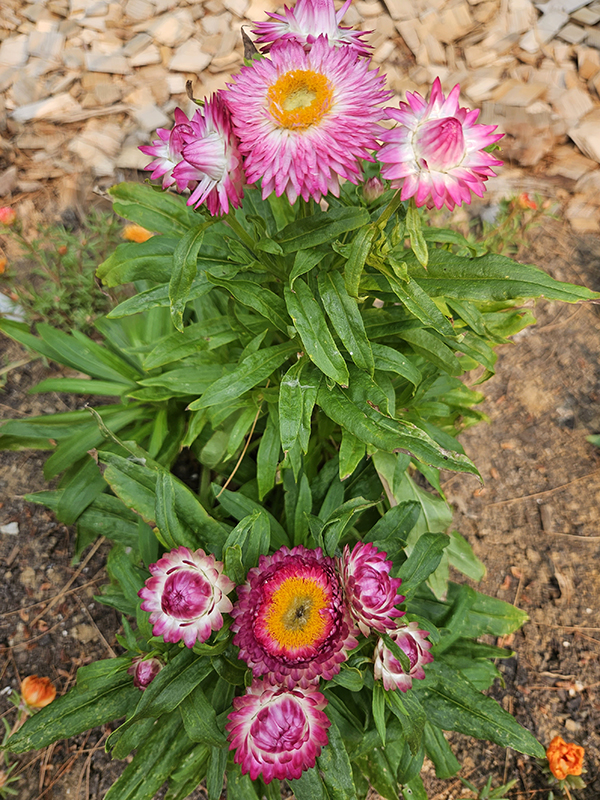
You can find all sorts of different sizes of strawflowers, from dwarf varieties that grow to only 12 inches tall to towering varieties that can get upward of four feet tall. In addition, their blooms come in a variety of different warm hues like bright pinks, burgundies, oranges, yellows, reds, and whites. So there’s definitely a variety for your garden space!
All About Growing Strawflowers
Strawflower seeds take a long time to go from sowing until the first blooms appear. If you live in a location with a long growing season, you can get away with directly planting seeds outside. Just wait until the soil reaches a temperature of 70º Fahrenheit before planting directly outside.
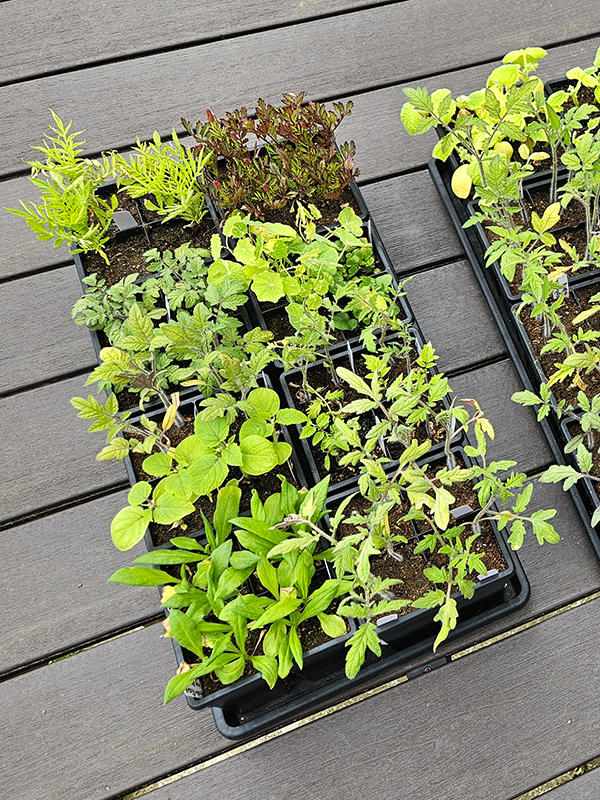
However, for people like me here in the Midwest, you need to either plant strawflowers as transplants or start seeds inside. Thankfully, strawflowers are pretty easy to grow from seeds indoors.
Starting Seeds Indoors
You can grow strawflowers from seeds you saved the previous year or from commercial seed companies. No matter what you choose, start the seeds about 6 to 8 weeks before your last frost date.
Fill a container with drainage holes with pre-moistened seed starting soil. Gently press the seeds into the soil, but do not cover them with additional soil. Unlike most seeds, strawflowers require light in order to sprout and start growing.
Place the container in a warm location that can receive light for germination. Cover the container with a clear plastic lid or plastic wrap to help hold in moisture. If needed, gently mist the soil with water every day or so.
Once the seeds germinate, leave the grow lights on for 12 to 14 hours each day. Bottom water the containers as needed. Before planting the seedlings outside, harden them off to help them get used to the outdoor elements.
You can read more about starting seeds indoors in my three-part series, starting with part one: “Starting Your Garden Seeds Indoors Series – Part 1: Sowing”.
Planting Seedlings Outside
Whether you are planting the seedlings you started indoors or ones you purchase from a local garden center, wait until the nighttime temperatures reach above 60º Fahrenheit during the night before planting outside.
Strawflowers can grow in partial shade. However, you will have better blooms when planting in locations with full sun.
Choose a spot that has well-draining soil. Other than that, strawflowers aren’t too particular about what soil they grow in. In fact, sandy and rocky soil is better than rich and fertile soil, but really any type will work.
If you are planting a taller strawflower variety like Tall Double Mix or King Orange (two of my favorites), keep the wind in mind when choosing your growing location. Taller varieties need protection from strong winds, or you can provide them with some support staking.
When planting, create a hole that is two inches deeper and wider than the plant’s rootball. Add in an inch of compost and work it into the soil. Place the seedling inside and backfill with additional soil. Water well to help set the soil around the plant’s roots. Space any additional plants 10 to 12 inches apart.
Long-Term Care – Growing Strawflowers
While strawflowers can handle drought-like conditions, they will provide more abundant blooms if you keep them properly watered. If it doesn’t rain at least once a week, provide plants with a good soaking. Water at the base of the plant as opposed to watering overhead.
Strawflowers are not heavy feeders. However, you can provide plants with a low-dose of all-purpose fertilizer or fertilizer geared towards blooming plants. Avoid fertilizers that have high amounts of nitrogen. This will only encourage plants to produce more foliage as opposed to supporting bloom production.
Deadhead any spent blooms as they start to fade. This will help plants to focus their energy on producing new blooms as opposed to allowing old blooms to go to seed.
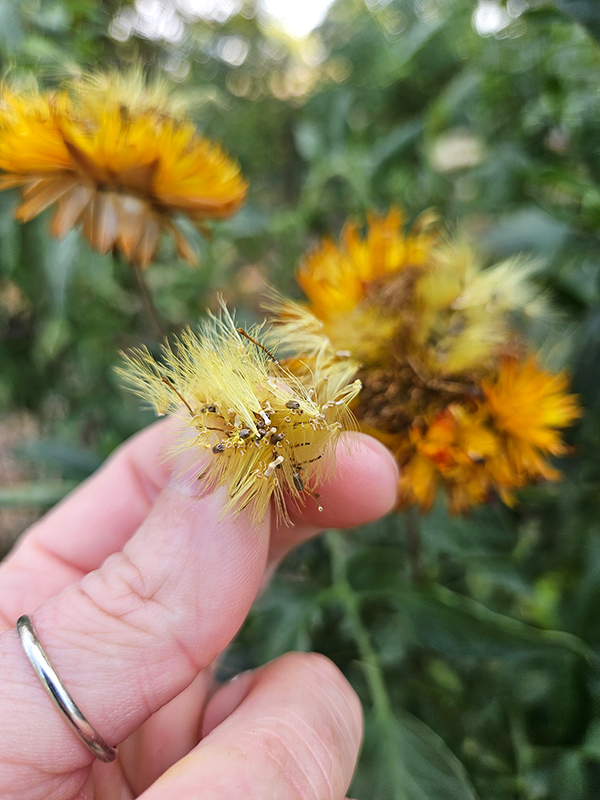
If you want to save the seeds, allow a few of the flowers to open up and start to dry out while still on the plant. You can then easily harvest the seeds by pulling off the fuzzy inner petals and placing them in a small paper envelope.
Alternatively, you can cut off the entire seed head and place it in a brown paper bag. Once the bloom has fully dried, gently shake the bag to dislodge the seeds. Separate the seeds and store them in a paper packet in a cool, dry location until next spring.

Harvesting Blooms
The best part about growing strawflowers is the ability to harvest the blooms for drying. The best time to do this is when the blooms have only a few layers of bracts opened (the outside faux petals).
If you wait until the bloom looks like the one in the above left photo, you will just end up with a mess on your kitchen table from the seeds. Instead, choose blooms that have just started to open up.
Harvest the blooms in late morning. Strawflower blooms will close up during the night. After the temperature rises in the morning, they will start to open up again as well as dry out slightly. That’s when you need to harvest them using a pair of small pruners or snips. (Here’s my favorite ones to use – Product Link: Fiskars Micro-Tip Pruning Snips)
To harvest just the bloom, cut just below the base of the flowerhead. Place the blooms on a paper plate and store them somewhere dry and warm to dry out completely. It normally just takes a week or two.
To harvest the bloom and the stem, cut a few inches of stem below the bloom. Just as a heads up, the stems are rather thin and might bend easily. For drying, bind the stems together and hang them upside down to dry fully. You can now keep the blooms indefinitely to display around your home or use in crafts!
Until next time, thanks for stopping by!
– Chelsea
*This post may contain affiliate links. These are products I have used personally and highly recommend. As an Amazon Associate, I may earn a small commission from qualifying purchases if you purchase items through my links. These links and the ads on this page help to support my family and our semi homestead, so Thank You!
Discover more from Semi Homestead Life
Subscribe to get the latest posts sent to your email.