
One of my favorite houseplants for growing both inside and outside is Tradescantia Zebrina. This stunning houseplant goes by several different names, including Creeping Inch Plant and Wandering Dude. The plant also used to be called Wandering Jew, but most people change the ending to “Dude” instead.
Tradescantia Zebrina is a tropical perennial that is a native ground cover in parts of Mexico. It can be grown outside year-round in zones 8 through 12. However, in most other locations, people treat it as a year-round trailing container houseplant.
During the warmer summer months, the plant thrives outside under the protection of some shade. Then you can bring it back indoors and care for it as a typical houseplant once the weather starts to cool down.
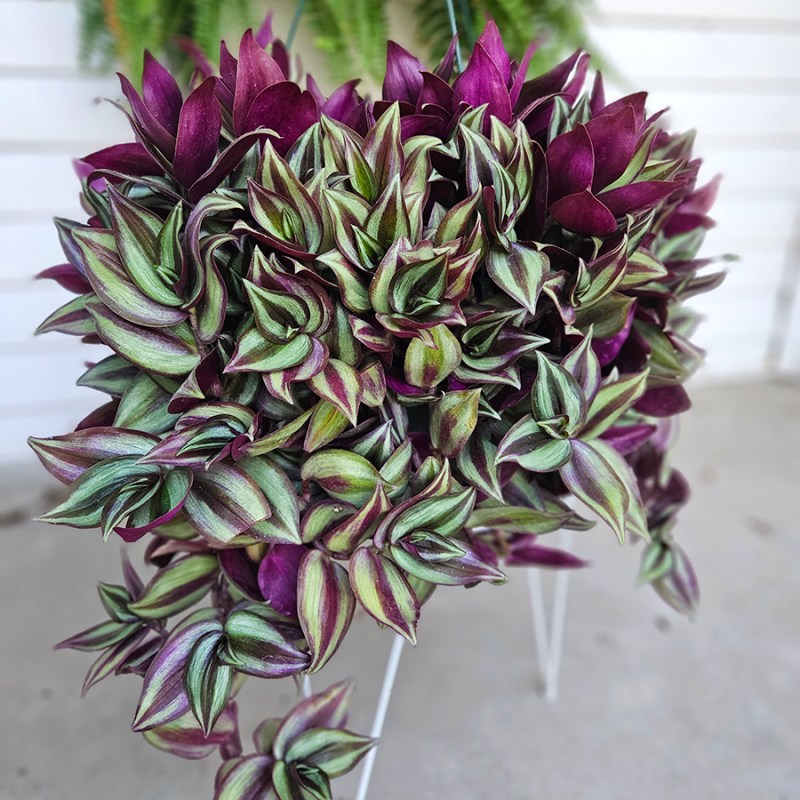
The Inch Plant is fast-growing and simple to care for. But one of the best parts of growing Tradescantia Zebrina is that it is one of the easiest plants to propagate. With the purchase of one initial plant, you can produce multiple new plants, all for free!
There are a few quirks that go along with growing Zebrina that you should be aware of if you want to grow this stunning plant in your home though. But they definitely shouldn’t stop you from giving this beauty a try!
Physical Characteristics Of Tradescantia Zebrina
Tradescantia Zebrinas feature long trailing foliage. When it receives plenty of sunlight, the leaves will be spaced close together roughly every inch or so (hence the name “inch” plant). However, when grown indoors or with poor lighting, the spacing between the leaves can lengthen, giving the plants a leggy appearance.
This is something I struggle with when I move my Tradescantia Zebrina indoors. Even though it is underneath a grow light, the stems still tend to get leggy during the wintertime and are not as full and attractive as when it is outdoors. However, a little haircut helps to reduce the long, thin stems. Those stems will fill out again once it is under better lighting.
The leaves are mostly purple with silvery green stripes running from the stem to the tip. The color of the stripes will vary depending on the amount of sunlight the plant receives. When it gets sufficient sunlight, the silvery stripes are so bold that they appear to sparkle. In low-light situations, the silver dulls and the leaves are almost all purple.
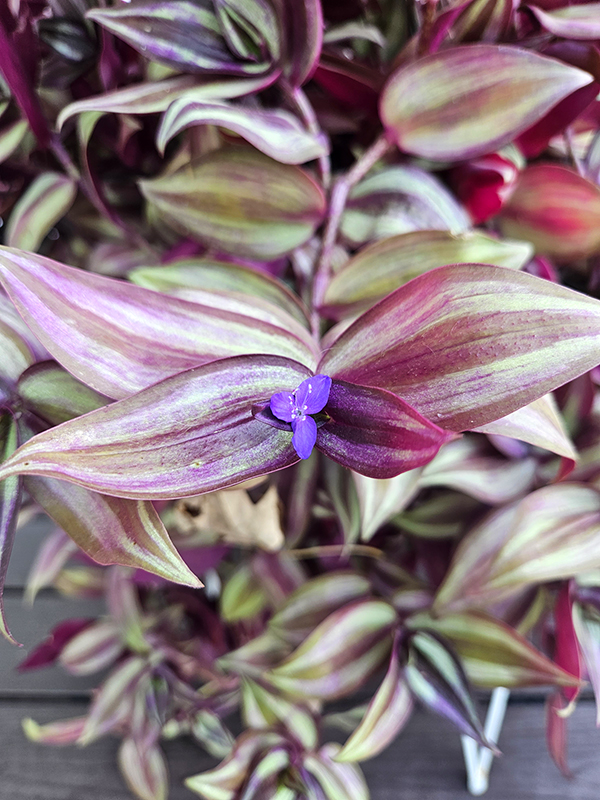
While the Tradescantia Zebrina does flower, their flowers are pretty insignificant. They produce tiny purple blooms that will only appear under the right conditions. The good news is that if you see blooms on your plant, then you know it is happy and has sufficient moisture and lighting. My Zebrina has been known to still flower indoors, even though some of the stems are leggy. In fact, I’ve even had my cuttings continue to bloom!
Growing And Caring For Tradescantia Zebrina
Even though Tradescantia Zebrina is fairly simple to care for as a houseplant, there are still a few tips to keep in mind. They are a great choice for beginners and experienced houseplant owners alike. They can easily be kept happy as long as they have proper sunlight and watering. To learn about some of my other favorite houseplants that are easy to grow and care for, check out “My Top 5 Favorite Houseplants That Are Easy To Grow.”
Sunlight & Fertilizer Requirements
As a ground cover plant in its native environment, the Inch Plant receives bright, filtered sunlight. When grown as a potted plant, the plant needs plenty of bright, indirect sunlight or artificial light. A shaded front porch or patio works great during the summer months.
Tradescantia Zebrina can handle some direct sunlight, but the color of the leaves will start to wash out. Too much sun can actually burn the foliage. When I moved my plant from the shaded front porch to our deck, it started to get a few hours of direct sunlight. This started to wash out the silvery color, resulting in mostly all purple leaves.
After moving the plant indoors, I set my Zebrina underneath a hanging grow light. The light is probably 5-6 feet away, which has resulted in some thinning of the leaves as well as a reduction in the overall leaf size. If able, place your Zebrina as close as possible to a light source or in a South-facing window.
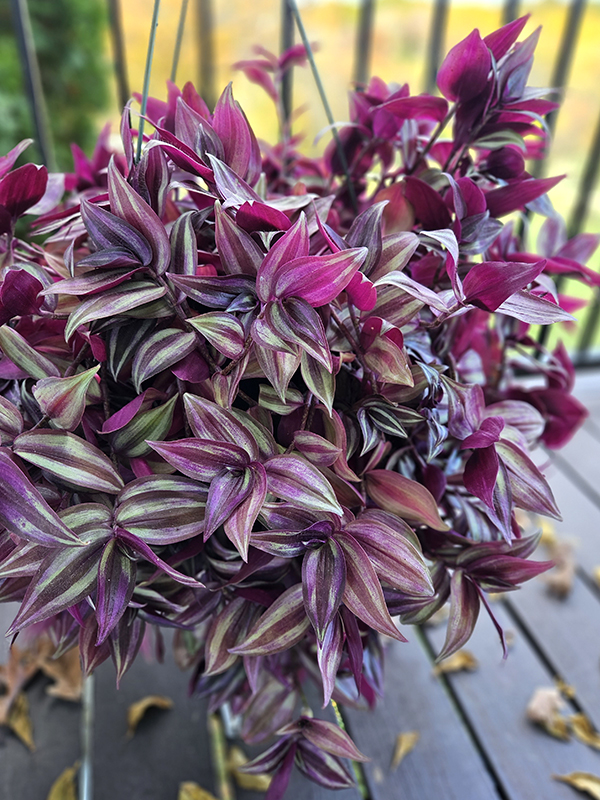
Since Tradescantia Zebrina is a fast grower, it requires a steady dose of fertilizer. I feed my plant every couple of weeks with a low-dose liquid fertilizer as I water the plant. (I like to use Dr. Earth fertilizer – Product Link: Dr. Earth Organic Pump And Grow Houseplant Fertilizer.)
Watering & Fertilizing – Growing Tradescantia Zebrina
This is where the plants can be kind of finicky. The Inch Plant likes to have slightly moist soil but they don’t want to be constantly wet. If their roots are in soggy soil, they will quickly start to rot. On the flip side, they also don’t want to dry out completely, either.
Your best bet is to either use a moisture meter or your finger and feel down several inches into the soil. If it feels moist, wait a few more days before watering. If it is dry, then it’s time for a good soaking. (This is the moisture meter I use – Product Link: Soil Moisture Meter.)
You might read online that Tradescantia Zebrina doesn’t like to get their leaves wet. However, I personally have never found that to be an issue. Again, that is my own experience and yours may vary greatly. When my plant was outside, rainfall never fazed the plant at all. And when I water it or use a humidifier around it, the leaves never seem bothered by standing moisture. It’s just something to keep in mind if you start to notice the leaves changing.
For that reason, most people suggest you water from the base of the plant. I personally just spread the foliage apart carefully and water at the soil level. I find it much harder to base water my plant because I allow it to trail over the container. You can also set the growing container on a tray with rocks and water to help increase the moisture level directly around the plant.
Pruning & Propagating
Tradescantia Zebrina benefits from regular pruning. As mentioned, this plant can get rather long and leggy after a while. When growing outdoors, this isn’t as much of an issue since it receives plenty of sunlight. However, once brought inside, the stems tend to become leggy.
When this happens, giving your plant a simple haircut will be all you need to get it back into shape pronto. My original Inch Plant has gone through multiple heavy prunings and always comes back in no time at all.
To prune, simply take a pair of clean scissors, pruners, or snips and cut the plant just after a leaf. You can trim back all the way back to the very first leaf coming out of the soil if you need to give the plant a heavy prune.
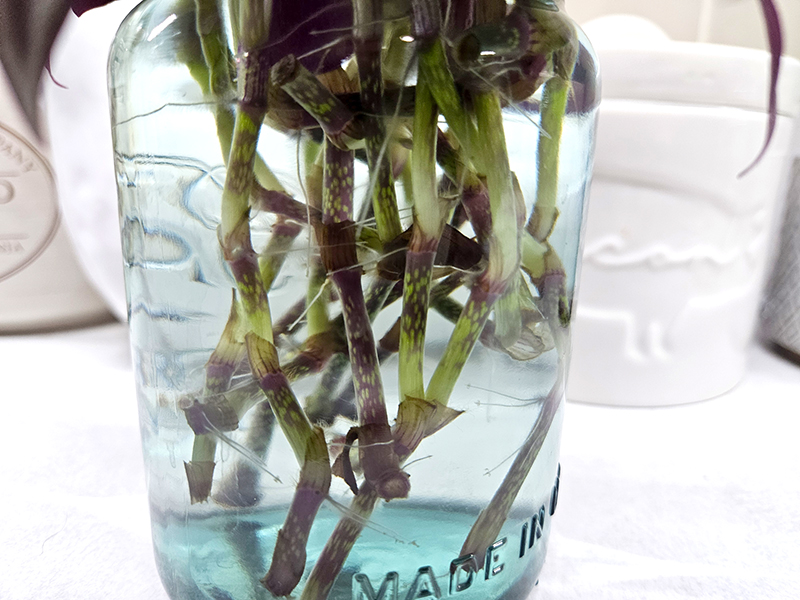
Once you snipped off the ends, don’t toss the cuttings! Trim the cuttings back to right before a leaf node. Remove the next few leaves and then pop the stem into a glass of water or plant it directly back into the soil. The nodes will quickly turn into new roots in just a couple of weeks.
Giving your plant a heavy prune in the spring will have it looking its best when summer rolls around and the plant can be taken outside. Hopefully, you enjoy growing Tradescantia Zebrina as much as I do!
Until next time, thanks for stopping by!
– Chelsea
*This post may contain affiliate links. These are products I have used personally and highly recommend. As an Amazon Associate, I may earn a small commission from qualifying purchases if you purchase items through my links. These links and the ads on this page help to support my family and our semi homestead, so Thank You!
Discover more from Semi Homestead Life
Subscribe to get the latest posts sent to your email.