
If you are looking to add stunning pops of color to your garden this year, you can’t go wrong with growing zinnias! They are one the easiest yet most rewarding flowers you can grow!
In fact, zinnias are one of the fastest-growing annuals available, pushing out loads of vibrant blooms from early summer up until the first frost. And thanks to their cut-and-come-again nature, you can enjoy those blooms both on the plants and displayed on your counter all season long.

Zinnias grow easily from seeds and can be started indoors in late winter. However, they grow so quickly and easily that it is best to sow them directly in your garden spaces. In just 4 to 8 days, the plants will sprout and the rapid growth begins.
One of the best parts about including zinnias in your garden is that they bring in loads of pollinators! We’ve had everything from bees and butterflies to hummingbirds stop by our garden to enjoy our zinnia blooms.
As an added bonus, you can easily collect and save their seeds to plant and grow again next year. They truly are one of the best flowers to grow in your vegetable garden or in any place that can benefit from a bit of beautiful color – and one we make sure to include each year!
Growing Zinnias From Start To Finish
Types Of Zinnia Flowers
There are serveral different varieties of zinnias flowers available. Most stores carry a few different varieties, but online seed retainers will open up even more options to you, so be sure to shop around a bit before grabbing your seed packets.

Zinnia flowers are broken down into three main types based on their blooms and petal formation. Those types are Single, Double, and Semi-double.
Single blooms have one row of petals with a large visible center. Double blooms have multiple layers of petals and their center isn’t always visible. Semi-double blooms are somewhere in between the two. Typically, you can see the center on semi-double blooms.
Zinnia blooms also might be listed as several different types of shapes, including cactus, button, and beehive to name a few. You can also find zinnias in about every height possible, making them perfect for about any growing space and situation.
My Favorite Varieties (Well, Some Of Them Anyway!)
Double Zahara Raspberry Ripple – This stunning zinnia features 2.5-inch wide blooms with white-turned-pink petals that have dark pink stripes running down the middle. (They are the bottom zinnias in the picture at the beginning of my article.) (Product Link: Park Seed Double Zahara Raspberry Ripple Seeds)
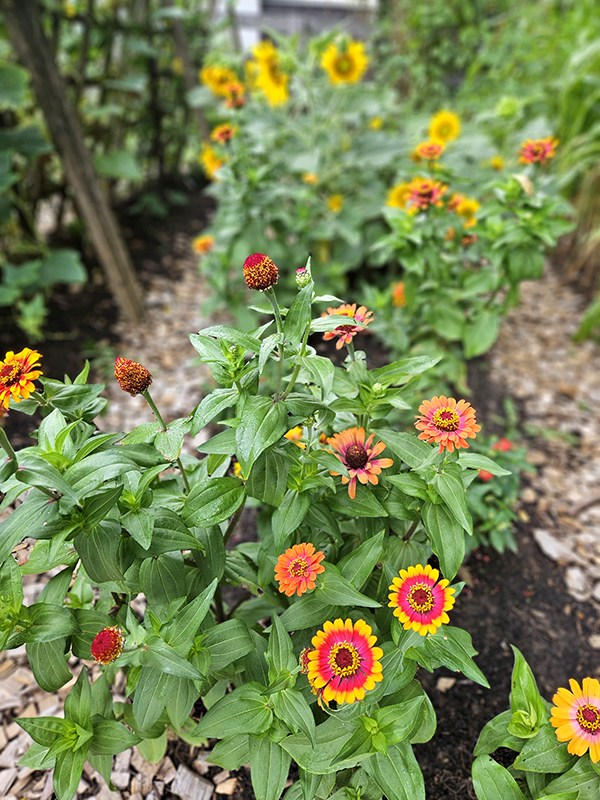
Zowie! Yellow Flame – With a name like that, you know it’s going to be a vibrant, beautiful flower! Zowie! features blooms that turn from orangish-yellow ends to fiery red before ending up as pink in the center. (See my photo above with the bee.) (Product Link: Park Seed Zowie! Yellow Flame Seeds)
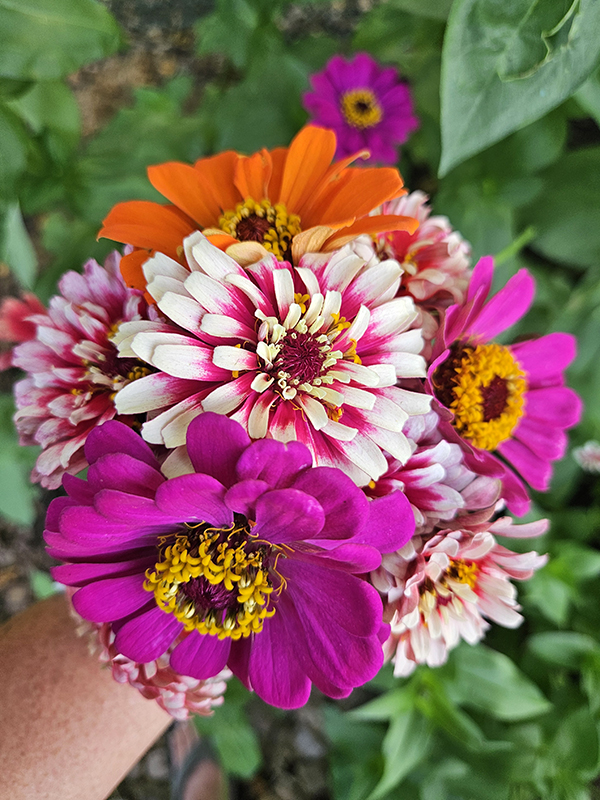
Double Zahara Salmon – Another zinnia with 2.5-inch wide blooms that have almost an ombre look, going from almost red on the bottom petal layers to a bright pink towards the center. (They are the top zinnias in the picture at the beginning of my article.) (Product Link: Park Seed Double Zahara Salmon Seeds)
Swizzle Cherry and Ivory – These are dwarf zinnia plants that only grow to be around 10 to 12 inches tall, so they are perfect for containers or in front of taller varieties. These blooms go from white tips and end up with bold fuchsia pink in the center. (See photo above.) (Product Link: Park Seed Swizzle Cherry and Ivory Seeds)
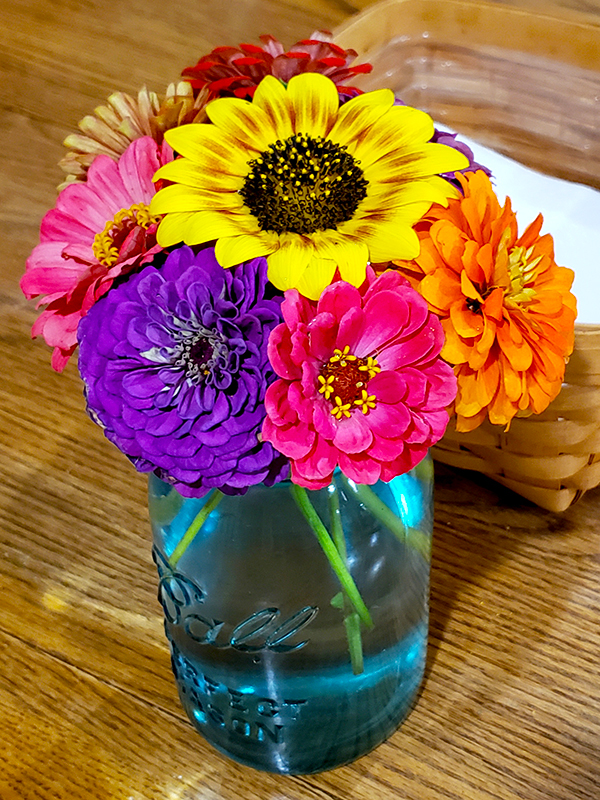
Cut & Come Again – The list wouldn’t be complete without the traditional mix of Cut and Come Again zinnia seeds. These seeds are a mix of red, orange, yellow, pink, and white blooms that grow to be around 2.5 inches wide. (See photo above and the last photo in the article.) (Product Link: Burpee Cut & Come Again Zinnia Seeds)
Ideal Zinnia Growing Conditions
As mentioned above, you can start zinnia seeds indoors before the season begins or you can sow them directly in your garden spaces. I’ve tried both ways and prefer the direct sow method.
Since zinnias germinate so easily, there really is no need to waste the space and resources on giving them a few weeks head start indoors. Usually, you will have a bit better luck with direct sowing as opposed to trying to transplant tiny seedlings so that is the route I’d recommend.

If starting the seeds indoors, plant the seeds about 4 to 6 weeks before your last frost date. Use biodegradable pots if possible to avoid messing with the roots too much when transplanting. (These are the bigger ones I’ve used before – Product Link: Back to the Roots Organic & Plantable Seed Starting Pots)
If you are directly sowing seeds outside, wait until the temperatures stay above 60º Fahrenheit (F) day and night. Ideal growing temperatures are around 75 to 85º F.
Location Recommendations
Zinnias thrive in bright, full sunlight. The more direct sunlight you can provide these annual flowers, the better. The spot should get a minimum of 6 to 8 hours of sunlight daily.
Some zinnias are susceptible to powdery mildew later in the growing season. The bright sunlight will help to keep their leaves dry and combat the mildew. A location with good airflow will also also help prevent diseases.
These annual flowers can grow in most soil conditions but they thrive in nutrient-rich soil. Amend the soil with compost prior to planting. However, the most important part is that the soil is well-draining.
Planting Zinnia Seeds
Loosen the soil in your growing space a few inches down. You don’t need to plant the seeds deeply, but having a couple inches of loose soil will allow the roots to really take off and establish easily.
For ideal spacing, plant seeds anywhere from 4 to 24 inches apart. Different varieties have different spacing requirements. This allows for the ideal amount of air circulation for each plant. Check your seed packet for the specific spacing needs of each variety.
In all honesty, I find that it is much easier to just cast seeds out at random. I like to have the zinnia plants kind of packed together for a fuller look. Just note that if you go this route, you might end up with higher chances of powdery mildew.
Whatever spacing you decide to use, plant the seeds about a fourth of an inch deep. Then, cover loosely with soil and water well.
Caring For Growing Zinnias
Zinnias will sprout in about one week with ideal temperatures and conditions. Water young plants every couple of days so the soil stays moist. Avoid standing water. Zinnias are somewhat drought tolerant so they don’t need excess water like some blooming annuals do, especially after they mature.
If you amended the soil with compost prior to planting, there really is no need to fertilize the plants. If you want, provide plants with a low dose of all-purpose fertilizer when you start to see plants putting out buds. (I typically don’t fertilize my plants because we use compost and I still receive plenty of blooms all summer long.)
Since zinnias are considered a cut-and-come-again flower, the more you deadhead plants, the more blooms they will produce. This is a great feature because zinnias make excellent display flowers.
The Wiggle Test
There is a little trick when it comes to harvesting zinnia blooms at the ideal time. I call it the wiggle test (not trademarked by any means!).
To know if a bloom is ready for cutting, grab the stem a few inches below a bloom and give it a gentle shake. If the stem wiggles easily and the bloom kind of flops around, it isn’t ready for cutting. Check again in a couple of days.
However, if the stem stays fairly firm and is more ridgid with minimal bloom wiggling, you can cut away. Just use a pair of clean pruners or my personal favorite, micro pruners, to cut the bloom off a few inches down the stem where it meets the rest of the plant. (Product Link: Fiskars Micro-Tip Pruning Snips)
Zinnias will contine to push out blooms all summer long. Even if you don’t plan on displaying the blooms in your home, it’s still recommended to deadhead spent or dying blooms.
Once your location experiences your first hard frost, the plants will naturally be killed off. Even if you live in a location without frosts, the plants are annuals so they only live for one growing season.
I hope you consider adding zinnias to your garden this year!
Until next time, thanks for stopping by!
– Chelsea
*This post may contain affiliate links. These are products I have used personally and highly recommend. As an Amazon Associate, I may earn a small commission from qualifying purchases if you purchase items through my links. These links and the ads on this page help to support my family and our semi homestead, so Thank You!
Discover more from Semi Homestead Life
Subscribe to get the latest posts sent to your email.