
Did you know that growing zucchini plants vertically has a lot of great advantages that you can implement in your garden this spring and summer?
If you’ve ever grown a zucchini plant in your garden or seen one in a neighbor’s garden, then you know just how massive these plants can get! One single plant can grow between two and ten feet long and several feet tall, depending on the variety. That can really take up a lot of space in your garden for just one plant!
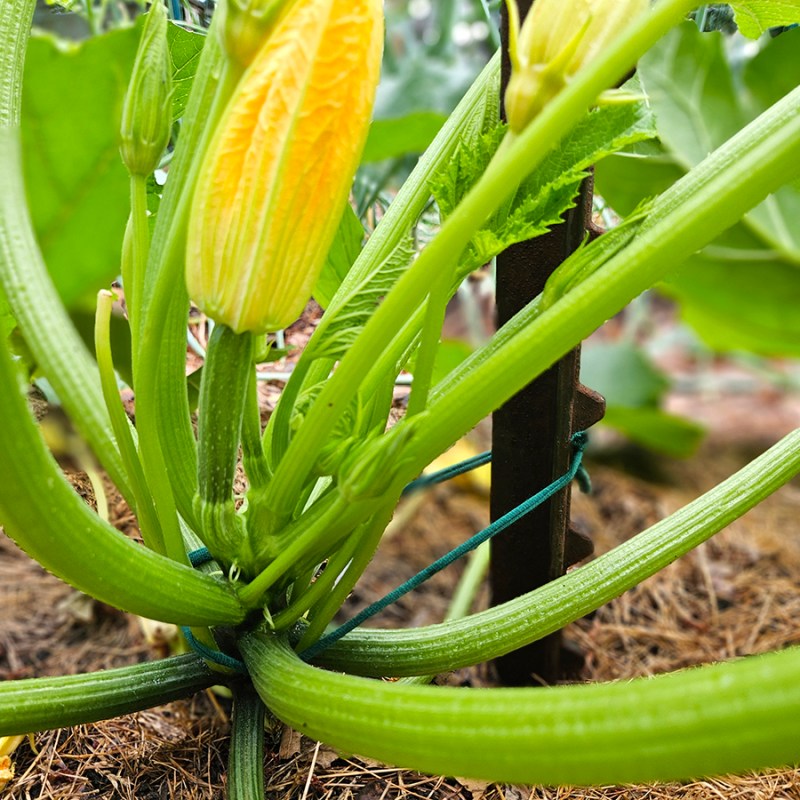
Instead of letting these heavy-producing plants sprawl out in your garden, consider growing them vertically. This simple technique doesn’t require a lot of fancy tools or equipment, but it can actually make a huge difference in the health and productivity of your plant.
In addition, by training your plants to grow upward, you are able to reduce their overall footprint in your garden. This allows you to grow even more zucchini plants in less space, or it allows you to plant other crops nearby that would otherwise get swallowed up whole by the ever-expanding zucchini plant.
Getting zucchini plants to grow vertically is actually really easy. However, there are a few things to keep in mind if you want to go that route.
Tips On Growing Zucchini Vertically
Advantages Of Going Vertical
I have grown zucchini plants both the traditional way and vertically, and have had great results with both methods. While growing them on the ground takes a little bit less work, I tend to have more issues with powdery mildew as well as an increase in squash bugs.
One of the biggest advantages of growing zucchini vertically is reducing their overall footprint in your garden space. Now, I’m someone who likes to grow multiple zucchini plants each year. (I had eight just last year.) If I were to let all of those plants sprawl out in my garden, I wouldn’t have much room for anything else!

Harvesting the zucchinis is also easier. You can see the fruit easily as it grows up the main stem. No more hidden monster zucchinis growing underneath the leaves at the base of the plant!
Another advantage of growing them vertically is that it makes it much easier to remove the old, yellowing leaves. As a zucchini plant grows, the oldest leaves tend to die back and start to wilt. It’s best to cut off those leaves to allow the plant to focus its energy on new growth and fruit production. Since those leaves grow along the main stem that is growing vertically, they are easier to see and remove.
Keeping Plants Healthier
One of the best advantages is that keeping the plants off the soil is that it helps to keep them healthier overall. First, it is a bit harder for pests to find their way to the plant. If squash bugs do make an appearance, it’s a lot easier for you to check the leaves over for any pesky eggs or adults hanging around.
It also helps to improve the airflow to all parts of the plant and exposes the blooms. When zucchini plants grow in a mounding format along the ground, the base of the plants, the lower leaves, and the blooms tend to get shaded out. If sunlight and bees can’t get to those parts of the plant, your harvest as well as the health of the plant will start to suffer.
One of the biggest threats to zucchini plants is powdery mildew. Keeping the plant up off the soil in addition to removing the lower leaves, helps to greatly reduce the chance of mildew.

What Doesn’t Change
You may have read online or heard a fellow gardener say that one advantage to growing them vertically is that those plants won’t get squash vine borers. Unfortunately, I know from personal experience that isn’t the case.
No matter how you grow your zucchini plants, the squash vine borers can find a way to make it to your plant. This is because the adult form of the squash vine borer is a moth. These adults find young zucchini plants and lay their eggs at the base of the plants, whether they are on the ground or not.
So while I wish growing zucchini vertically was a way to prevent vine borers from attacking the plants, it doesn’t. You can try tricks like delaying planting until midsummer after the adults are long gone, or even try wrapping the base of each stem early in the growing season. Vertically or not won’t make a darn bit of difference.
Steps For Growing Zucchini Vertically
There are several different ways you can go about growing zucchini vertically. The method we used was simple t-posts. We have one t-post for each zucchini plant. You can also use heavy-duty tomato cages, cattle panels, or any other structure that can withstand the weight of a growing plant and its fruit.

After planting zucchini seeds or transplants, immediately install your supports. If you wait too long after planting to add them, you risk damaging the root system of the growing plant. By adding them right away, there is no worry about that.
Depending on what you are using, aim to keep the support about 6 to 8 inches away from the seedling. You want it as close as you can get to the main stem to make tying it up easier.
Attaching Them To The Support
To begin with, allow your zucchini plant to grow as normal. Once the main stem gets long enough to reach a few inches past the support, start to tie it up vertically. Just move the plant slowly and be gentile.
We like to use a soft, flexible tie that will grow with the plant and not “strangle” the stem. Don’t use a rigid string like zip ties or something similar. (Here are the ties we use. You can cut them to size to work with your garden setup. We use them with our tomato plants, too – Product Link: Biostretch Soft Garden Plant Ties)
As the zucchini plant continues to grow, keep securing the main stem to the support. Try to have a tie every 6 inches or so. Don’t worry if the leaves are a little lopsided after you first tie them up. They will straighten out and reach for the sun within 24 hours.

In addition to tying the plant up, don’t forget to remove any old leaves. As the leaves start to die back, use a pair of pruners to cut them off at the base of the main stem.
No matter whether you decide on growing zucchini plants vertically or not, be sure to harvest from them often. Allowing a zucchini to grow on the plant for too long will slow down the plant’s production of new blooms. The more you harvest, the more fruit the plants will produce.
Until next time, thanks for stopping by!
– Chelsea
*This post may contain affiliate links. These are products I have used personally and highly recommend. As an Amazon Associate, I may earn a small commission from qualifying purchases if you purchase items through my links. These links and the ads on this page help to support my family and our semi homestead, so Thank You!
Discover more from Semi Homestead Life
Subscribe to get the latest posts sent to your email.