
If you have a Shagbark Hickory tree growing on your property or in a local park, why not consider harvesting and enjoying one of the best overlooked delicacies it produces: Hickory nuts!
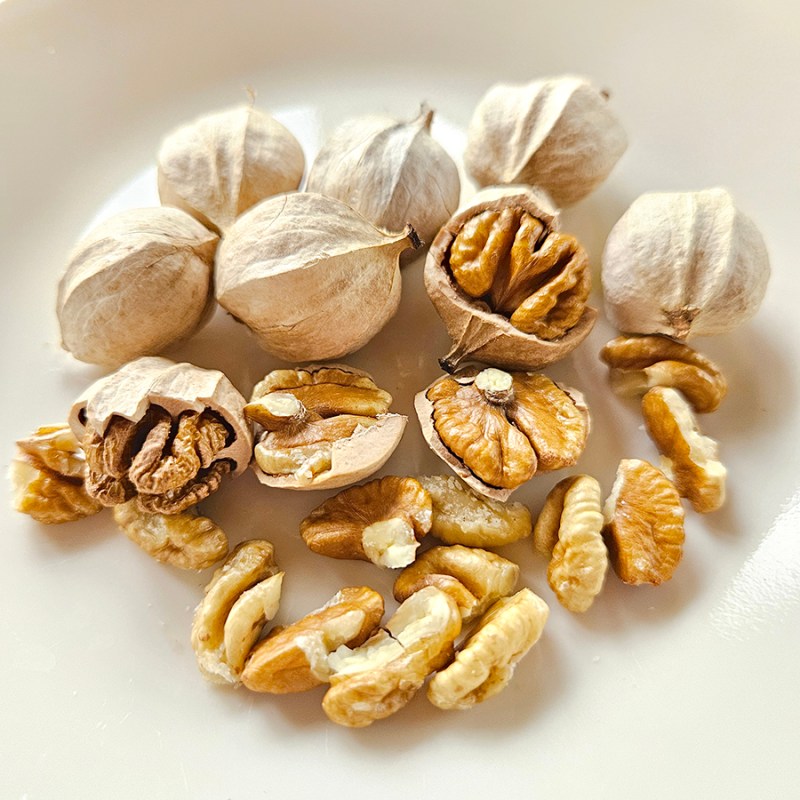
Sometimes, the best foods can be found right in our own backyards. We just have to take the time to look around us and learn how to identify the different trees and edible plants growing nearby.
Obviously, we have to be somewhat cautious because some items can be deadly or unsafe to consume. However, there is little doubt about confusing shagbark hickory nuts thanks to the tree’s distinct appearance and the look of the husks.
Around the months of September and October, you can start to see shagbark hickory nuts fall from the trees. Often, windy days or a strong storm will cause the heavy nuts to dislodge from their branches and come tumbling down. Other times, the chattering of squirrels in the tree will be your subtle hint that the nuts are ready for harvesting.
Most of these nuts are usually left behind for the squirrels and other foraging creatures, but these little white cased nuts can actually be quite the tasty snack! All it takes is a little time, some strong pliers or crackers, and a hungry belly!
All About Harvesting & Drying Hickory Nuts
Identify Shagbark Hickory Trees
The first step in foraging for hickory nuts is to identify the right tree. Like its namesake, a Shagbark Hickory tree has unique bark that actually looks like it is peeling off the trunk in long, irregular strips. The bark gives the tree its distinct “shaggy” appearance.
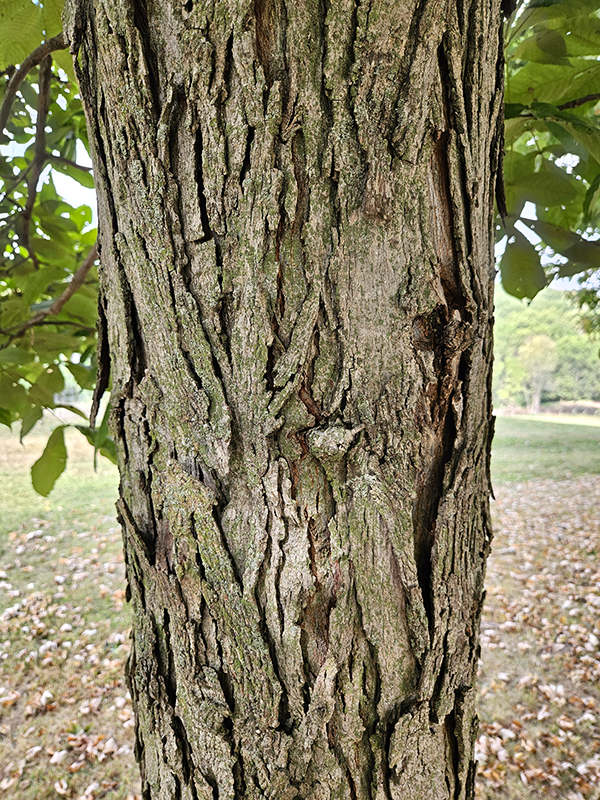
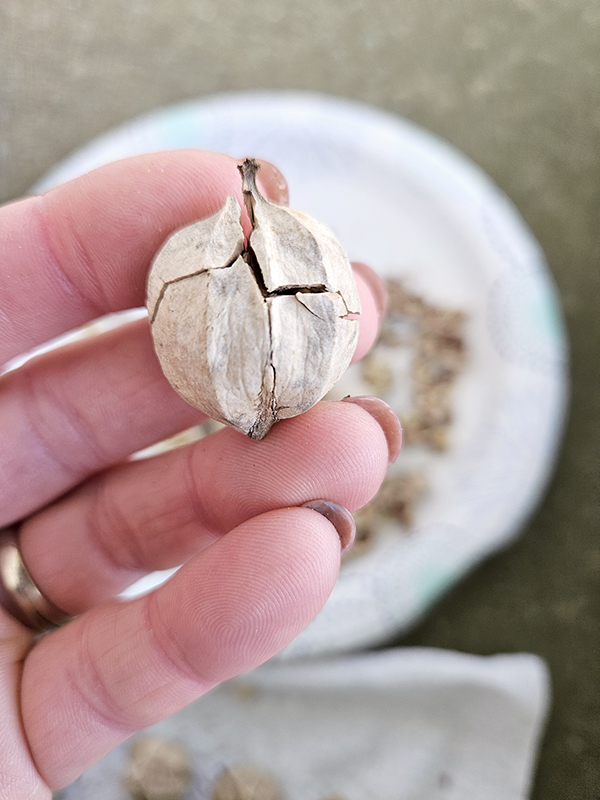
The trees feature alternating leaves with 5 to 9 dark green leaflets per stem. Each leaf grows around 8 to 16 inches long. The hard shell of the nut is white to brown in color, depending on its age. It measures around 1 to 1-1/2 inches long. The shell is surrounded by a husk that starts out green and then turns brown. The husk breaks off into segmented wedges as the nuts mature.
Hickory trees are native to the United States. You will often find Shagbark Hickory trees growing in wooded areas in Growing Zones 4 through 8. Thankfully, there are no Hickory trees that produce poisonous fruits, although the Bitternut Hickory isn’t the most tasty.
While there are several different hickory varieties, I will focus this article on Shagbark Hickory. It seems to be the most common around here. (It’s also the ones we have growing around us, so that is what my photos are of!)
Shagbark Hickory trees produce nuts each year, but it seems like the fruit is more abundant every three years or so. In addition, trees that grow where they have access to plenty of sunlight often produce more nuts than those shaded by other trees.
Harvesting The Hickory Nuts
Now that you have the right tree, it’s time to get harvesting. Starting around September, you should be able to see the bright green circular husks growing amongst the tree leaves.
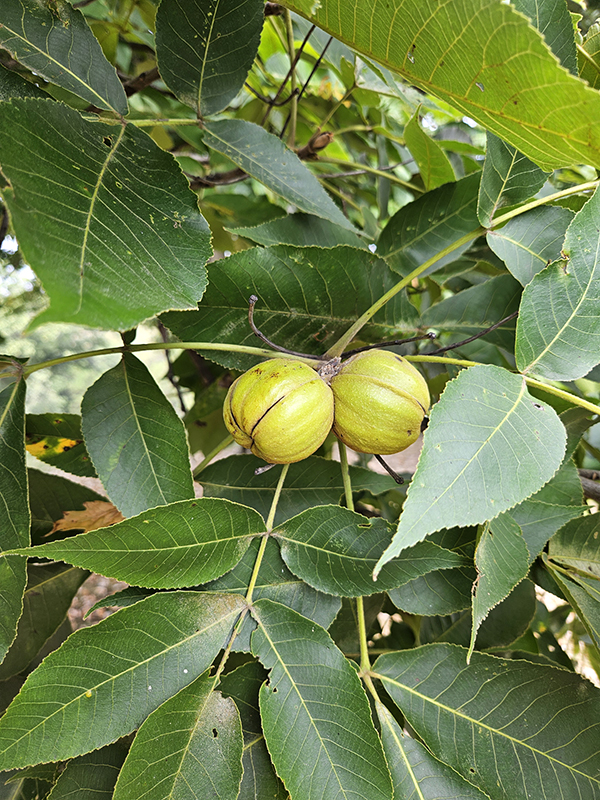
As the nuts mature, these green husks will start to open up, revealing a hard, whiteish shell inside. Sometimes, the nuts will fall to the ground before the husks have a chance to open up. Other times, the husks have already started to turn brown and break apart.
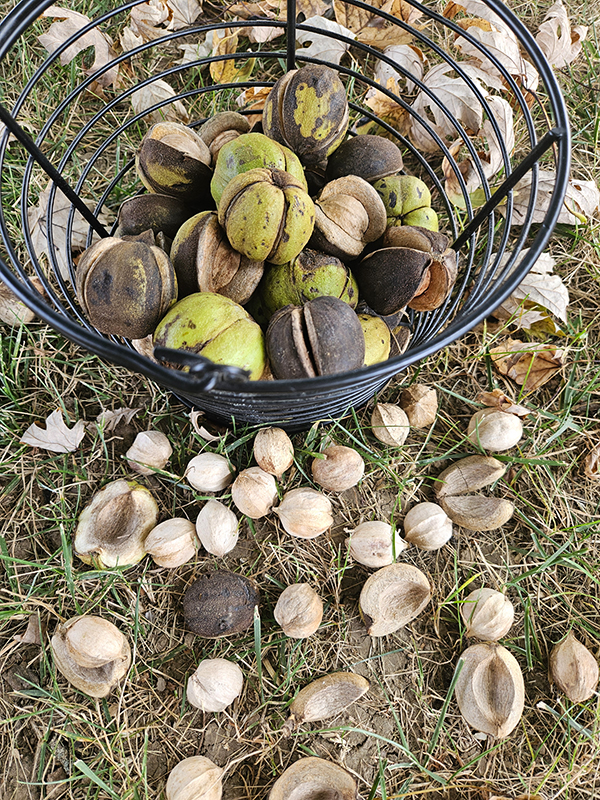
You can harvest the hickory nuts directly from the tree or off the ground. When you are picking hickory nuts off the ground, look for ones that feel heavy and have green husks. If the husk is dark brown, light-weight, and dried up, chances are those nuts are already bad or infected with hickory grubs.
Healthy husks can crack and split apart as they hit the ground. So be on the lookout for the white shells without any husks surrounding them as well.
Do not collect any nuts that are discolored or have holes in them. The bugs have already had their fill of these. Don’t be surprised if you wind up leaving about half of the nuts behind when harvesting due to this. That’s to be expected.
As you harvest, go ahead and remove the husks from the nuts. This will not only save space in your bucket but also allow the husks to become composted back into the soil. If you can’t remove them easily, allow the husks to dry out for a night or two and give them another go.
The Float Test – Harvesting Hickory Nuts
Once you get back to your place, it’s time to do the float test. Don’t wait too long doing this because if there are any hickory grubs in the batch, they can easily go from nut to nut and ruin an entire harvest.
Please note, the float test isn’t foolproof. The only way to know for sure whether a nut has gone bad or has edible meat is to crack it open. However, the float test can be a quick and easy way to see if the nuts have any meat left or if the meat has gone bad without going to too much work.
Simply fill up a bucket with water and add the nuts. Be sure you remove the husks before adding them to the water. If any of the nuts float, toss them out for the squirrels or set them in a separate pile to open after you get the good ones done first.
Drying & Storing
Now it’s time to dry the nuts. There are a few different ways you can dry the hickory nuts after harvesting. You can airdry them naturally, use a fan to speed up the process, or use your oven or dehydrator.
To air-dry them, set the hickory nuts on a tray or wire rack to dry out naturally. Place the tray in a dry location with good airflow. An upgrade for this method is to place the tray in front of a fan to help speed up the drying process. Drying naturally can take a few weeks.

For smaller batches, you can also use an oven or your dehydrator to dry the nuts out even faster. If using a dehydrator, set the temperature to 95º Fahrenheit and allow the nuts to dry for 16 to 24 hours. When using your oven, set the temperature as low as it can go and dry for around 6 hours, or as needed, until fully dried.
Once the nuts are dry, you can crack them open and consume them immediately, or you can store the nuts in the shells for longer periods of time. Just place the nuts in a container and throw them in the freezer, where they will last indefinitely. You can then grab what you need to shell and return the rest to the freezer.
Cracking The Nuts – Harvesting Hickory Nuts
I won’t lie, it isn’t the easiest to get the meat out of the hickory nut shells. Most likely, it will come out in pieces as opposed to one whole piece, like you see with walnuts and pecans. The best I have ever done is halves. It still tastes the same, but it is a labor-intensive process that requires patience.
For shelling, you can purchase dedicated nut-cracking machines if you plan on harvesting lots of hickory or similar nuts. Or, you can do like I do and go the old-fashioned route. All you need is a hammer and a pick. A pair of snips can also come in handy.
Start by placing the hickory nut on its side on a solid flat surface. Using the hammer, gently hit the nut on its side. The goal isn’t to pulverize the nut but only to make cracks in its shell. You can then use the pick and the snips to remove the rest of the hard shell from the meat. Again, most likely in pieces.
You can also use a handheld nut cracker and a pick. I have an old set that my parents had, and I “inherited” (aka, took!) when I moved into my own place. (I normally use them to crack crab legs, but they are supposed to be for cracking nuts!) The hammer seems to be the most consistent method, though. (This is similar to the set I have – Product Link: Nut Cracker Set.)
Enjoying & Storing
The nut meat will have a buttery-like flavor that is pretty similar to that of a pecan. It can be eaten right from the shell with no need for roasting. Keep the uneaten nuts in a closed container in your refrigerator for a couple of weeks or your freezer to prolong their shelf life. Use the hickory nuts in any recipe that calls for pecans or walnuts.
If you crack one and it smells rancid or looks moldy, toss it out to the squirrels. You should be able to tell pretty easily if they are rotten or not. Remove any rotten nuts immediately from the batch to prevent the rest from spoiling.
The white shells are hard and not edible. However, they are full of oils and are great for tossing into fireplaces, firepits, or even your BBQ. They burn slowly and give off a slight hickory scent.
Until next time, thanks for stopping by!
– Chelsea
*This post may contain affiliate links. These are products I have used personally and highly recommend. As an Amazon Associate, I may earn a small commission from qualifying purchases if you purchase items through my links. These links and the ads on this page help to support my family and our semi homestead, so Thank You!
Discover more from Semi Homestead Life
Subscribe to get the latest posts sent to your email.