
When it comes to late summer coneflower care, what you do with their blooms as they fade can make a huge difference in not only the health and appearance of the plants this year, but for many years to come. This leaves many asking the big question: Do you deadhead coneflowers or not?
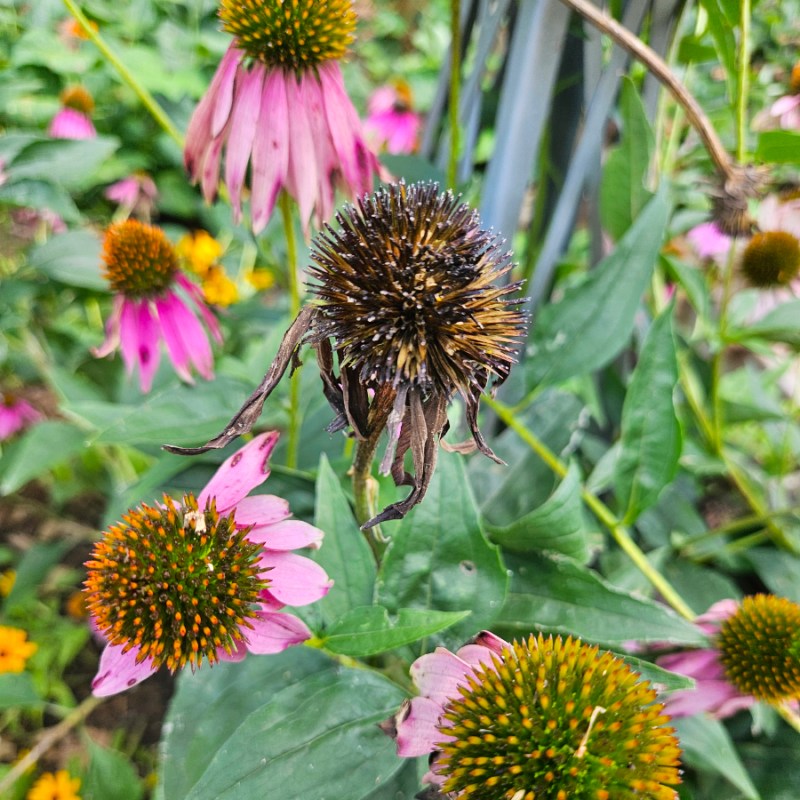
Coneflowers, also called Echinaceas, are one of the most popular and common native flowering perennials. With their single ray of bright petals and a dark-colored, dome-shaped center, they are a symbol of summer for many gardeners and growers.
Coneflowers are also one of the best low-maintenance flowering plants. They have grown for hundreds of years without the help of gardeners, returning year after year.
However, if you are growing coneflowers in your garden, those stunning coneflower plants can start to look a little drab and sad once late summer arrives. That’s where your helping hand might come into play.
Sure, you might still be getting new blooms on your plants by doing nothing, but what are you supposed to do with the blooms that are on their way out? Do you deadhead them throughout the entire growing season? Do you leave them to do their own thing, like they have done for hundreds of years naturally? The answer actually is both!
A Bit About Coneflowers – Late Summer Coneflower Care
Coneflowers are cold-hardy perennials that thrive in USDA Hardiness Zones 4 through 9. They self-seed and continue to come back year after year with little to no maintenance on your part. (That’s my kind of perennial!)
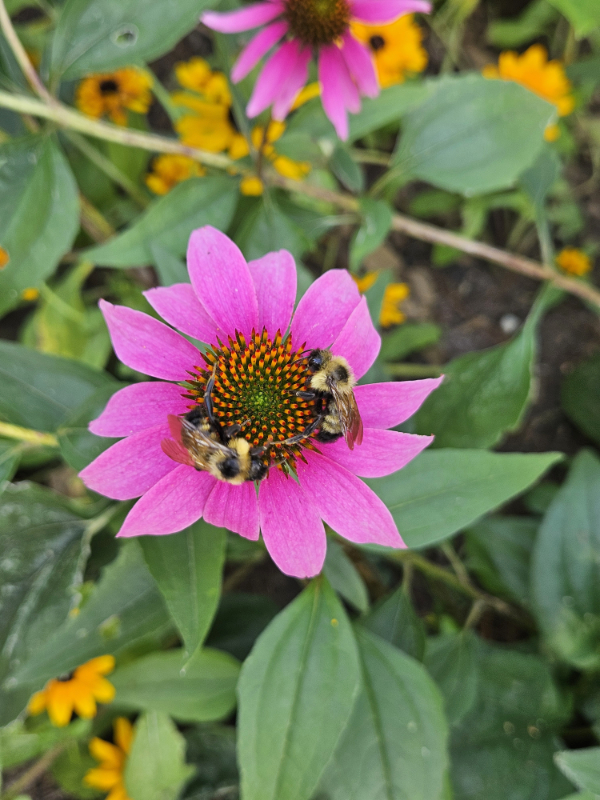
Coneflowers bloom for around two to three months during the mid-summer and early fall months. During this timeframe, each individual bloom stays open for about four weeks.
While the blooms are open, they rely on pollinators like bees and butterflies to pollinate the flowers. And boy do pollinators LOVE coneflowers! They are by far the most visited flowers in my garden, especially by honeybees and bumblebees. I’ve even seen hummingbirds stop by for a drink!
If pollination is successful, a seed head is produced as the flowers start to fade (i.e., die back). Once the seeds mature, they drop to the ground. Those seeds overwinter in the soil and germinate once the temperatures warm up the following year and new plants grow.
Advantages Of Deadheading Coneflowers
Now let’s talk a little bit about the advantages of deadheading coneflowers. Deadheading is the process of removing old and dying blooms from a flowering plant. Some people also refer to this as pruning.
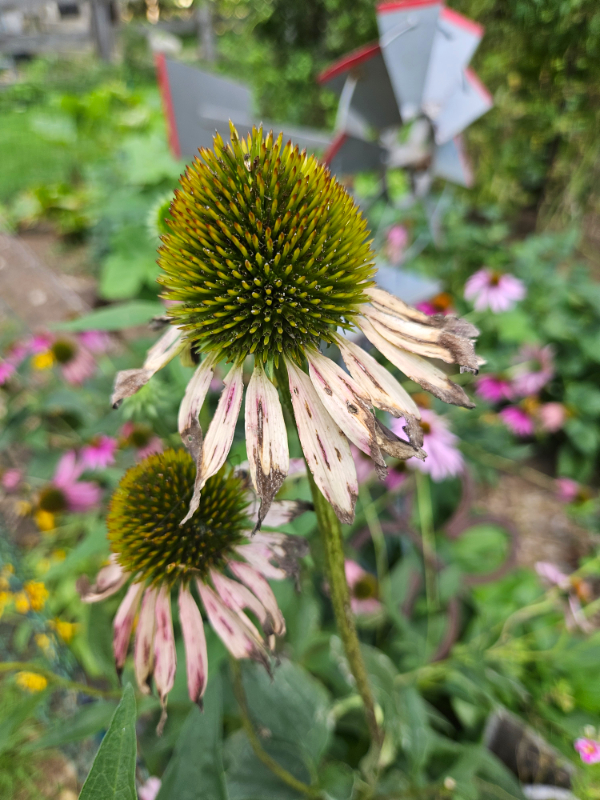
With most plants, deadheading allows the plant to focus more energy and resources on producing new blooms as opposed to maturing the developing seed head. This allows you to enjoy more blooms for a longer period of time.
Another advantage of deadheading coneflowers is that it helps to keep the plants neat and tidy. It’s no secret that a dying bloom looks less than appealing. Their bright and vibrant petals turn brown and brittle before falling off completely. What’s left is a spiky dried seed head that just can’t compete beauty-wise compared to a new bloom.
In addition, removing any dying plant matter helps to discourage pests and diseases from taking hold of your plants. These issues usually run rampant in plants that are stressed or struggling.
Lastly, deadheading allows you to save the seeds of open-pollinated varieties to grow again next year. This is a huge advantage if you want to add more coneflowers to your property or move them to another location.
How To Deadhead Spent Coneflower Blooms
To deadhead spent coneflower blooms, don’t just snip off the flower head. Instead, follow the stem down until you reach the first set of leaves and cut right above the leaves. This will allow the plant to look clean and polished without leaving a bare stem sticking up from the ground.
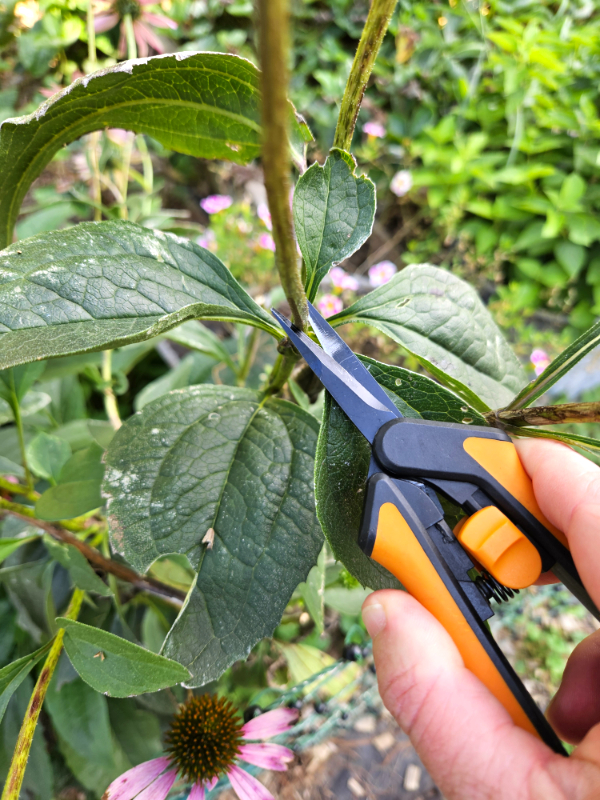
If your coneflower variety only produces one flower per stem, go ahead and cut the entire stem back to the ground. However, many coneflowers produce multiple blooms per stem, with or without deadheading.
Use a pair of clean pruning shears or snips when deadheading. I love my little Fiskars 6″ Non-Stick Pruning Snips (Product Link) for tasks like this. They are small, easy to carry in my pocket, and they do quick work of pruning and deadheading smaller stems, like coneflowers have. You wouldn’t want to use them to prune zucchini or sunflowers, but they are perfect for flowers!
Advantages Of NOT Deadheading Coneflowers
Now let’s flip to the other side of the “to deadhead or not to deadhead coneflowers” argument. (Let’s be honest, there are always two sides to every situation and argument, and we want to look at both sides equally.)
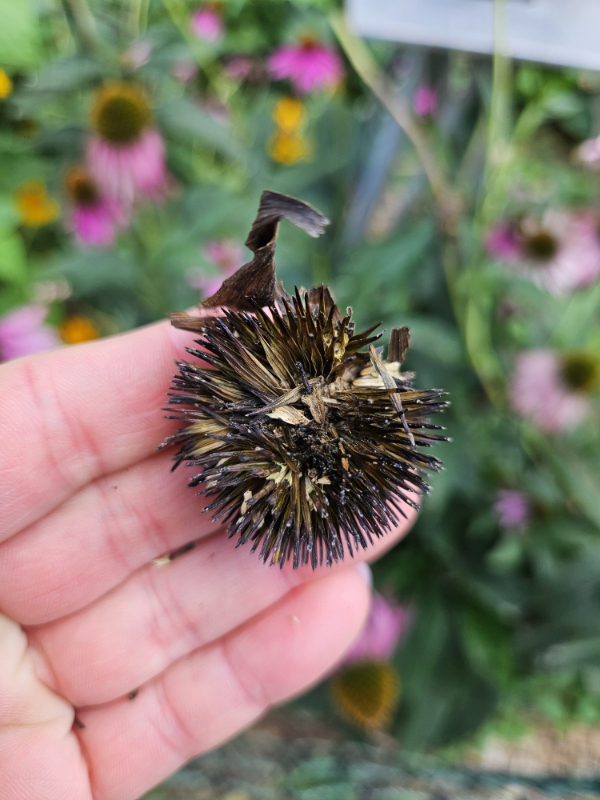
As I mentioned earlier, when coneflower blooms die back, they turn into dried seed heads. These seeds are an excellent source of nutrients and food for all sorts of different species of birds. Cardinals, goldfinches, blue jays, chickadees, and mourning doves all love dining on the seeds of coneflowers.
By growing coneflowers on your property and allowing them to dry naturally, you are providing these birds with access to free birdseed all summer long and into winter. This is the biggest advantage of allowing the coneflowers to die back naturally.
Another advantage of not deadheading is allowing the plants to self-sow naturally. As the seeds from the dried flower heads drop to the ground, they overwinter and are ready to start a new batch of plants come next springtime.
What Should You Do? – Late Summer Coneflower Care
In my opinion, the best option is to do both! Deadhead the blooms early on, then allow the later blooms to dry naturally later in the growing season.
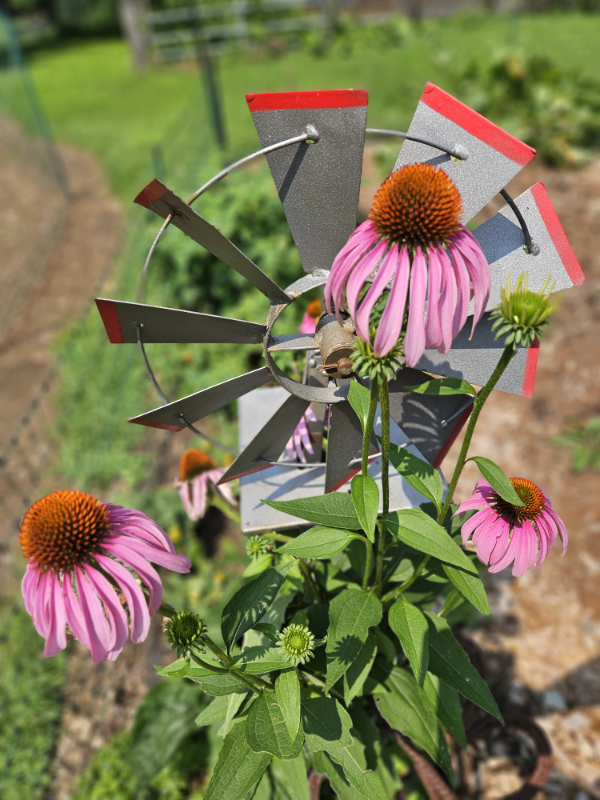
During the active blooming period of Summer, go ahead and deadhead any spent blooms. This will keep the plants looking good and also allow the plant to focus its energy on foliage and new growth as opposed to maturing seed heads.
Then, in late summer to early fall, allow the seed heads to dry out naturally on the plant. This will provide food to birds during the early fall through winter months as well as allow the plants to self-sow. (That is, if the birds leave any behind!) It really is the best of both worlds!
Until next time, thanks for stopping by!
– Chelsea
*This post may contain affiliate links. These are products I have used personally and highly recommend. As an Amazon Associate, I may earn a small commission from qualifying purchases if you purchase items through my links. These links and the ads on this page help to support my family and our semi homestead, so Thank You!
Discover more from Semi Homestead Life
Subscribe to get the latest posts sent to your email.