
Are you getting burnt out on BLT sandwiches, fresh salads, or quick salsa and need ways of preserving your fresh garden tomatoes instead? I’ve got you covered with four great options!

I get it; There are only so many fresh tomatoes you can eat in a growing season. It seems like I wait all year for summer to be here just so I can sink my teeth into a ripe, juicy tomato. However, when I’m knee-deep in the middle of summer and have tomatoes sitting on almost every surface in my kitchen, I start to get a little frazzled, to say the least!
Of course, I love to top salads with bright cherry tomatoes for a nice pop of flavor. I also love to slice up a big old heirloom tomato to enjoy with multiple strips of bacon and homemade baked bread for the ultimate BLT sandwich.
But before I know it, I’m burnt out and need a break. Instead of letting all of those freshly picked tomatoes go to waste, I preserve them instead.
There are so many different ways to preserve tomatoes. However, I just want to give you a few ideas to get you started. That way, you can still enjoy fresh garden flavors and benefits, even if it’s in the middle of winter!
4 Easy Ways Of Preserving Garden Tomatoes
Like I mentioned earlier, there are a ton of different ways you can preserve your garden tomato harvest. Tomatoes are one of the most versatile crops to preserve. You can can them, freeze them, dry them, and even ferment them. These are just some of my favorites that I want to pass along to you.
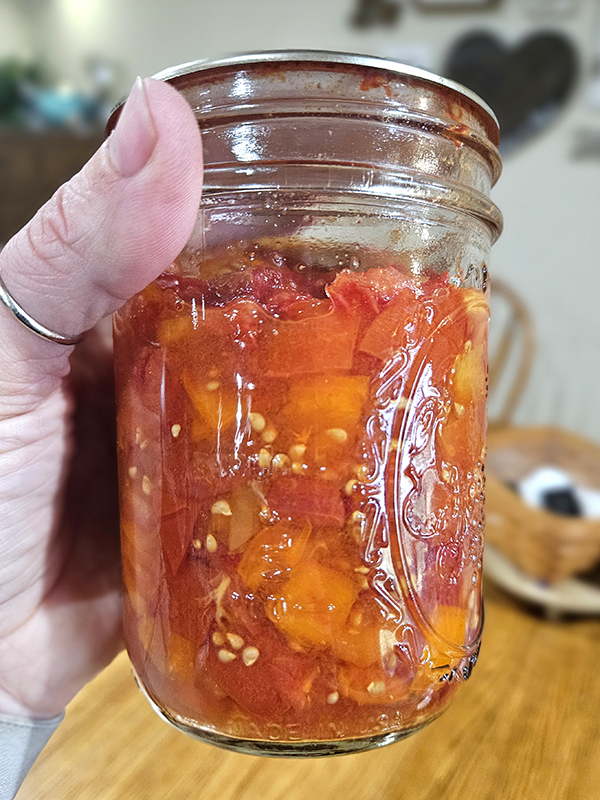
1: Canned Diced Tomatoes – Preserving Garden Tomatoes
When I try to preserve my tomato harvest, I like to use methods that are versatile and give me the most real-life applications for our family. If your family doesn’t eat a lot of pasta sauce, then there is no reason to can 30 jars of the stuff. It will just sit unused in your pantry.
So one of my favorite ways of preserving garden tomatoes is by canning diced tomatoes. I have a lot of recipes that we use on rotation that call for a can of diced tomatoes (like my “Cheesy Bowtie Pasta & Smoked Sausage” recipe). Instead of having to dash to the store, I can walk down to my pantry instead.
Or, if I want to take the time to make a homemade pasta sauce in the middle of winter, I can grab a few cans of diced tomatoes and make it happen. I’ll still get to enjoy the fresh flavors of summer, but do all the work when I have the time.
You can also preserve tomatoes whole or halved instead of diced, using the same method. (I use the recipe from Ball.) It’s quick, simple, and allows you to use the tomatoes in a wide range of applications at a later date.
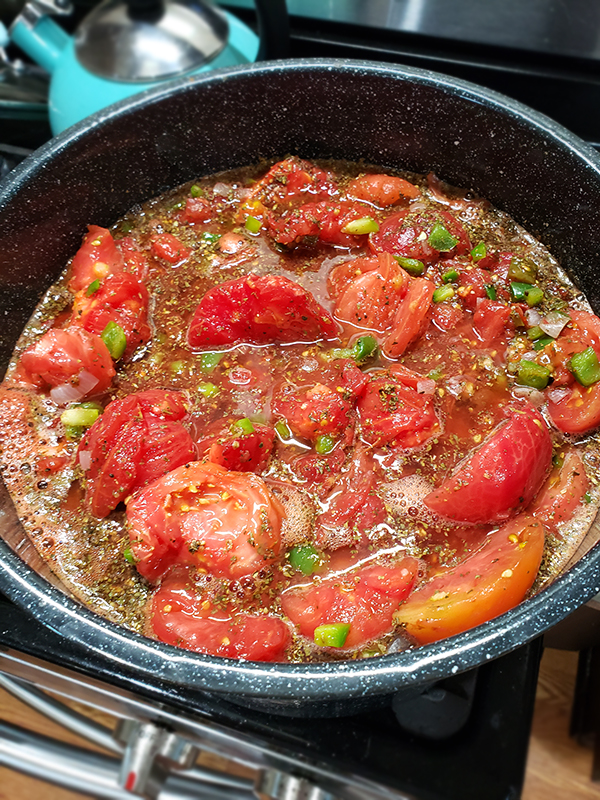
2: Canning Tomato-Based Products
If you want to spend a bit more time and be more specific about using up your tomatoes, you can turn them into tomato-based products. There are actually SO many different ways to can and use tomatoes that I’m sure I’m missing several, but this will give you an idea:
- Tomato Juice
- Tomato Soup
- Pasta Sauce
- Homemade Salsa
- Pizza Sauce (One of our favorite ways of preserving tomatoes.)
- Rotel-Style Tomatoes
- Ketchup
- Tomato Paste (This one requires a ton of tomatoes, so it’s a great option if you have a bumper crop.)
Some of these methods I have tried, some I have not. My most often used tomato-based canned products are pasta sauce, salsa, pizza sauce, and Rotel-style tomatoes. You can find all sorts of different recipes for these as well. If you would like the recipes I use personally, just shoot me a message. (I’ll update the list with links as I get articles written.)
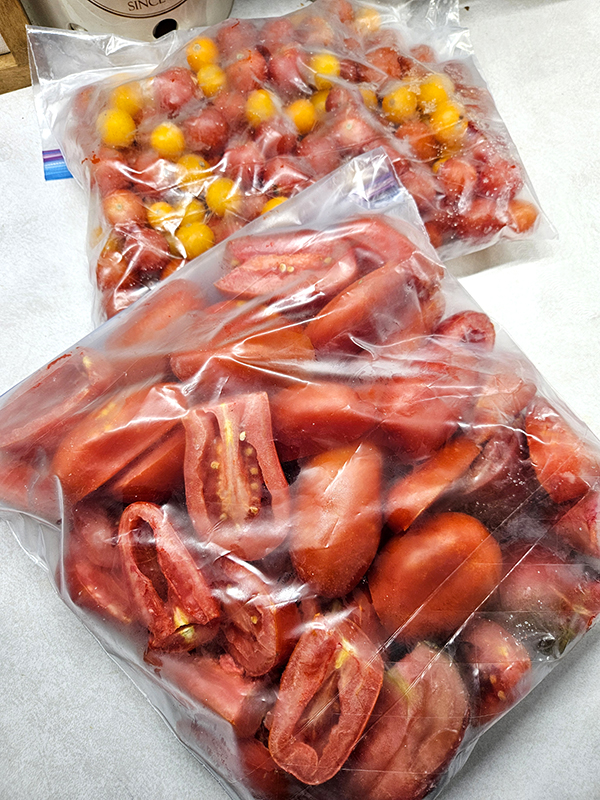
3: Freezing Tomatoes – Preserving Garden Tomatoes
This is probably my favorite way of dealing with several issues that can arise with growing tomatoes in the summer. Whether it is an influx of ripe tomatoes all at once, no time for canning, or only a few tomatoes ripe here and there, freezing is a great way to handle all those challenges.
Early in the growing season, the garden is often just getting going. I can sometimes only harvest a couple of ripe tomatoes at a time. While I eat a few here and there, what I really want to do is process a big batch of homemade pasta sauce or salsa. But in order to do that, I need a ton of tomatoes to be ripe at the same time.
Then, in the middle of the summer madness, I am trying to juggle ten different activities and projects at the same time. It doesn’t always leave a lot of time for anything else. That includes canning and preserving. Or, maybe it’s 90º Fahrenheit outside and I really don’t want to turn on the stove for canning.
Whatever the reason, freezing tomatoes is a great way of preserving that garden produce until you are ready for canning or have enough tomatoes to make that homemade pasta sauce a reality. The tomatoes do become a bit mushy once they thaw out, but they are perfect for turning into sauces and pastes.

4: Dehydrating Tomatoes
Dehydrating tomatoes might not be a method you consider very often when you think about preserving garden tomatoes. However, it’s actually a great way to store a bumper crop of any type of vegetables without taking up much space in your pantry.
You can then turn the dehydrated vegetables into a very fine powder that you can use in a variety of applications. Use them to add nutrients to all sorts of different dishes. The powder can also help flavor or thicken soups, roasts, vegetables, etc. (Homemade dried vegetable stock, anyone?) You can also use them as a natural food coloring.
The key to making powders is to make sure the tomatoes are completely dried and conditioned before grinding and storing. Any moisture will end up gunking together and making a mess as opposed to a fine powder. (Ask me how I know!)
Use either a dehydrator or you can use your oven at a very low temperature. Once you have the tomatoes dried and powdered, they can be stored in your pantry in an air-tight container for multiple years. (Here is the food dehydrator I use and love – Product Link: COSORI Food Dehydrator.)
Hopefully, you now have a few more ideas on preserving your garden tomatoes so you can enjoy them all year long!
Until next time, thanks for stopping by!
– Chelsea
*This post may contain affiliate links. These are products I have used personally and highly recommend. As an Amazon Associate, I may earn a small commission from qualifying purchases if you purchase items through my links. These links and the ads on this page help to support my family and our semi homestead, so Thank You!
Discover more from Semi Homestead Life
Subscribe to get the latest posts sent to your email.