
By mid-summer, some of your potted flowering plants, like petunias, can really start to look a little worse for wear and need your help to keep them from struggling. Whether it’s the heat, insufficient watering, lack of nutrients, or something else, your once vibrant flowering plants could use a little TLC!
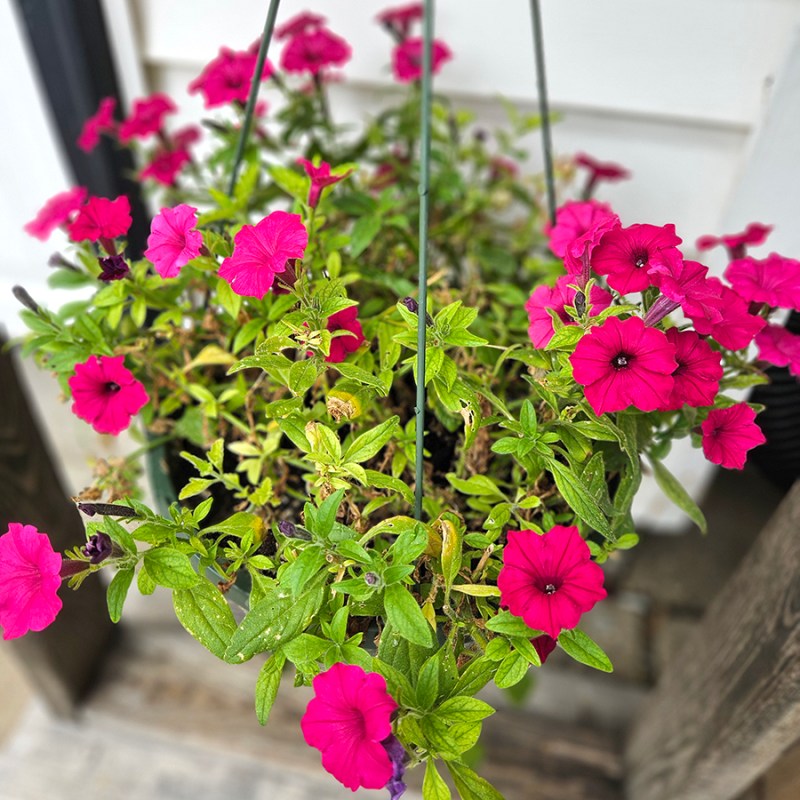
For most people, flowering potted plants like petunias are a great way to add pops of color, texture, and visual interest to their property. You can find blooms in about any color, from hot pinks to sunny yellows to deep mahogany, in addition to multiple different bloom shapes.
Not only can they help beautify your home, but they are also excellent for bringing in loads of pollinators like bees, butterflies, and an assortment of moths. And if you are a vegetable gardener like I am, the more pollinators you have around your property, the better!
Now I’ll admit it, I’ve unintentionally killed more than my fair share of potted flowering plants. Usually, it boils down to summer getting busy. The next thing I know, a few hot days have gone by, and the potted plants are all but done for.
The good news is that even if your plant has seen better days, all is not always lost. There are still a few things you can do to try to revive them and get those annuals blooming beautifully once again!
5 Ways To Help Struggling Petunias And Other Potted Plants
1: Deadhead Spent Blooms
Deadheading is a funny name that refers to the process of cutting off spent or dying blooms. After a bloom dies back, it starts to turn into the seed head.

Plants spend a lot of energy and resources maturing seed heads. These are resources that could be otherwise spent on creating new and vibrant blooms. So by removing the dying blooms, you are allowing the plant to refocus that energy.
Besides, there’s no reason to let the seeds mature and attempt to self-sow for the next growing season. Most seeds can’t stay viable anyway, especially in colder locations. Instead, we just want the plants to look stunning for the current season.
To deadhead petunias and other flowering plants, use a pair of clean pruners, snips, scissors, or even your fingers (for more delicate blooms and stems). Cut the stems back to where they meet the rest of the plant. Don’t just cut off the bloom because that only leaves behind a rather ugly stem sticking up from the plant. (These are my favorite pruners for deadheading – Product Link: Fiskars Micro-Tip Pruning Shears)
Some petunia varieties are self-deadheading, which means that blooms automatically drop off on their own. (Have you ever driven past a beautiful downtown area and seen their hanging baskets overflowing with stunning blooms? Most of those plants are self-deadheading.) However, it’s still a good idea to deadhead if your plants are struggling.
2: Resaturate The Soil – Help Struggling Petunias
A lack of watering is likely the #1 most common reason why petunias and other potted plants struggle and die in the summer. But like I mentioned earlier, I get it. I’m not always the best at remembering to water my potted plants each and every day. (The same goes for my poor houseplants at times!) The result is often potting soil that is dry, caked, and basically hydrophobic. What do I mean by that?

Have you ever tried to water a plant with dried-up potting soil? Does the water seem to flow straight through the pot and out of the drainage holes the second you start to pour?
Well, that’s because the soil is not actually absorbing the water. The top of the soil might be getting a little bit of water, but nothing below the surface is. Instead, the soil is actually repelling it. There’s no good in watering a plant if the soil can’t actually soak it up.
The reason for this is that most potting soils are made up of quite a bit of peat moss. Peat moss is great for retaining water, being lightweight, and decomposing slowly over time. However, it is also very hard to resaturate once it dries out.
What To Do?
Thankfully, you don’t need to dump the potting soil out and start all over again. There’s a simple trick you can use to resaturate the soil. The trick is to use warm water.
If you can, submerge the entire pot in a bucket of warm water. Allow the soil to soak up as much moisture as possible for around 20 minutes. The pot should feel nice and heavy once you pull it out!

If your struggling plants are too large to pick up and submerge, just pour a ton of warm water over the entire plant. Wait a few minutes and repeat the process. Keep doing this until you can feel down into the soil and it feels fully saturated. The warm water should be easier for the soil to absorb as opposed to cool water.
3: Fertilize & Feed – Help Struggling Petunias
Once you have the struggling petunias and other potted plants nice and cleaned up and the soil absorbing water again, it’s time to feed the plants.
Flowering plants require a lot of nutrients to continually produce blooms all summer long. Since potted plants only grow in a small amount of soil, they quickly use up the nutrients and resources within that soil. By mid-season, there are usually no resources left.
While slow-release granular fertilizers are perfect for flowering annuals and perennials growing in the ground, they aren’t the best option for plants growing in pots, containers, or hanging baskets. Instead, reach for a liquid fertilizer.
Look for a liquid fertilizer that has either equal amounts of nutrients or lower amounts of nitrogen. (Nitrogen encourages foliage growth, and we want the flowers to be the stars here.) You can even find fertilizers that are made with specific nutrients geared towards flowering plants.
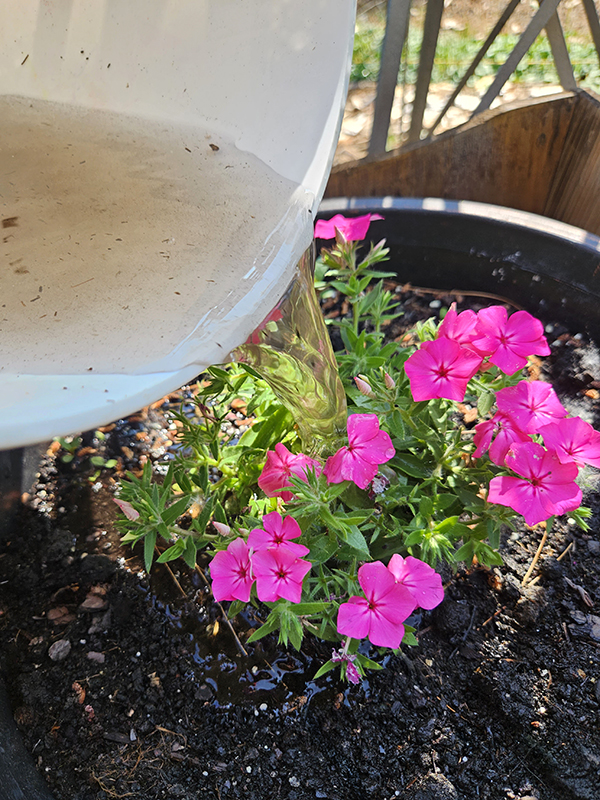
You can also use what’s called “compost tea”. This isn’t a tea that you would want to drink by any means, but it can be used to power and help struggling petunias and other potted flowering plants.
Simply fill a 5-gallon bucket halfway up with finished compost. Top the bucket off with water. Stir to combine. Allow the mixture to soak for a few days, stirring occasionally. You can then use the liquid part of the compost tea on any and all of the plants in your garden in place of regular watering. The solids can go back to your compost pile. Repeat this process weekly for best results.
4: Move & Protect – Help Struggling Petunias
As the dog days of summer pass, the length of daylight hours changes. Make sure that your potted petunias and other flowering plants are still receiving plenty of daylight. Move them to a different location if needed.
Also, keep in mind the weather and elements. If possible, move your potted plants to a protected space if the weather is calling for strong storms. Many plants, like petunias, will easily get damaged in strong winds and especially hail.
I always try to drag all of my potted plants into our garage for the night if I know that storms are predicted. Obviously, you can’t plan for everything, but taking the time to protect them when you can is a great way of helping struggling petunias and other potted plants.
If you are still having issues even after making sure the plants have plenty of sunlight, nutrients, and water, check for bugs and pests. Deer and rabbits, as well as insects like aphids, thrips, and spider mites, can all cause flowering plants to struggle. Treat or protect as needed based on the pest that is causing the problems.
5: Get On A Schedule
I know your summer is likely jam-packed already, but you will have the best success if you get on a schedule. Find a time of day that you can work in a few quick minutes of caring for your potted plants each day.
Maybe it’s ten minutes right before you leave for work each morning. Maybe it’s while you let the dog out to potty in the morning. Or maybe it’s right before you go to bed each night. Whatever it is, find a time and day that works for you and stick to it.
Especially during the peak of the summer heat, your potted plants need to be watered every day. If you live in a very hot climate, you might even need to water them twice a day. This is especially important when temperatures reach the triple digits. By sticking to a schedule and making it a routine, you can maybe avoid having struggling plants in the first place, since that is probably the biggest reason why these flowering plants fail.
If worst comes to worst, you can always use the dead potted plants to add to your compost, so all is not lost. And besides, it will be mum season before we know it!
Until next time, thanks for stopping by!
– Chelsea
*This post may contain affiliate links. These are products I have used personally and highly recommend. As an Amazon Associate, I may earn a small commission from qualifying purchases if you purchase items through my links. These links and the ads on this page help to support my family and our semi homestead, so Thank You!
Discover more from Semi Homestead Life
Subscribe to get the latest posts sent to your email.