
A great, all-natural way to power your plants all throughout your garden is to make a simple compost tea. It’s quick to make, requires only two ingredients, is easily absorbed by plants, and won’t overpower or burn delicate foliage.
If you’ve gardened for any length of time, then you know just how important adding compost to your garden soil is. Whether you purchase bagged compost from the big box stores or make it yourself in your own compost bin, it’s a must-have product if you are looking to have a successful gardening season.
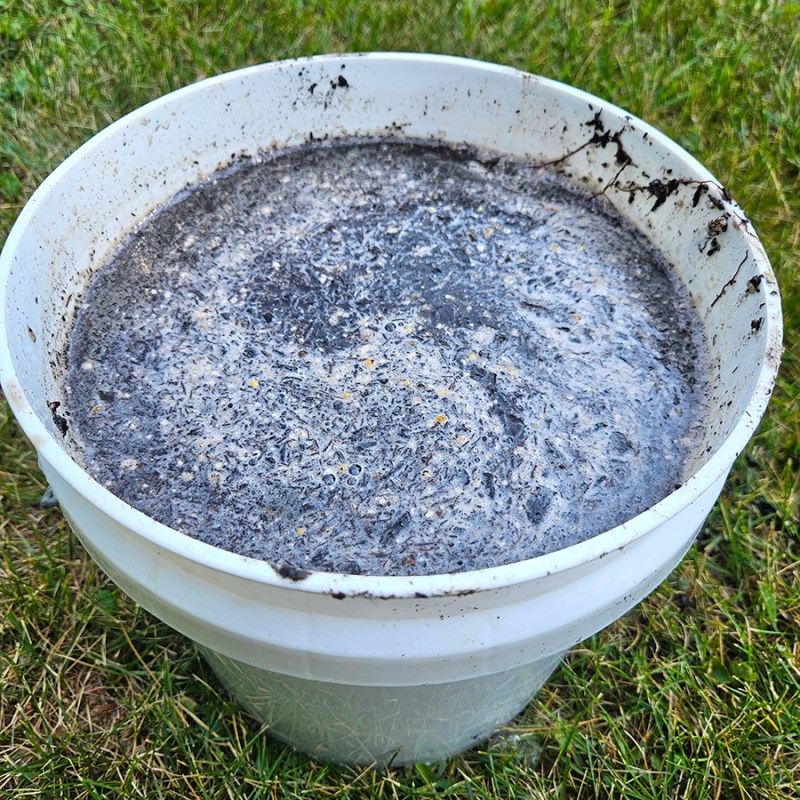
Not only is compost loaded down with all sorts of nutrients and resources your plants need in order to grow and produce, but it also helps to improve the composition of your soil. And just like compost can help improve your plants and the soil, compost tea can also go to work helping improve plants in your garden (or anywhere around your property, for that matter!).
Compost tea can easily be made using a container, something to stir it with, and a mixture of compost and water. That’s it! Allow it to sit for a few days, and you have yourself an amazing, all-natural fertilizer that is loaded with beneficial microorganisms and nutrients!
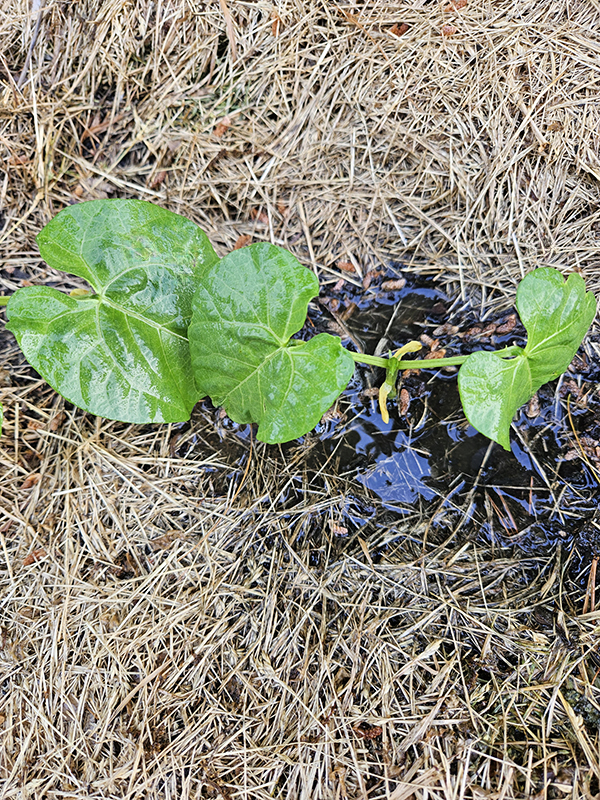
You can then use it on any plant on your property that could use an extra boost of nutrients, like your vegetable plants, annual flowers, hanging baskets, container plants, flowerbeds, newly planted trees and bushes, and perennial plants. Pretty much any of your plants and shrubs growing can benefit from compost tea!
Why Use Compost Tea
There are several reasons why you might want to consider using compost tea around your property and throughout your garden space.
To begin with, this tea is easily absorbed by plants. You can either apply it directly to the foliage of the plant, or you can apply it to the roots. Unlike most commercial fertilizers, there is no fear of burning any delicate foliage, either.

Since the mixture is comprised of microscopic nutrients and microorganisms, the plants don’t have to wait for the tea to break down before they can absorb all that goodness. That means the plants receive power and nutrients immediately as opposed to needing to wait a few days.
Other Advantages
In addition, the compost tea can help to improve your soil. With regular applications, the actual soil structure will improve, allowing for better water retention as well as improvements at the microscopic level. Using it with sandy soils or clay soils can improve airflow in the soil as well as the ability for rain and water to flow more easily (or be retained, in the case of sandy soils).
Deep applications of compost tea also help to encourage the plant’s roots to grow down deep into the soil. A stronger root system equals a more stable base as well as the ability to have more access to find and soak up water and nutrients.
Lastly, if desired, you can adjust your compost tea ingredients to meet the needs of specific plants. This isn’t really a route I take, but it’s simple to adjust your compost tea if needed based on what you add to the compost. I try not to overcomplicate gardening tasks, so I tend to stick with just compost and water!
How To Make A Simple Compost Tea
Just like there isn’t really a “recipe” for making your own homemade compost, there really isn’t a set recipe for compost tea either. However, just for the fun of it, I am going to treat this article like my recipe articles on my website and format it that way.

Some websites want you to get all fancy and use aerators to mix the compost and tea together, but I don’t feel they are really required. A little manpower and you can still have an amazing product without all the fuss. Besides, this is supposed to be a simple compost tea recipe, remember!
Equipment Needed
To make this simple compost tea, you are going to need two types of “equipment.” Both can be items you already have on hand around your home.
First, you need a bucket or container that can hold water. You can use a 5-gallon bucket, a plastic storage container, or any other large container that won’t leak. Just make sure it’s an item that you don’t mind getting dirty! If you are worried about the plastics, use a food-grade container.
The only other piece of equipment you need is something to stir the compost tea with. This can be a long stick, an auger drill bit, a yard stick, etc. Pretty much anything that can reach the bottom of your container and stir without snapping in half will work.
The Two Ingredients Needed
Next, you need your two ingredients. First up is the compost. Again, you can purchase compost already finished at most local farm stores or even a lot of home improvement stores. You can also purchase finished compost in large batches from garden nurseries.

I know some people get particular about what brands you “should and shouldn’t” use, but use whatever you are comfortable with. It’s your garden and plants, so you are in charge!
You can also use your own finished compost if you are keeping a pile on your property. I have several articles on making and using compost, so if you want to read more about that, be sure to check them out:
- “Making Compost The Easy Way – A Gardener’s Secret Weapon!”
- “Materials To Compost – Create The Best Compost For Your Garden”
- “Composting Potted Plants – Why & How To Reuse Old Potting Soil”
The most important part with your compost – however you aquire it – is that it is “finished”. You don’t want to use compost that is too hot or hadn’t had a chance to break down properly. This is esepcially important if your compost uses a lot of livestock manure.
The second and last ingredient is water. Plain old water is all you need. Again, some websites will tell you to use non-chlorinated water. However, we get our water from the spigot in front of our house, and it works just fine. (We are on city water.) You can also collect rainwater to use, which is another great option (and something I need to do more of)!
Instructions For Simple Compost Tea
Ok, now you’re ready to make the compost tea. Fill your container halfway with the finished compost. Then fill the rest of the way with water. Leave a few inches at the top for stirring. Using your piece of stirring equipment, mix the two together. Be careful not to slosh the mixture around onto the floor!
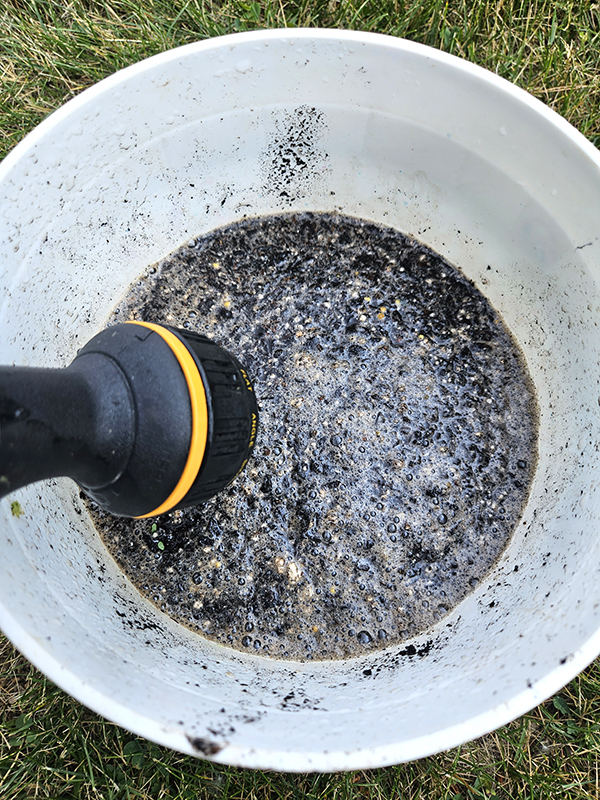
Now, if your container has a lid, perfect! If not, no big deal. Cover the container if you’d like but at the very least, store it somewhere in your garage or a protected space where it won’t be bothered for a few days. (Or where young children or pets can’t get into it!)
Once or twice a day for about a week, go out to the container and give it another good mix. This will help to distribute the solids of the compost throughout the water. During this timeframe, you are allowing the compost to steep, just like a cup of tea would in your kitchen. Only, don’t drink this tea!
Using The Compost Tea
When the week is up and the liquid is a nice brown color, it’s ready to use on your plants. Simply use the liquid part in place of regular watering or as an added boost of nutrients here and there. The solids can go back into your compost pile to be re-energized again.
If you want to add the compost tea to a handheld sprayer to spray on the foliage, I suggest straining it using a tight sieve to catch all the solid bits. Then the liquid can be sprayed directly on the plant’s foliage or poured around the roots of the plants.
You can also make a tea using worm castings instead of compost. However, it then becomes “worm casting tea,” for obvious reasons! Just make it the same way as you would the compost tea, with half the container being the castings and half being the water. (Worm castings are a great, all-natural fertilizer for garden plants! Product Link: 100% Pure Organic Worm Castings)
Hopefully, this simple compost tea recipe is something you try in the future to help power your plants and provide them with a wonderful, all-natural fertilizer made right in your own backyard!
Until next time, thanks for stopping by!
– Chelsea
*This post may contain affiliate links. These are products I have used personally and highly recommend. As an Amazon Associate, I may earn a small commission from qualifying purchases if you purchase items through my links. These links and the ads on this page help to support my family and our semi homestead, so Thank You!
Discover more from Semi Homestead Life
Subscribe to get the latest posts sent to your email.