
Whether you plant your fruit trees in the early spring months or during the fall, there are a few key tips to keep in mind when choosing your fruit trees.
We have planted fruit trees both in the fall and the spring for one reason or another. Both planting dates come with different advantages and disadvantages. However, there are a few things we have to keep in mind, no matter when we are planting our fruit trees.
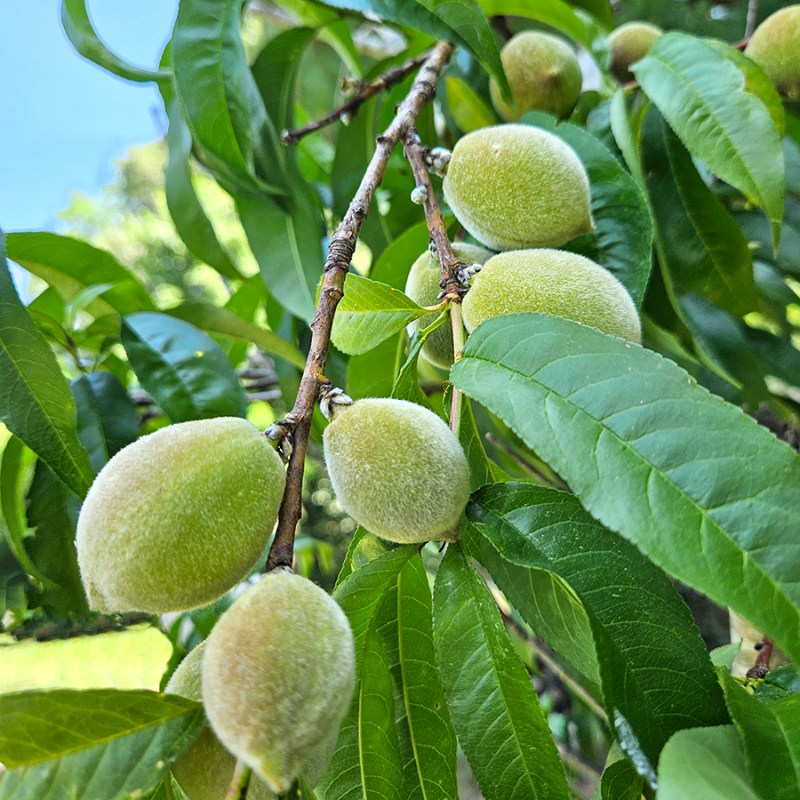
First, there’s making sure you are choosing the right variety for your growing location and climate. While local nurseries should only carry the right ones for your area, online nurseries have a plethora of choices for you to pick from. Choose the wrong one, and you may be out a lot of money!
Then there’s the difference in sizes, whether or not they are self-pollinating, and their blooming period. That doesn’t even mention whether you want to buy the plants as bare-root trees or potted trees!
Thankfully, I’ve broken down some of the basic tips you need to know, no matter when you plant your fruit trees or what fruit you plan on growing.
5 Tips On Choosing Fruit Trees
Tip 1: Choosing The Right Fruit Tree For Your Location
When picking out your fruit tree for planting in the spring, you want to make sure you are choosing a variety that can handle your growing location. Here in the Midwest, we cannot grow some types of fruit due to our cold winters.
The same goes for people living in the South. While people in the South can easily grow oranges and lemons, those same trees would struggle to grow in the ground during our harsh winter months.
But it’s not just the type of fruit you can grow in different locations. It’s also the varieties within the same fruit option that can vary as well. For example, some apple varieties are more cold-hardy than others and work better for our Illinois winters.
As mentioned above, local nurseries or tree farms should only carry trees that you can grow in your specific location. (If they don’t, then I’m not sure I would trust their other growing practices!)
However, there are a TON of great online retailers that also sell fruit trees. For those online stores, you need to make sure you are doing your research. Make sure you select only varieties that can handle your particular climate.
Tip 2: The Mature Size Of The Tree
Another tip to consider when choosing fruit trees is the tree’s mature size. This final size will dictate how much space you can put between additional trees as well as other structures on your property. It will also tell you how tall the tree is expected to grow without pruning.
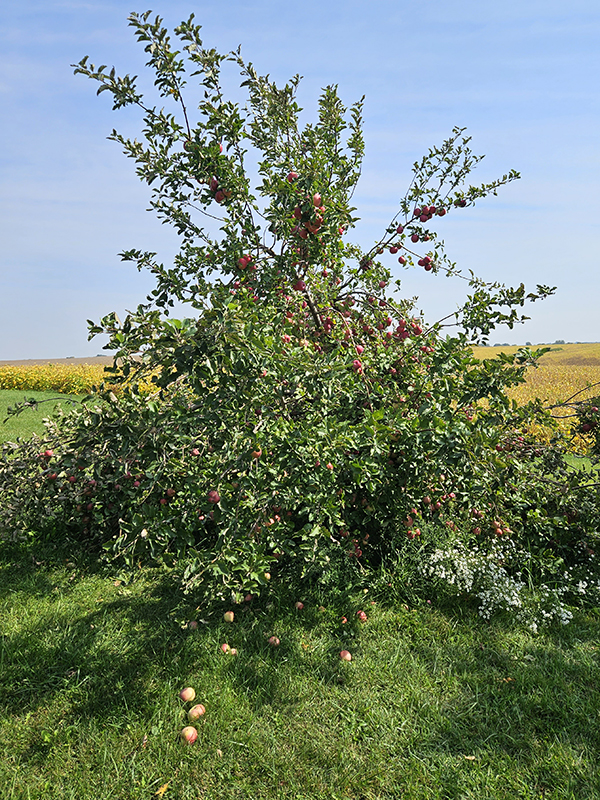
It can be really misleading to see a tiny bare-root fruit tree ready for planting and think there’s no way it can grow to be 20-something feet tall! However, the tree’s final mature size must be taken into consideration, not how big the tree is during planting.
For most tree varieties, you will need to decide if you want a dwarf tree, a semi-dwarf tree, or a standard tree. Most fruit trees are now available in most of these size options (at least online). Whichever you choose will depend on your growing space as well as your harvesting goals.
We typically get semi-dwarf trees here for our semi homestead whenever available. They are just a bit more manageable for us and don’t take up quite as much space while still producing plenty of fruit to harvest.
More About The Three Sizes
Dwarf trees typically grow to around 8 to 10 feet tall and wide, but this can depend on the location. They usually produce fruit a bit sooner than the larger types. They are great for growing in locations with limited space.

Standard fruit trees can grow to be 18 to 25+ feet tall and wide at their mature height. (Some fruits like peaches and nectarines grow to be more around 12 to 15 feet tall/wide). While they take quite a bit longer to start putting out fruit, they will produce a lot more per tree. The downside is that they are harder to harvest from and require a ladder or some sort of harvesting pole.
Semi-dwarf trees are between the two sizes (and in my opinion, the best of both worlds). Most grow to be around 12 to 15 feet tall and wide, but this can be controlled some with proper pruning. Semi-dwarf trees produce more fruit than dwarf trees without growing to be the massive sizes that standard trees do.
Tip 3: Is The Tree Self-Pollinating – Tips On Choosing Fruit Trees
You also need to know whether or not your fruit tree variety requires cross-pollination. Some trees are self-pollinating. This means they don’t need an additional nearby fruit tree of a different variety for pollination to occur. They are self-fertile. The pollen can be transferred from the anther to the stigma on different flowers on the same tree or within the same exact bloom even.
Most fruit trees, however, require the use of cross-pollination in order to produce fruit. This is when the pollen needs to be moved from the flower on one tree to the flower on a different tree. The kicker is that it can’t be a genetically similar tree. It needs to be a different variety of the same fruit.
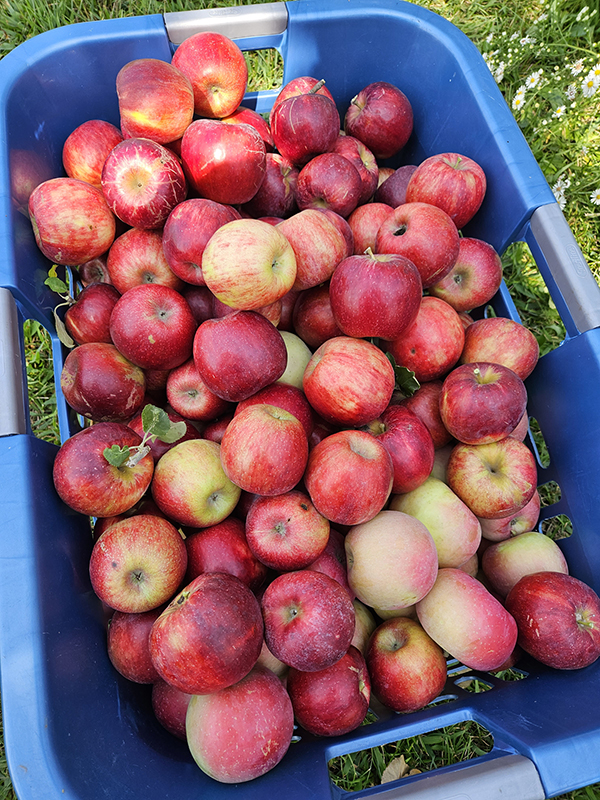
For example, most tart cherry trees are self-fertile. This means you only need one tree to get a good harvest of fruit. But if you want to grow sweet cherry trees, most require at least one other tree in a different variety with the same bloom time to grow nearby. So you would need to plant one Bing Sweet Cherry tree and one Rainier Sweet Cherry tree.
Most peaches, nectarines, plums, and prunes are also self-fertile. Besides sweet cherry trees, cross-pollination is important for most apples, pears, and Japanese plums. Again, there are exceptions for almost all of these due to different varieties being created all the time.
Having to purchase, find the space to plant, and maintain two of the same fruit trees might change whether or not you decide to grow that particular fruit. Just be sure to do some research before purchasing any fruit tree.
Tip 4: But Wait, There’s More! – Bloom Time
My tips for choosing fruit trees don’t just stop there! Say you need to grow two trees so they can cross-pollinate. Well, it’s not just as easy as picking out your two favorite varieties. You need to keep in mind the timeframe that each one blooms.
Some fruit trees, even within the same type of fruit, bloom at different times of the year. You need to pick two varieties that bloom around the same time. The trees can’t cross-pollinate if one tree puts out flowers in May while the other does in June.

Most nurseries will have guides that will tell you which varieties they offer are good matches. You can also find guides on most online growers’ websites. Worst comes to worst, just do a quick Google search. I’ve been known to do that right in the middle of a garden center before!
Tip 5: Bare-Root Or Potted Fruit Trees
Now that you have the growing location figured out and know exactly which variety of fruit tree (or trees) you need, let’s talk about the type of tree you can purchase.
Normally, when you buy trees at local garden nurseries, they come as potted plants. This allows the nurseries to keep the plant alive and growing, whether it gets purchased or not. You can also purchase potted trees online, but it usually comes with a decent price tag.
Most potted fruit trees will be a bit older and larger. This means that they can usually get established on your property quicker and start to produce fruit that much faster. (Most fruit trees can take years before they start to produce anything worth harvesting.)
The other option is to purchase what’s called “bare-root” trees. These plants come without any soil attached. They literally have their roots showing and are sold as dormant trees.

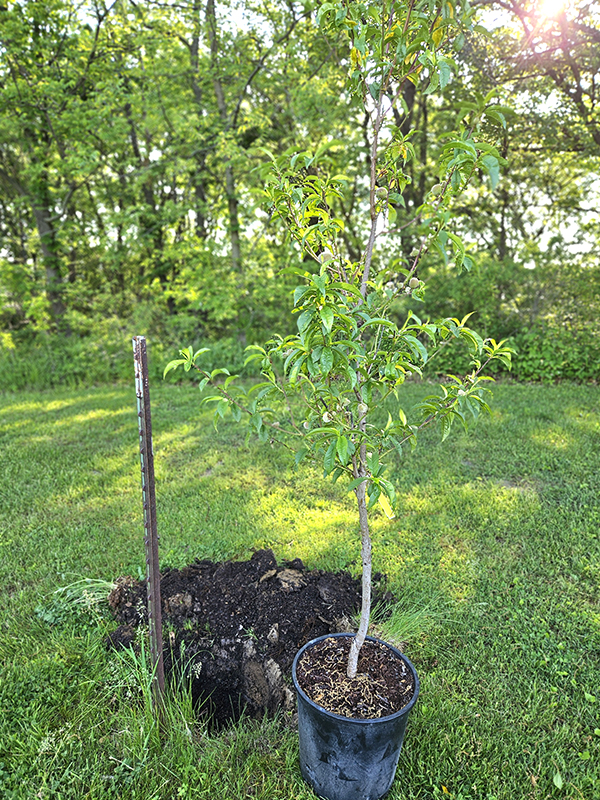
The advantage of choosing bare-root fruit trees is that they are usually cheaper and easier to plant. The negatives are that you have to get the plants into the soil before they go out of dormancy. In addition, the plants are usually younger and smaller in size.
We have personally purchased both types. While I like the bare root option, I personally prefer potted trees. I just feel like the trees are able to adapt to our soil much easier, and we end up with healthier-looking plants right from the get-go.
On To Planting!
As long as you keep these five tips in mind before choosing and purchasing your fruit trees, you can set the stage for healthy plants and great harvests for years to come!
For more information about planting and pruning fruit trees, check out my other articles:
- “Plant Fruit Trees In The Fall – Get A Head Start On Spring Growth!”
- “Planting Fruit Trees In Spring For Healthy And Productive Trees”
- “Pruning Apple Trees In Winter – Get Them In Shape, Literally!”
Until next time, thanks for stopping by!
– Chelsea
*This post may contain affiliate links. These are products I have used personally and highly recommend. As an Amazon Associate, I may earn a small commission from qualifying purchases if you purchase items through my links. These links and the ads on this page help to support my family and our semi homestead, so Thank You!
Discover more from Semi Homestead Life
Subscribe to get the latest posts sent to your email.