
A common gardening issue is having tomatoes that crack or split just as they are about to be perfectly ripe. It’s a problem that most gardeners experience at one time or another during their lifetime. Even experienced gardeners can be left with splitting fruit.
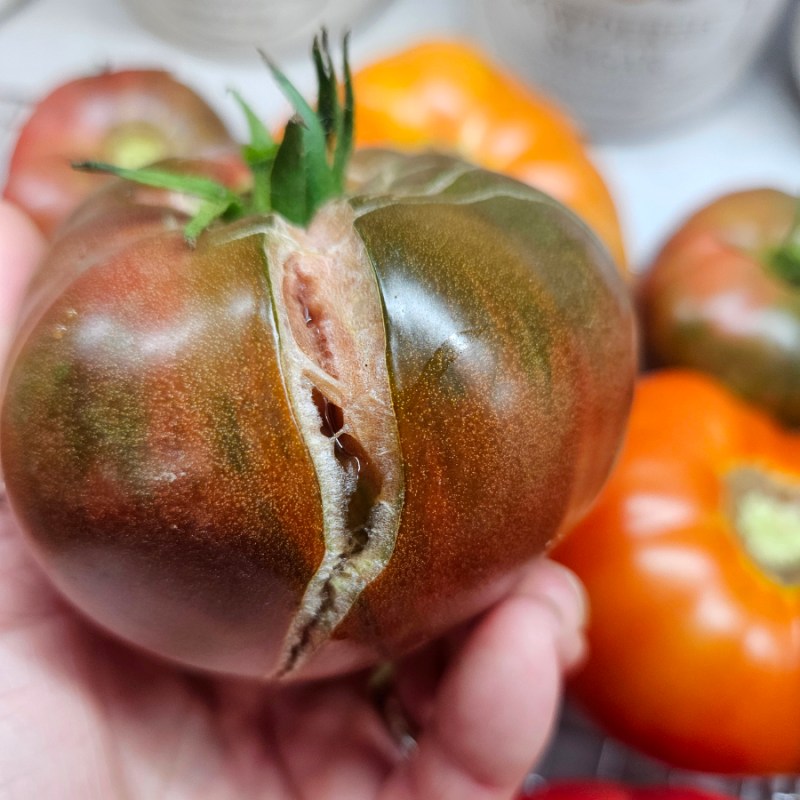
You go out to the garden to harvest a few ripe tomatoes, only to realize that there are deep splits and cracks across the fruit. What causes tomatoes to crack and split, and is there anything you can do to prevent it? Are the fruit still safe to eat, or are they destined for the trash bin?
Most often, cracking and splitting are caused by inconsistent watering and/or heavy rainfall. You go through a period of dry weather, followed by heavy rain or overwatering. This quick uptake of moisture causes the flesh of the tomatoes to expand faster than the thin skin can keep up with. This results in splits and cracks.
Thankfully, the issue of tomatoes cracking and splitting is most often preventable. In fact, it’s pretty easy to achieve. Maintaining consistent soil moisture and following a few basic gardening practices can greatly reduce the chance of cracking and splitting occurring and allow you to be able to harvest beautiful, crack-free tomatoes!
Why Do Tomatoes Split And Crack?
Tomatoes are composed of around 94% water. Most of that moisture is within the juicy interior flesh.
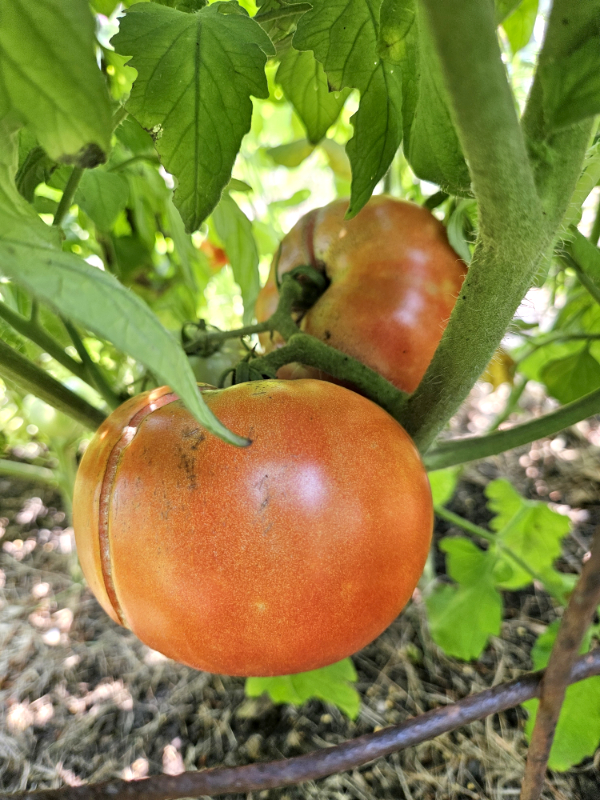
Splitting and cracking happen when the flesh inside a tomato all of the sudden recieves a ton of moisture all at once. This causes the flesh to grow and expand. While that doesn’t sound like a bad thing, unfortunately, the skin can’t keep up with fast growth, so it cracks to make room for the expanding flesh.
You most likely see cracking and splitting in almost ripe and already ripe tomatoes. The more mature the fruit is, the more noticeable and susceptible it is to splitting.
Types Of Tomato Cracking
There are two main types of tomato cracking or splitting: Radial and Concentric.
Radial cracks go from the stem of the fruit down to the blossom end (i.e., from top to bottom). They are usually deep, reaching into the flesh below the skin. Radial cracks are most often caused be inconsistant watering or sudden heavy rainfall. The more moisture, the deeper and larger the cracks. Since the cracks reach into the flesh, they are susceptible to diseases, mold, and pest damage.
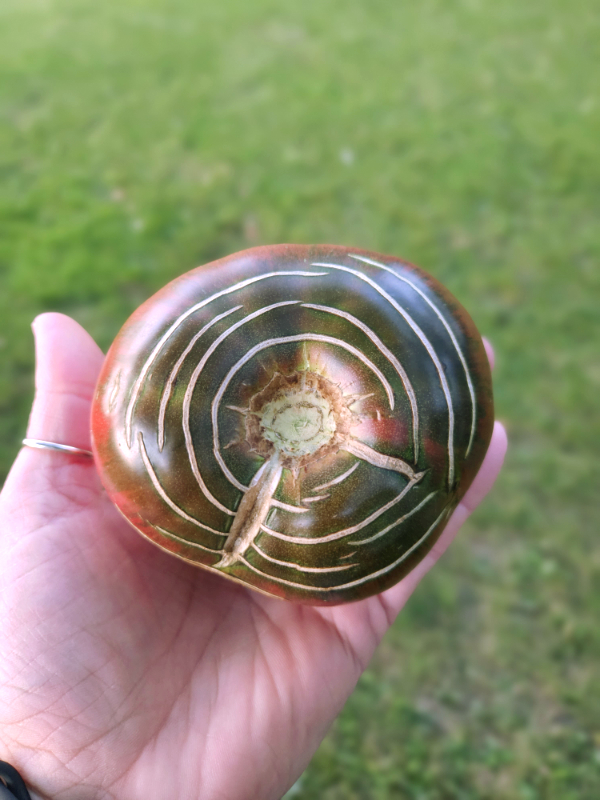
Concentric cracks look more like circular rings that go around the stem area. Think of them as “stretch marks” on the tomato skin as opposed to cuts or slits. Concentric cracks aren’t as deep as Radial cracks and are usually only a blemish on the skin. (Meaning they don’t reach down into the flesh.) You can get Concentrick cracks from inconsistent moisture as well as genetics. Large, heirloom tomato varieties often get Concentric cracks.
Are Tomatoes That Crack And Split Safe To Eat?
The answer to this question kind of depends on the type of crack or split the tomato has and its severity.
Since Concentric cracks are usually only surface-deep, they are almost always safe to consume, skin and all. If the skin scarring bothers you, simply cut away that area or peel the skin before consuming. However, the fruit itself is totally fine to eat.
As for Radial cracks, if the split is new and has just happened, the fruit is usually safe to eat. Check for any signs of mold, decay, or insects. If the tomato is free of those, cut away the cracked area and consume the rest of the fruit.
However, if the fruit has deep cracks or if the fruit isn’t harvested right away, it’s best to err on the side of caution. Any split or crack that exposes the flesh also exposes the fruit to pests, mold, bacteria, fungi, etc.
The Main Reasons For Cracking And What To Do About Them
Here are the main reasons why your tomatoes might be cracking or splitting:
1. Inconsistent Watering
Uneven moisture levels is the most common culprit of splitting, and this often occurs because of inconsistent watering. Going days or even weeks without watering and then providing plants with a huge drink will cause splitting.

What To Do: Water plants consistently. This isn’t to say that you need to create a strict schedule for watering. How much water you provide each week will vary depending on the amount of rainfall you receive, the type of soil you have, how mature your tomato plants are, etc.
Aim to give plants around 1 inch of water each week. This includes hand watering AND rainfall. To check the moisture level, go down 3 to 4 inches into the soil. If the soil there is dry, give the plants a good drink.
Do not rely on the first few inches of soil to check for dryness since that can be misleading. Using an inexpensive soil moisture meter like this XLUX Long Probe Deep Use Soil Moisture Meter (Product Link) can help remove any question of knowing for sure whether to water or not.
To learn more about watering your tomato plants and your garden in general, visit my article, “Watering Your Garden For Success – A Full Beginner’s Guide”.
2. Heavy Rainfall – Why Tomatoes Crack and Split
Heavy rainfall and inconsistent watering kind of go hand-in-hand. If you aren’t watering your plants often enough and a heavy rainfall happens, tomato splitting and cracking can occur. Again, if dry soil receives a large amount of moisture all at once due to heavy rainfall, the fruit will swell and crack.

What To Do: The best chance of avoiding tomatoes cracking and splitting from a sudden heavy rainfall is to keep the soil consistently moist all throughout the growing season.
Also, at the beginning of the growing season, make sure you plant your tomatoes in a location that has well-draining soil. This alone can help reduce the chances of splitting from heavy rainfall since the water won’t have a chance to pool around the base of the plant.
Unfortunately, even if you have a consistent watering schedule in place, you still can’t control the weather. Implementing a few of the “Additional Tips” below will also help prevent issues from heavy rainfall.
3. Extreme Temperatures
A less common cause of tomatoes splitting and cracking is due to extreme temperatures. Both extremely hot weather and a drop in temperature can cause fruit to stress and sometimes split.
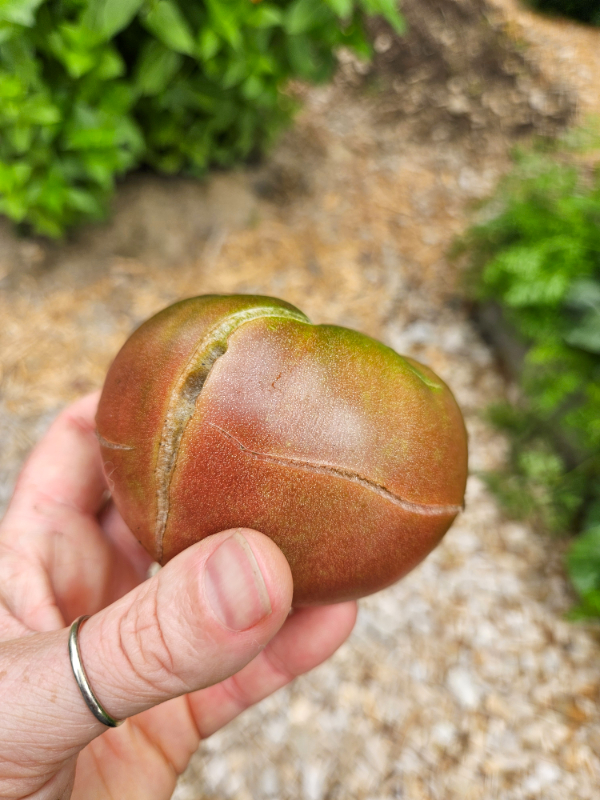
Dry spells and hot weather can cause the skin on a ripening tomato to toughen. This makes less room for rapid expansion or growth to occur without splitting. In addition, in hot weather, the soil often dries out much faster. Having dry soil and then either a downpour or heavy watering can cause the splitting.
On the flipside, a sudden drop in temperature or a cool, damp nighttime temperature can cause a plant’s transpiration rate to slow way down. (Transpiration is the process by which a tomato plant absorbs water from its roots and transports it through the rest of the plant. Then, the water vapor is released into the atmosphere.) When transpiration slows down, but the roots keep absorbing moisture, this can cause splitting.
What To Do: Just like the other fixes, keeping the moisture levels consistent is the best fix. In addition, if you know a cold snap is heading your way, use row covers or frost blankets to help protect your tomato plants.
4. Different Tomato Varieties – Why Tomatoes Crack and Split
Some tomato varieties are more susceptible to splitting than others. For example, large heirloom tomatoes have a much higher chance of both Radial and Concentric splitting than hybrids or even smaller fruit. Some hybrids are bred to withstand inconsistent moisture levels better than heirlooms.

What To Do: If you often struggle with tomatoes splitting despite regular watering and keeping the soil moist, plant tomato varieties that are naturally more resistant to cracking and splitting. These tomatoes often feature thicker, more flexible skins that are more forgiving than other varieties.
Unfortunately, no tomato is split-proof. Every variety, from tiny cherry tomatoes up to huge slicing tomatoes, can split. However, try growing some of these varieties: Better Boy, Celebrity, Juliet, Roma, SunSugar, and Super Sweet 100. Also, stay away from larger heirlooms if splitting is a real concern for you.
Additional Tips To Prevent Tomatoes From Cracking & Splitting
Besides what I talked about above, there are two additional ways you can help prevent your tomatoes from splitting or cracking. Regardless of whether you deal with tomatoes splitting and cracking, I highly suggest you implement them into your gardening practice.
Use mulch. A nice, thick layer of organic mulch can help to maintain moisture within the soil. In addition, it also helps keep the soil temperature more consistent. (Among other benefits, which you can read about here: “Why To Use Mulch In Your Garden – Weed Less & Improve The Soil”.)
To enjoy all of the benefits of mulch, maintain a thick 4 to 6 inch layer of the material around the base of the plants. Just don’t allow the mulch to touch the stem. Use materials like grass clippings, straw, or shredded leaves.
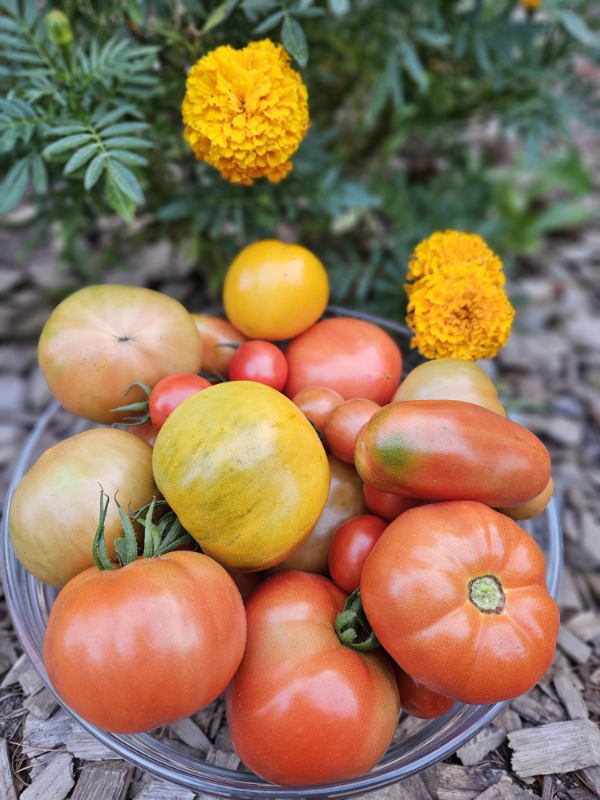
Harvest fruit early. Since tomatoes that are almost ripe or ripe are the most susceptible to splitting and cracking, harvest the fruit early and often. Instead of allowing your tomatoes to fully ripen on the vine, harvest them just as the fruit starts to show signs of changing colors.
As long as the ripening process has started, the fruit will continue to ripen off the plant, only in the safety of your home. This helps keep your fruit safe from not only the splitting, but also pests and insects that also enjoy vine-ripened fruit!
Hopefully with these tips, you will be able to avoid your tomatoes splitting and cracking and enjoy blemish-free fruit!
Until next time, thanks for stopping by!
– Chelsea
*This post may contain affiliate links. These are products I have used personally and highly recommend. As an Amazon Associate, I may earn a small commission from qualifying purchases if you purchase items through my links. These links and the ads on this page help to support my family and our semi homestead, so Thank You!
Discover more from Semi Homestead Life
Subscribe to get the latest posts sent to your email.