
Known for its succulent-like foliage and its ability to handle the heat like a pro, portulaca is a great flowering annual to grow around your property where many other flowers would struggle to survive, let alone produce blooms!

Sometimes called by their cultivators Moss Rose or Purslane, Portulaca thrives in poor-quality soils like sandy or rocky soil. They are perfect for growing as a flowering ground cover, draping along stone walls, adding color to flower beds, or growing in hanging baskets and containers (my preferred choice).
Portulaca plants feature multiple small rose-like blooms that close during the night and on cloudy days. You can find these blooms in a variety of warm colors like red, orange, yellow, pink, salmon, and variegated shades.
These summer-loving plants will continue to push out blooms from early summer until the first frost. Their ability to require less water makes portulaca a great plant if you tend to forget to water your plants or if your location receives less than average rainfall.
While portulaca is technically an annual, it is a prolific self-seeder. Here in Illinois (growing zone 5), it’s always a welcoming sight to see new little plants pop up through the soil after a long winter season!
How To Grow Portulaca (Moss Rose)
Growing Portulaca From Seed
Portulaca plants can be purchased as transplants from garden centers, or you can start the plants from seed. In fact, portulaca is extremely easy to grow from seed.
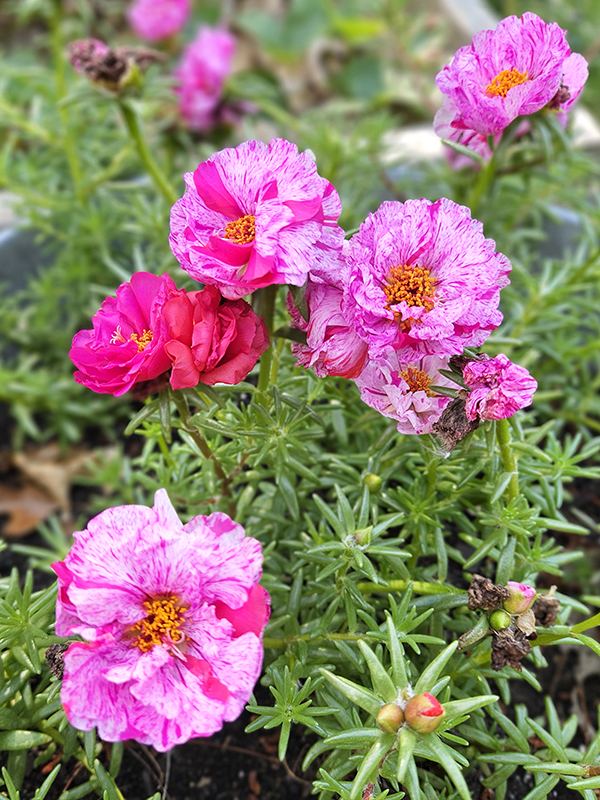
To grow portulaca from seed, start the plants indoors about 6 to 8 weeks before your last frost date. This will allow the plants plenty of time to germinate and start to grow before you need to transplant them outside.
If you live in a warmer climate, you can successfully start seeds directly outside. However, for those of us here in the Midwest and North, you’ll typically have better luck starting them indoors. (For the plants that self-sow outside, they typically don’t germinate here until I’m about ready to plant my indoor-started seedlings outside.)
The Details On Starting Seeds Inside
Use a seed starting soil and a container with plenty of drainage holes. The seeds are tiny, so it might be a bit hard to get the seeds spaced evenly apart. However, I have had no issues with bulk planting the seeds and having them germinate. You can always thin the plants later on.
Sow the seeds only about 1/8″ deep in the soil. The seeds should germinate in around two weeks. Keep the soil lightly moistened until this occurs. Then, only water when the soil has dried out almost completely. Again, these plants do better with drier soil.
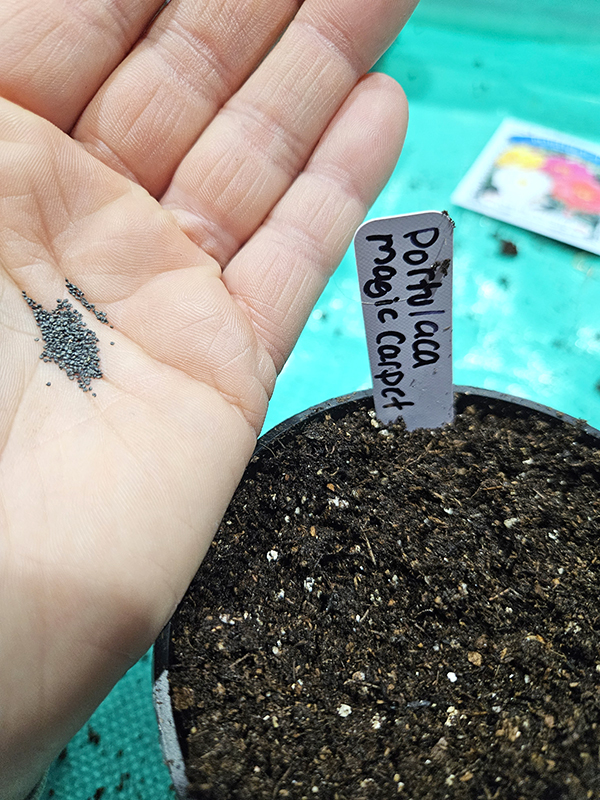

Keep the seedlings under grow lights for around 16 hours each day. Be sure to harden off the plants before transplanting outside.
(You can read more about starting seeds indoors and the steps you should take with part one of my Seed Starting Series: “Starting Your Garden Seeds Indoors Series – Part 1: Sowing”.)
Planting Transplants – How To Grow Portulaca
Once the threat of frost has passed and the soil has started to warm up, you can plant transplants outside. Choose a location that receives full sun. Portulaca needs at least 6 to 8 hours of direct sunlight each day. The more sun, the better for these heat-loving plants!
Ensure that the soil where you plant portulaca does not retain moisture well. A light, well-draining sandy soil is ideal. Portulaca thrives in dry, poor soils where most flowering annuals would struggle to survive. If you have clay-like soil like we do, grow the plants in containers or raised beds for the best success.

Even though they grow in poor soil, amend the soil with a bit of compost prior to planting. Portulaca plants are heavy feeders thanks to their many blooms. The compost will help give the plants an extra early boost or nutrients.
Each plant can grow up to a foot tall, but features a spreading growth habit that can reach up to two feet wide, depending on the variety. So keep this in mind when spacing out plants.
However, we have great success planting them in bunches together when growing in containers. (It can be difficult to separate tiny seedlings if you started the seeds yourself.) For larger seedlings or when using as ground cover, space plants out accordingly. Water well after planting.
Summer & Fall Care
While they aren’t quite as hardy as cacti when it comes to moisture levels, their plump succulent-like foliage does help retain moisture. This allows the plants to go for longer periods of time between drinks. A good once-a-week thorough watering, if you haven’t received any rainfall, should be sufficient to keep porulaca happy and blooming strong.
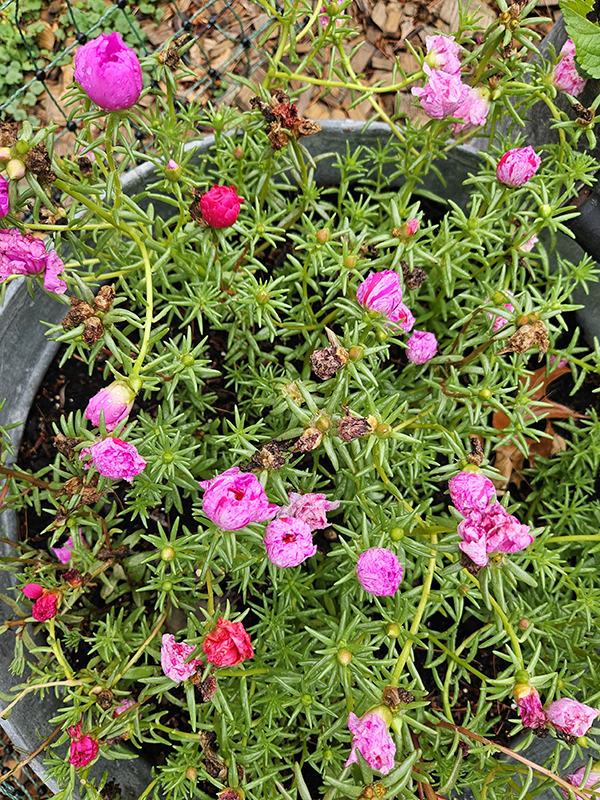
Even though portulaca can grow well in poor soil, it’s still a good idea to provide a little bit of nutrients. In addition to the compost added at the time of planting, give portulaca plants an additional dose of water-based, all-purpose fertilizer about halfway through the growing season.
Portulaca does not need to be pruned or deadheaded since they are self-cleaning. However, remove any stems that are dead or look diseased.
Thinning out can help encourage proper airflow and reduce the chance of fungal issues, but it also isn’t required. You can also trim back plants halfway through the growing season if they are starting to get a little unruly or leggy.
Propagating Portulaca – How To Grow Portulaca
Like most succulents, portulaca is easy to propagate from cuttings. To take cuttings, use a pair of clean, small snips or pruners. Cut off about 4 inches of stem from the tip of the plant. Remove any of the blooms or buds as well as the leaves on the bottom half of the stem. (Here’s the small snips I love using – Product Link: Fiskars Micro-Tip Pruning Shears.)

Dip the cut end of the stem into a rooting hormone (optional). Place it in a small container or pot with light-weight, pre-moistened soil. Keep the soil moist but not saturated.
The cutting should start producing roots in about two weeks. After you start to see new growth, reduce watering to once a week. The cutting can then be transplanted into a new container or planted outside.
With the proper care and avoiding overwatering, your portulaca plants will reward you with blooms all the way until the first frost!
Until next time, thanks for stopping by!
– Chelsea
*This post may contain affiliate links. These are products I have used personally and highly recommend. As an Amazon Associate, I may earn a small commission from qualifying purchases if you purchase items through my links. These links and the ads on this page help to support my family and our semi homestead, so Thank You!
Discover more from Semi Homestead Life
Subscribe to get the latest posts sent to your email.