
One of the very first flowers to greet you after a long, cold winter is the crocus, but in order to enjoy these early spring blooms, you need to plant the bulbs in the fall.
Crocuses are tiny little flowers that produce blooms in colors of purple, yellow, white, and orange. They are a welcoming site after a long, bleak winter (especially here in Illinois!).
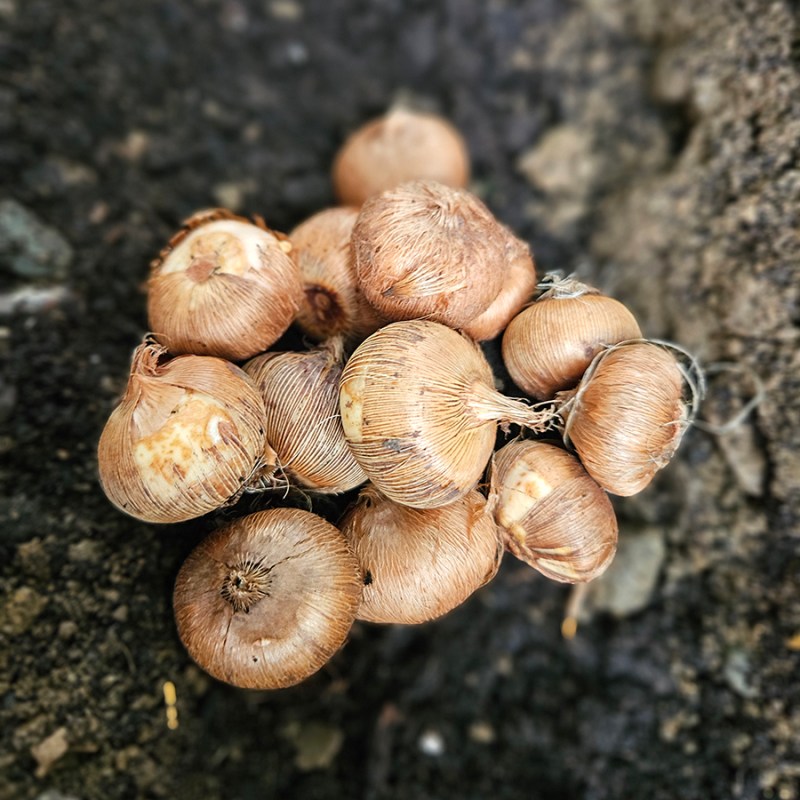
Like tulips and garlic, crocuses require a period of cold hours in order to grow and bloom. This means that people living in the Midwest and north need to plant them in the fall to get them to bloom in the spring.
Once you plant the bulbs, they are pretty much hands-off until the plants start to sprout in late winter or early spring. In fact, these tiny flowers that measure just between 2 to 4 inches are even known to push up through snow – all without you needing to do anything!
The best part is that they are deer-resistant and rabbits and squirrels tend to leave them alone as well. If you are still worried about them being dug up, there’s a simple trick I like to use when planting crocus that I’ll share.
Bulbs vs Corms
Crocuses are perennials that bloom each spring and then come back the following year. They also naturalize, which means that they spread out and create larger displays year after year.
Unlike most other flowers like zinnias or sunflowers, crocuses grow from what most people call bulbs. However, they actually grow from a tuber called a corm. (I’ll be using both terms interchangeably throughout the article.)

Bulbs are made up of rings or layers. These layers are basically modified leaves that store energy and food for the plant while it is dormant. Onions, shallots, tulips, and daffodils are all examples of plants that grow from bulbs.
Corms, on the other hand, do not have layers. Instead, there is just a solid piece of tissue that stores the food and energy while the plant is dormant. As the plant grows, the corm is dissolved until the plant produces a new corm for the next dormant season.
How To Plant & Grow Crocuses
When To Plant
You need to plant crocuses in the fall months before the ground freezes. This gives the plants enough time to get slightly established but not enough to allow the corm to sprout.
The ideal time for planting is when the soil is around 60º Fahrenheit. This typically occurs sometime around late September or October in the northern locations and around October or November for locations south.
The goal is to get them in the ground about 6 to 8 weeks before your first expected frost, so that date will vary based on your growing zone. For us here in Zone 5 in Illinois, our first frost is usually around the end of October or early November at the latest.
Crocuses are hardy in zones 3 through 8. If you live in zone 9 or higher, the soil won’t get cold enough during the plant’s dormancy period. However, you can also force the plants to bloom.
Preparing The Planting Location
Crocuses can grow in about any soil as long as it is well-draining. While the plants are fairly hardy and easy to grow, they do not do well in soil that stays saturated. In fact, they tend to rot if they are consistently wet.
If your soil is heavy or retains moisture too well, add compost, peat moss, or even small pieces of bark to aid in drainage. I added in a bunch of compost prior to planting my crocus corms since our soil leans more towards the clay-like side.
The location I am planting them also has a bunch of small river rocks from past landscaping projects. While you might think that the rocks are an issue, they can actually help the corms. Not only do they help improve soil drainage, but the rocks can help deter squirrels.

This is because squirrels and other digging creatures don’t really like to dig through rocks in order to get to the corms. This is a great trick that also works when planting tulips, too.
As for the location, choose one that receives a good amount of sunlight throughout the day. While they bloom best in full sun, they can also do well in spots with dappled sunlight or overcast.
Planting Crocus Bulbs
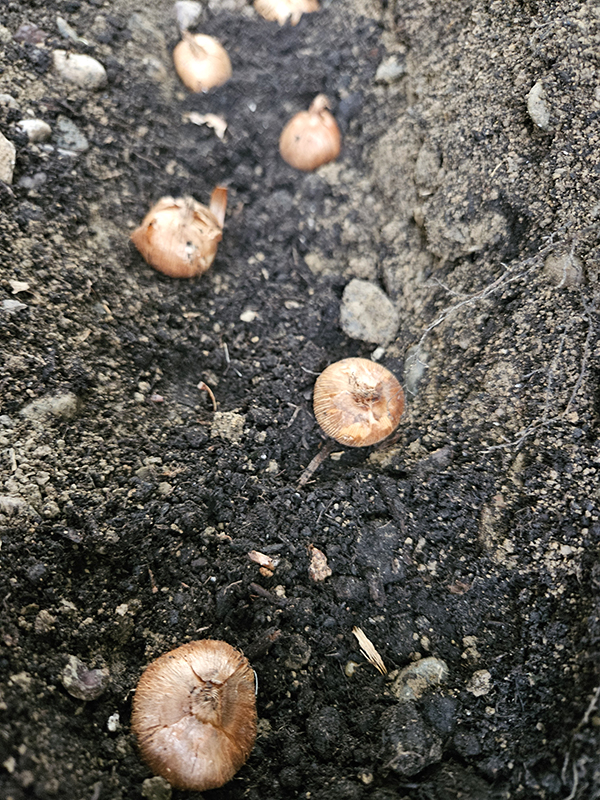
Once you’ve chosen your location and amended the soil if needed, it’s time for actually planting. You can plant crocus bulbs by either digging up each individual hole or by creating a trench. I prefer to use the trench method.
Whichever you choose, the goal is to get the crocus corms in the ground about 3 to 4 inches deep. This helps protect them from the thawing and freezing temperatures that tend to occur with winter weather.
The “technical” way of planting them is to go three times as deep as the corms are tall. In general, this usually ends up being around the 3 to 4-inch mark. (However, who has the time to measure each individual bulb? If you do, more power to you!)

Space additional crocus corms roughly 3 inches apart from one another. This gives them plenty of space to spread out and not have to compete for nutrients. Again, this is a spacing that I just eyeballed. I also staggered each one to save on space. Water plants well after planting.
One big key is to make sure that the pointy end of the corm is facing up. This can make a huge difference in whether or not the corms sprout successfully or not.
Waiting Until Spring – How To Plant Crocus Bulbs
After the initial watering, there really isn’t much care that you need to do before winter. If you have a long stretch of dry weather (say more than two weeks), then give the corms a good drink. Otherwise, a bit of fall rainfall here and there should suffice.
Before the first frost, cover the area with a light mulch like shredded straw or wood chips. (We get untreated cedar chips from Lowe’s, but this is the same idea – Product Link: 100% Natural Cedar Shavings. Just make sure they don’t have any added chemicals or colorings.) The mulch will help protect the bulbs even more during the sub-freezing temperatures. In late February, remove the majority of the mulch to give the crocuses space to sprout and grow.
While crocuses are blooming, only water if plants haven’t received any rain for a week or so. After blooming is finished, wait until the foliage completely dies back before removing it. The corms will now go dormant until next spring. I hope you enjoy these cheerful blooms being one of the first things to greet you after a cold, snowy winter!
Until next time, thanks for stopping by!
– Chelsea
*This post may contain affiliate links. These are products I have used personally and highly recommend. As an Amazon Associate, I may earn a small commission from qualifying purchases if you purchase items through my links. These links and the ads on this page help to support my family and our semi homestead, so Thank You!
Discover more from Semi Homestead Life
Subscribe to get the latest posts sent to your email.