
One of the prettiest yet most forgiving plants to grow is Tradescantia Zebrina, and they are also one of the easiest for propagating cuttings in either water or soil. This allows you to create brand new plants or revive your current plant – all for free!
Propagating is the process of taking a cutting from the original plant to create roots of its own. These cuttings can be rooted in either soil or in water and can then be transplanted into their own containers if desired.

In terms of a Tradescantia Zebrina, propagating doesn’t necessarily mean you are making a brand new plant. Sometimes, you need to fill in empty spaces in the container or pot so it looks fuller and healthier. Other times, you might need to remove dead growth and cut the plant back to where it is healthy.
This often happens in the winter after the plant has lived indoors as a houseplant for far too long. (At least that’s the case for my poor zebrina! It always looks a little sad after spending the winter months indoors.)
No matter what your reasoning is for propagating, the steps and outcome are the same – and it couldn’t be any easier!
Propagating Tradescantia Zebrina Cuttings – The When & How
Growing Zebrina Outdoors
The leaves on a Zebrina plant will grow and look different based on where they are currently growing and your location. They may also need propagating at different times and for different reasons because of this. (If you want to go more in-depth, check out my article, “Growing Tradescantia Zebrina – How To Grow Inch Plant“.
When grown outdoors in bright, indirect light, the leaves on the plants will be at their brightest colors. You get intense red or purple coloring as well as strong silver stripes. The leaves and stems also become thick and larger, thanks in part to being able to withstand wind and other outdoor elements.
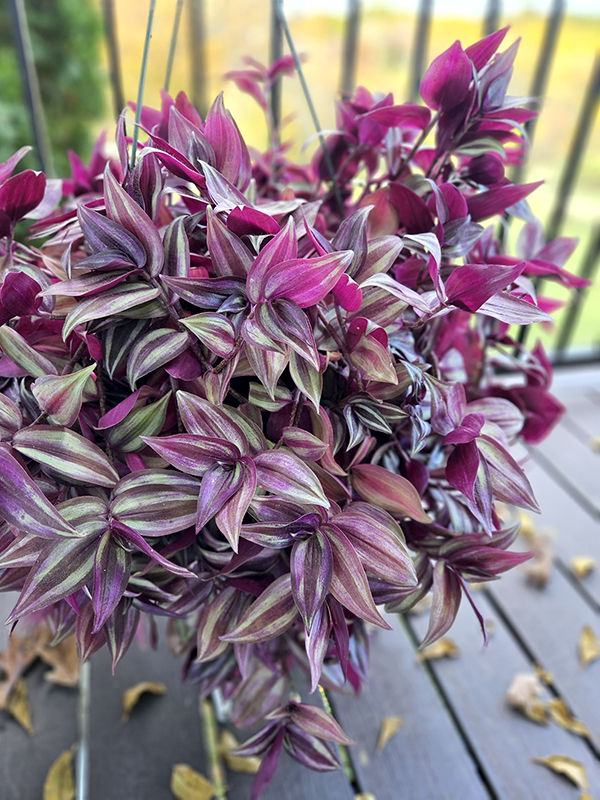
If the plant receives more direct sunlight, it will start to lose its silver coloring and turn more purple or red in color. It’s a difference that we see when we move our Zebrina to different locations around our home throughout the year. Either way, the growth is usually nice and healthy when grown outside.
Propagating because of frail stems and leaves isn’t usually needed during these warmer months. You can still easily take cuttings to make brand new plants for yourself or to give to family and friends if you’d like, though.
Another time to repot your Zebrina in the summer is if you are starting to see roots grow out of the bottom of the pot. This indicates that the growing container might be a bit too small, and it is time for an upgrade.
Growing Zebrina Indoors – Propagating Tradescantia Zebrina Cuttings
When grown indoors with artificial lights, the plants often have thinner stems and softer leaves. The leaves are also usually much smaller than when grown outside. Plants can become leggy, especially if there is not enough light available. This is usually when they might need a “chop and prop”.
A chop and prop is when you chop off portions of the stems and repot them into a different container or the same one. It is a fun name for propagating Tradescantia Zebrina and other plants. However, you can also use it to refresh or fix your leggy and struggling plant as well.
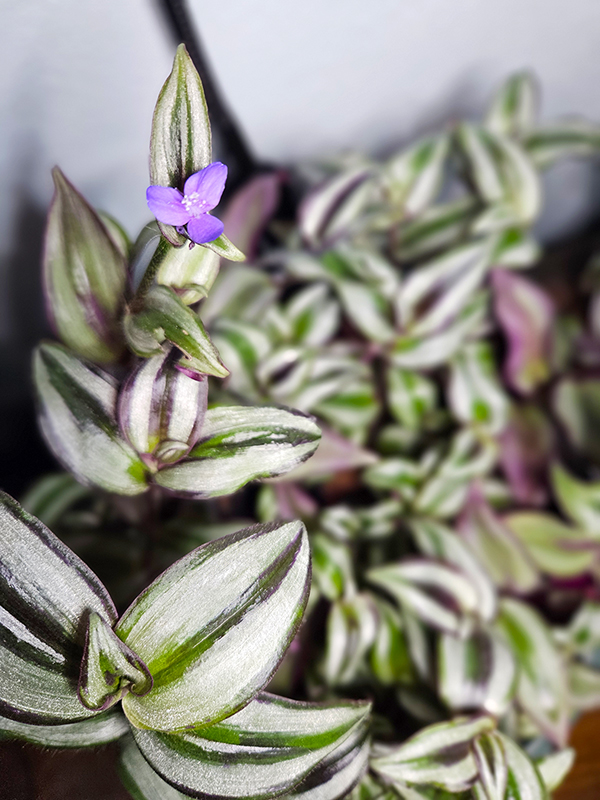
During the winter, I move my Zebrina indoors. Unfortunately, it doesn’t take long before the leaves start to look thin, ragged, and a bit pathetic. Eventually, there comes a time when I need to chop and prop the entire plant if I want to keep it alive.
While this can seem like an extremely drastic measure to take, it’s a really simple process that helps to keep the plant tidy and healthy. Without doing this, I would’ve tossed the plants ages ago due to dead growth and pathetic stems!
Whether you are doing a full chop and prop during the winter or just taking a few cuttings here and there from healthy growth, propagating Tradescantia zebrina cuttings is the same process.
How To Propagate Zebrina
There are two main ways to propagate a zebrina plant. The first is using soil and the other is using water. The beginning process is the same for both methods, though.
First, you need to cut off 4 to 6 inches of healthy stem from your plant using a pair of pruners or tiny snips. Look for new leaf growth at the tip to indicate the stem is still in good shape. (My favorite snips for pruning – Product Link: Fiskars Micro-Tip Rose Pruning Shears)

When you take your cutting, include at least a few nodes. These nodes are little bumps where roots can grow from. Make the cut right underneath a leaf node.
Repeat the process with other stems until you have as many cuttings as you’d like. Don’t worry about harming the Zebrina plant. They are extremely tough and hardy and will grow back quickly.
With the cutting, remove the bottom half of the leaves from the stem. Whether you are planting them in soil or putting them in water, you don’t want the leaves left behind because they can easily rot. This causes the cutting to waste energy trying to “heal” the rotting leaf as opposed to creating new roots.
Propagating In Soil – Propagating Tradescantia Zebrina Cuttings
If propagating in soil, dip the tip of the root in rooting hormone. This step is optional, but it can help kick-start the rooting process and allow the cutting to get established quickly. Since Tradescantia zerina roots so easily, it really isn’t needed, and I sometimes skip this step. (Product Link: Garden Safe Brand TakeRoot Rooting Hormone)
Fill a new container with moistened potting soil or seed starting soil. You can also just add the cutting back to the original container if you are trying to fill in gaps or make the top fuller. The steps are the same either way.
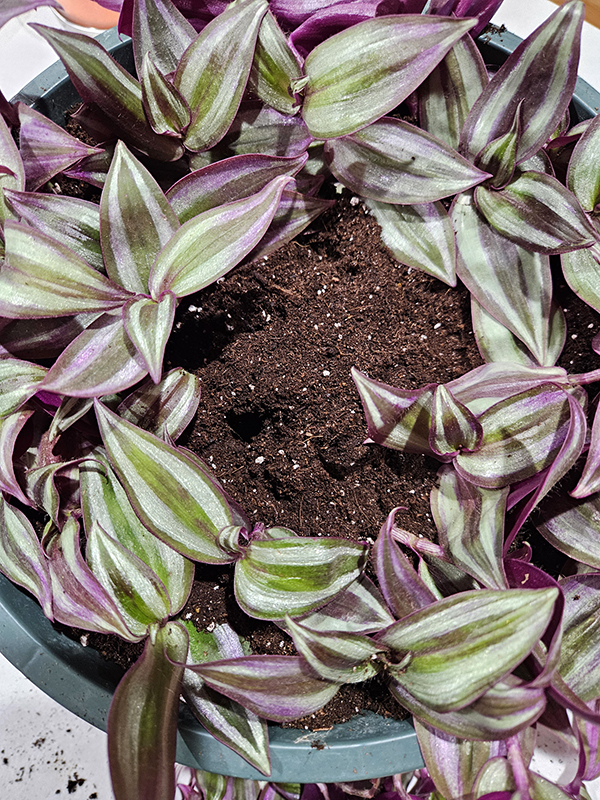

Create a little tunnel in the soil for the stem to go down into. To easily do this, I take a #2 pencil and make deep holes. The width of the pencil is perfect for most of my cuttings. Do not just try to shove a zebrina cutting into the soil without first making a hole. Even the healthiest stem can snap easily if it is met with any resistance.
Make sure you are burying at least 2 to 3 nodes. This will give you the best chance of the cutting taking root. Again, make sure that there are no leaves buried in the soil. If there are, simply remove them with your snips or your fingernails.
Lightly pack the soil around the cutting. Keep the cutting in a warm location that gets medium to bright indirect light. A sunny windowsill is perfect for this. Keep the soil moist but not overly saturated.
Before too long, the cutting will start to produce roots. Once the roots are a few inches long, you can remove them and plant them in their permanent home.
Propagating In Water – Propagating Tradescantia Zebrina Cuttings
The other way of propagating Tradescantia Zebrina cuttings is to use water. This is my preferred method if I do not want to just chop and prop the cuttings back into the original container.
Place the cutting into a container so that at least a couple of nodes are fully submerged in water. I like to use pint-sized canning jars for this, but you can use whatever container you like as long as it can hold water and isn’t too large. Again, make sure there are no leaves under the water.
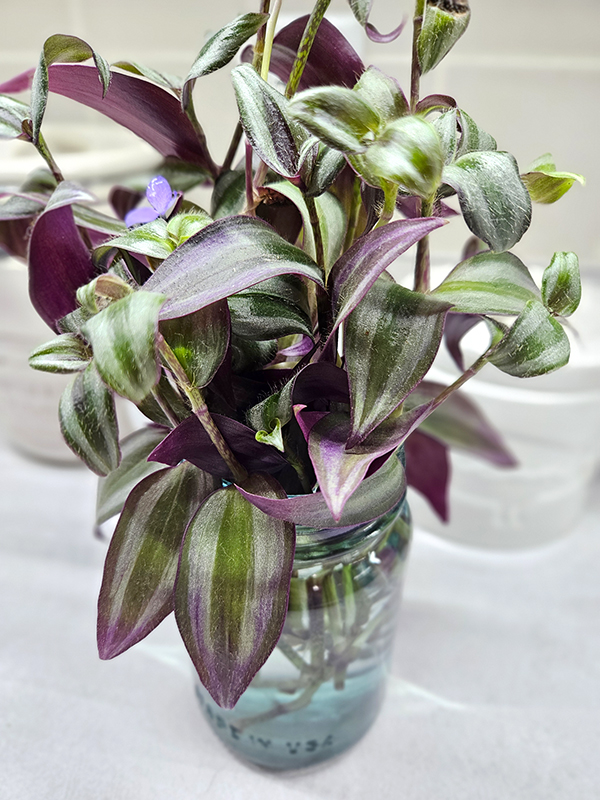
Place the container in a warm location that receives bright indirect light. We have lights underneath our kitchen cabinet that I keep on during the day, so my cuttings usually live there.
After just a few weeks, you will start to see the roots forming. Keep the water level filled, adding more when needed. (I just use regular tap water for this.) Once the roots are a few inches long, you can plant them in the soil.
Whether you are propagating your Tradescantia Zebrina cuttings by soil or water, the process is simple, quick, and a great way to provide you with more plants all for free!
Until next time, thanks for stopping by!
– Chelsea
*This post may contain affiliate links. These are products I have used personally and highly recommend. As an Amazon Associate, I may earn a small commission from qualifying purchases if you purchase items through my links. These links and the ads on this page help to support my family and our semi homestead, so Thank You!
Discover more from Semi Homestead Life
Subscribe to get the latest posts sent to your email.