
If you have ever noticed a low-growing “weed” taking over your garden, flowerbed, or other tilled soil, chances are it’s either Common Purslane or Spurge. One of these plants is an edible, nutrient-packed succulent, while the other is an extremely toxic weed.
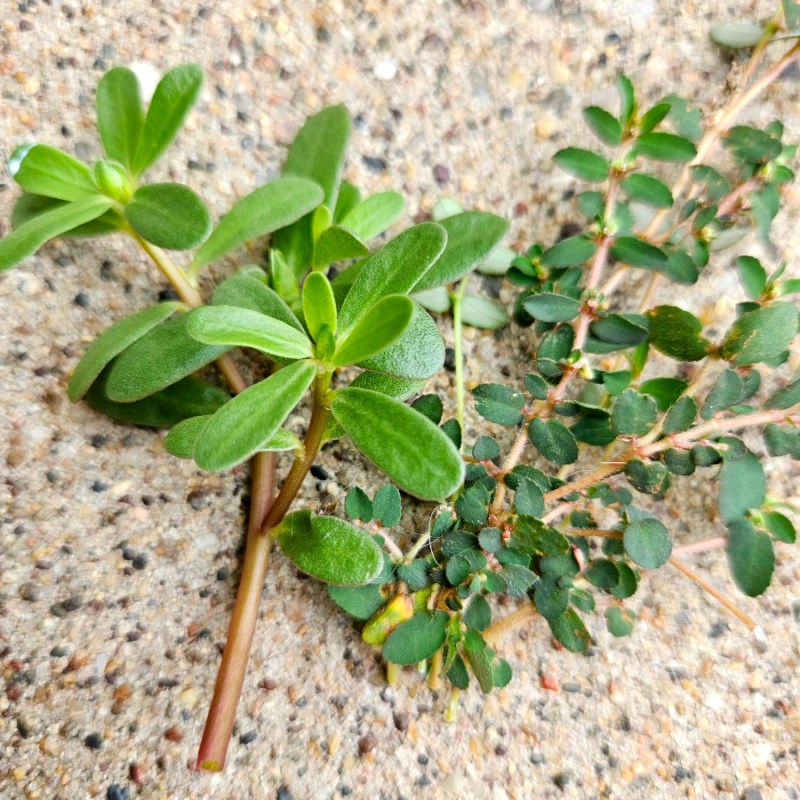
At first glance, the two plants can look pretty similar. However, there are subtle differences that start to show up if you look carefully at each plant. These distinctions make the difference between harvesting a nutritious edible wild green and one that causes skin and stomach issues!
Before you consider chowing down on one of these wild plants, let’s take a minute to show you a few simple identification features that allow you to spot the differences between these two look-alike weeds. That way, you know for sure whether you should pull the weed and toss it, or add it to your dinner plate!
What Is Common Purslane?
Common Purslane is an annual succulent that is known botanically as Portulaca oleracea. (Don’t confuse it with Portulaca/Moss Rose, Portulaca grandiflora, one of Purslane’s non-edible botanical cousins.) Even though it is not native to North America, Purslane now grows commonly in gardens, flowerbeds, and other disturbed soils.
Some people consider Purslane to be a weed because it thrives in dry locations with pretty much any type of soil. This includes rocky, unfertile soil. (To be honest, a weed is really just a plant growing in any location you don’t want it to grow. Many “weeds” are actually edible and worth learning more about. (See my link at the bottom of this article.)
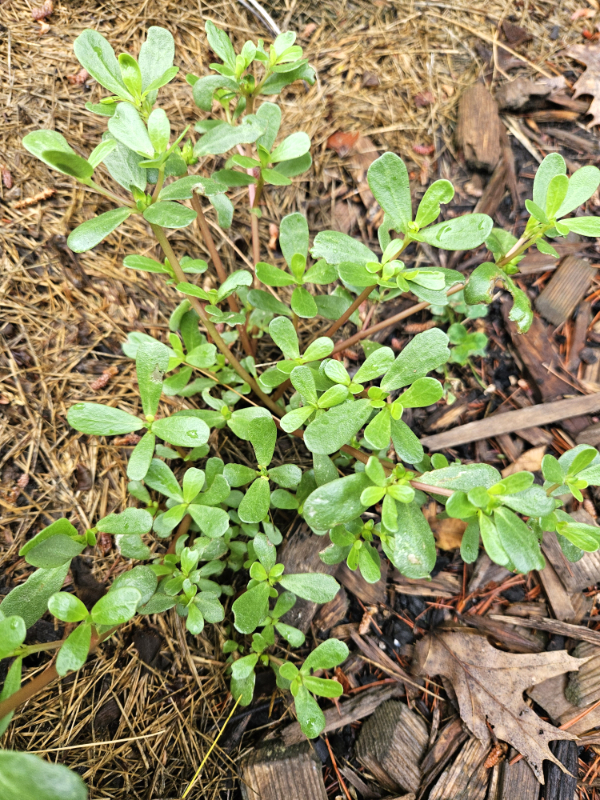
Purslane thrives in full-sun situations as well as partial shade. Even though it is an annual, purslane is a pro at reseeding and coming back each year.
While most succulent plants would struggle or rot after heavy rains or frequent waterings, purslane handles those elements just fine. For example, we have one raised bed in our garden where Purslane thrives. It doesn’t matter if I keep it well watered or infrequently watered.
How To Identify Common Purslane – Purslane Or Spurge
Purslane features thick, reddish-green stems and smooth, fleshy green leaves. Alternate leaves grow around stem joints. The individual leaves are teardrop-shaped, being narrower at the base and wider at the tip. Their succulent leaves are capable of holding water, which gives them a full, squishy appearance.
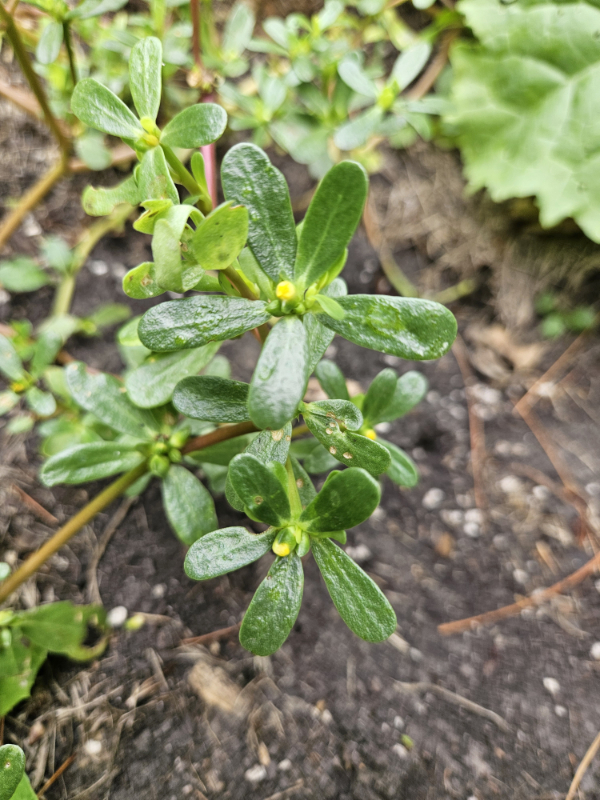
During hot, sunny days, you might even see very small yellow flowers at the end of the stems. These flowers grow out of the middle of a leaf axil on mature plants.
Purslane produces multiple stems that grow out in all directions from a single taproot. The result is often a large, low-lying mat that acts as a ground cover and can be up to 3 feet in diameter.
Is Purslane Edible?
Yes, all parts of Common Purslane that grow above the soil are edible. (The roots aren’t usually consumed.) In fact, most people consider it to be a “super food”. The plant features a juicy, slightly sour and lemony flavor. Older plant stems can be tough and woody, so it’s best to harvest the plant while it is still young and tender.

Purslane is packed full of plant-based omega-3 fatty acids – more than any other leafy green plant. It also contains vitamins A and C as well as antioxidants, calcium, iron, magnesium, and potassium. (Source: University of Wisconsin Horticulture)
Most often, purslane is consumed raw, adding a nice tangy crunch to salads or other foods. It can also be sautéed or boiled, similarly to how you would make spinach. As it cooks down, Purslane creates a slightly gelatinous texture that can be used to thicken soups.
A note of warning: Purslane does contain a high amount of oxalates. Because of this, it should not be consumed in excess if you are one of the lucky individuals who has to deal with kidney stones a lot.
What Is Spurge?
The main look-alike to Purslane is Spurge, botanical name Euphorbia. There are several different types of Spurges, but Spotted Spurges and Prostrate Spurges are the two most common. (The plants in my images are Prostrate Spurge.)

Spurge is an annual broadleaf that thrives in the heat of summer. Even though Spurge is native to North America, most people consider it to be invasive and unwanted due to its growth habits and toxicity.
It is a common plant that often pops up in gardens, flowerbeds, disturbed soils, and even in the cracks in concrete sidewalks and driveways. (That’s where we always find ours.) Spurge grows easily in pretty much any type of soil.
What Does Spurge Look Like?
Just like Purslane, Spurge grows out from a single taproot and produces stems in all directions. The stems grow close to the ground in a mat-like fashion that can be as wide as three feet.
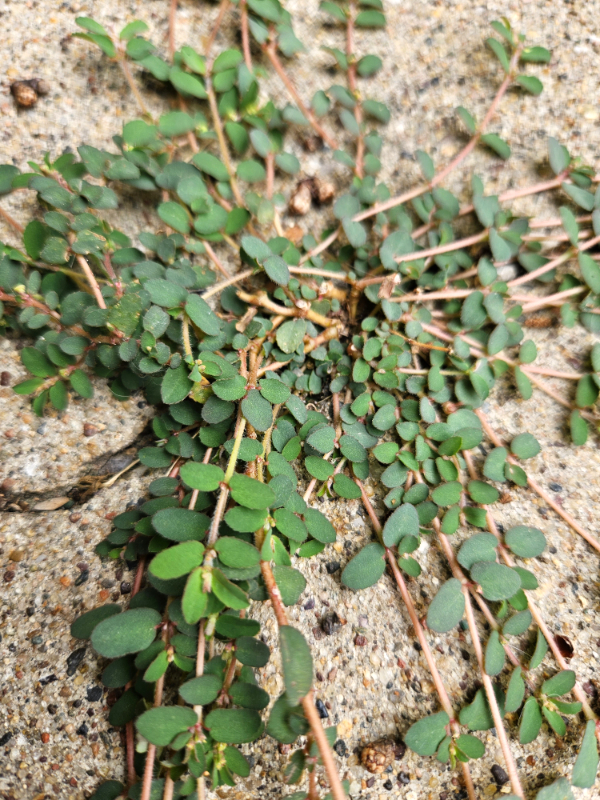
It has woody, reddish stems that have teeny tiny hairs growing around the outside. Instead of tiny yellow flowers like Purslane has, Spurge has small, insignificant pinkish-white flowers.
The plant has smaller, oval-shaped green leaves that aren’t as thick and succulent-like as Purslane leaves are. If you look closely, you will see that the leaves also have tiny hairs growing around the edges.
Is Spurge Edible – Purslane Or Spurge
No, Spurge is not edible and is actually very toxic. All varieties of Spurge produce a milky, white sap that can cause issues when it contacts your skin or is ingested.
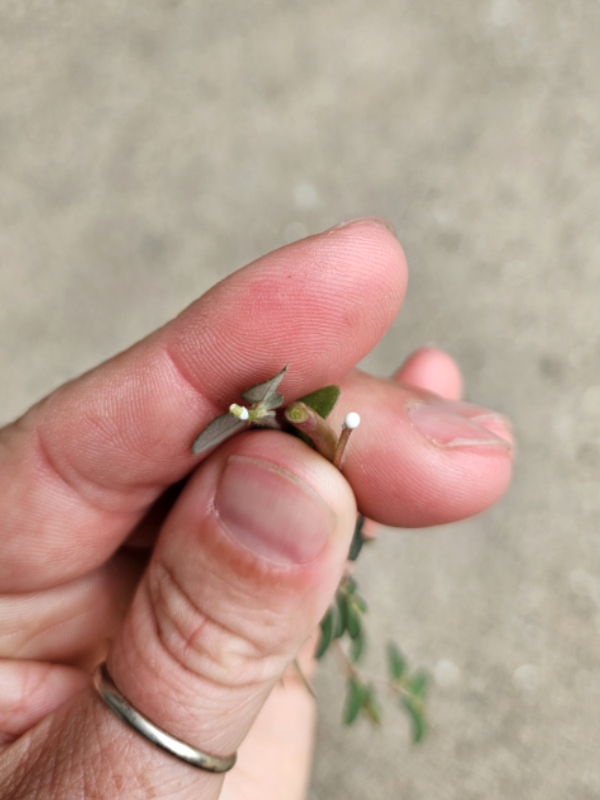
In fact, it’s this white sap that is the best indicator of whether you are dealing with Spurge or Purslane. If you break a stem of Purslane, you are met with a clear liquid, whereas the liquid is milky white for Spurge.
So if you see a white sap, wear gloves to protect your skin and toss the plant. If the liquid is clear, you should be good to go! (Note: Always double-verify that you have the right plant before consuming any foraged plant! Also make sure the plants haven’t been treated with chemicals of any kind.)
Now you can tell whether you are dealing with toxic Spurge or edible Purslane the next time you see a mat-like plant growing out of your garden or yard. If you are curious about other types of edible “weeds”, check out my article, “10 Edible Weeds – Plants To Forage From Your Own Backyard”.
Until next time, thanks for stopping by!
– Chelsea
*This post may contain affiliate links. These are products I have used personally and highly recommend. As an Amazon Associate, I may earn a small commission from qualifying purchases if you purchase items through my links. These links and the ads on this page help to support my family and our semi homestead, so Thank You!
Discover more from Semi Homestead Life
Subscribe to get the latest posts sent to your email.