
When it comes to gardening, there seems to be some set “rules” or techniques that experts say you must follow in order to have a successful harvest, but I feel like some rules are meant for breaking!
If you were to group together 10 different gardeners and ask their opinions on one thing or another, chances are you would get multiple different variations. Does that mean that some of the gardeners are right and the others are wrong? Most definitely not!
What works for my garden setup, my soil, my location, and my climate is not what will necessarily work for you. And that’s ok!
So many new gardeners get worked up on gardening “rules” or techniques that they feel they must follow in order to grow plants. And the truth of the matter is that you can bend or even break most of those rules depending on your situation. I have learned this the hard way over the multiple years I’ve had gardens.
So I thought it would be a good idea to tell you about the “rules” I tend to break and why. The main goal is to grow plants, protect the soil and pollinators as much as possible, and harvest loads of produce to enjoy. How you go about doing that might vary. You have to make your own gardening rules!
What Gardening Rules I’m Breaking
1. Spacing Requirements
Each plant variety has specific spacing requirements that are based on the plant’s mature size and nutrient needs. This is the same for flowers, vegetables, fruits, etc. Most of the time, you can find ideal spacing requirements on a seed’s packet or on the transplant’s label. A quick Google search will also give you the most common “rule” for spacing each plant apart.

For example, you should plant broccoli 18 to 24 inches apart and rows 24 to 36 inches apart. That’s up to three feet apart from one plant to another! For home gardeners with limited space, that really isn’t realistic.
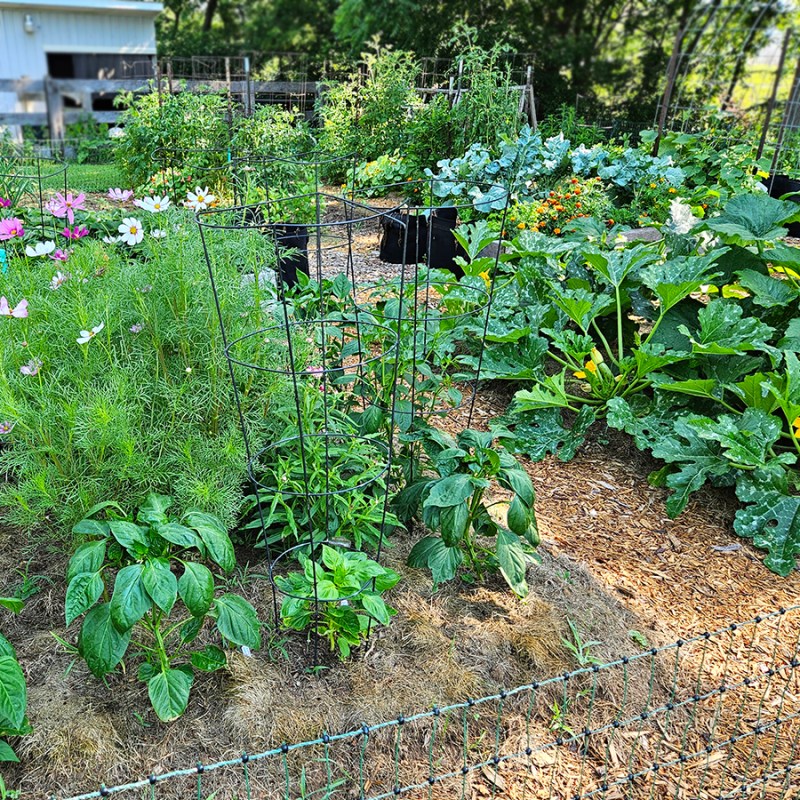
If you are starting a garden from scratch, then spacing requirements are a great way to plan out your garden. However, I most often break those rules. I find that I can usually get away with spacing plants much closer together without any issues.
Do I sometimes regret those close planting spaces once late August and September come around and my garden is unruly and growing wild? Sometimes! (My early summer garden definitely doesn’t look as tidy as my late summer one!)
But I still get amazing yields and usually keep healthy plants by fudging the spacing requirements, just so I can make the most of my garden space. Just keep in mind air circulation and taller plants shading out smaller ones if you are a space rebel like me!
2. Only Growing Heirlooms – Breaking Gardening Rules
It seems like everywhere you look, it’s heirloom this, non-GMO that, organic gardening, etc. You can read all sorts of different articles and visit seed stores that push ONLY heirloom and open-pollinated plant varieties. However, there is nothing wrong with using hybrid varieties. I’ll say that again for those in the back: Hybrid plants are ok to grow!
Heirloom plants are considered open-pollinated. This means that you can save their seeds, and the seeds will produce exact copies of the parent plants. Many of our oldest seed varieties are heirlooms. (You can read more about heirlooms vs hybrid seeds in my article, “How To Save Garden Seeds – Open-Pollinated Vs Hybrid Seeds”.)
Hybrids, on the other hand, are created by cross-pollinating two different parent plants to create a new one. Hybrid seeds are not the same as GMO seeds. GMOs are seeds that are created using laboratory techniques to alter a plant’s DNA. So no matter what your stance is on GMOs, growing hybrids isn’t the same!
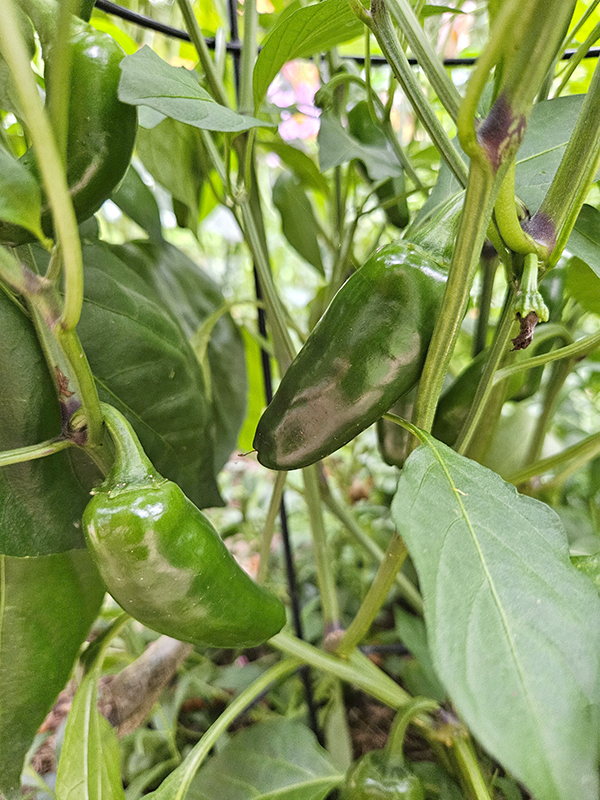
There are many positives of growing hybrids. They are usually bred for beneficial aspects like disease resistance, higher yields, and unique flavors or other traits. The biggest drawbacks are that sometimes the flavor isn’t as good as that of heirloom varieties, and their seeds can’t be saved. Still, there is nothing wrong with growing hybrids.
3. Keeping Two To Three Stems Per Tomato Plant
It is suggested by many that you prune each indeterminate tomato plant to only two to three main stems. By growing plants this way, you are able to plant way more plants in your growing space since each plant will take up less space. Some also state that the yields and the size of the fruit will be increased.

Each sucker that grows from an indeterminate tomato plant will turn into a leaf and fruit-producing “main” stem. As the weeks go along, your plant can produce loads of suckers. While I always prune the base of each tomato plant, I don’t prune all of the suckers.
I will prune most of the suckers early in the growing season. I will also prune a few here and there throughout the summer to increase airflow within the plant and to keep plants from getting TOO out of hand.
But for the most part, I definitely don’t prune every sucker or limit the plant to just two or three stems. I still get to harvest plenty of healthy, large fruit, even if my plants do get a bit unruly by late summer.
4. Only Watering Early In The Morning – Breaking Gardening Rules
Ideally, you should water your vegetable plants early in the morning. This helps to prevent evaporation from the hot sun, as well as lessen the chances of damaging delicate foliage. It also allows any wet foliage to dry out during the day to reduce powdery mildew.
However, life happens. My schedule doesn’t always allow me to get out to my garden and spend an hour watering my plants in the morning. Sometimes, the only time I can get out there is late at night or in the middle of the day. I always figure a good watering – no matter the time – is always better than thirsty plants.
The only caveat to that is that I don’t water my plants overhead using a sprinkler. If you only water by sprinkler or overhead, then yes, please do water early in the morning if at all possible.
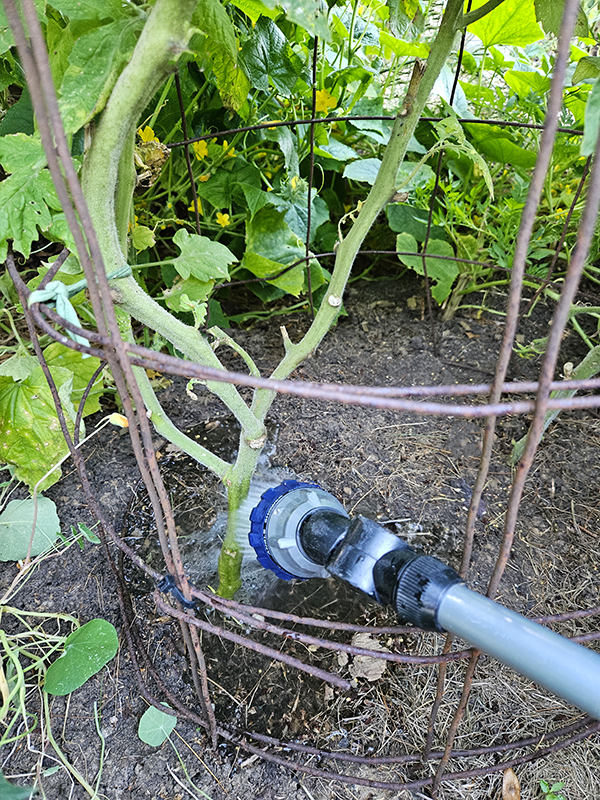
Instead, I water plants at their base using a long-handled sprayer. Going this route or using drip irrigation is fine to do any time your schedule allows. (Here is a sprayer similar to the one I use – Product Link: Orbit Front Trigger 10 Pattern Turret Wand.)
Watering at the base keeps as much moisture off the foliage as possible. It also eliminates many of the issues associated with watering during the day. Just remember that no matter when you water, doing it less often and deeply is better than light drinks multiple times a week.
5. Feeding Plants On Schedule
The last of the gardening rules I end up breaking each year deals with fertilizers. Normally, I use compost at the time of planting, which provides plants with a great early boost of nutrients.

Then, usually after plants start to become established, I will fertilize with a granular fertilizer. (And even this doesn’t happen every year.) The granular fertilizer is a slow-release fertilizer that does a great job of providing plants with nutrients throughout the growing season with little work on my end.
Occasionally, if plants are looking really weak, I’ll give a boost of compost tea or other liquid fertilizer. But for the most part, I don’t really feed my plants while they are growing.
Mainly, I try to nurture the soil. I use a combination of mulch, cover crops, and rotational planting that helps to keep the soil well fed, balanced, and full of organic matter. This allows me to grow amazing plants without needing to constantly reach for fertilizers.
Hopefully, you can see how gardening doesn’t always have to be a set of “rules” that you must follow, but rather suggestions to use and adapt as needed to work for you and your gardening space.
Until next time, thanks for stopping by!
– Chelsea
*This post may contain affiliate links. These are products I have used personally and highly recommend. As an Amazon Associate, I may earn a small commission from qualifying purchases if you purchase items through my links. These links and the ads on this page help to support my family and our semi homestead, so Thank You!
Discover more from Semi Homestead Life
Subscribe to get the latest posts sent to your email.