
As summer comes to a close, you might be wondering what you should do with your tomato plants and all those red and green tomatoes left on the vines before fall hits. Before you simply pull everything out and consider the growing season over, there are a few ways to make the most of the time your plants have left.
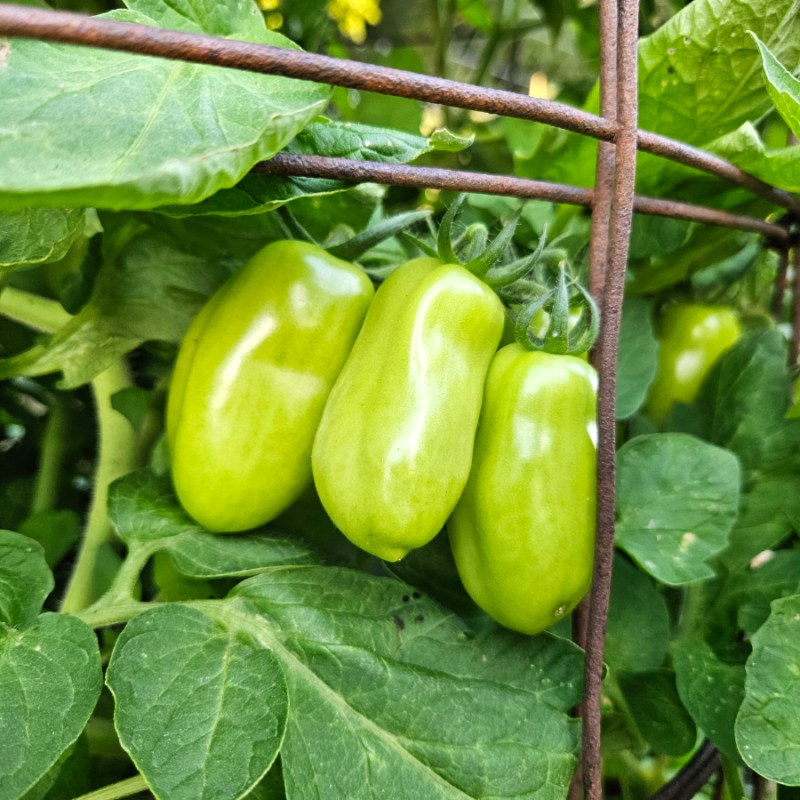
September in the garden looks very different depending on where your growing location is. For those of us in the Midwest or further North, September usually marks the start of the end of our gardening season.
Daylight hours are shortening. It’s (thankfully!) becoming less humid during the day. And the nighttime temperatures bring about a briskness that makes most of us want to grab a sweatshirt and light a fire pit. (Or maybe that is just me?)
If that sounds familiar for your climate, then your garden likely is starting to slow way down on production, and this includes your tomato plants. In this article, I’ll talk about what you should do with your end-of-season tomato plants as well as all those tomatoes still left on the vine. That way, you can continue making the most of this growing season and set yourself up for success for next year’s garden.
Don’t Rip Out Your Plants Just Yet
Once September hits, most of us get the itch to start cleaning out our gardens. We’ve spent hours all summer long watering, weeding, harvesting, and processing, and most of us are ready for a much-deserved break.
Some plants are ready to be pulled. Crops like green beans, zucchini, and cucumbers are likely done for the growing season and can be removed without regret.
However, cooler temperatures don’t automatically mean ALL crops need to be done growing. Most indeterminate tomato plants are likely still pushing out tomatoes and ripening those already on the vine. If these tomato plants are still healthy and producing, there is absolutely no need to pull them just because summer is ending.
Just don’t be surprised if your tomato plants slow way down on their progress. Adjust your expectations to match the changing of the seasons.
Check For Diseases And Pests – Fall Tomato Plants
While you can leave healthy tomato plants to do their thing during the early fall months, the same can’t be said for plants that are already getting attacked by pests or diseases.

If you see signs of disease or pest damage – something that is really common this time of year – take action immediately. Either treat or prune affected plants. If the issue is bad enough, pull the plant entirely and dispose of it far away from your garden to prevent spreading the disease or pests further.
Leaving unhealthy tomato plants in your garden not only allows the issues to spread like wildfire for the remainder of the fall growing season, but it also sets your garden up for problems next year as well. There are loads of pests and diseases that can overwinter in the soil and in dead plant matter, even here in the frigid Midwest and North. So the sooner you get them out of your garden or stop the problem, the better!
Prune Indeterminate Plants
Chances are, your determinate tomato plants are long gone and done producing. However, indeterminate tomato plants continue to push out new growth and blooms all growing season long. (If you aren’t sure what the difference is between the two types of tomato plants, check out my article “Determinate And Indeterminate Tomatoes – All You Need To Know”.)
To give all those green tomatoes a fighting chance, prune the tops of indeterminate vines. The best time to do this is about a month before your first expected frost. But wait, when is this date for your location?

The Old Farmer’s Almanac has a link where you can enter your ZIP code and get the average frost date for your location. While this date isn’t foolproof, it can at least give you an idea of what to expect. Once you have that date, count back about a month and get to work pruning.
Find the top of each vine and cut it off. This allows the plant to focus its energy and resources on maturing the green tomatoes still on the vine as opposed to growing new stems, foliage, and blooms.
In addition to top pruning, remove any blooms you see as well as any small fruit. Unfortunately, they won’t have enough time to pollinate and mature before the first frost hits, so you might as well focus on the fruit that is already halfway there.
Wait For First Frost – Fall Tomato Plants
There’s a big difference between temperatures cooling down and the first frost of fall. A frost watch or warning occurs when the temperature around the base of plants reaches 32º Fahrenheit (F) or below. A freeze occurs when temperatures stay cold for a longer period of time.
While tomatoes can handle cooler temperatures, they can’t survive temperatures below about 35º F, and definitely not a hard freeze. Even your most cold-hardy crops like carrots and lettuces can’t survive a freeze.
Use your first frost date as a guide, but keep an eye on your local daily forecast. Until you hear a watch or warning announced, continue watering your tomato plants as needed and checking them for issues like you have been doing all growing season long.
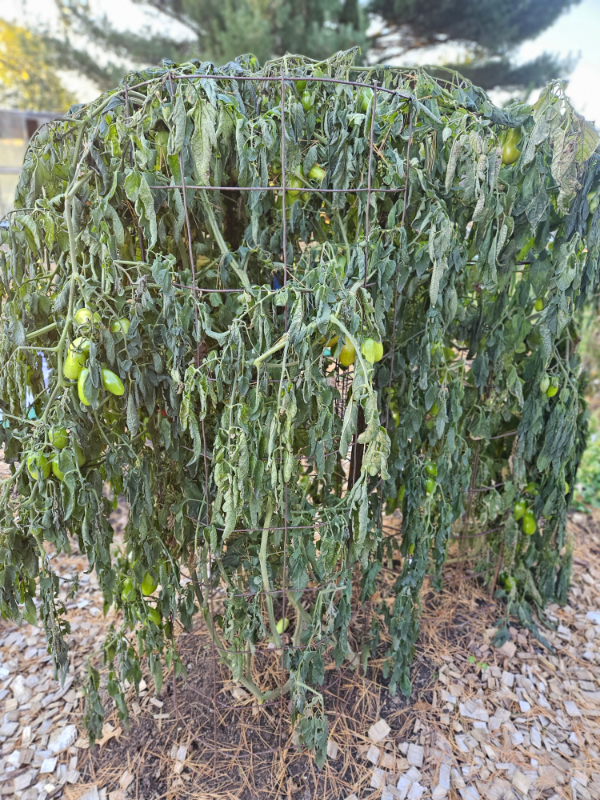
Time To Act – First Frost Watch/Warning
Once there is a threat of frost announced, you really have two options: cover the plants or harvest all of the tomatoes.
1. Cover And Protect
The first option to do before your first frost is to cover and protect the entire plant. Tomato plants are considered tender plants. If you don’t cover them up completely during a frost, they will be killed.
This is a great option to use if your location is expecting a much earlier frost than it normally sees. It can help extend your growing season by a few days or even weeks, depending on how early the frost occurs.
Use a lightweight sheet or blanket to cover the entire plant. Ensure that the cover reaches all the way down to the soil. Secure the bottom with weights, rocks, or something heavy so it won’t blow off during the night.
I have used both Frost Blankets (Product Link) and old bed sheets with success. Once morning arrives and the threat of frost has passed, immediately remove the cover.
Do not use plastic since it can trap moisture and freeze the plant’s foliage if the plastic touches the plant. If you only have plastic available, attach it to the tomato cage or something similar to avoid it touching the plant foliage.
2. Harvest All Of The Tomatoes
The second option is to harvest and remove all of the tomatoes off the plant. This includes fruit that has already started to ripen as well as the tomatoes that are still completely green and hard as rocks.

Place any fruit that has signs of ripening (slight color on the fruit’s shoulders) on your counter and allow them to ripen naturally. (This is what I do normally anyway to keep the fruit looking healthy and pest-free. Learn why here: “Picking Tomatoes Early – The Benefits Of Ripening OFF The Vine”.)
As for the green tomatoes, put them in a single layer in a cardboard box or similar. Keep the box somewhere cool and dark.
Most of the green tomatoes will start to ripen over time. (Adding an apple to the box and closing the lid can help speed up the process.) Check the box frequently and remove any that have started to ripen, as well as any that are going bad. Tomatoes ripened this way won’t have quite the same flavor and texture as normal tomatoes, but they still beat store-bought any day!
Pull The Plants – Fall Tomato Plants
No matter what method you use to avoid the first few frosts, there will come a time when your plants eventually die due to frost or freezing temperatures. You can choose to wait until this occurs before removing the plants from your garden, or you can remove them beforehand. The choice is really up to you.
I typically prefer to remove my plants before the first hard freeze to avoid dealing with mushy, wilted plants. Healthy plants are much easier to pull from the ground. (And not as nasty to handle!) Either way, don’t wait until the ground has frozen solid, for obvious reasons.

When removing tomato plants from your garden, remove all the foliage, leaves, and the fallen fruit. This can prevent pests from overwintering in the dead foliage and helps reduce the chances of unwanted soil-borne diseases. It also keeps the seeds from fallen tomatoes from turning into tons of unwanted volunteer tomato plants next year.
Do not compost your tomato plants and the fruit. Again, tomato plants typically carry diseases and pests that home compost piles can’t kill off. Instead, toss the plants in a pile far away from your garden or take them to a municipal composting facility if you have one nearby.
Clean And Prepare
Lastly, take the time to clean and store your tomato cages or supports. Your spring self will thank you when next year rolls around!
If needed, amend the soil now before the ground freezes to give yourself another head start. This might include adding compost, tilling the soil, planting a cover crop, or adding a few inches of organic mulch. Whatever you choose to do, don’t leave the soil bare. Bare soil is just waiting for weed seeds to take hold.
By the time next year rolls around, your garden will be prepped and ready for another great year of growing tomatoes and other crops!
Until next time, thanks for stopping by!
– Chelsea
*This post may contain affiliate links. These are products I have used personally and highly recommend. As an Amazon Associate, I may earn a small commission from qualifying purchases if you purchase items through my links. These links and the ads on this page help to support my family and our semi homestead, so Thank You!
Discover more from Semi Homestead Life
Subscribe to get the latest posts sent to your email.