
Want to learn how to plant and grow annual phlox (Phlox drummondii) in your garden this year? Then you’ve come to the right place!
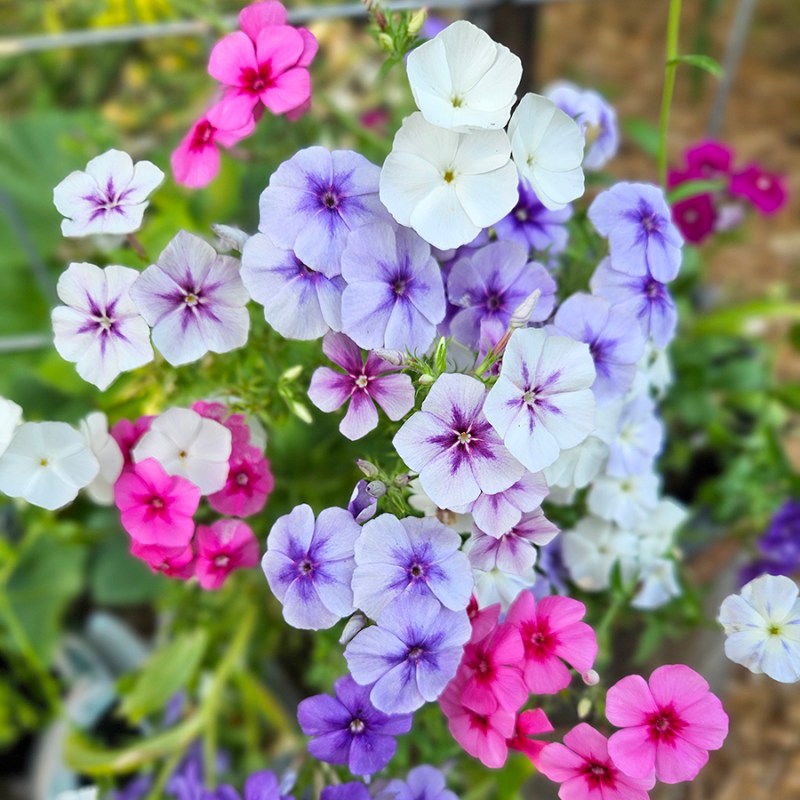
When most people talk about Phlox, they are usually referring to one of the perennial varieties: Creeping/Moss Phlox, Woodland Phlox, or Tall Garden Phlox. Each of these perennials is a great option for colorful, heavy-flowering power.
However, what if you don’t want something quite so permanent growing in your garden space? Having a bit more flexibility with your planting locations each year is especially important if you are growing these beautiful flowers amongst vegetables and fruit. That’s where annual phlox comes into play!
Annual phlox is typically considered to be an early-season blooming flower, but newer cultivars are capable of blooming into the middle of summer and again in the fall. It is perfect for growing around garden borders and in flower beds, hanging baskets, containers, and more.
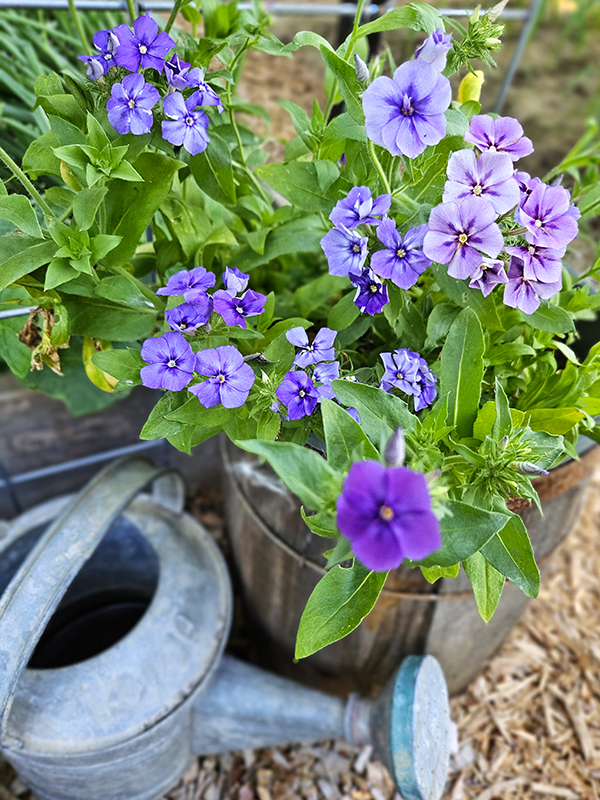
With its tiny, fragrant, star-shaped blooms in a wide variety of colors, it’s no wonder that annual phlox is one of my favorites to grow in my vegetable garden! The best part is that you can grow it fairly easily from seeds or transplants.
Types Of Phlox
Besides Annual Phlox (Phlox drummondii), sometimes referred to as Drummond’s Phlox (what I will be talking about today), there are three main types of perennial phlox. These perennial phlox are characterized based on their growing habits and height. They are hardy in Growing Zones 3 through 9.
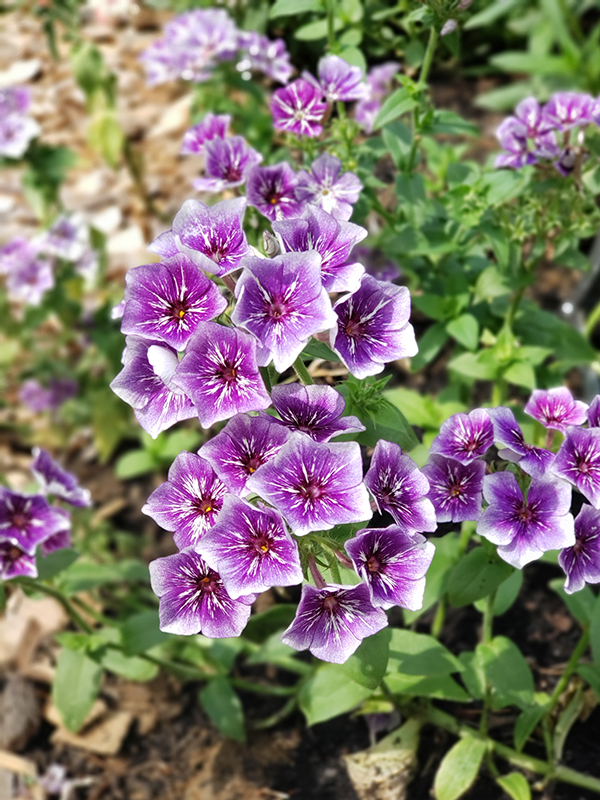
Creeping or Moss Phlox – Perennials that grow low to the ground and are great as a ground cover in full sun locations.
Woodland Phlox – Perennials that grow to about ankle height and are great for growing in shaded or partial shade locations.
Tall Garden Phlox – Perennials that can grow as tall as 5 feet. This is the type you see bordering gardens. It sometimes requires staking and support.
Quick Facts About Annual Phlox
- Annual Phlox thrives in full sun locations and in well-drained soil.
- It grows to be 6 to 12 inches tall, making it great for containers or in front of taller flowers in flowerbeds.
- The blooms have a mildly sweet scent that bees, butterflies, and other pollinators love but deer detest.
- Blooms best in spring and again during fall, but some cultivars can bloom long into summer.
- Can be found in several different colors, including blue, purple, red, pink, and white.
- You can grow phlox from transplants or seeds.
Starting By Seeds – How To Grow Annual Phlox
Depending on your growing location, you can either start Annual Phlox seeds indoors, as winter sown seeds, or planted directly outdoors in the garden. I live in Growing Zone 5, so I start my phlox seeds indoors. Aim to plant them around 6 to 8 weeks before your last spring frost date. (This is usually mid to late March, so they can be transplanted into the garden mid-May.)

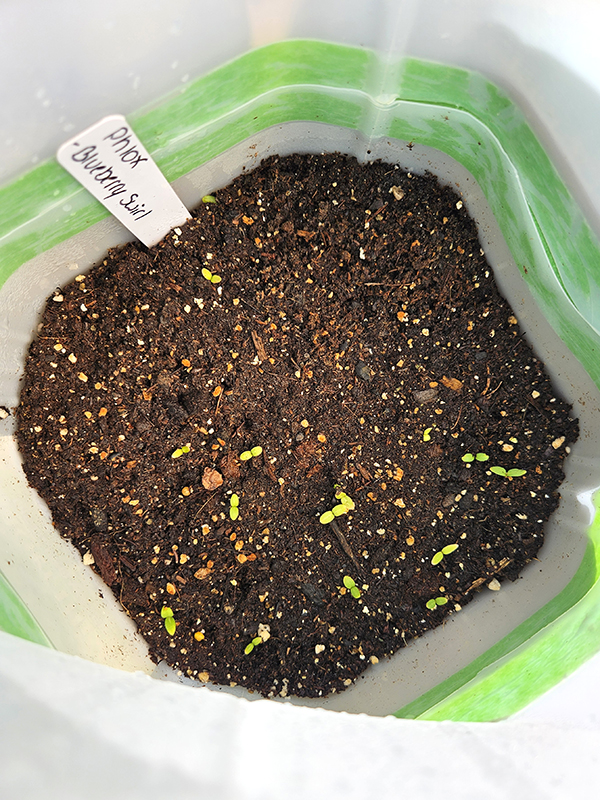
Phlox seeds require darkness in order to germinate. Sow the seeds on the surface of the soil, then cover with about a 1/4 of an inch of pre-moistened soil. Keep containers covered with a clear plastic lid or plastic wrap of some sort to help retain moisture.
Unlike some seeds that require warmth, Annual Phlox seeds germinate best in soil temperatures around 60º to 65º Fahrenheit (F). The seeds can take around 10 to 21 days to germinate, so be patient! Gently spray the soil’s surface every couple of days with water to keep the soil lightly moist during this timeframe.
Once seeds have germinated, remove the plastic and turn on your grow lights. Keep the lights just a few inches above the growth. Bottom water once or twice a week to keep the soil moist. Transplant the seedlings outside once the threat of frost has passed for your location. Don’t forget to harden them off before planting, though!
(For more in-depth information about starting seeds indoors, check out my article, “Indoor Seed Starting 101 – A Complete Beginner’s Guide”.)
Planting Transplants – How To Grow Annual Phlox
Wait to plant any Annual Phlox seedlings until the threat of frost has passed in early spring. While mature Annual Phlox plants can survive light frosts and fluctuating colder temperatures, younger transplants will struggle to establish and survive.
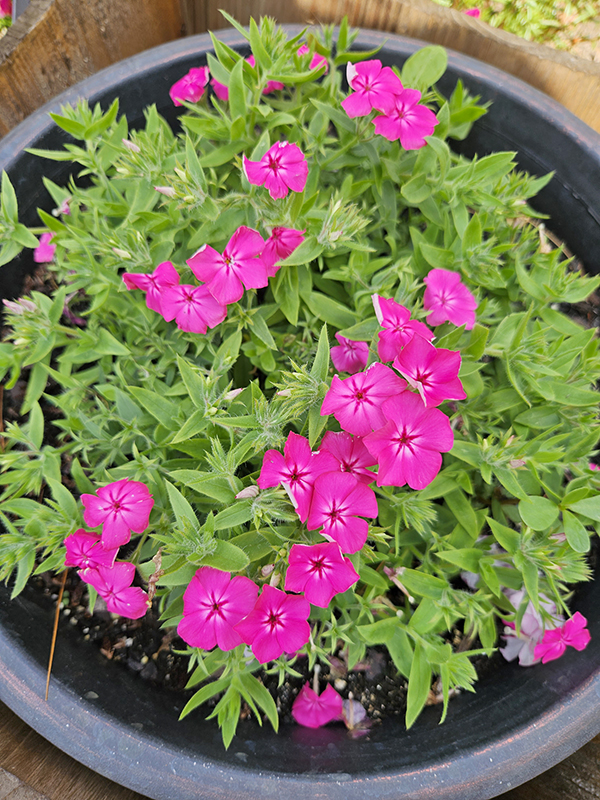
Thankfully, since phlox is more of a cool-weather flowering annual, phlox can handle cooler soil temperatures compared to summer-loving flowers like Zinnias or Lantanas. They still prefer soil temperatures of around 60º to 65º F.
Choose a location that receives full sun (at least 6 to 8 hours of direct sunlight daily). The type of soil isn’t as important, but it needs to be well-draining. Phlox does better at handling droughts than it does waterlogged soil, so drainage is especially important. If you are planting the seedlings in a container, make sure it has plenty of drainage holes.
Dig a hole that is slightly larger than the size of the plant’s rootball. Amend the soil with a bit of compost to provide the plants with extra nutrients and help improve the soil’s structure. Add the Annual Phlox plant and backfill with soil, gently tamping down around the plant.
Water well after planting. Space any additional plants about 8 to 12 inches apart. (I tend to fudge this when I am planting Phlox in containers and group them closer together.)
Caring For Phlox
Annual Phlox requires about an inch of water each week. (This includes rainwater.) Avoid overwatering since phlox can be susceptible to root rot. If you must hand-water plants, do so at the base so you don’t get excess moisture on the delicate blooms.
Mulching around transplants can help the soil retain moisture and keep the soil cooler during the hot summer months. Use an organic mulch like grass clippings, straw, or shredded leaves. (Something that can break down into the soil later on.)
Because phlox is a heavy-flowering annual, it can benefit from a light dose of all-purpose fertilizer when summer arrives. However, if you added compost to the soil when planting, that will often be enough to get the plants through the growing season.
While pruning isn’t required, pinching plants off when they are young can create bushier plants. Also, deadhead any spent blooms to help encourage plants to produce more blooms. (I will be honest, I don’t normally deadhead my plants because the blooms are so tiny. They still seem to flower just fine.)
Even though Phlox drummondii is an annual Phlox variety, it can reseed itself for the following year. So keep that in mind when choosing your location or container to use. Young volunteer plants can easily be removed if unwanted.

Common Issues – How To Grow Annual Phlox
There aren’t really too many issues with Annual Phlox. Since they are only meant to live for one growing season, the first hard freeze should kill off any plants in the fall.
As far as pests are concerned, spider mites are the biggest problem. Otherwise, they are mostly left alone by pests, including deer. Powdery mildew can be a concern if you grow annual phlox in partial shade or if you have hotter, muggier summers. Thinning plants and providing adequate air circulation can help reduce the chance of powdery mildew.
Besides that, Annual Phlox is a fairly simple and hands-off flower to grow in your garden. Hopefully, you will try growing it this year!
Until next time, thanks for stopping by!
– Chelsea
*This post may contain affiliate links. These are products I have used personally and highly recommend. As an Amazon Associate, I may earn a small commission from qualifying purchases if you purchase items through my links. These links and the ads on this page help to support my family and our semi homestead, so Thank You!
Discover more from Semi Homestead Life
Subscribe to get the latest posts sent to your email.